Artwork
An Interior with Card Players and a Blacksmith
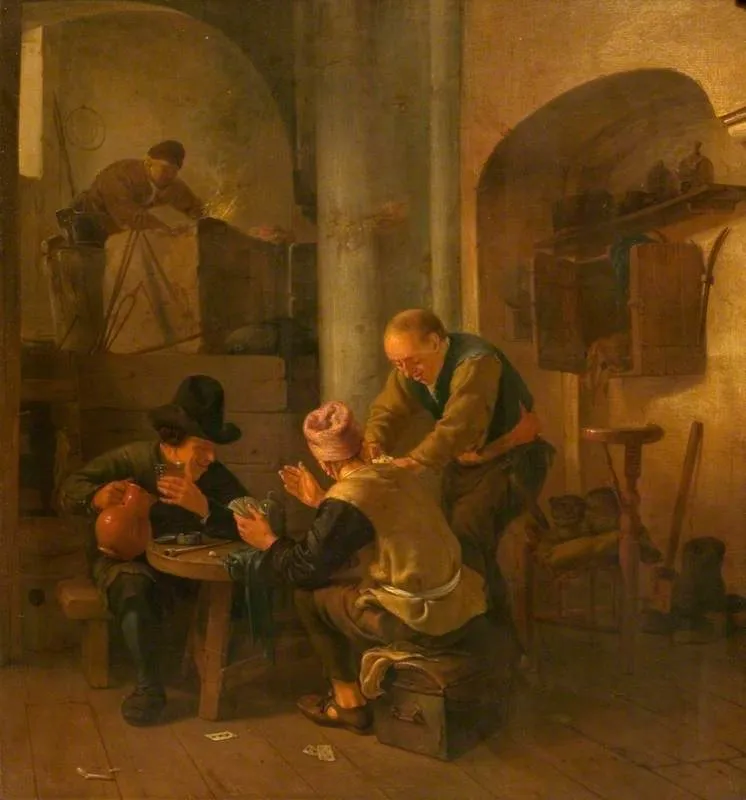
An Interior with Card Players and a Blacksmith is an oil painting by the Dutch Golden Age artist Johannes Natus. It dates from 1661 and is held in the collection of the Victoria and Albert Museum.
About this work
The use of chiaroscuro in this painting creates a sense of depth and volume, drawing the viewer's eye to the central figures.
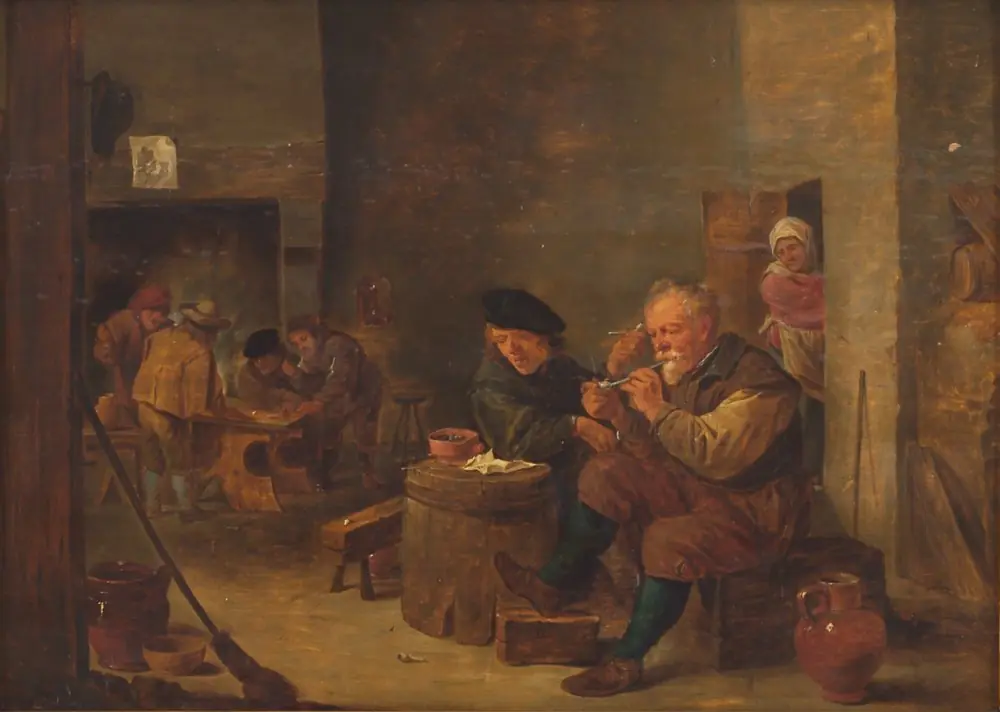
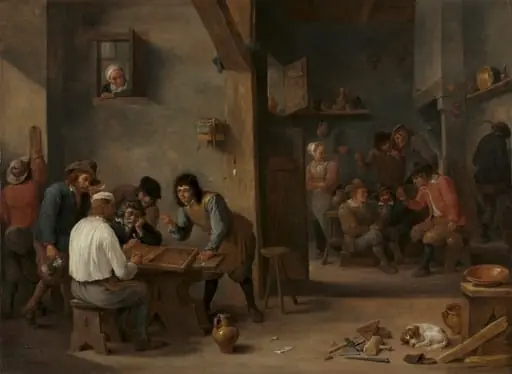
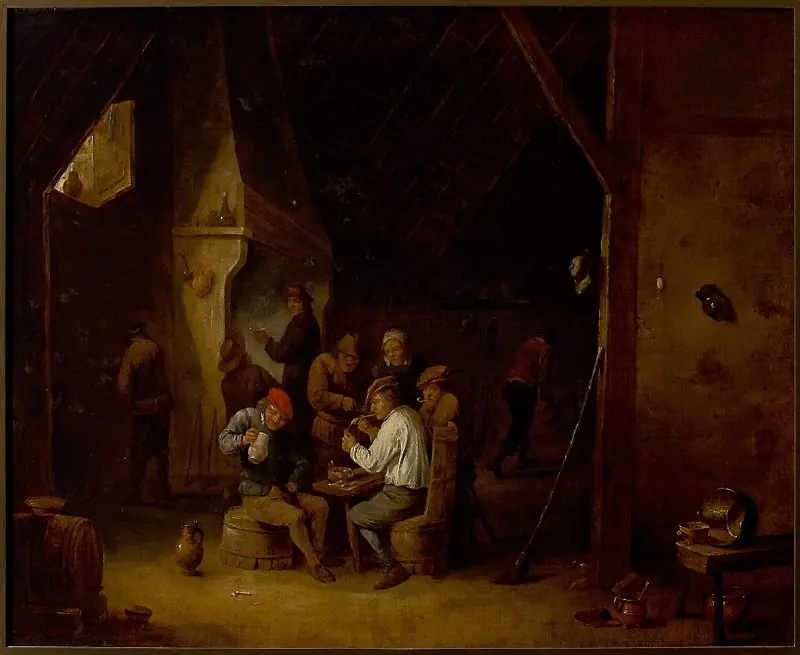
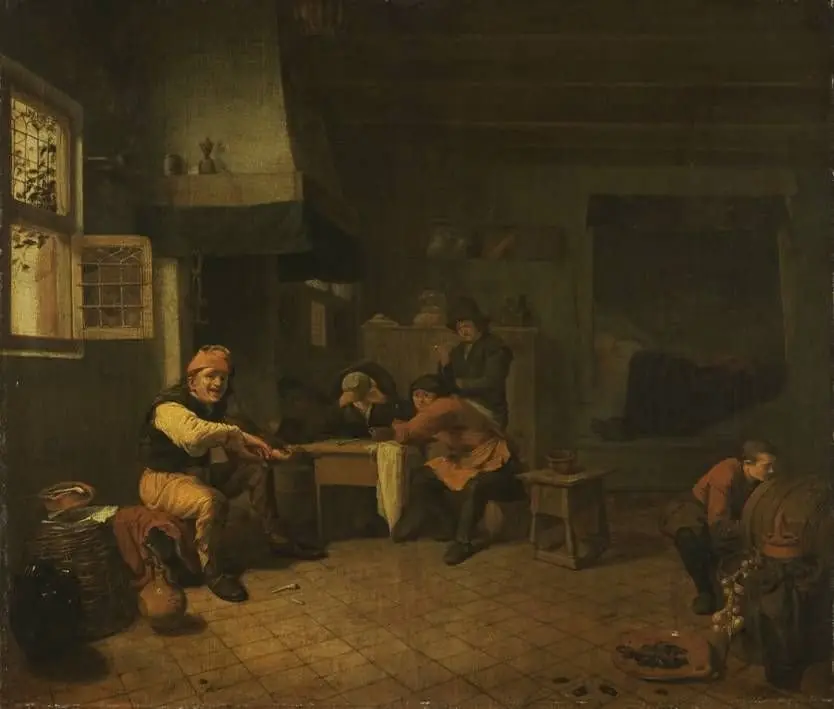
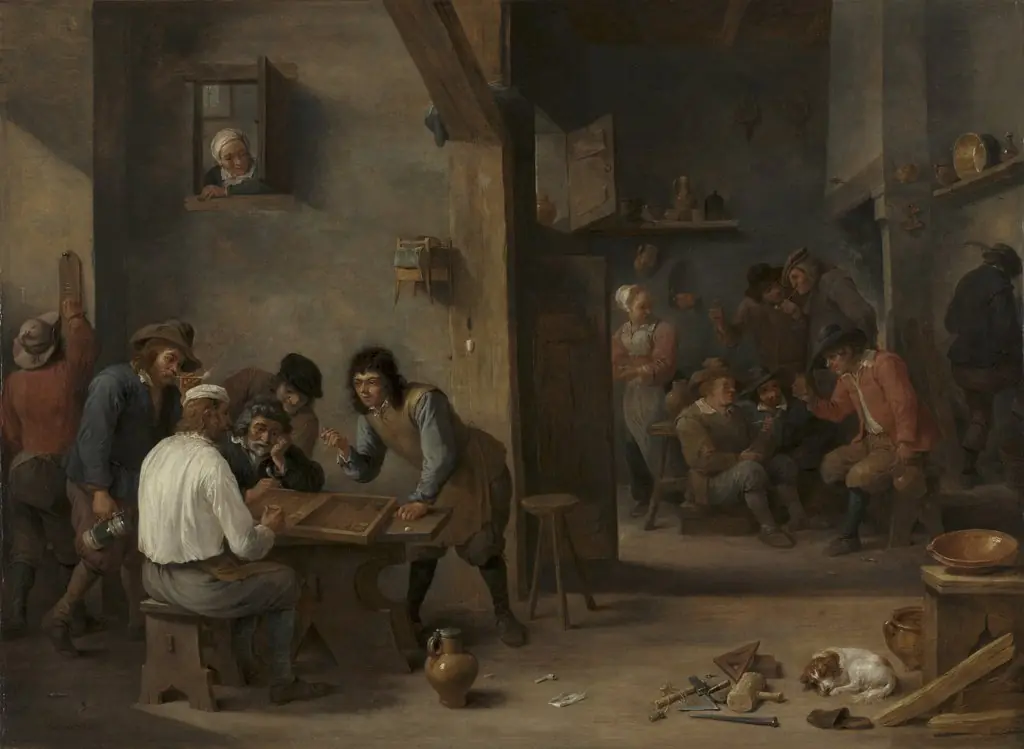
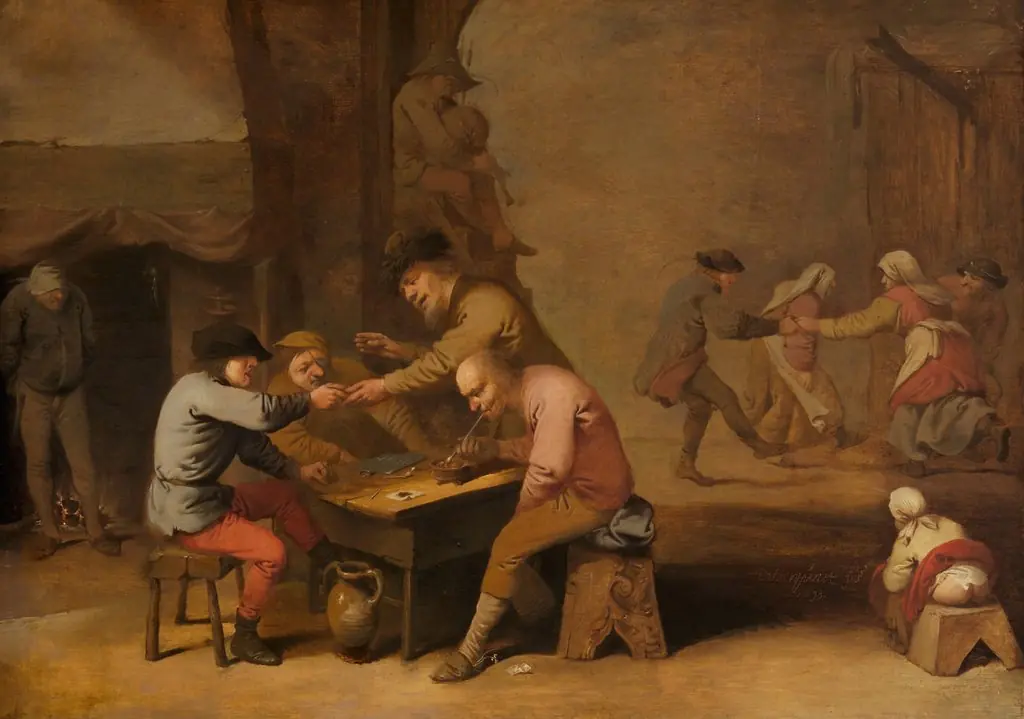
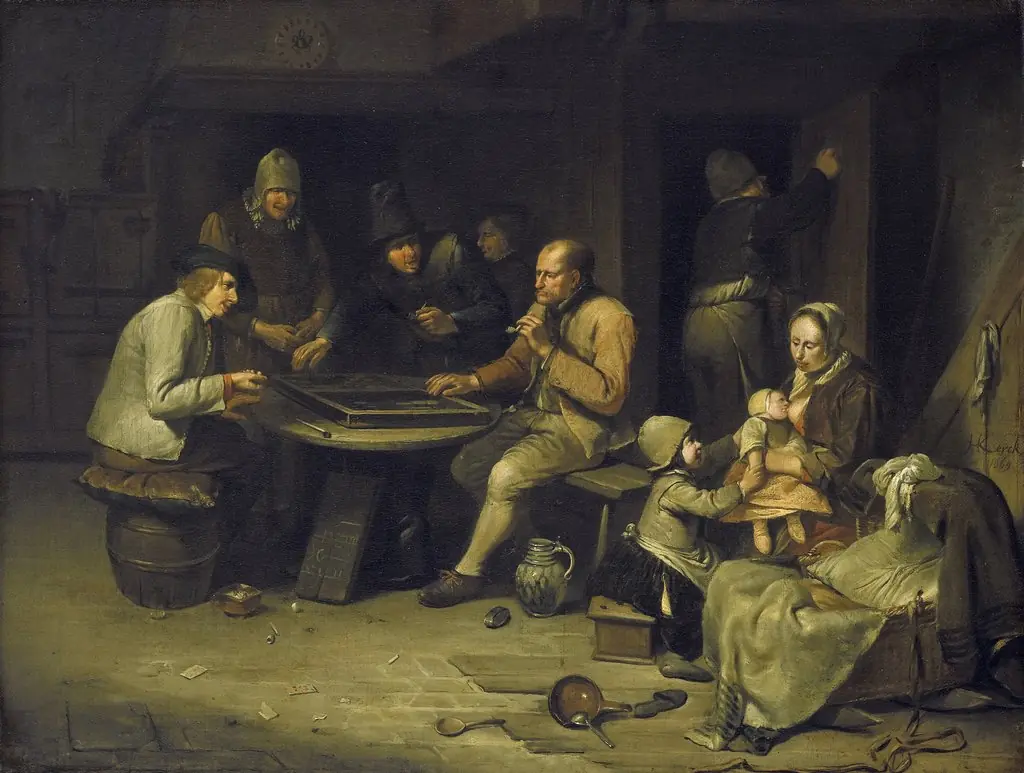
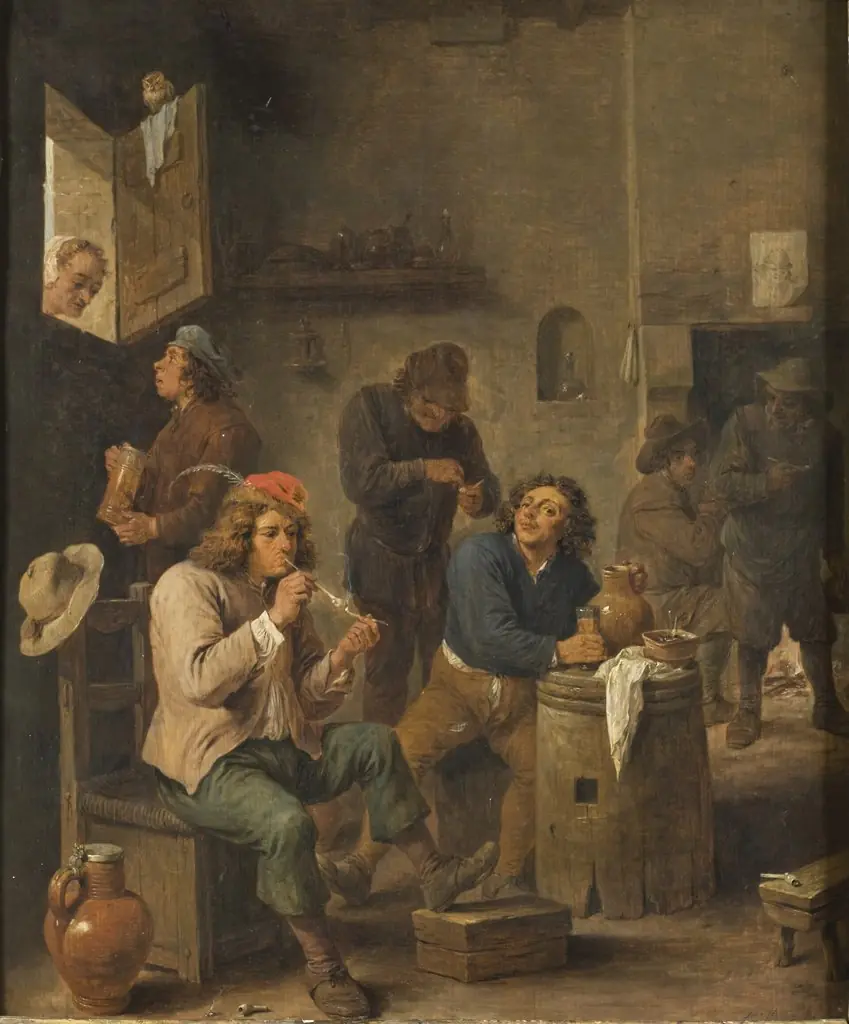
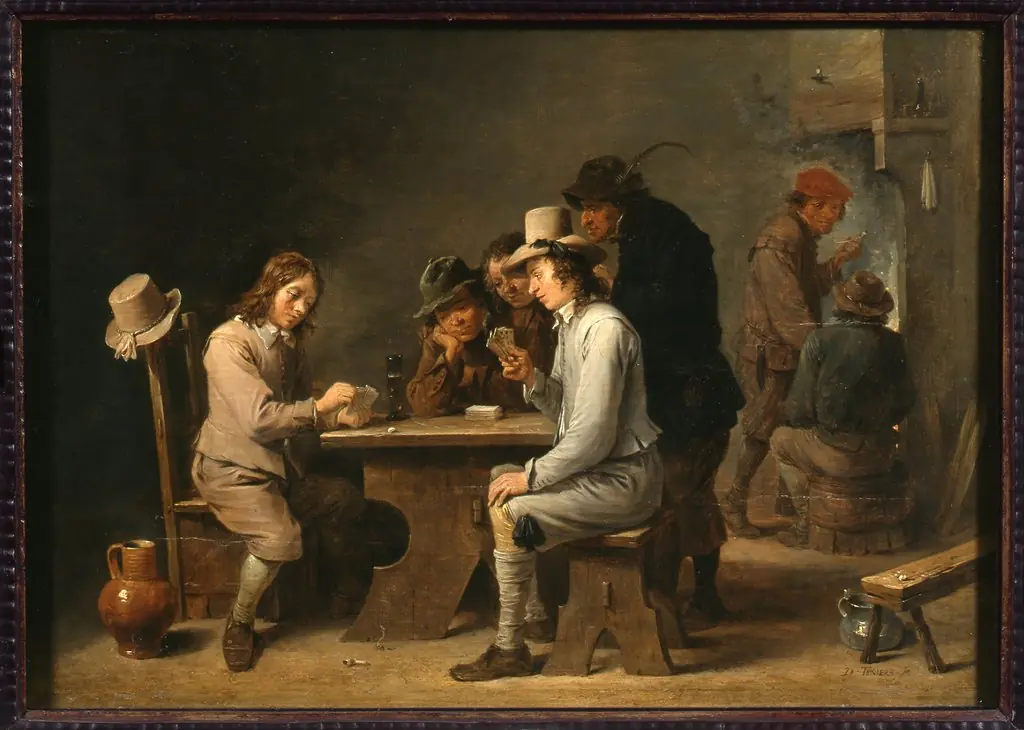
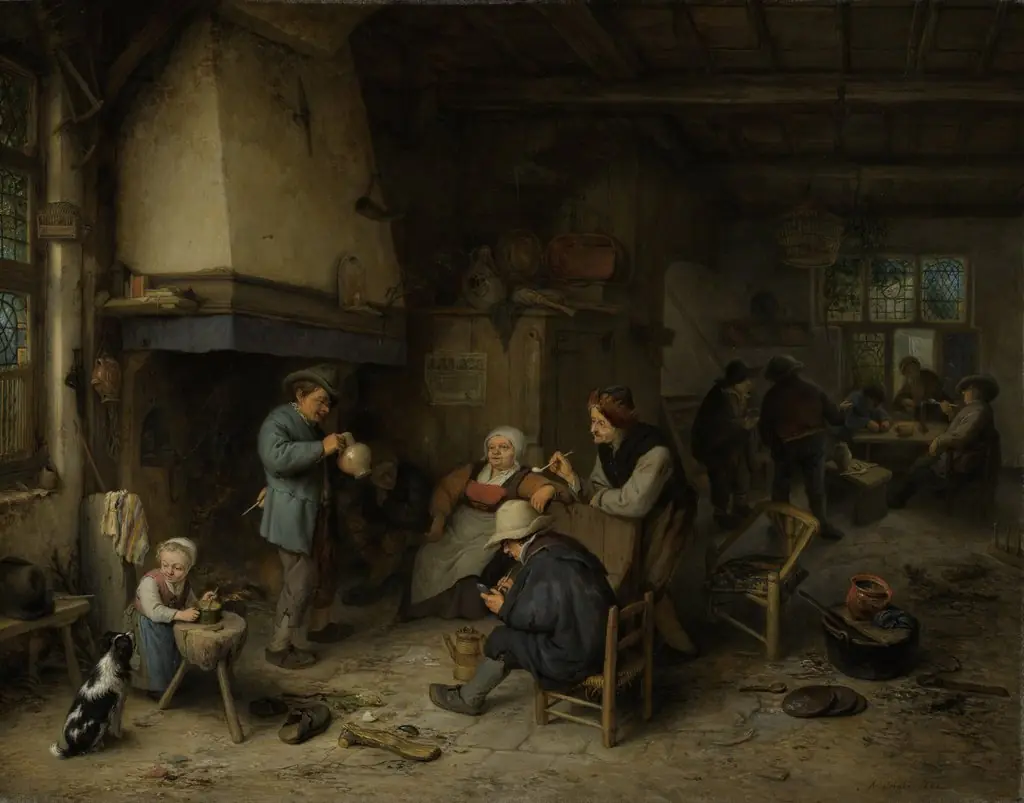
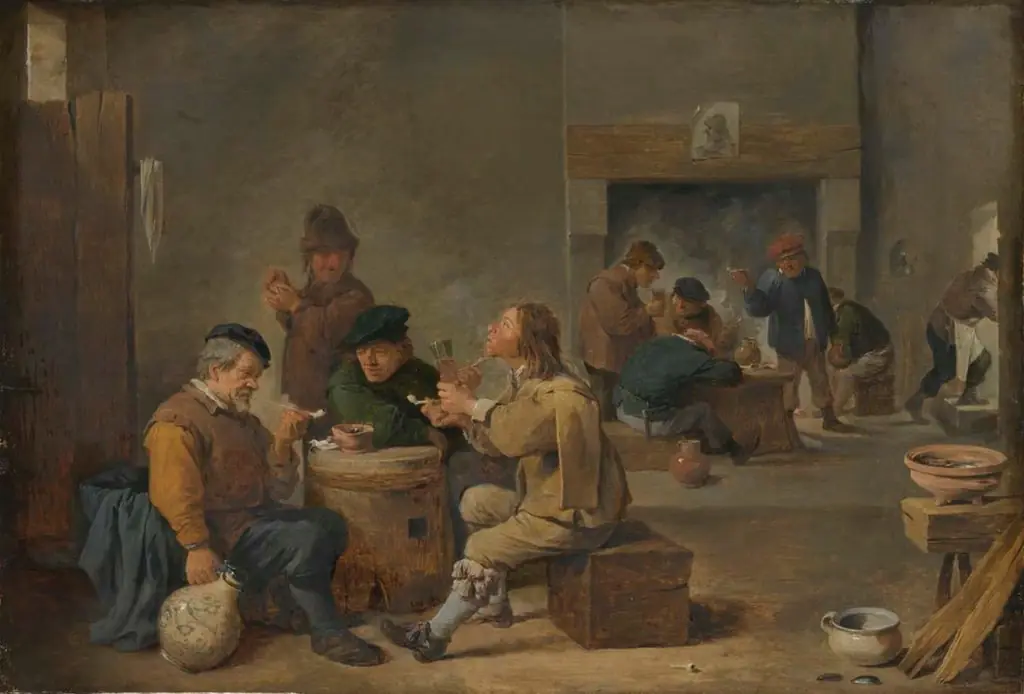
This painting shows a lively scene of men gathered in a room. In the foreground, three men are seated around a table, engaged in a game of cards. One man is standing behind them, while another is working at a forge in the background.
The men are dressed in attire typical of the 17th century, with hats, vests, and breeches. The room is dimly lit, with the only light source coming from the forge. The atmosphere appears to be one of camaraderie and leisure.
The use of chiaroscuro in this painting creates a sense of depth and volume, drawing the viewer's eye to the central figures. The artist's skillful use of light and shadow adds to the overall sense of warmth and conviviality in the scene. To learn more about the artist's techniques, look up chiaroscuro.
Overview
Johannes Natus painted An Interior with Card Players and a Blacksmith in 1661 using oil on canvas. The work is part of the Victoria and Albert Museum’s collection. It depicts a domestic interior where a group of men are engaged in leisure and labor, framed by a single light source that illuminates the scene.
Subject & Meaning
The composition centers on three figures seated at a table, absorbed in a card game, while a fourth man stands nearby and a blacksmith works at a forge in the background. The attire—hats, vests, breeches—places the participants firmly in the 17th‑century milieu, suggesting a moment of camaraderie among working‑class men.
Technique & Style
Natus employs chiaroscuro to model forms, allowing the glow from the forge to cast deep shadows across the room. This contrast creates a sense of volume and directs attention toward the players. The brushwork balances detail in the figures’ clothing with broader tonal shifts that convey the warm, intimate atmosphere.
History & Provenance
Created in 1661, the painting entered the Victoria and Albert Museum’s holdings at an unspecified date, where it remains on display. No records indicate earlier ownership beyond the artist’s workshop, and the work has been referenced in catalogues of Dutch‑influenced genre painting.
Context
The scene reflects a common 17th‑century genre motif that juxtaposes leisure activities, such as card playing, with manual labor, exemplified by the blacksmith’s forge. This contrast underscores everyday life’s dual aspects—social interaction and work—while the limited lighting echoes the interior settings favored by Dutch and Flemish painters of the period.
Artist & collection