Artwork
New England Landscape
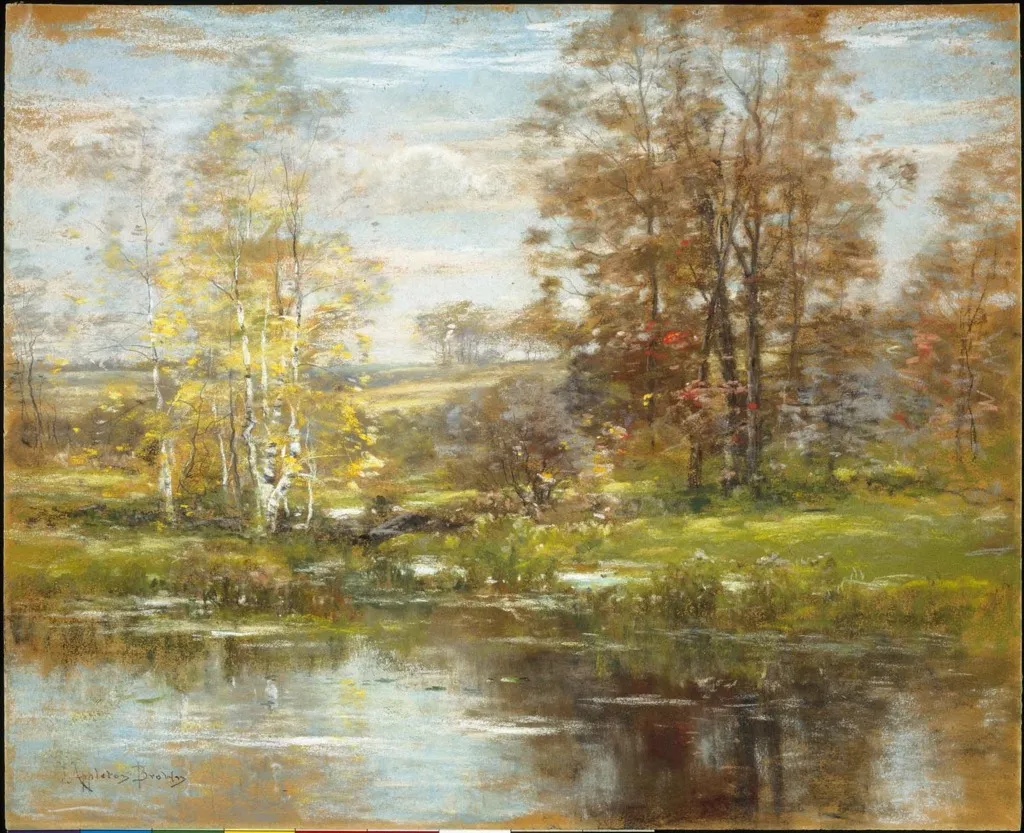
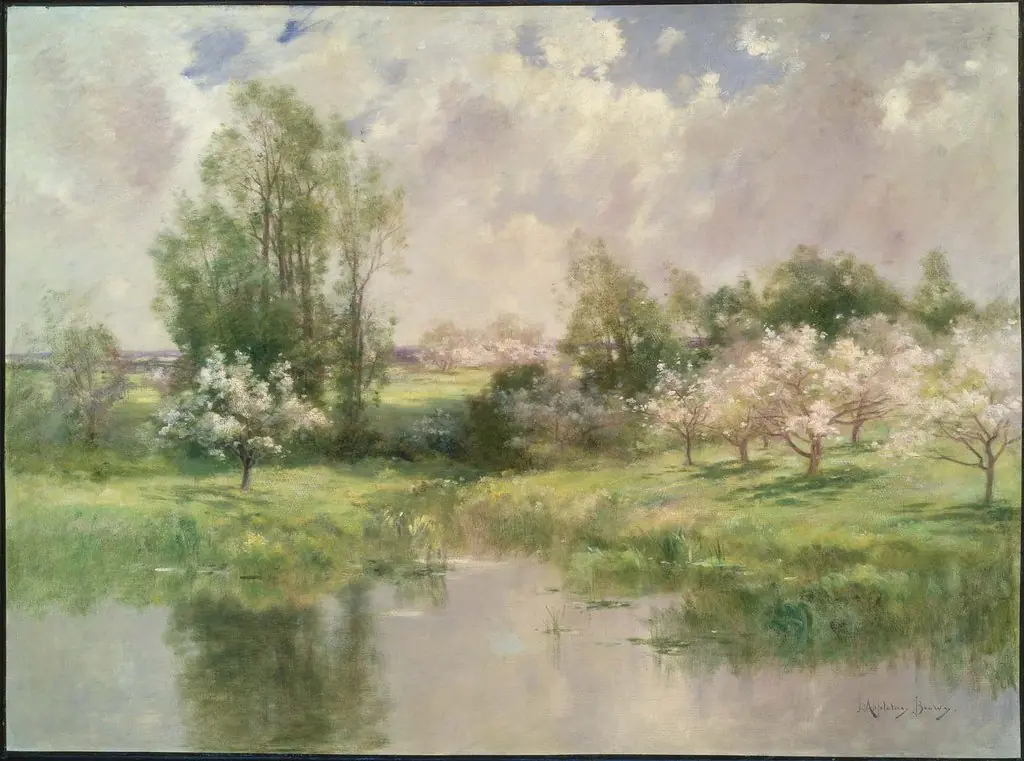
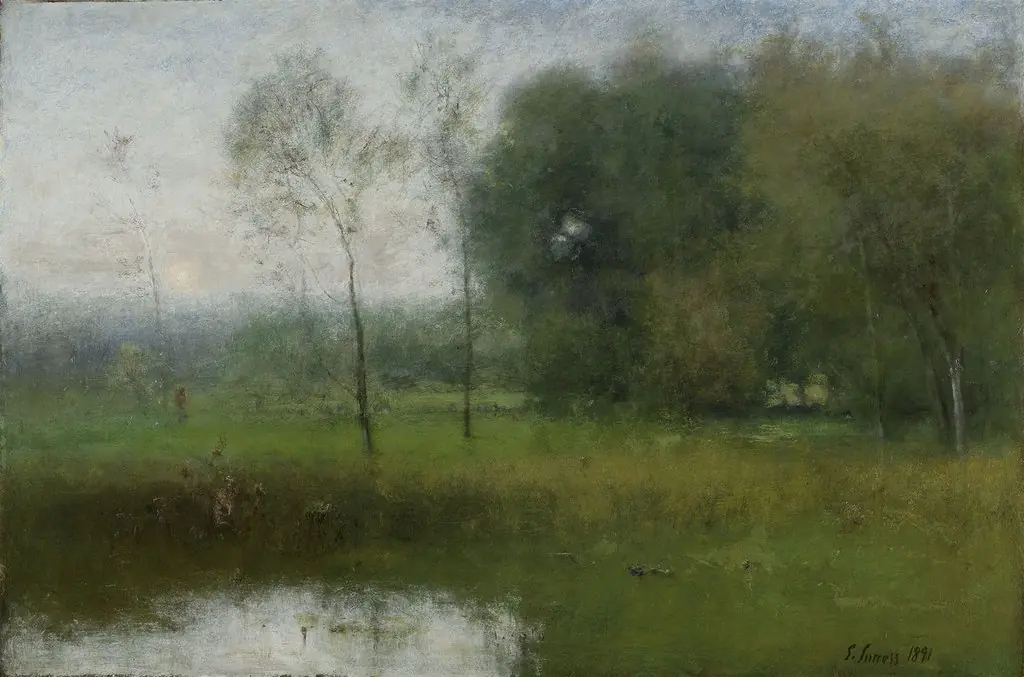
New England Landscape is an unspecified painting by the American Impressionist artist John Appleton Brown. It dates from 1894 and is held in the collection of the Museum of Fine Arts Boston.
About this work
Overview
A soft, pale sky merges with distant hills, creating a serene atmosphere that reflects the artist’s affinity for the region’s seasonal light.
John Appleton Brown’s 1894 work *New England Landscape* captures a tranquil woodland setting in the northeastern United States. The composition centers on a modest pond edged by slender birch trunks, their pale bark contrasting with the darker foliage beyond. A soft, pale sky merges with distant hills, creating a serene atmosphere that reflects the artist’s affinity for the region’s seasonal light.
Subject & Meaning
The scene presents a quiet forest tableau where water and trees interact under a gentle light. Birch trees, some still leafless and others just beginning to show yellow buds, frame the pond, while deeper woods display a mix of green and brown tones punctuated by bright red berries. The subtle interplay of illumination and shadow suggests a fleeting moment of early autumn, emphasizing nature’s quiet cycles.
Technique & Style
Brown employs loose, rapid brushwork characteristic of American Impressionism, suggesting an outdoor, plein‑air approach. The paint is applied in thin, fluid strokes that convey the texture of bark, water ripples, and atmospheric haze. Light is rendered with a delicate touch, brightening patches of water and foliage while preserving cooler, shadowed areas, creating a balanced tonal contrast without heavy impasto.
History & Provenance
Born in West Newbury, Massachusetts, Brown studied with French painter Emile Lambinet before establishing a career in Boston, where he exhibited regularly. After moving to New York City in 1891, he continued to produce lyrical landscapes. *New England Landscape* entered the Museum of Fine Arts, Boston’s collection, where it remains part of the institution’s representation of late‑19th‑century American Impressionism.
Context
The painting reflects the broader trend of American artists adopting Impressionist techniques to depict regional scenery. Brown’s focus on New England’s seasonal transitions aligns with contemporaneous interests in capturing light and atmosphere. By portraying a modest, unadorned natural setting, the work contributes to the era’s shift away from grand historical subjects toward intimate, everyday landscapes.
Artist & collection
Artist
John Appleton Brown (July 12, 1844 – January 18, 1902) was an American landscape painter working largely in pastels and oils, born in West Newbury, Massachusetts.

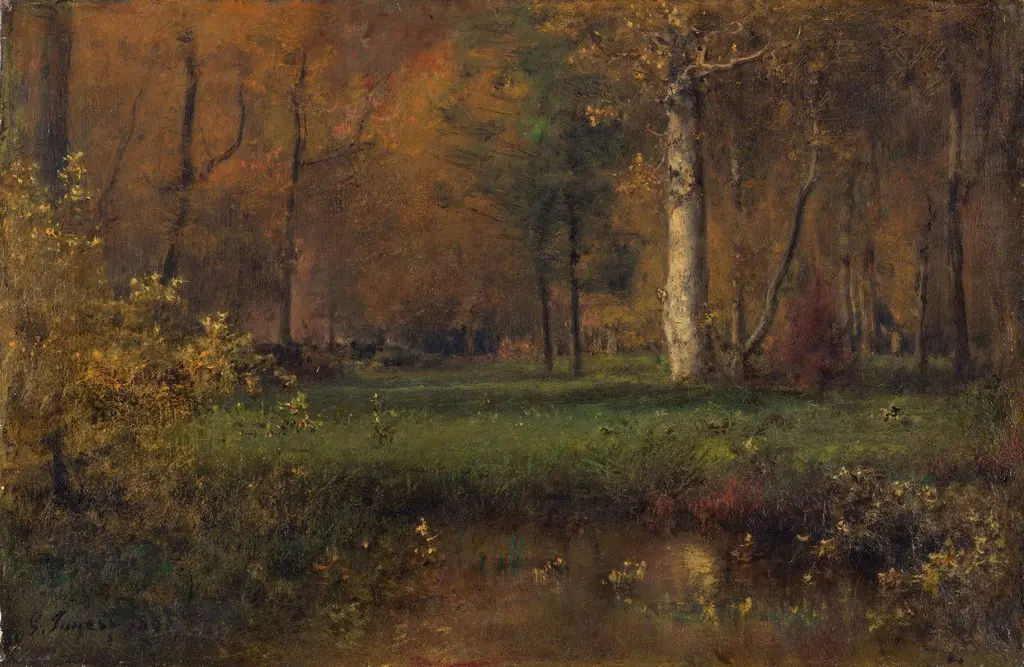 Landscape with Yellow Bush
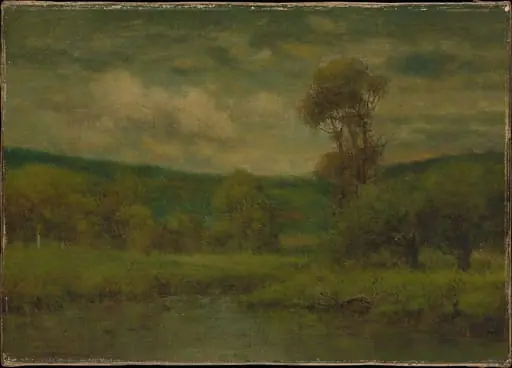 Landscape
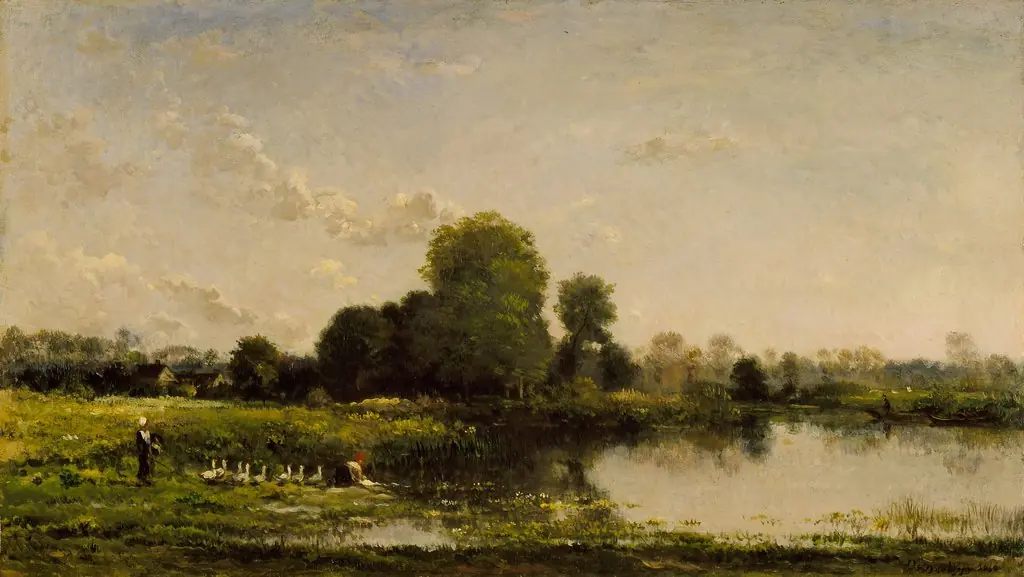 Riverbank with Fowl
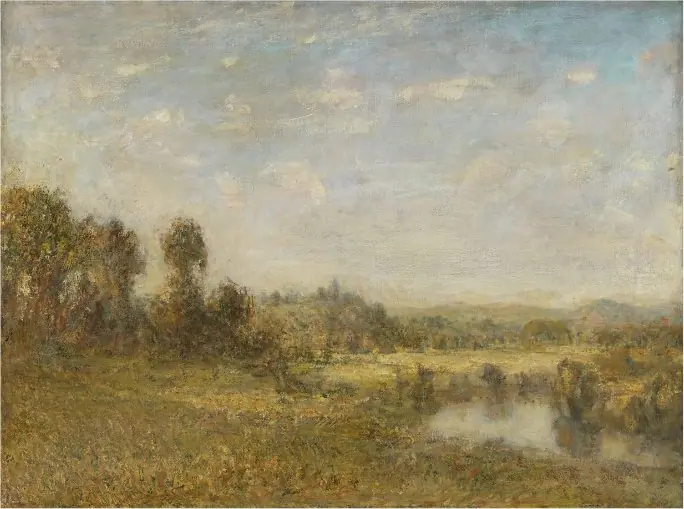 A Country Scene with Pond
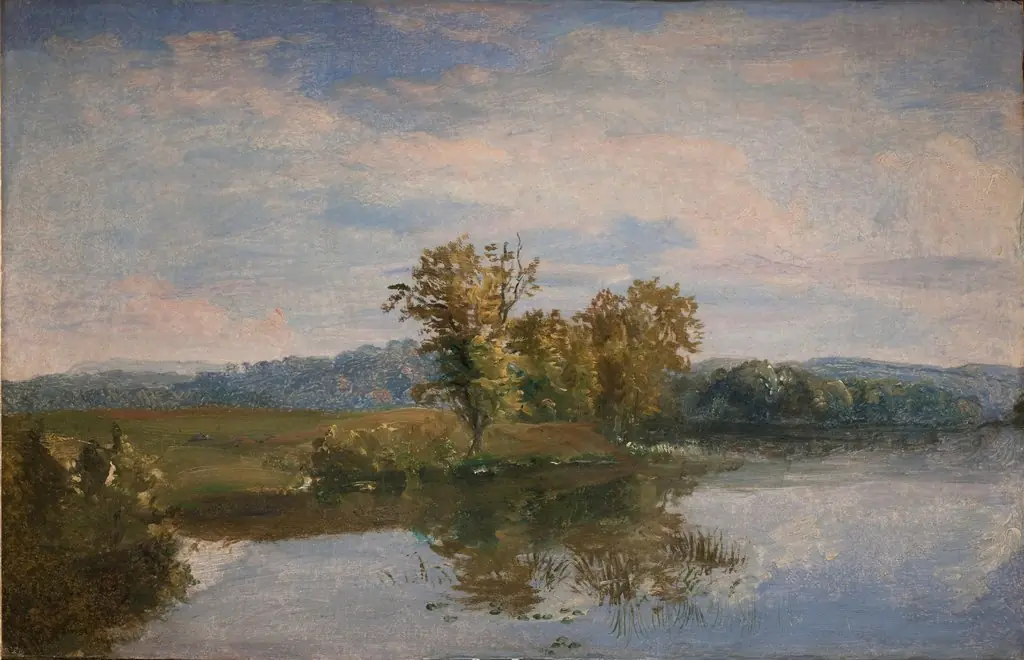 A View of Lake Vejl near Silkeborg, Jutland
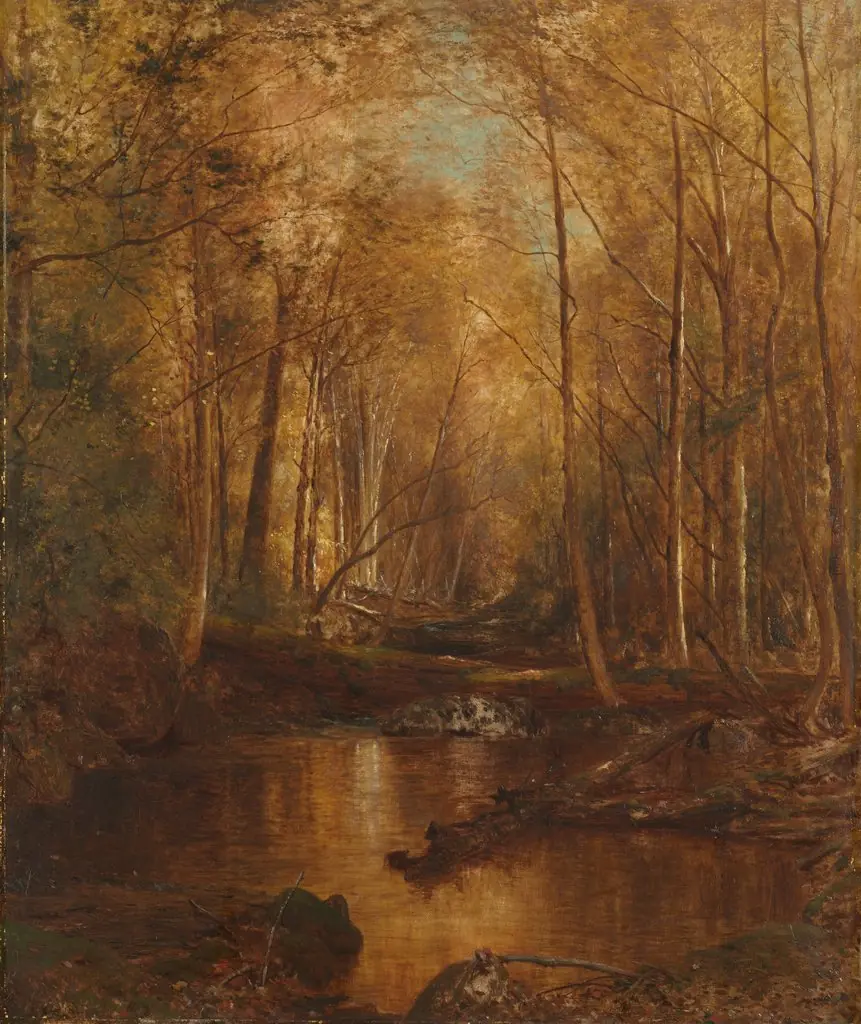 Autumn in the Catskills
 Gray Day on the Esopus
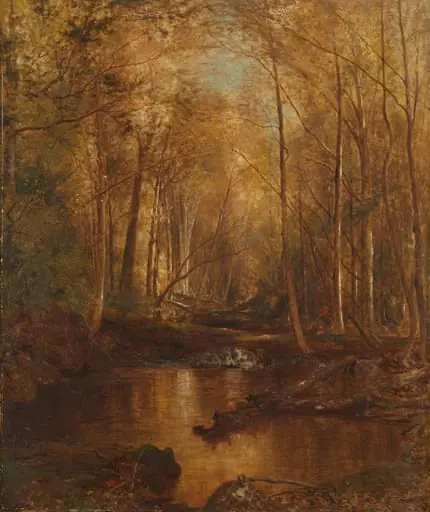 Autumn in the Catskills
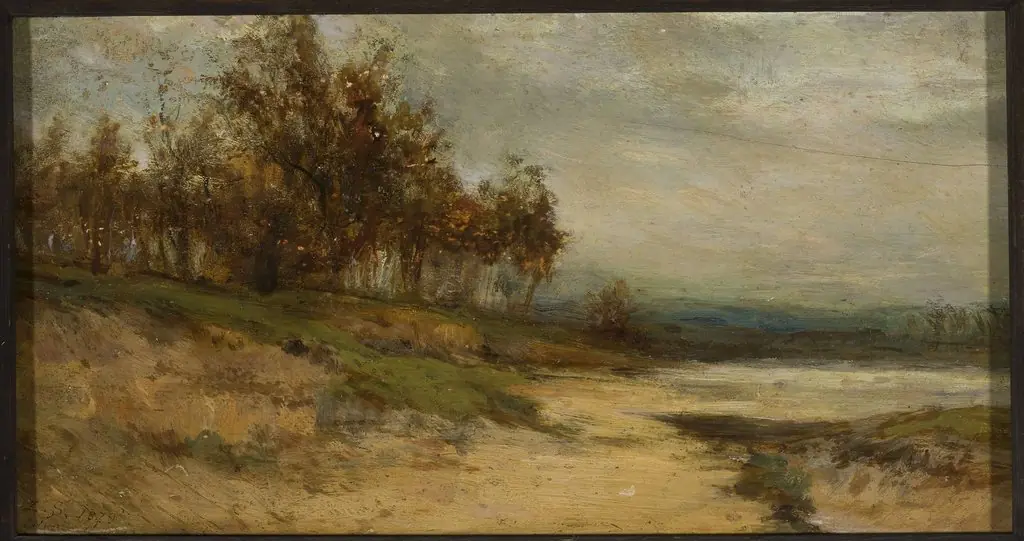 Landscape with a bunch of trees
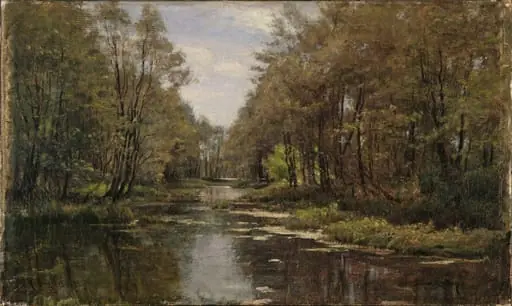 Kaivopuiston lammikko
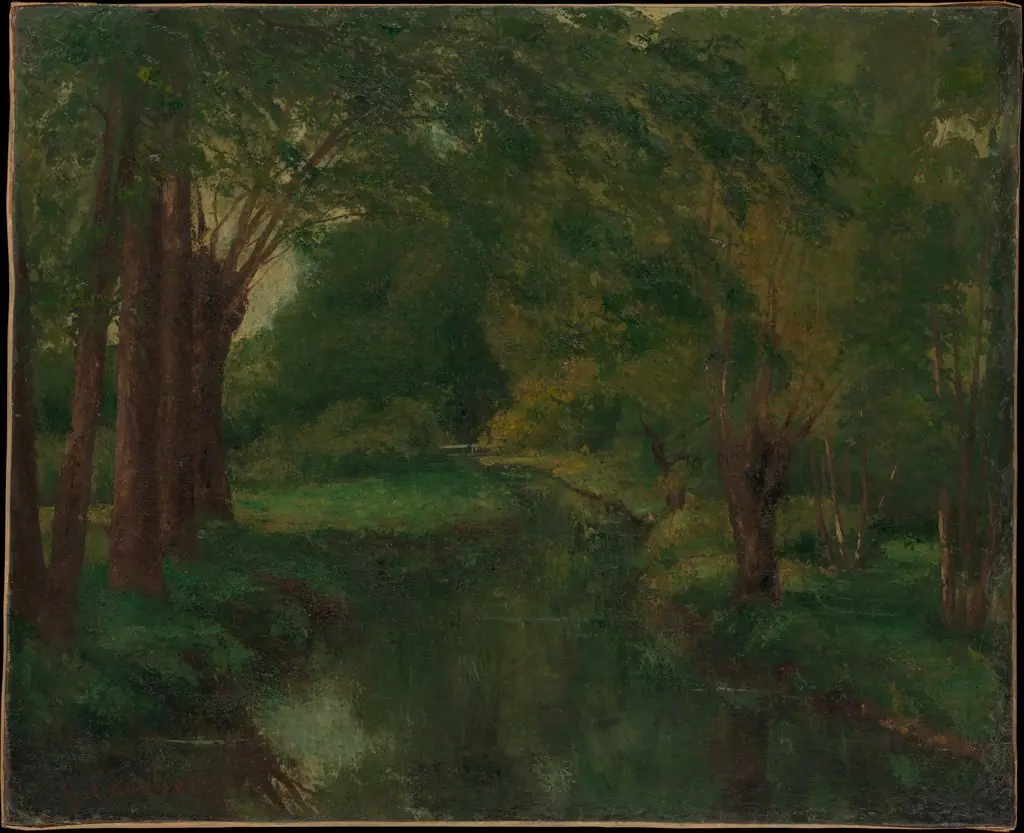 A Brook in a Clearing (possibly "Brook, Valley of Fontcouverte; Study")
 New Jersey Landscape