Artwork
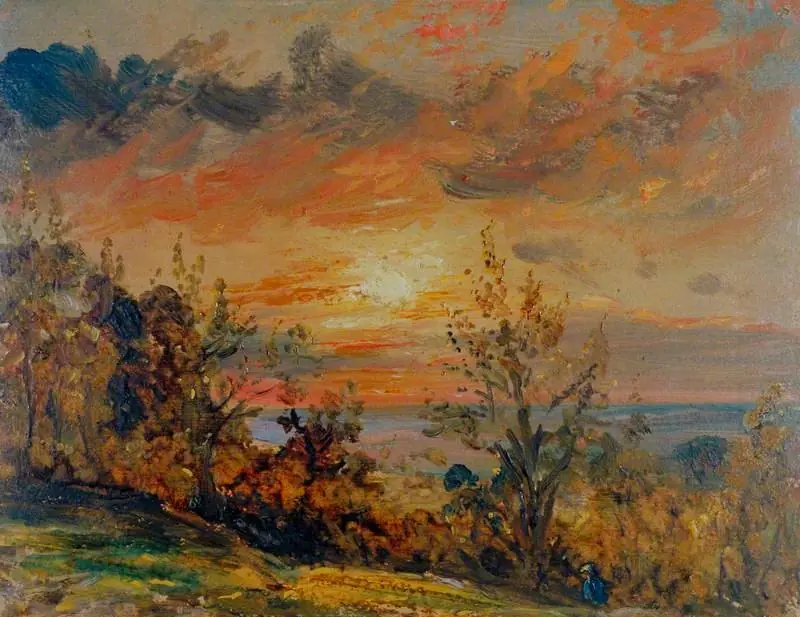
A Landscape near East Bergholt, Evening
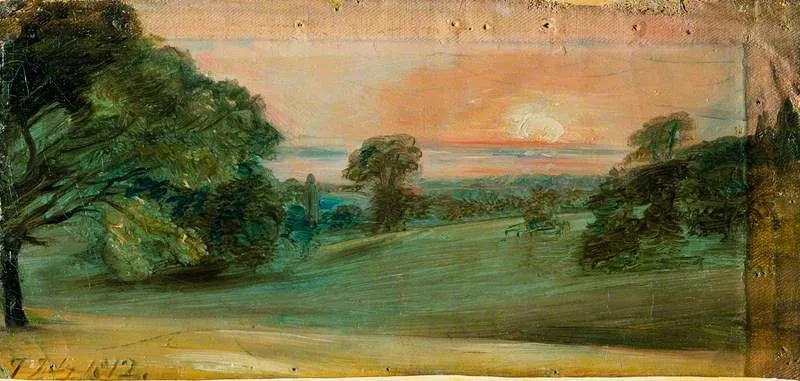
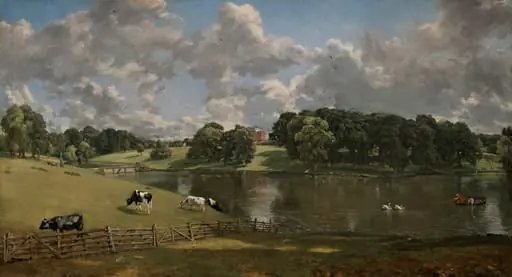
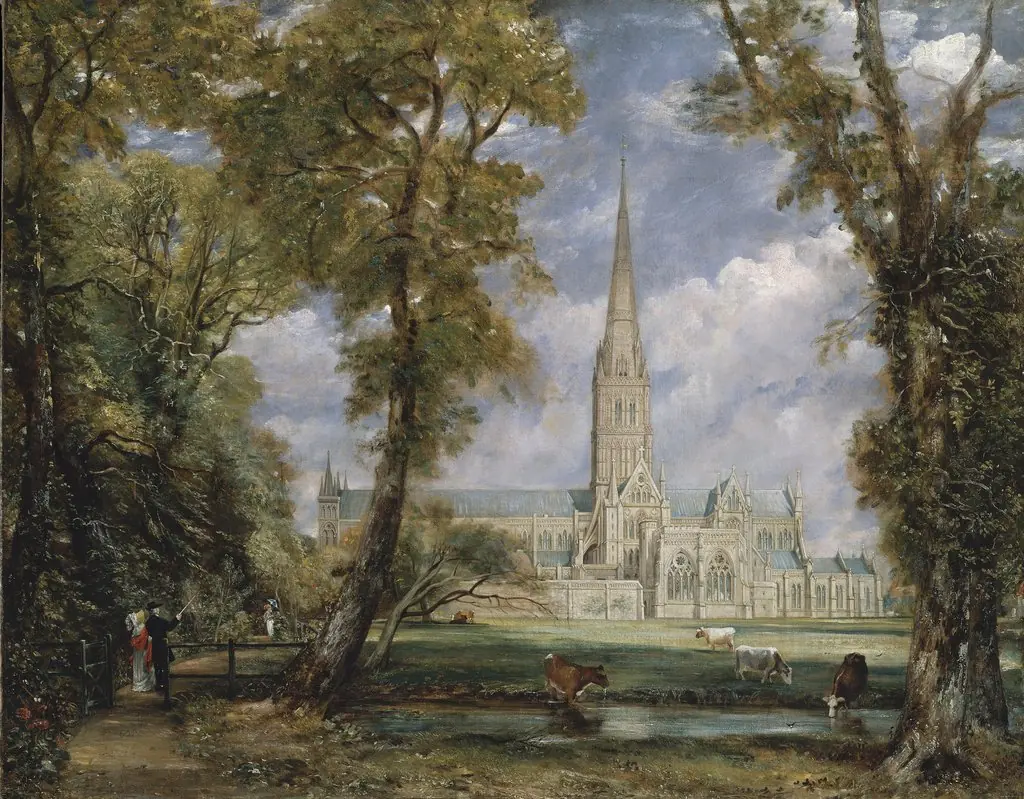
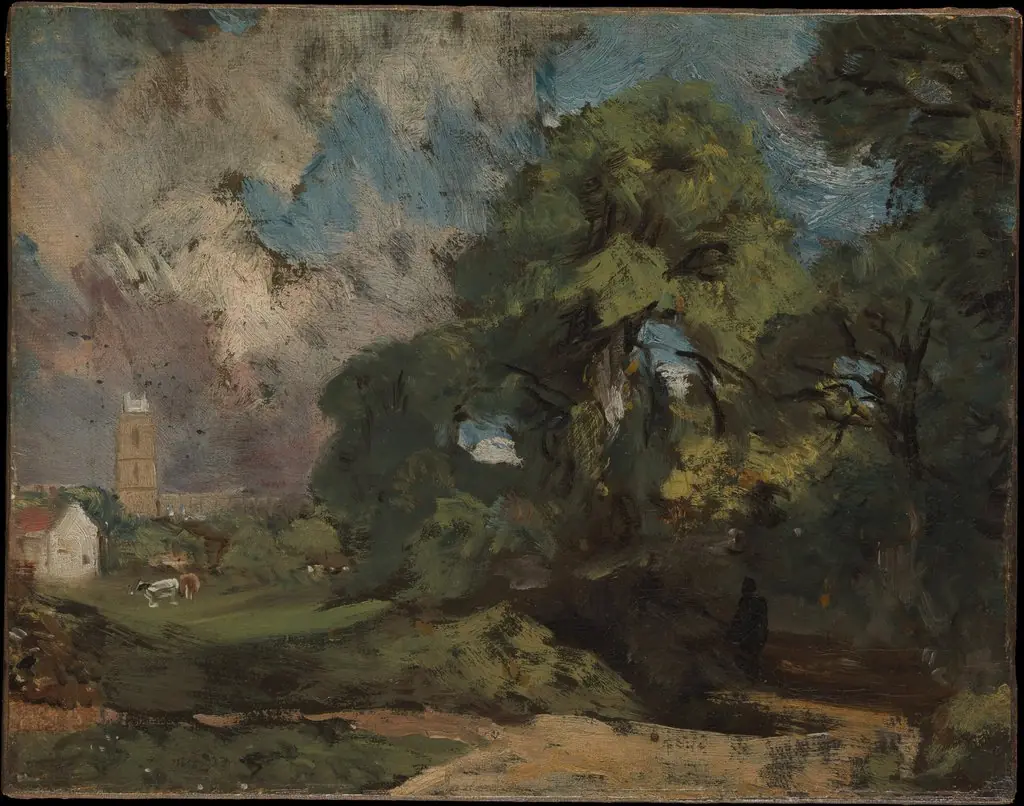
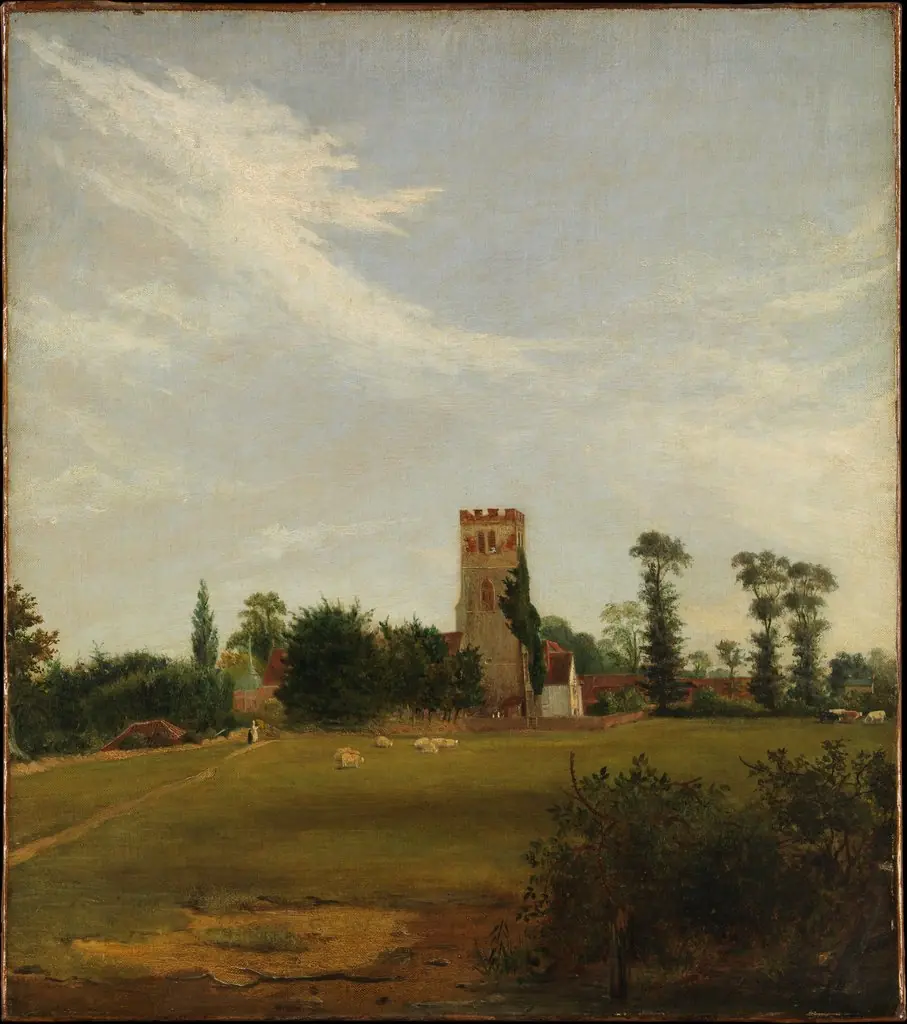
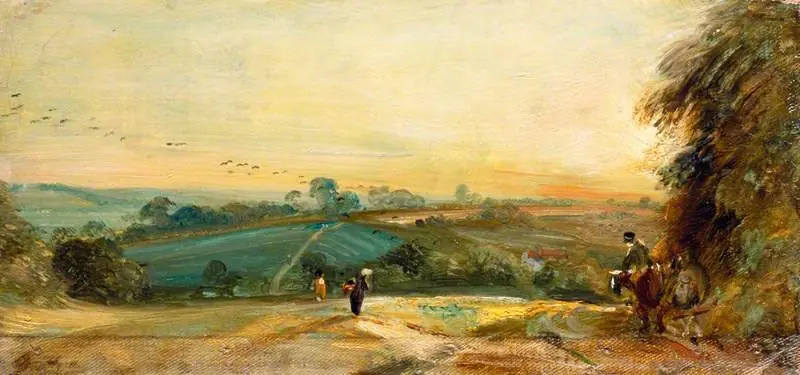
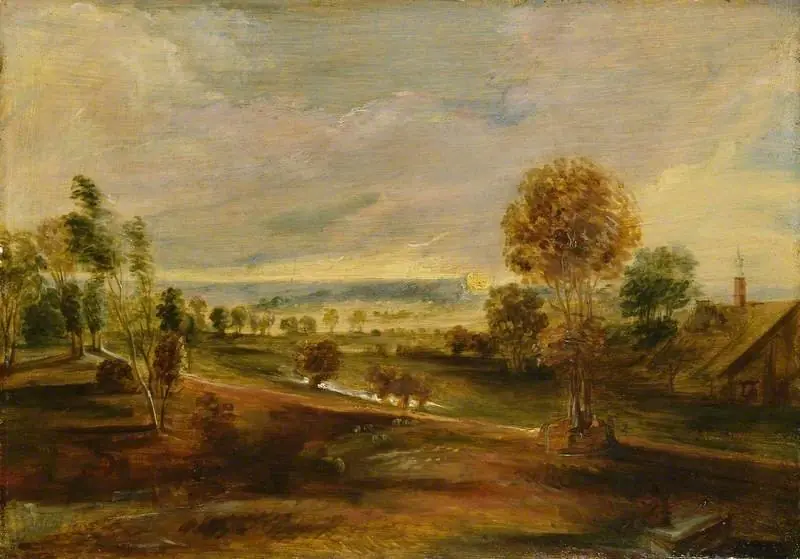
A Landscape near East Bergholt, Evening is an oil painting by the British Romanticist artist John Constable. It dates from 1812 and is held in the collection of the Victoria and Albert Museum.
About this work
Overview
Painted in 1812, this oil-on-canvas work by John Constable captures a quiet evening scene near his childhood home in East Bergholt, Suffolk. It belongs to a series of early landscapes in which he sought to record the natural world with close observation. The painting is now part of the Victoria and Albert Museum’s collection, where it remains one of the earliest examples of his mature style.
Subject & Meaning
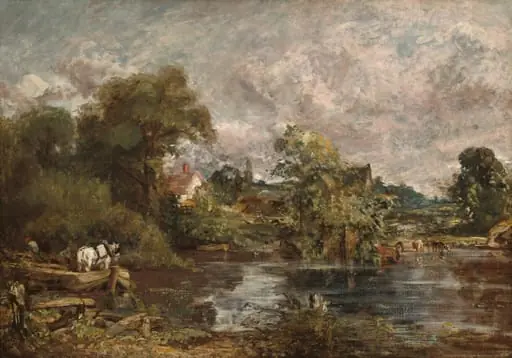
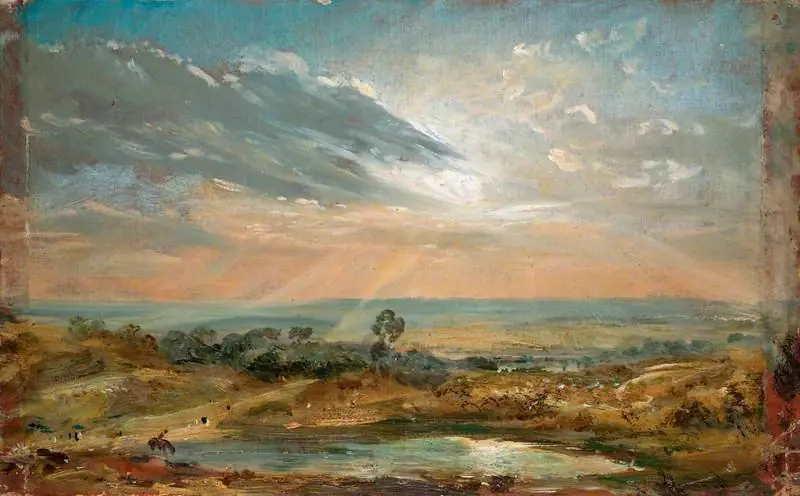
The scene presents a tranquil rural vista at dusk, centered on a large tree whose limbs extend diagonally across the composition. Behind it, a low hill descends toward a still body of water that mirrors the fading light. The warm sky, suffused with pink and orange, suggests the moment just after sunset. There is no human presence, emphasizing nature’s quiet endurance and the passage of time.
Technique & Style
His approach prioritizes direct observation over idealized convention, reflecting his commitment to truth in landscape representation.
Constable applied oil paint with deliberate, visible brushwork to convey texture in foliage, water, and sky. Rather than smoothing transitions, he layered tones to suggest atmospheric depth. The composition uses the tree as a structural anchor, guiding the eye toward the horizon where light and land meet. His approach prioritizes direct observation over idealized convention, reflecting his commitment to truth in landscape representation.
History & Provenance
Created during Constable’s formative years, the painting remained in his possession until his death. It passed through private hands before entering the Victoria and Albert Museum’s collection in the 19th century. Its survival as an intact early work offers insight into his evolving technique and personal connection to the Suffolk countryside, a recurring theme throughout his career.
Context
In the early 1810s, British landscape painting was dominated by romanticized or classical ideals. Constable diverged by focusing on ordinary, local scenes rendered with scientific attention to light and weather. This work reflects his belief that nature, in its unaltered state, held intrinsic artistic value — a stance that later influenced the Barbizon School and French Impressionists.
Legacy
Though not widely recognized during his lifetime, this painting exemplifies Constable’s foundational role in shifting landscape art toward realism. His method of painting outdoors and capturing transient effects of light became central to later movements. Today, works like this are studied for their technical precision and emotional restraint, marking a quiet revolution in how nature was seen and painted.
Artist & collection
Artist
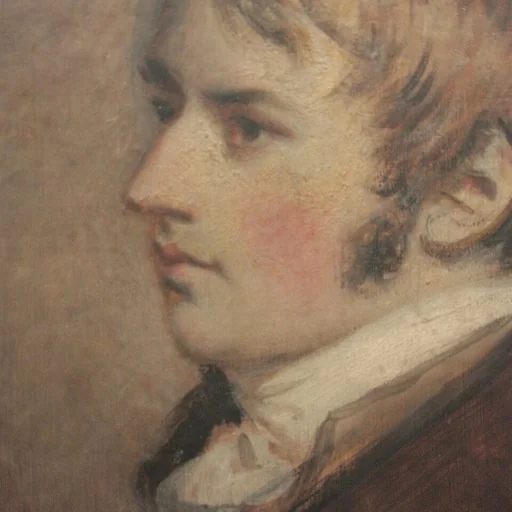
John Constable (; 11 June 1776 – 31 March 1837) was an English landscape painter in the Romantic tradition.