Artwork
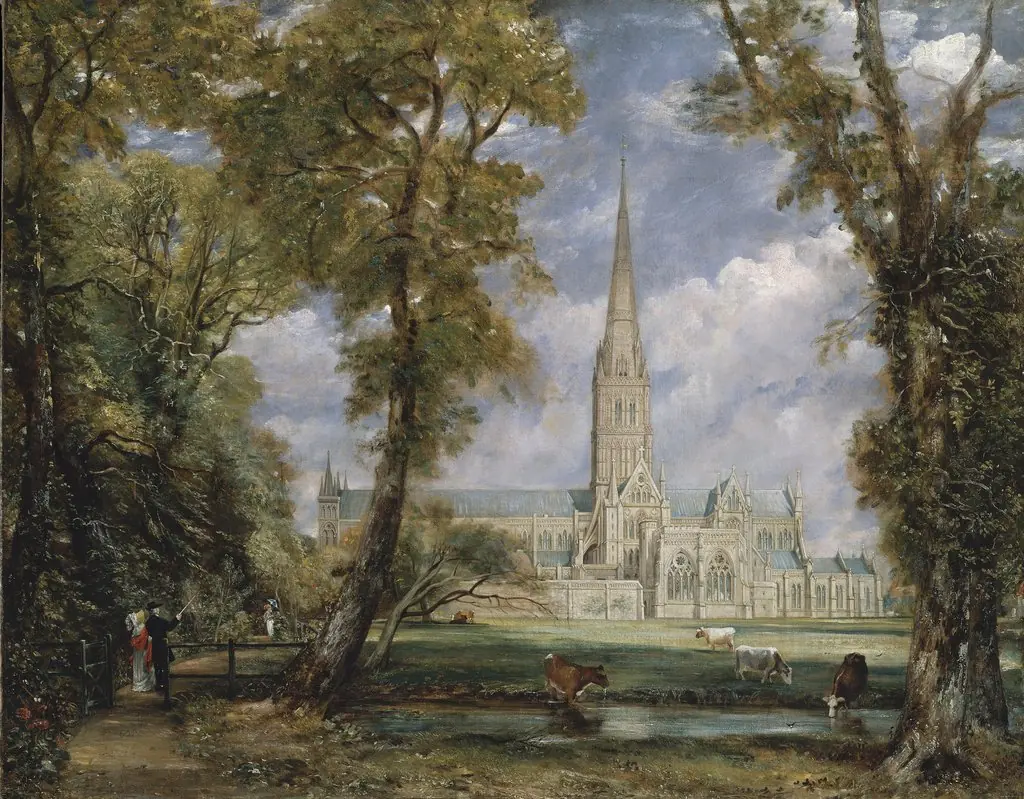
Salisbury Cathedral from the Meadows
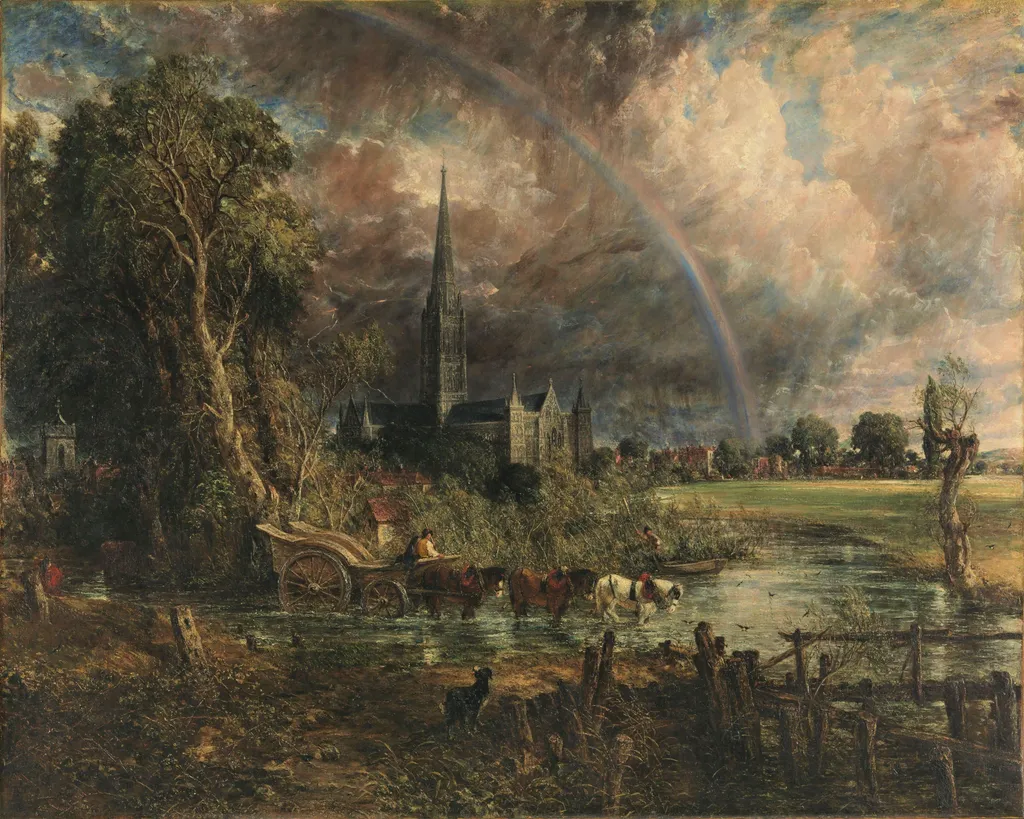
Salisbury Cathedral from the Meadows is an oil painting by the Impressionist artist John Constable. It dates from 1831 and is held in the collection of the Tate.
About this work
Overview
John Constable completed Salisbury Cathedral from the Meadows in 1831, three years after the death of his wife Maria. The oil painting presents a tranquil rural landscape dominated by the silhouette of Salisbury Cathedral viewed across the River Nadder. It is part of the collection at Tate Britain in London, displayed in the Clore gallery.
Subject & Meaning
The composition brings together agricultural and pastoral elements: a horse‑drawn cart traverses a shallow ford, while cattle and a sheepdog occupy the foreground. The cathedral’s spire rises in the distance, linking the everyday labor of the countryside with the enduring presence of the ecclesiastical landmark.
Technique & Style
Constable employs his characteristic loose brushwork, building up the sky and clouds with thick, impasto strokes that convey atmospheric movement. The handling of light creates a warm, natural glow across the water and fields, emphasizing the fleeting effects of weather and season.
History & Provenance
The work was first shown at the Royal Academy exhibition of 1831, after which Constable continued to refine it through 1833–34. It entered the Tate Britain collection later in the 20th century and remains on public view in the museum’s dedicated gallery for British art.
Legacy
Art historians Leslie Parris and Ian Fleming‑Williams have identified the painting as a high point in Constable’s career, noting its synthesis of landscape observation and emotional resonance. The piece is frequently cited as an exemplar of his mature style.
Own this work as a print
Artist & collection

Artist
John Constable (; 11 June 1776 – 31 March 1837) was an English landscape painter in the Romantic tradition.