Artwork
Pastures, Bacchus Marsh
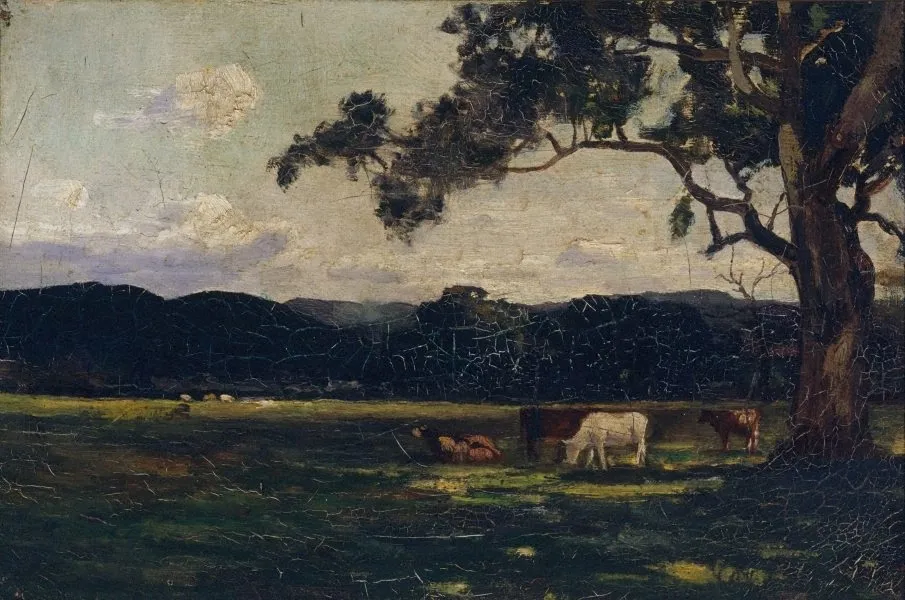
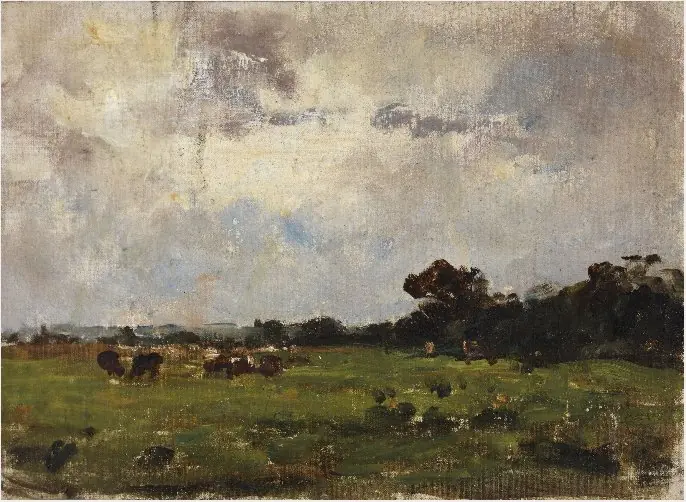
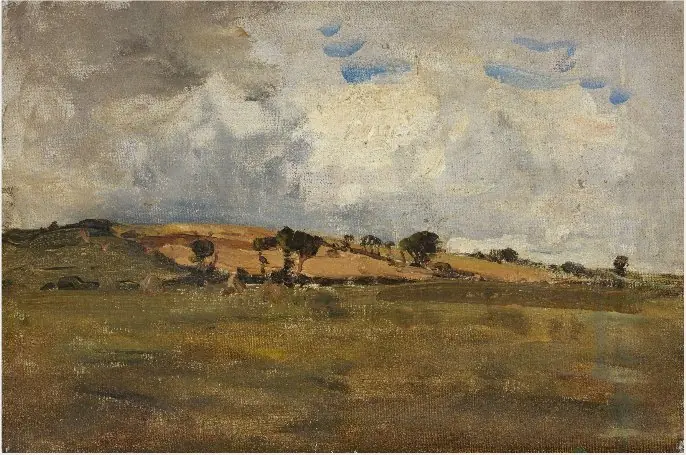
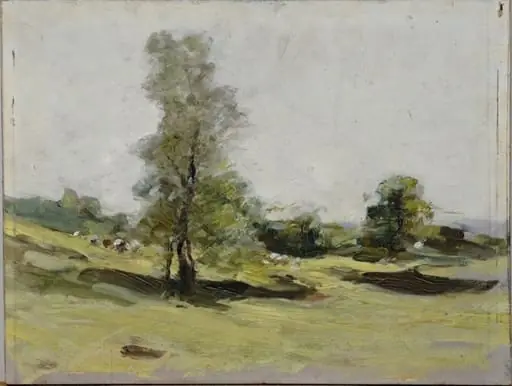
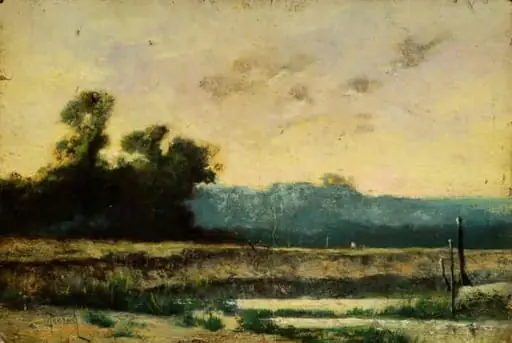
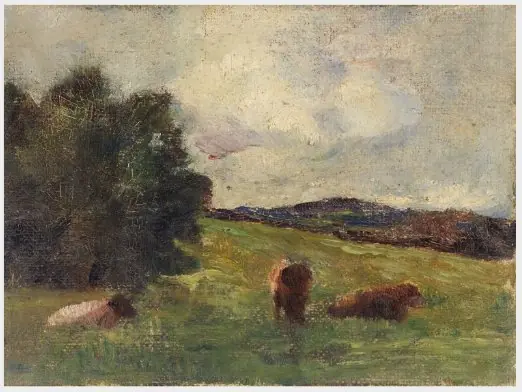
Pastures, Bacchus Marsh is an oil painting by the Impressionist artist John Ford Paterson. It dates from 1891 and is held in the collection of the Art Gallery of New South Wales.
About this work
Overview
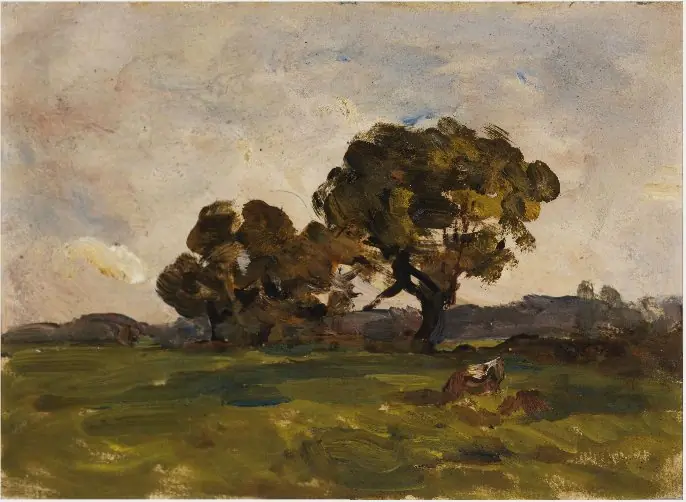
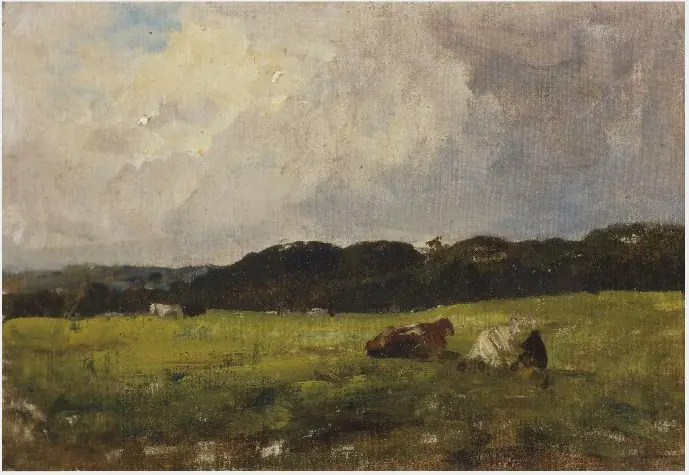
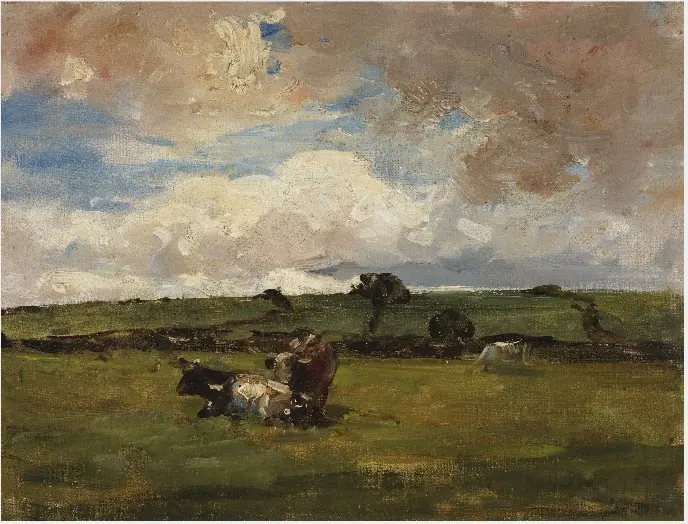
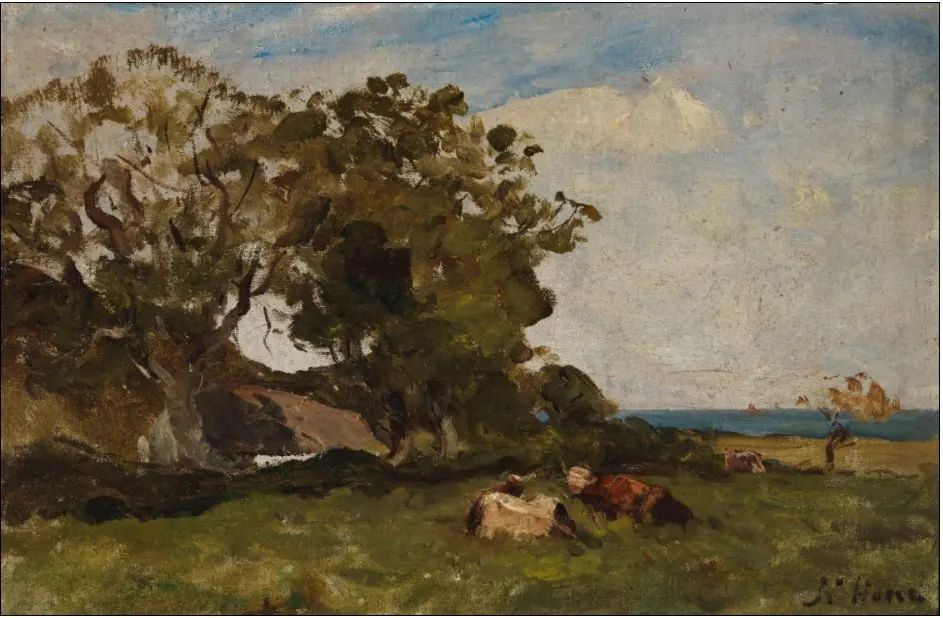
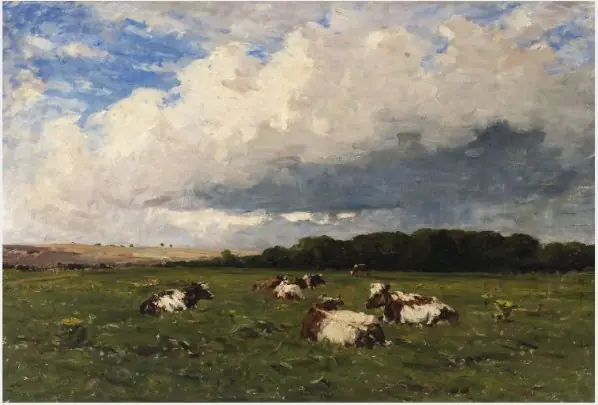
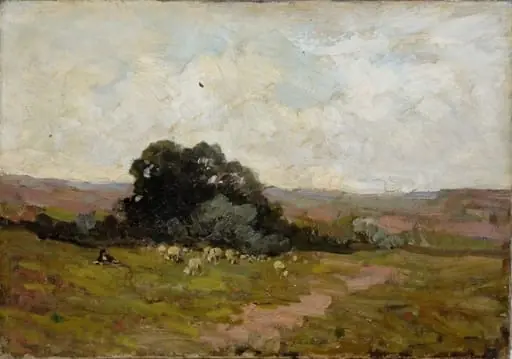
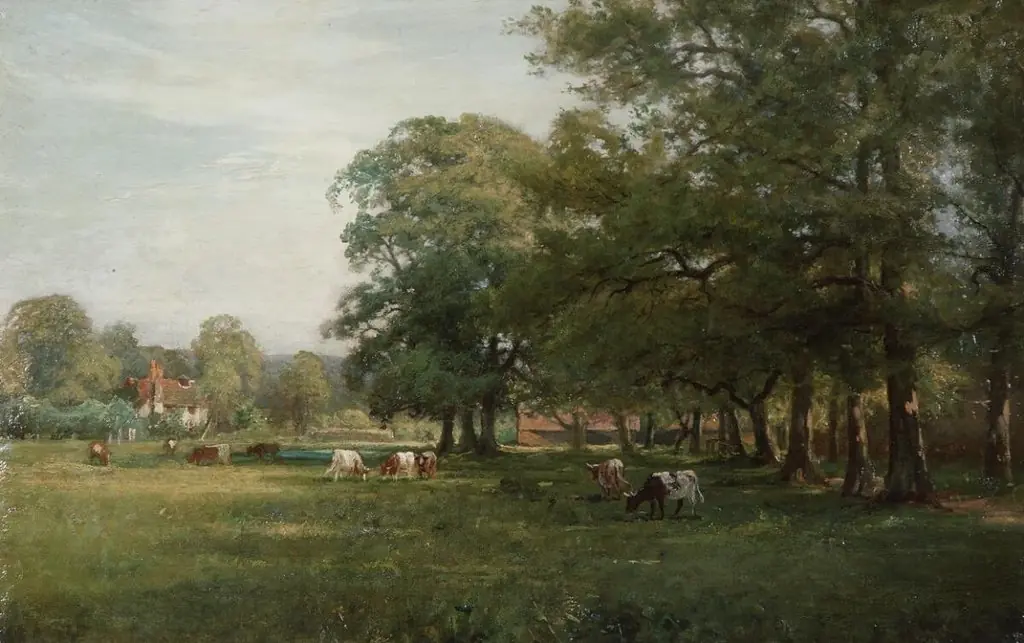
John Ford Paterson’s *Pastures, Bacchus Marsh* (c. 1891) presents a quiet Australian rural scene. A low‑lying pasture stretches toward distant hills, punctuated by a solitary tree and a few cows grazing under a cloud‑filled sky. The composition conveys a sense of openness and calm, typical of Paterson’s interest in the country’s natural environment.
Subject & Meaning
The work focuses on an everyday agricultural setting, emphasizing the relationship between land and livestock. By portraying the pasture without dramatic narrative, Paterson invites contemplation of the landscape’s inherent tranquility and the modest rhythms of farm life in late‑19th‑century Victoria.
Technique & Style
Executed in oil, the painting employs loose, visible brushwork that suggests atmospheric effects rather than precise detail. A muted palette of greens, browns, and soft grays creates depth, while the handling of light across the hills and sky reflects Paterson’s alignment with Impressionist concerns for fleeting illumination.
History & Provenance
Paterson, a Scottish‑born artist who settled in Australia, produced the piece during a period when he concentrated on depicting the Australian countryside. *Pastures, Bacchus Marsh* entered the collection of the Art Gallery of New South Wales, where it remains part of the institution’s holdings of late‑19th‑century Australian landscape painting.
Artist & collection
Artist
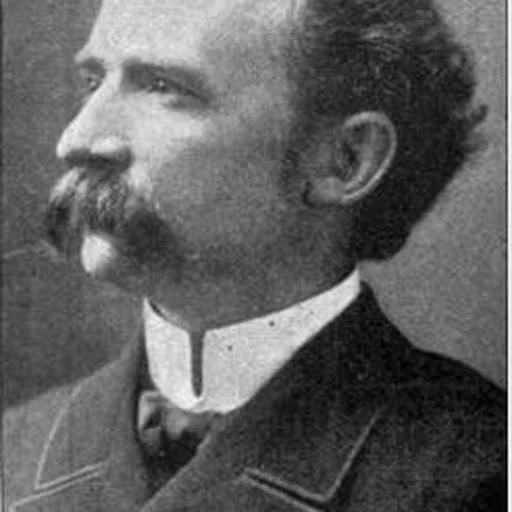
John Ford Paterson (1851, Dundee – 30 June 1912, Carlton), often referred to as Ford or J. Ford Paterson, was a Scottish-born Australian artist. He specialised in landscapes.