Artwork
Seed Time
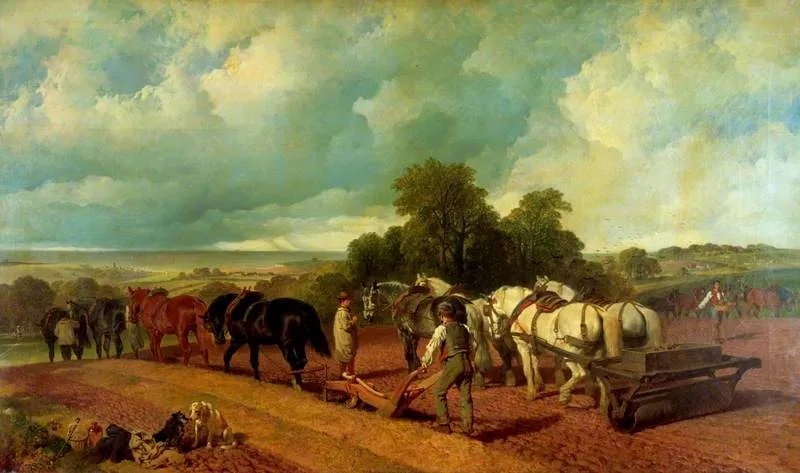
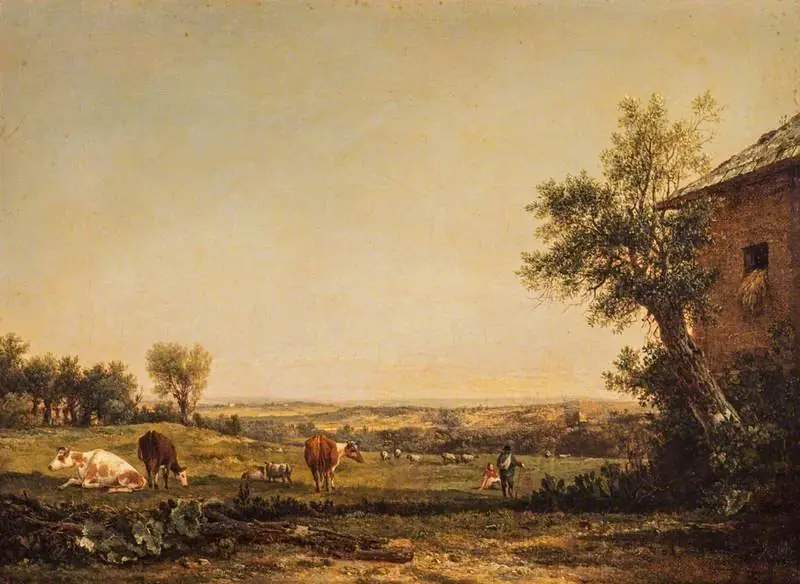
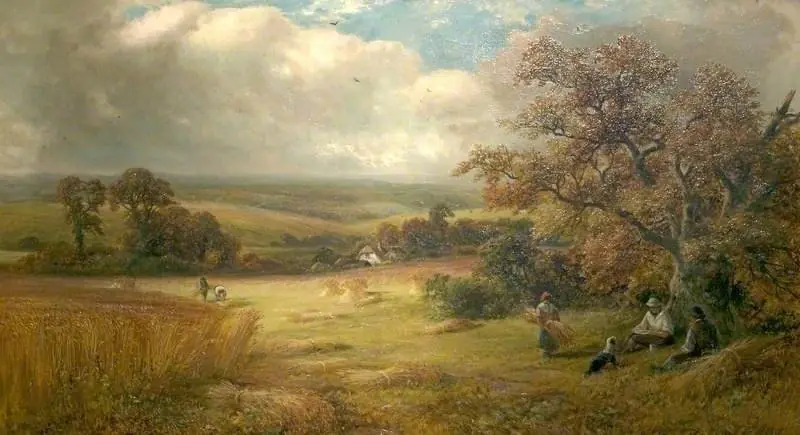
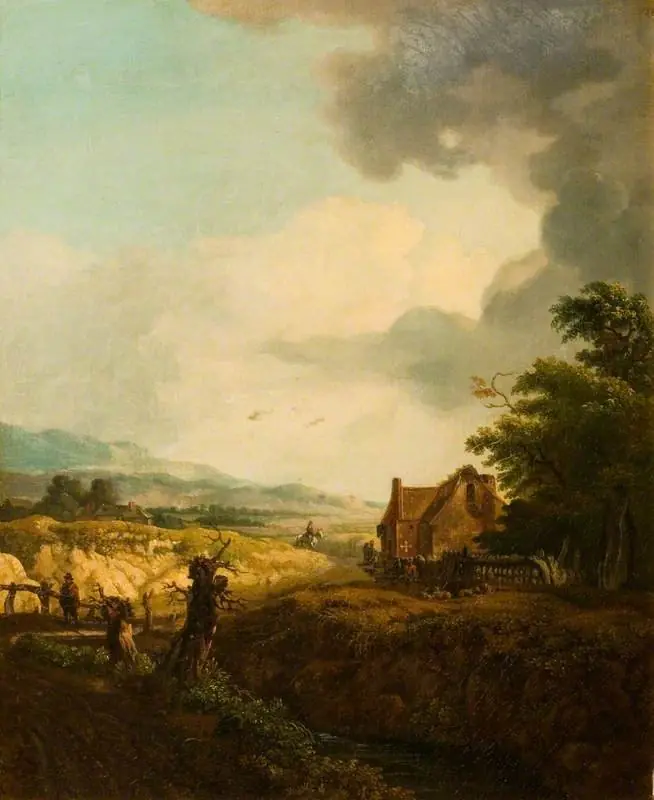
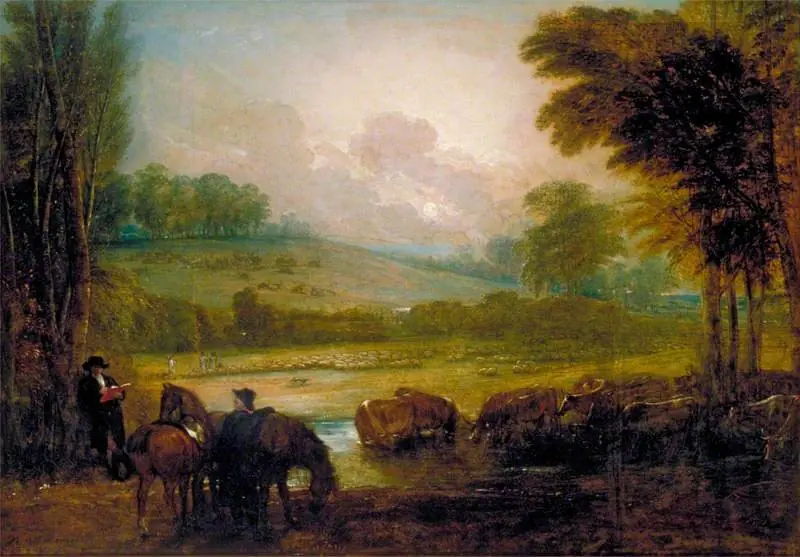
Seed Time is an oil painting by the British Romanticist artist John Frederick Herring, Sr.. It dates from 1855 and is held in the collection of the Victoria and Albert Museum. John Frederick Herring Sr.
About this work
Overview
Created during the height of British Romanticism, the work reflects a quiet reverence for agricultural life.
John Frederick Herring Sr.'s 1855 oil painting *Seed Time* depicts rural labor in mid-19th century England. Created during the height of British Romanticism, the work reflects a quiet reverence for agricultural life. Herring, previously a coachman and sign painter, turned to art with a focus on animals and country scenes, bringing observational precision to his depictions of farmsteads and livestock.
Subject & Meaning
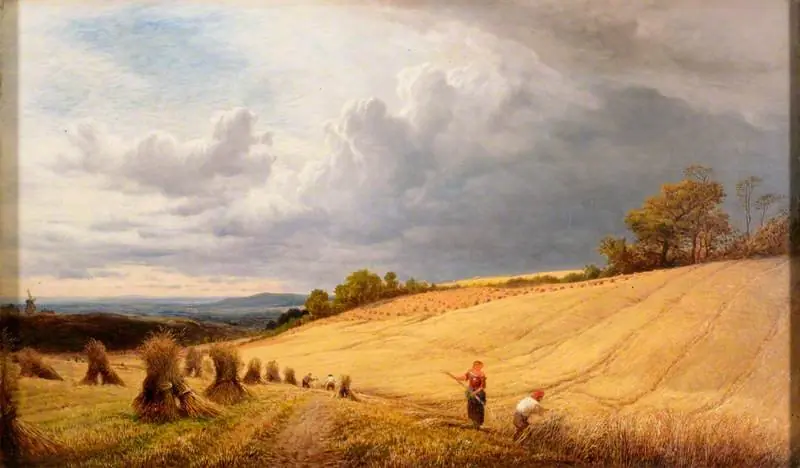
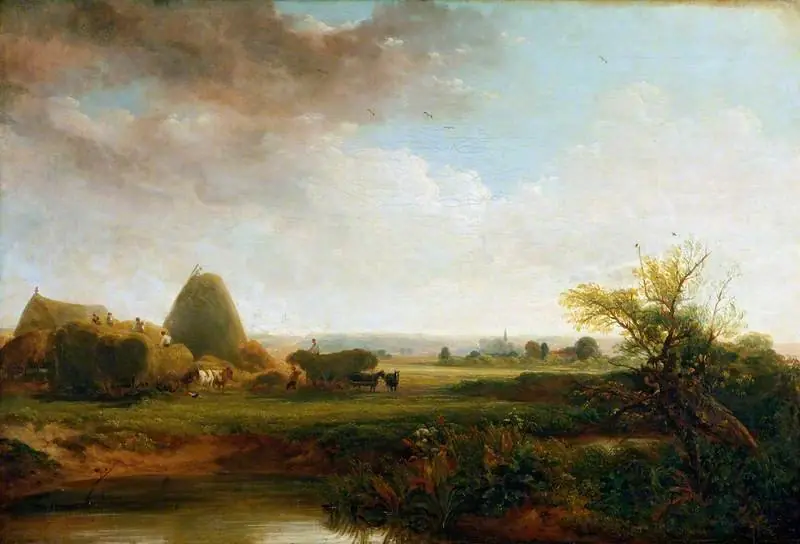
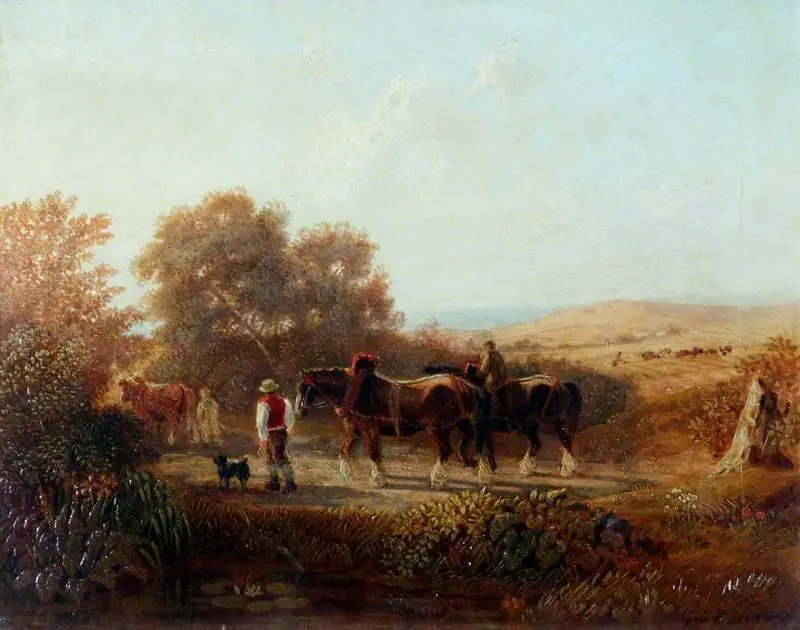
The painting shows a farmer guiding a white horse pulling a plow through a field, both figures engaged in the quiet rhythm of sowing. The farmer’s simple attire and focused posture emphasize diligence over spectacle. The horse, lowered in concentration, mirrors the farmer’s labor. Together, they embody the unglamorous yet essential work of preparing the land, a theme resonant with Romantic ideals of nature and human toil.
Technique & Style
Herring applied oil paint with visible, deliberate brushwork that lends texture to soil, fabric, and fur. The palette favors warm browns, ochres, and muted greens, grounding the scene in earthy realism. Light filters through a cloudy sky, casting soft shadows that enhance the painting’s tactile quality. His technique avoids idealization, instead capturing the physical weight and grain of rural life with quiet fidelity.
History & Provenance
Completed in 1855, *Seed Time* entered the collection of the Victoria and Albert Museum, where it remains today. Herring’s reputation as a painter of horses and rural scenes earned him steady patronage among the English middle class. Though not widely exhibited in major salons, his works were collected for their authenticity, and this painting reflects his consistent focus on agricultural subjects throughout his career.
Context
In mid-Victorian England, industrialization reshaped the countryside, prompting artists to document vanishing rural traditions. Herring’s work aligned with a broader cultural interest in agrarian life, even as mechanization advanced. Unlike grand historical narratives, his paintings offered intimate, unembellished views of daily labor, appealing to viewers seeking connection to a perceived simpler past.
Legacy
Herring’s paintings, including *Seed Time*, contributed to a genre of British art that honored rural labor without sentimentality. While not part of the academic mainstream, his works remain valued for their honest portrayal of animal and human effort. His influence is seen in later realist painters who turned to the countryside as a subject worthy of sustained observation.
Artist & collection
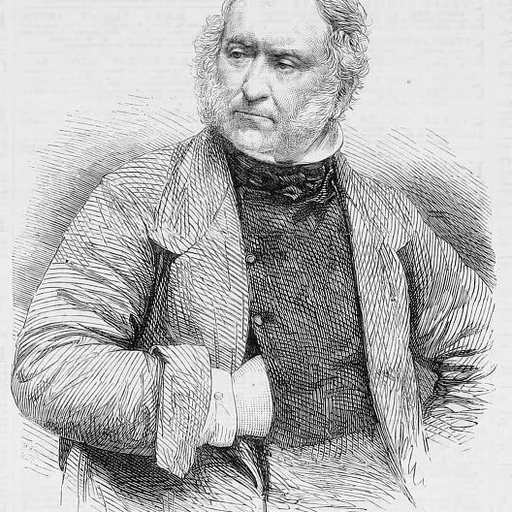
Artist
John Frederick Herring Sr. (12 September 1795 – 23 September 1865), also known as John Frederick Herring I, was a painter, sign maker and coachman in Victorian England. He painted the 1848 "Pharoah's Chariot Horses"…