Artwork
The White Bridge
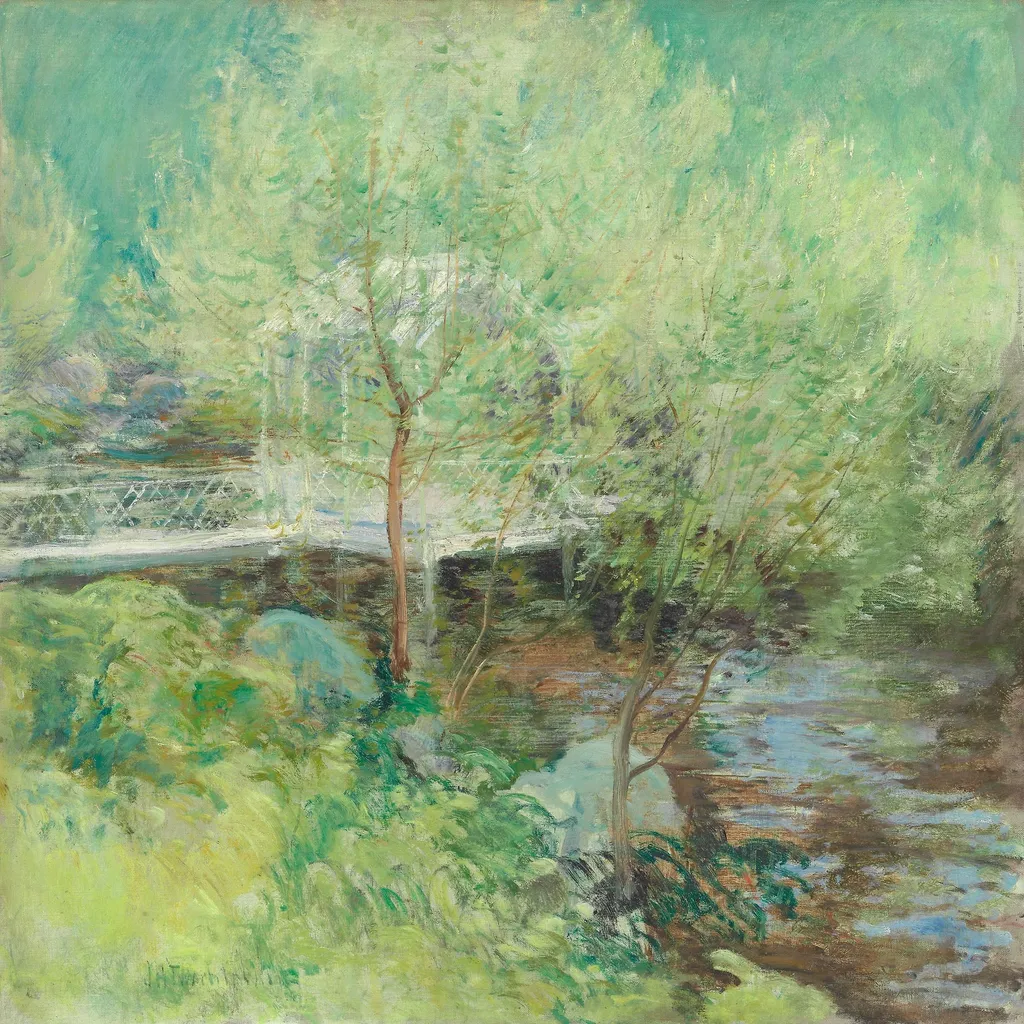
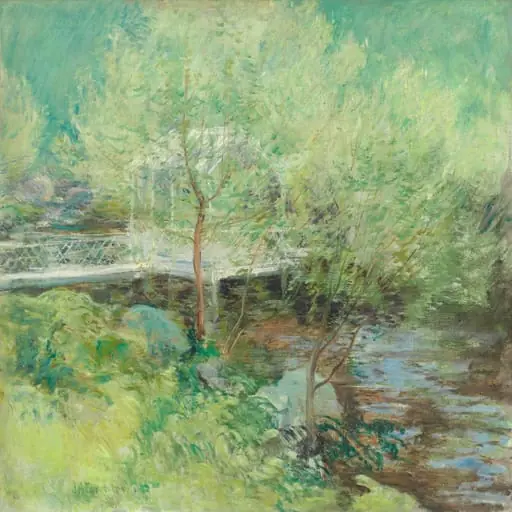
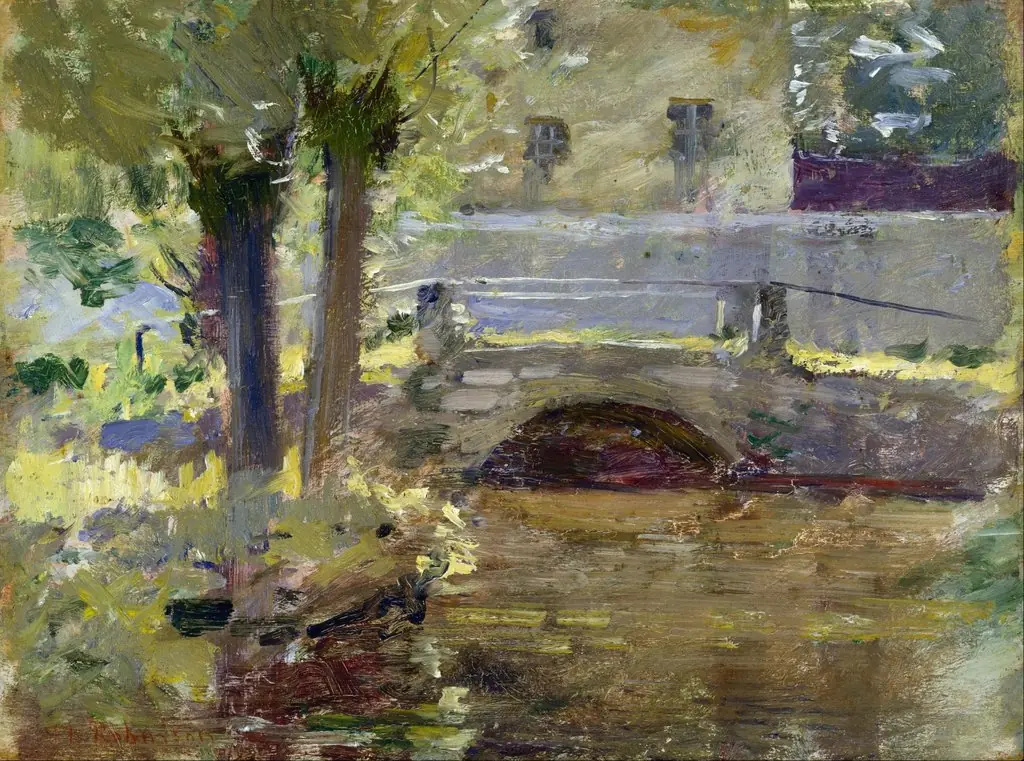
The White Bridge is an oil painting by the American Impressionist artist John Henry Twachtman. It dates from 1898 and is held in the collection of the Art Institute of Chicago.
About this work
Overview
Painted in 1898, The White Bridge is an oil on canvas work by American artist John Henry Twachtman. It presents a quiet rural scene centered on a narrow, pale bridge crossing a still pond. The composition emphasizes stillness and subtle transitions between land, water, and sky, reflecting Twachtman’s interest in capturing transient atmospheric conditions rather than detailed topography.
Subject & Meaning
The painting invites quiet observation rather than narrative interpretation, aligning with the introspective tone of American Impressionism.
The bridge serves as a quiet focal point, neither grand nor ornate, suggesting humility within nature. Surrounded by dense foliage and reflective water, the scene evokes solitude and contemplation. There is no human presence, reinforcing a sense of withdrawal from urban life. The painting invites quiet observation rather than narrative interpretation, aligning with the introspective tone of American Impressionism.
Technique & Style
Twachtman employed loose, textured brushwork to suggest form without defining it sharply. Colors are muted—soft greens, grays, and pale blues—blended to convey diffused daylight. The surface shows visible strokes that imply movement in foliage and water, yet the overall effect remains serene. His method avoids bold contrasts, favoring tonal harmony to evoke mood over detail.
History & Provenance
Created during Twachtman’s mature period, the painting was acquired by the Art Institute of Chicago in 1901, just three years after its completion. It entered the collection through a direct purchase, reflecting the institution’s early commitment to American Impressionist works. The painting has remained in the museum’s holdings since, with no documented changes in ownership.
Context
Painted near the end of the 19th century, The White Bridge reflects Twachtman’s engagement with European Impressionism, particularly the work of Monet. Yet his approach diverges in its restraint and subdued palette, aligning more closely with the quiet American landscape tradition. It was made during a time when artists sought personal, intimate responses to nature, away from academic conventions.
Legacy
The White Bridge exemplifies Twachtman’s distinctive contribution to American Impressionism: a meditative, tonal style that prioritized atmosphere over spectacle. While less widely known than some contemporaries, his work influenced later generations of American landscape painters who valued emotional resonance over dramatic composition. The painting remains a key example of his refined, introspective vision.
Own this work as a print
Artist & collection