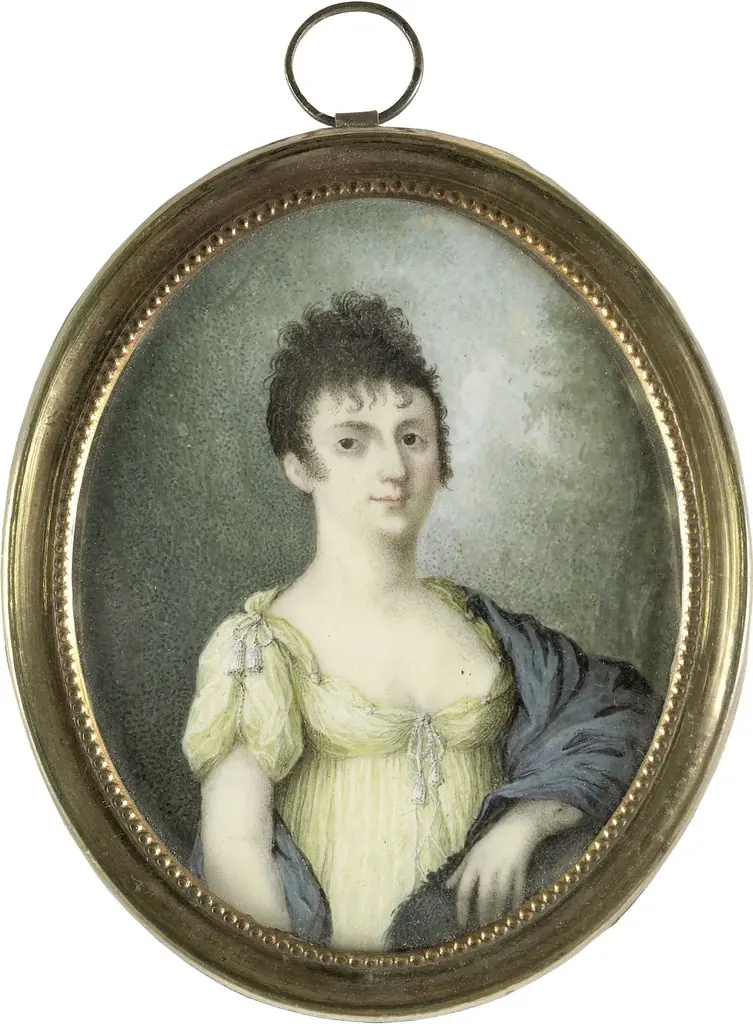
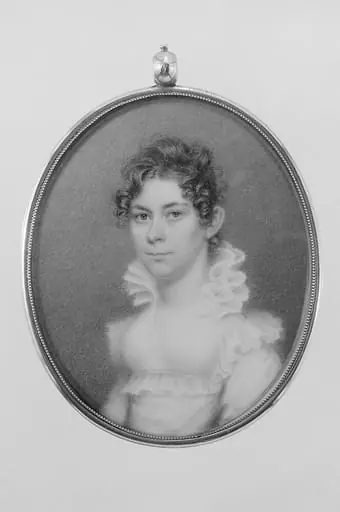
Artwork
Portrait of Miss Mary Tadman
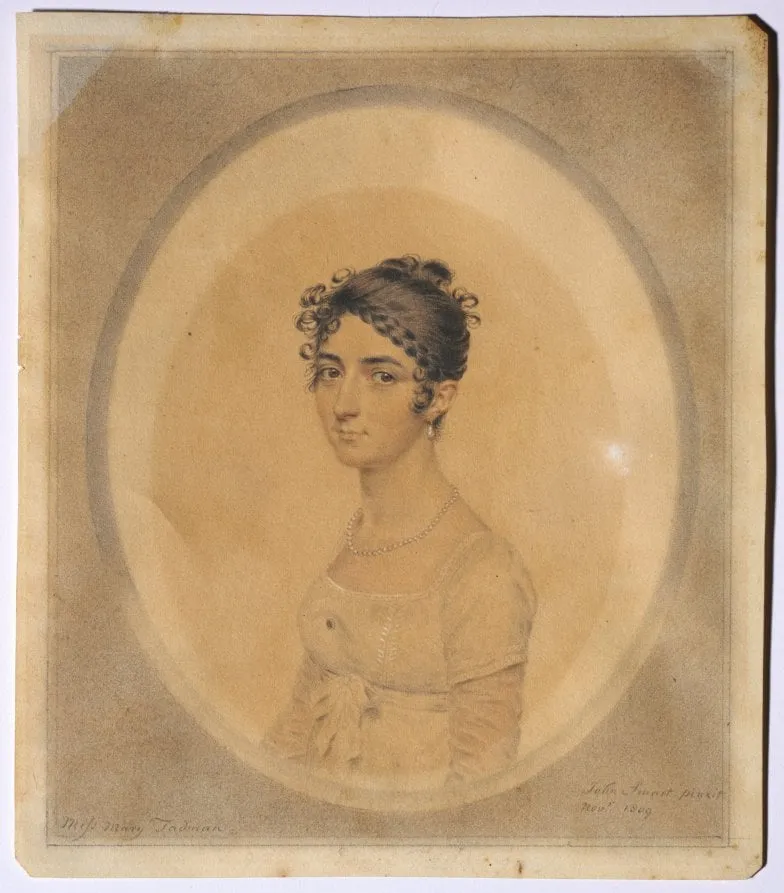
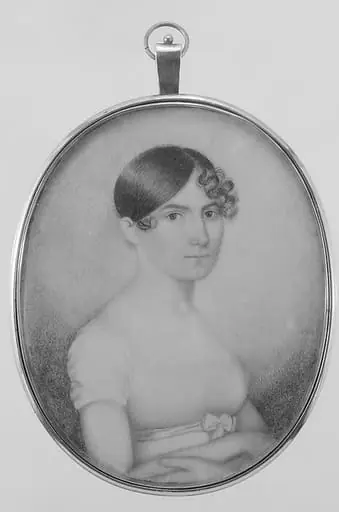
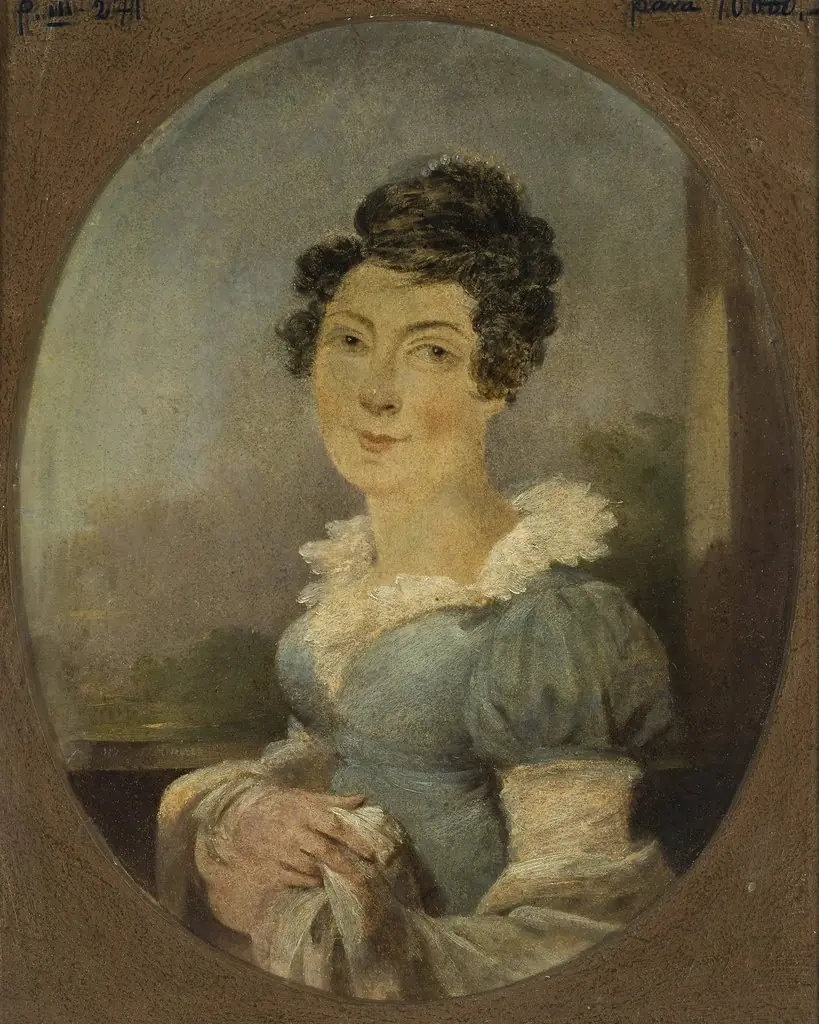
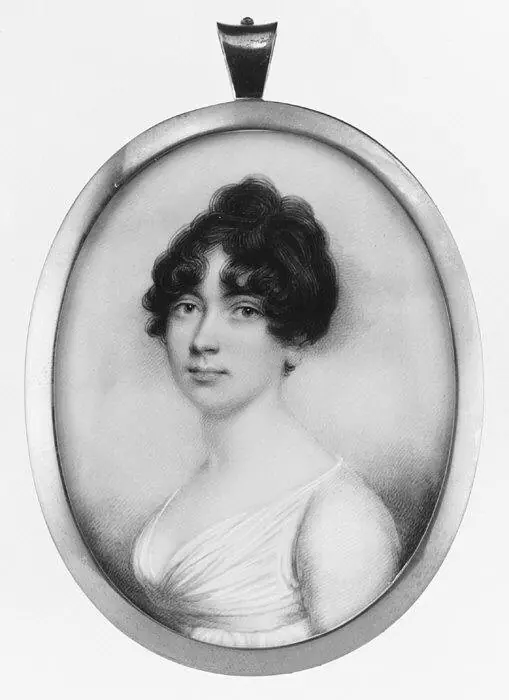
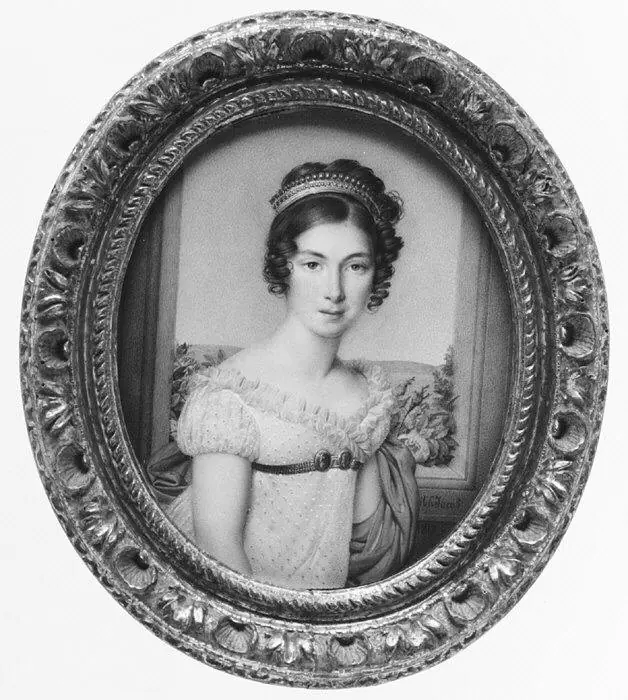
Portrait of Miss Mary Tadman is an unspecified portrait miniature by the British Romanticist artist John Smart. It dates from 1809 and is held in the collection of the Cleveland Museum of Art.
About this work
She wears a white dress with tiny embroidered flowers and a pearl necklace that glows against her skin.
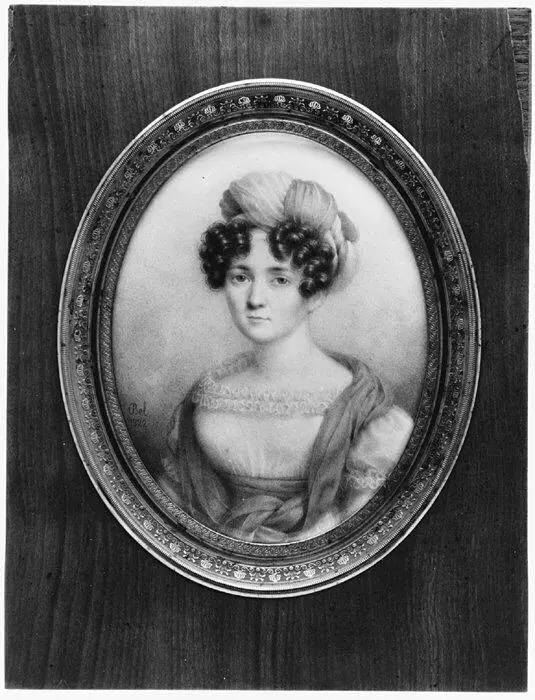
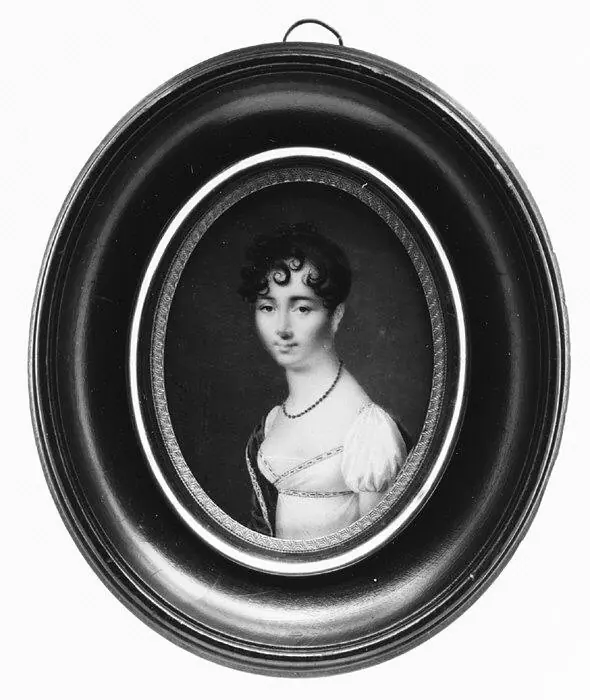
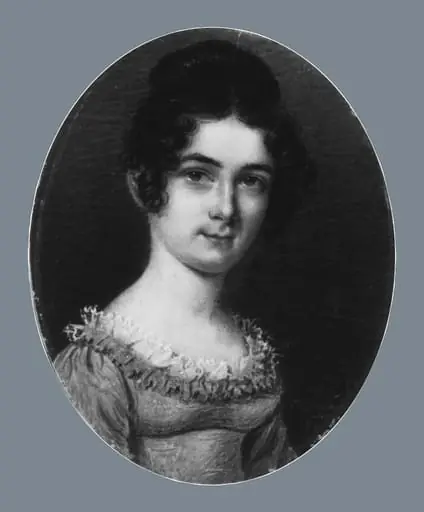
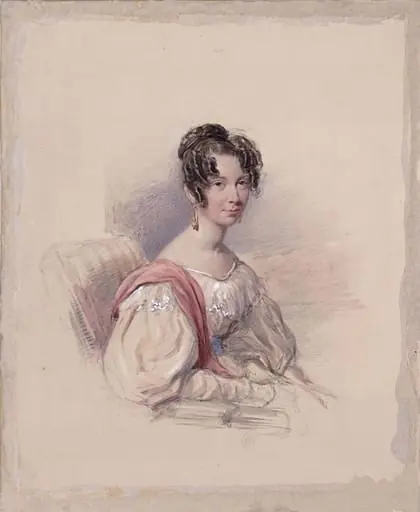
Mary Tadman looks straight at you, her dark curls framing a pale face. She wears a white dress with tiny embroidered flowers and a pearl necklace that glows against her skin.
This tiny portrait—smaller than a postcard—was painted to be carried like a photo in a locket. John Smart made hundreds like it, each one sharp enough to show every eyelash. The braid across her hairline is so fine you can almost count the strands.
For more faces from this time, look up England, 18th century.
Overview
This portrait miniature depicts Mary Tadman in delicate watercolor and gouache on ivory, rendered with precision typical of late 18th-century British portraiture. Measuring less than a postcard, it was designed for intimate, personal use—likely worn as a locket portrait. The work’s fine detail, including individual hair strands and embroidered fabric, reflects its status as a finished piece rather than a sketch, emphasizing craftsmanship over preparatory function.
Subject & Meaning
Mary Tadman, aged 23 at the time of execution, is portrayed with composed dignity, her gaze direct and calm. Her attire—white muslin dress, pearl jewelry, and classically styled coiffure—conveys Neoclassical ideals of modesty and refinement. The portrait captures her at a pivotal moment: just before her marriage to Major William Jolliffe Eldridge, signaling both personal transition and social aspiration within the British elite.
Technique & Style
Executed in watercolor and heightened with white gouache, the portrait achieves a luminous effect against the ivory ground. The sleeves, rendered as detachable muslin, are painted with translucent layers to suggest texture and lightness. Fine pencil lines define the braid across her brow and the embroidery on her bodice, while the oval border is meticulously outlined, framing the sitter with restrained elegance characteristic of John Smart’s workshop.
History & Provenance
Painted in December 1809, the portrait coincides with Tadman’s marriage to Major William Jolliffe Eldridge. After his death in India in 1818, she remarried Colonel Daniel Hutchins Bellasis in 1821, with whom she lived for nearly twenty years in Poona. The portrait likely traveled with her, serving as a personal memento of her earlier life in England amid her extended residence abroad.
Context
Detachable sleeves and empire-waist gowns were fashionable among British women during the Regency era, allowing a single garment to transition from day to evening wear. Miniature portraits on ivory, often produced by artists like John Smart, were prized as portable tokens of identity and affection, circulating within families and between lovers across distances—particularly relevant for those connected to the British military abroad.
Legacy
Tadman’s portrait exemplifies the social function of miniature portraiture in early 19th-century Britain: a quiet assertion of status, memory, and personal history. Its survival and preservation reflect its emotional weight to the sitter and her descendants. As a work of craftsmanship and personal significance, it offers insight into the lives of women navigating mobility, marriage, and identity within the British imperial context.
Artist & collection
Artist
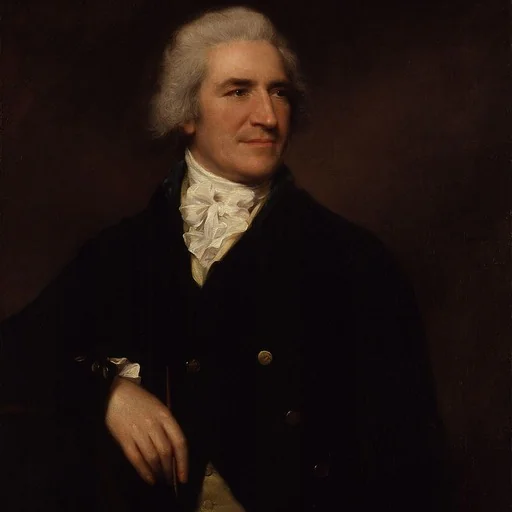
John Smart (1 May 1741 – 1 May 1811) was an English painter who specialised in portrait miniatures. He was a contemporary of Richard Cosway, George Engleheart, William Wood and Richard Crosse.