Artwork
The Cove of Cork
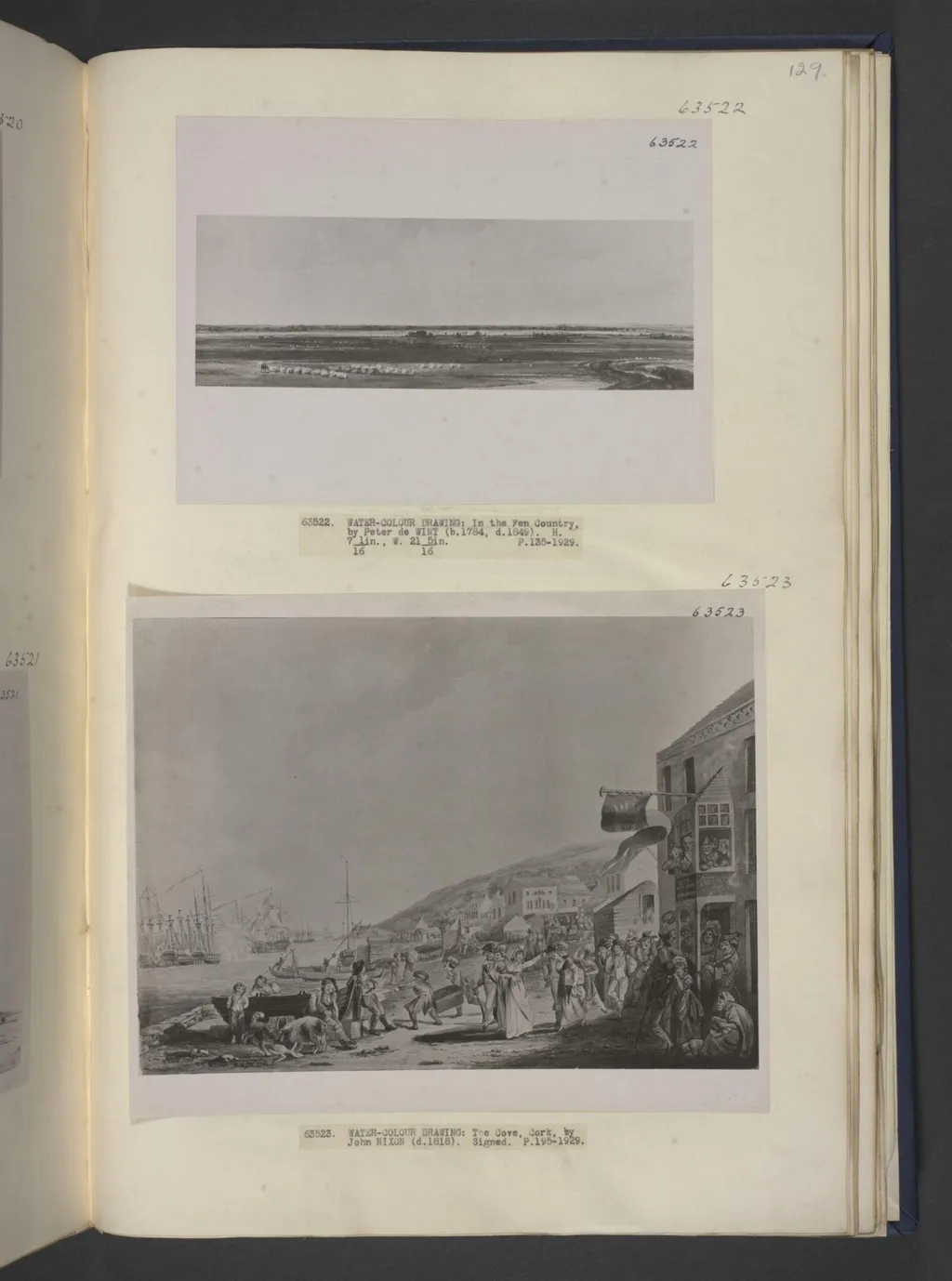
The Cove of Cork is a watercolor work on paper by the British Romanticist artist John Nixon. It dates from 1794 and is held in the collection of the Victoria and Albert Museum.
About this work
Overview
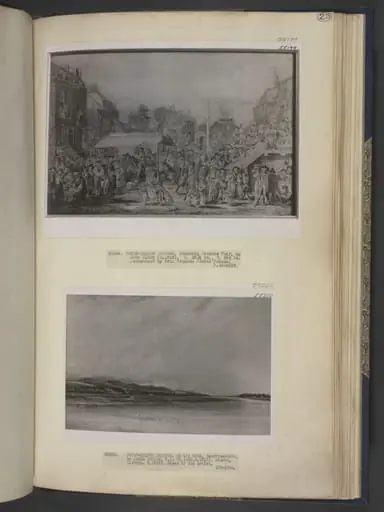
Created in 1794, *The Cove of Cork* is a watercolour by John Nixon that captures a bustling maritime scene in Cork Harbour.
Created in 1794, *The Cove of Cork* is a watercolour by John Nixon that captures a bustling maritime scene in Cork Harbour. The artist inscribed his name and the date directly on the work, affirming its authorship and temporal context. The composition presents a quiet yet lively moment in daily coastal life, rendered with delicate washes and precise linework characteristic of late 18th-century British watercolour practice.
Subject & Meaning
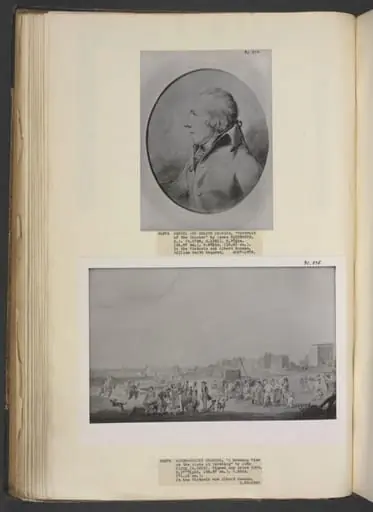
The scene depicts ordinary activities around the harbour: pedestrians strolling, a horse-drawn cart paused near the water, and figures engaged in quiet tasks. Anchored vessels and shoreline buildings suggest a working port, while a single flag adds a subtle marker of identity or authority. Nixon’s focus on unremarkable moments reflects an interest in the rhythms of civic life rather than grand narratives.
Technique & Style
Nixon employed transparent watercolour to achieve a luminous, atmospheric effect. Fine brushwork defines the textures of clothing, rigging, and stone facades, while soft washes suggest distance and light. The composition avoids dramatic contrasts, favoring a restrained palette and balanced arrangement that enhances the sense of quiet observation typical of topographical watercolours of the period.
History & Provenance
The work is held in the collection of the Victoria and Albert Museum, where it is catalogued as part of a broader group of British topographical watercolours from the late 1700s. Its survival and preservation suggest it was valued early as a record of place, though no detailed provenance prior to its museum acquisition is publicly documented.
Context
In 1794, Ireland was under British administration, and Cork served as a key commercial port. Watercolour was widely used for documenting landscapes and urban scenes, often by amateur artists or professionals commissioned for record-keeping. Nixon’s work aligns with this tradition, offering a visual archive of maritime activity during a period of economic and political transition.
Legacy
*The Cove of Cork* remains an example of how watercolour functioned as both art and documentation in the late 18th century. While Nixon is not widely known today, his work contributes to a larger body of images that preserve the visual texture of British and Irish port towns, offering insight into everyday life before industrialization transformed these spaces.
Artist & collection