Artwork
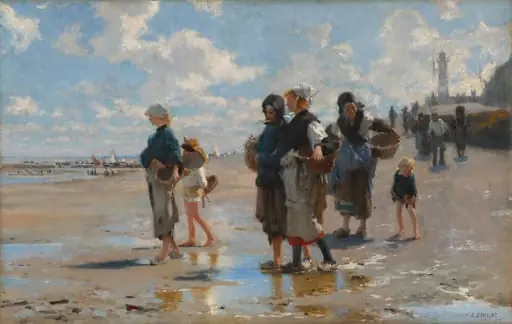
Fishing for Oysters at Cancale
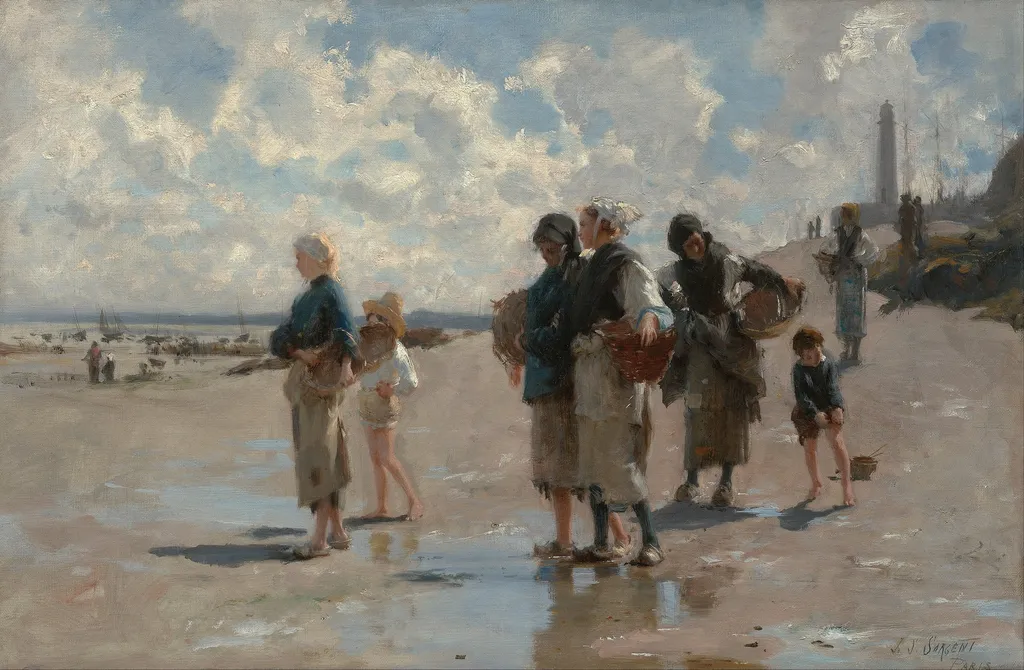
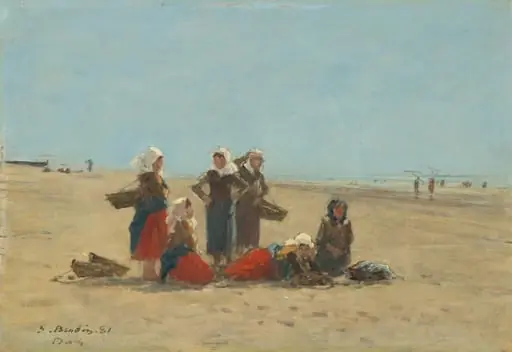
Fishing for Oysters at Cancale is an oil painting by the American Impressionist artist John Singer Sargent. It dates from 1890 and is held in the collection of the Museum of Fine Arts Boston.
About this work
Overview
The piece captures a quiet moment of labor and daily life along the shore, distinguishing itself from his more formal portraits.
Painted in 1890, *Fishing for Oysters at Cancale* is an oil work by American artist John Singer Sargent, created during a visit to the Normandy coastal village of Cancale. The piece captures a quiet moment of labor and daily life along the shore, distinguishing itself from his more formal portraits. It reflects his interest in outdoor scenes and the rhythms of working-class communities, aligning with his broader exploration of light and atmosphere beyond studio commissions.
Subject & Meaning
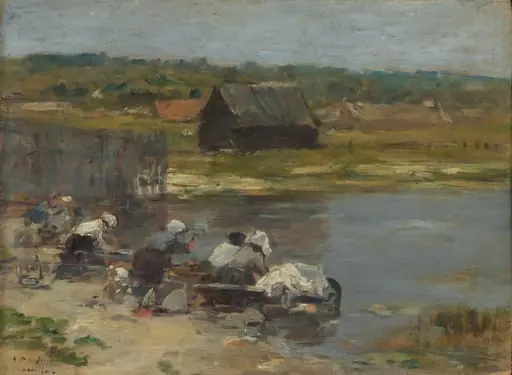
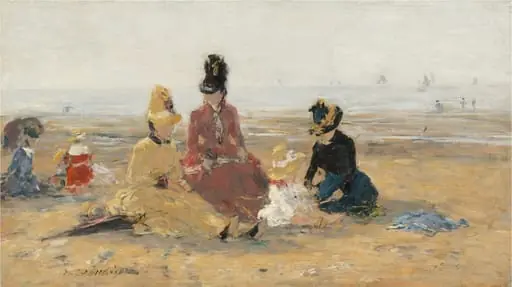
The painting portrays women and children engaged in the aftermath of oyster harvesting, standing on a windswept beach with baskets and scattered shells. Their postures suggest fatigue and routine, not spectacle. Children play nearby, their presence underscoring the intergenerational nature of coastal labor. Sargent avoids romanticizing the scene; instead, he presents it as an unembellished record of subsistence, emphasizing dignity in ordinary work rather than narrative drama.
Technique & Style
Sargent employed loose, energetic brushwork to convey the texture of wet sand, heavy woolen skirts, and the diffuse light of a cloudy sky. His handling of fabric and surface suggests movement — folds of clothing ripple with the breeze, while the sand appears granular and damp. The palette is muted, dominated by grays, browns, and soft blues, reinforcing the overcast atmosphere. The composition avoids sharp focal points, inviting the viewer to absorb the scene as a whole, in the manner of plein-air practice.
History & Provenance
Created during Sargent’s travels in northern France, the painting remained in private hands until it entered the collection of the Museum of Fine Arts, Boston, in the early 20th century. Its acquisition reflected the museum’s growing interest in American artists working abroad and their engagement with European subjects. Unlike his commissioned portraits, this work was not intended for sale, suggesting personal artistic exploration rather than commercial demand.
Context
In the 1890s, Sargent was increasingly drawn to scenes of rural and maritime labor, influenced by French Impressionism and his own observations during summer trips. Cancale, known for its oyster beds, offered a subject that merged naturalism with social observation. While contemporaries like Monet focused on light effects, Sargent balanced atmospheric rendering with human presence, situating his work between American realism and European modernism.
Legacy
Though less known than his portraits, *Fishing for Oysters at Cancale* exemplifies Sargent’s versatility and commitment to capturing transient moments of everyday life. It remains a key example of his plein-air practice and contributes to broader understandings of how American artists engaged with European subjects outside elite circles. The painting continues to be studied for its technical fluency and quiet social resonance.
Own this work as a print
Artist & collection

Artist
John Singer Sargent (; January 12, 1856 – April 15, 1925) was an American expatriate artist, considered the "leading portrait painter of his generation" for his evocations of Belle Époque and Edwardian-era luxury.