Artwork
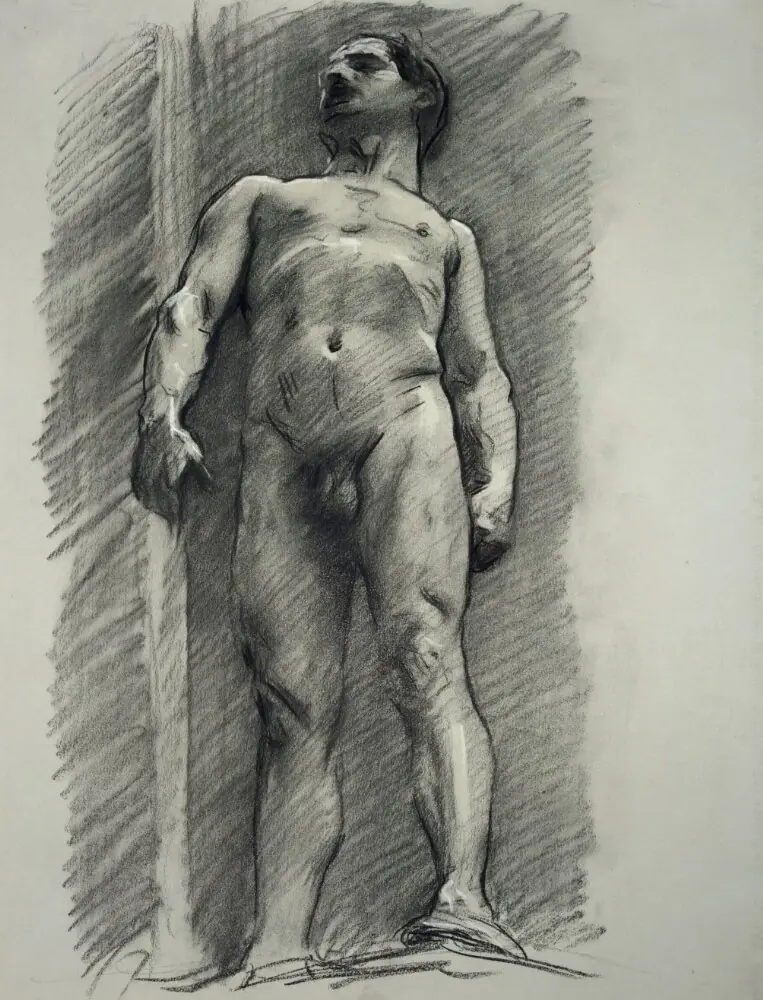
Partial View of a Standing Male Nude
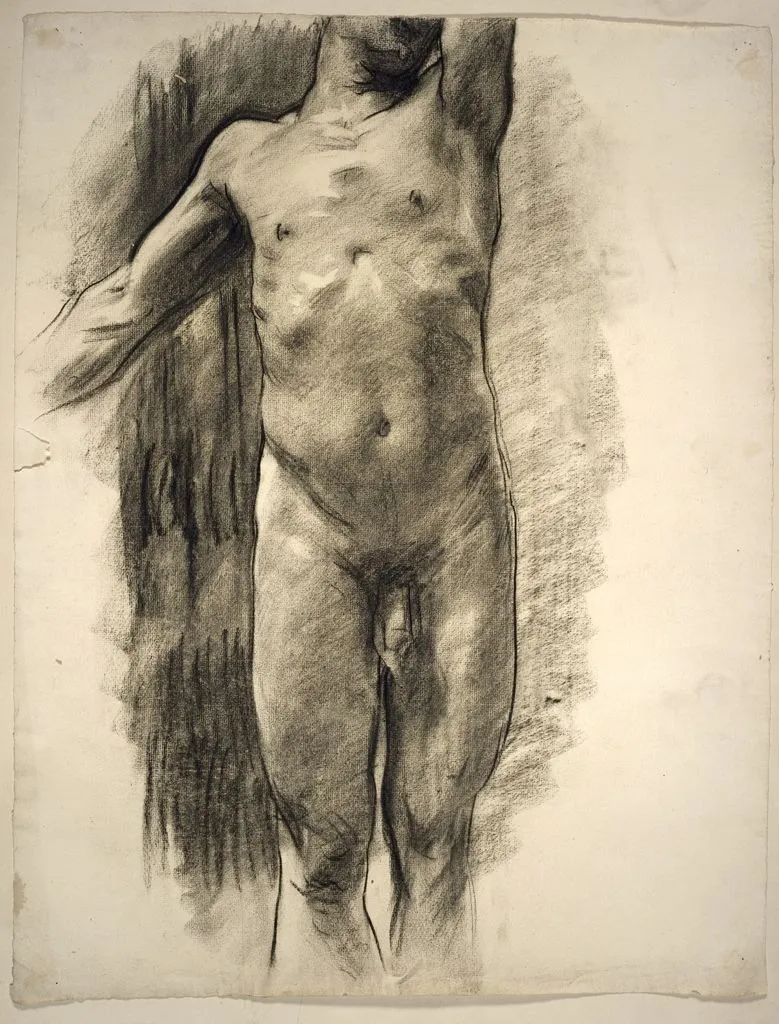
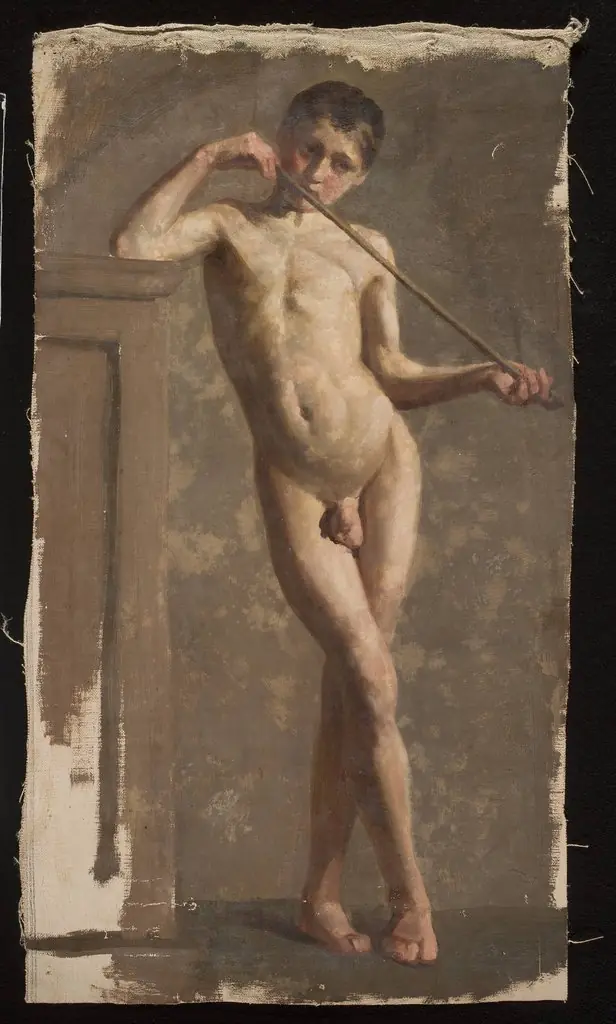
Partial View of a Standing Male Nude is an unspecified painting by the Post-Impressionist artist John Singer Sargent. It dates from 1902 and is held in the collection of the Harvard Art Museums.
About this work
Overview
Painted in 1902, this work is one of several figure studies by John Singer Sargent, an American artist based in Europe. Unlike his formal portraits, this piece is a private exploration of the male form, executed with quiet precision. It belongs to a series of drawings and paintings made during his travels, reflecting his ongoing engagement with anatomical study rather than commissioned work.
Subject & Meaning
The pose is naturalistic, neither heroic nor theatrical, suggesting an interest in observational truth rather than idealization.
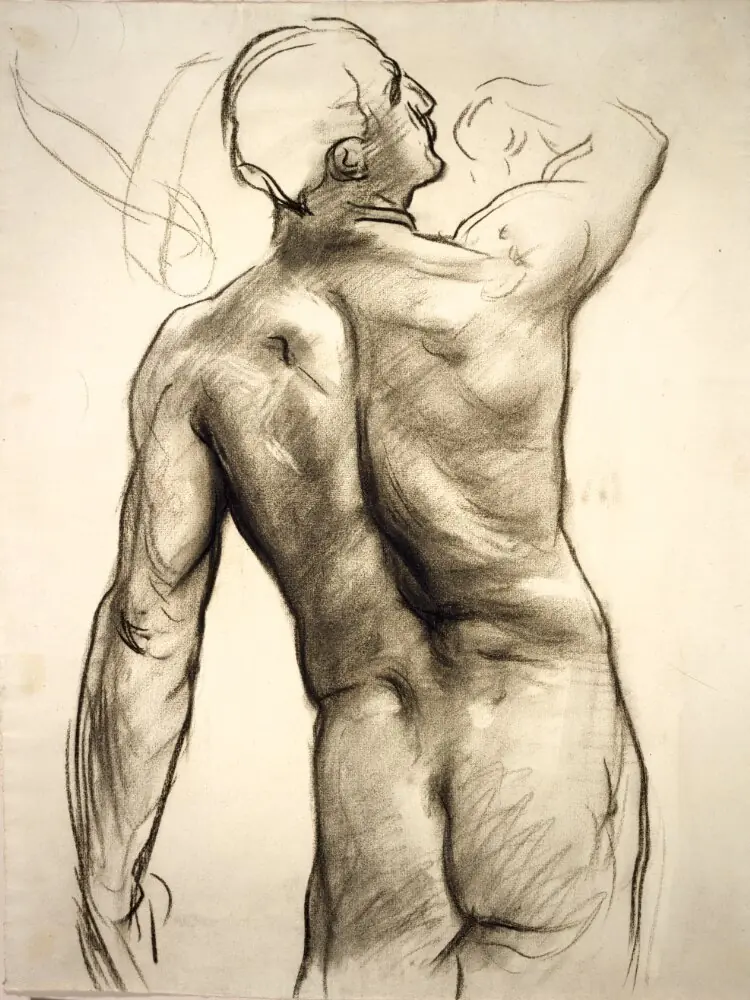
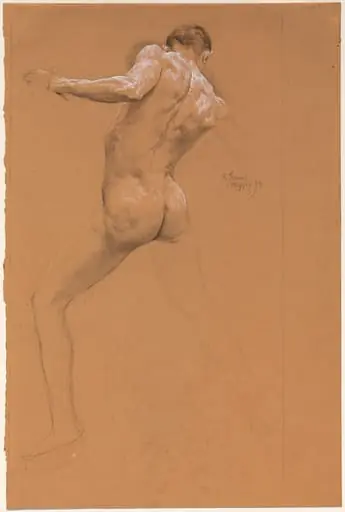
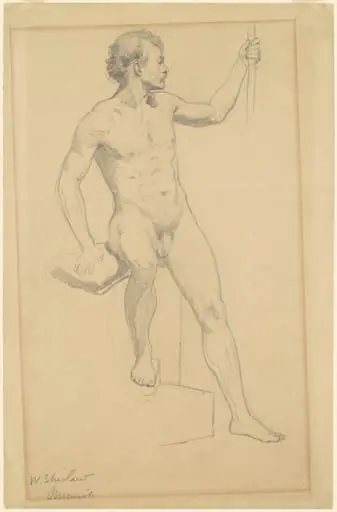
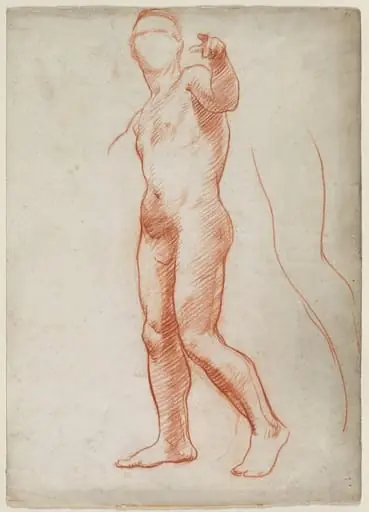
The subject is a standing male nude, shown from the waist upward, with one arm raised and the other relaxed at his side. There is no narrative or symbolic context—only the body itself as the focus. The pose is naturalistic, neither heroic nor theatrical, suggesting an interest in observational truth rather than idealization. The absence of setting or props reinforces the study’s intent: to examine form in isolation.
Technique & Style
Sargent employed subtle chiaroscuro to model the figure’s musculature, using soft transitions between light and shadow to suggest volume without harsh outlines. The background is muted and unobtrusive, allowing the body’s contours to emerge with clarity. His brushwork is controlled yet fluid, balancing academic discipline with the immediacy of direct observation. The result is a restrained elegance, rooted in classical training but free of overt stylization.
History & Provenance
The work entered the collection of the Nationalmuseum in Stockholm, where it remains today. It was likely acquired following Sargent’s exhibitions in Europe, which brought his figure studies to broader attention. Though not publicly exhibited during his lifetime as a finished painting, it was part of his private practice, revealing his commitment to understanding anatomy beyond portraiture.
Context
Created during the post-Impressionist era, the piece reflects a continued reverence for structural integrity in the human form, even as many contemporaries moved toward abstraction or expressive distortion. Sargent, trained in Florence and Paris, maintained a classical foundation while absorbing modern sensibilities. This study stands as a quiet counterpoint to the radical shifts in art at the time, emphasizing observation over innovation.
Legacy
This work contributes to the understanding of Sargent’s broader artistic practice beyond society portraiture. It reveals his disciplined approach to the nude as a subject worthy of sustained study. Though less known than his portraits, such figure studies influenced later artists interested in the intersection of realism and formal clarity, preserving his legacy as a meticulous observer of the human body.
Artist & collection
Artist
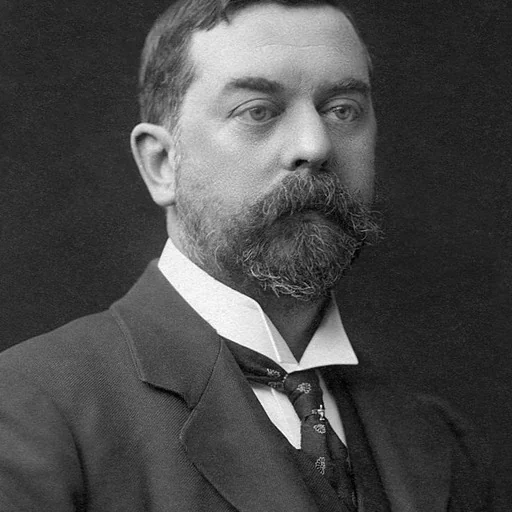
John Singer Sargent (; January 12, 1856 – April 15, 1925) was an American expatriate artist, considered the "leading portrait painter of his generation" for his evocations of Belle Époque and Edwardian-era luxury.