Artwork
The Wood Gatherers
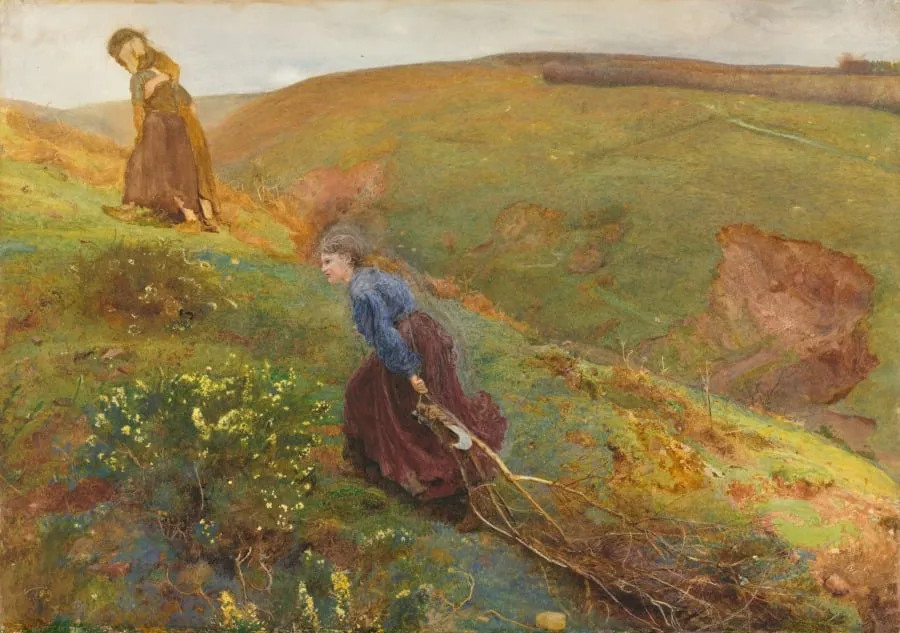
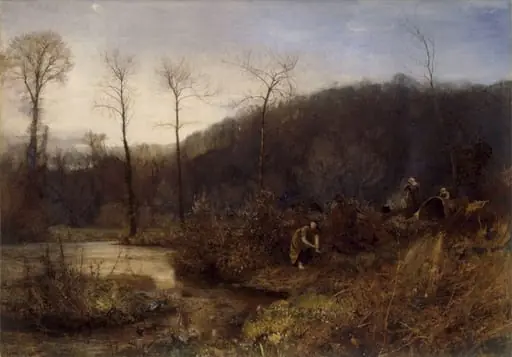
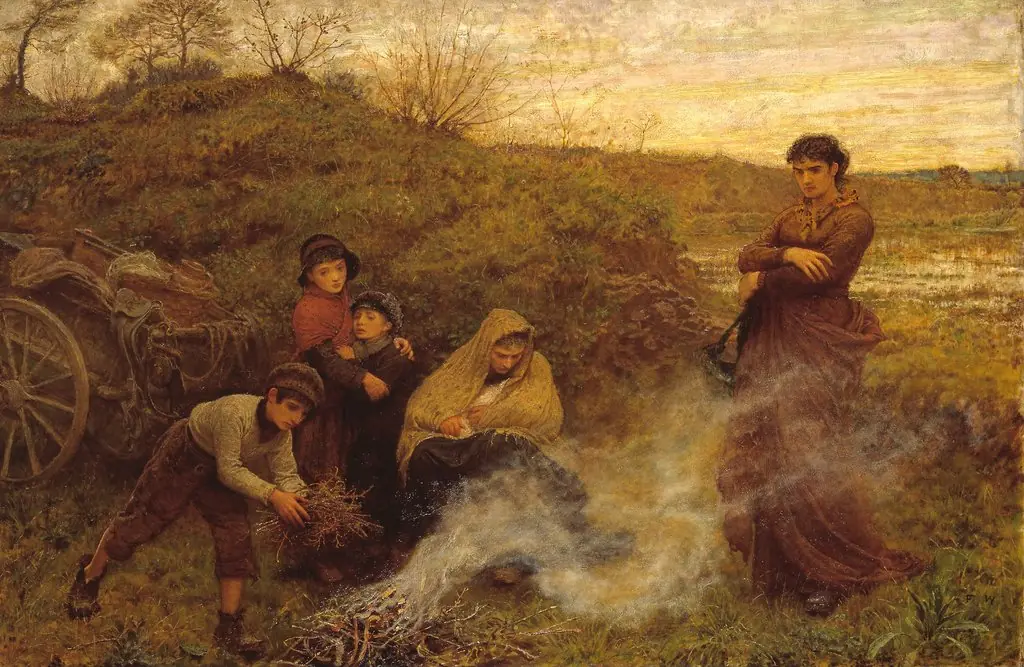
The Wood Gatherers is a drawing by the Impressionist artist John William North. It dates from 1869 and is held in the collection of the Cleveland Museum of Art.
About this work
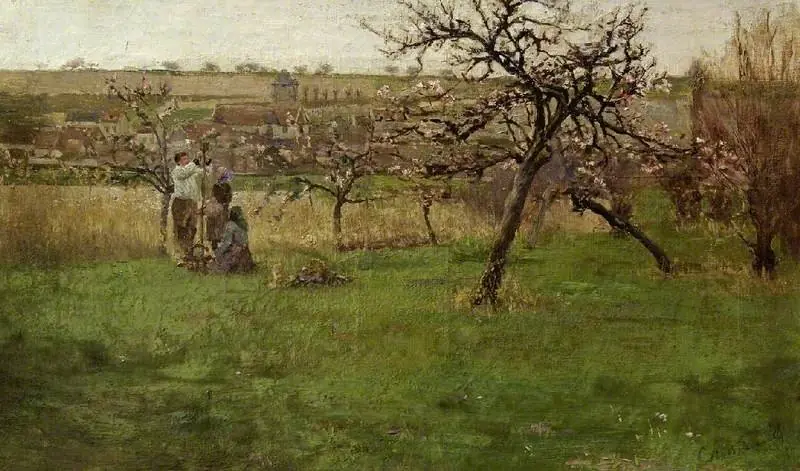
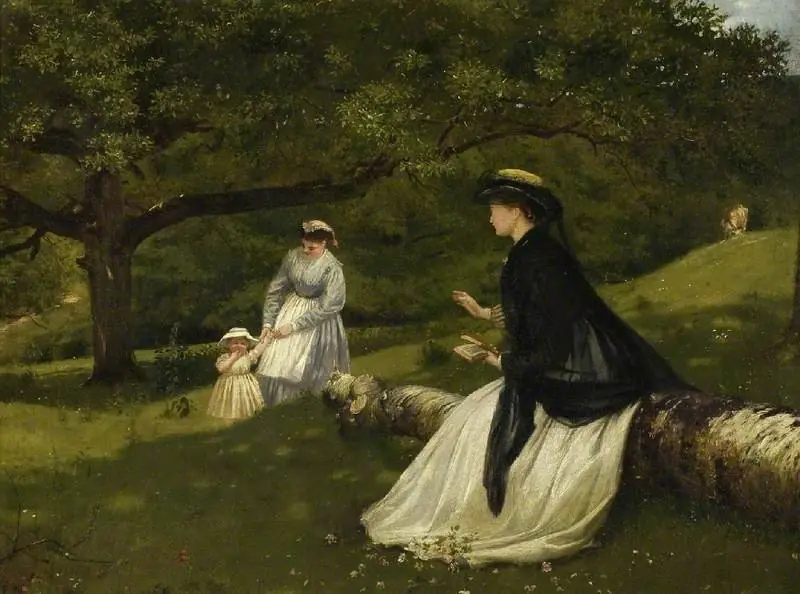
You see three women in long skirts bending to pick up sticks in a quiet English wood.
North painted every leaf and twig so carefully that the scene feels almost too real—until you step back and the details blur into soft light. It’s like he let the trees breathe instead of trapping them on paper.
If you like this quiet, leafy mood, look up other paintings of England, 19th century.
Overview
Rather than emphasizing narrative, North focuses on the interplay of light, texture, and atmosphere, creating a scene that feels both intimate and expansive.
John William North’s drawing depicts three women gathering firewood in a quiet English woodland. Executed in watercolor, the work captures a moment of rural labor with quiet dignity. Rather than emphasizing narrative, North focuses on the interplay of light, texture, and atmosphere, creating a scene that feels both intimate and expansive. The composition invites contemplation over action, aligning with the aesthetic values of late 19th-century British landscape art.
Subject & Meaning
The figures—three women in long skirts—are engaged in the everyday task of collecting fallen branches, a common rural practice. Their postures suggest fatigue and routine, yet the scene avoids sentimentality. North presents labor not as hardship but as a quiet harmony with nature. The absence of overt emotion or social commentary allows the environment itself to convey meaning, reinforcing a sense of continuity between human activity and the natural world.
Technique & Style
North employed watercolor with meticulous layering to suggest individual leaves and twigs, yet avoided rigid definition. His technique relies on subtle gradations and selective detail: close inspection reveals precise strokes, but from a distance, these dissolve into a hazy, luminous whole. This method—described as an illusion of abundance through suggestion—creates a breathing quality in the foliage, where form emerges and recedes, evoking the transient nature of light in woodland settings.
History & Provenance
The drawing originates from North’s extended period in Somerset, where he observed and sketched rural life during the 1870s and 1880s. It was likely produced as a preparatory study or independent work for exhibition, reflecting his commitment to plein air observation. Though not widely documented in public collections, it aligns with his broader body of work, which was exhibited regularly by the Royal Watercolour Society and admired for its poetic restraint.
Context
North worked within the tradition of British watercolorists who sought to elevate landscape beyond topographical record into emotional resonance. His approach echoed the Pre-Raphaelite attention to detail while rejecting their theatricality. In an era of industrial expansion, his quiet woodlands offered a counter-narrative—emphasizing stillness, continuity, and the dignity of agrarian life, resonating with contemporary literary and artistic ideals of natural harmony.
Legacy
North’s work influenced later generations of British landscape artists who favored atmospheric suggestion over overt realism. His ability to balance precision with ambiguity became a model for conveying mood without narrative. Though less prominent today, his drawings remain valued for their quiet integrity and technical restraint, representing a thoughtful alternative to the more dramatic visions of his contemporaries.
Artist & collection

Artist
John William North (London 1 January 1842 – 20 December 1924 Stamborough, Somerset) was a British landscape painter, mainly in watercolour, and illustrator, a prominent member of the Idyllists.