Artwork
Harriet Hubbard Ayer
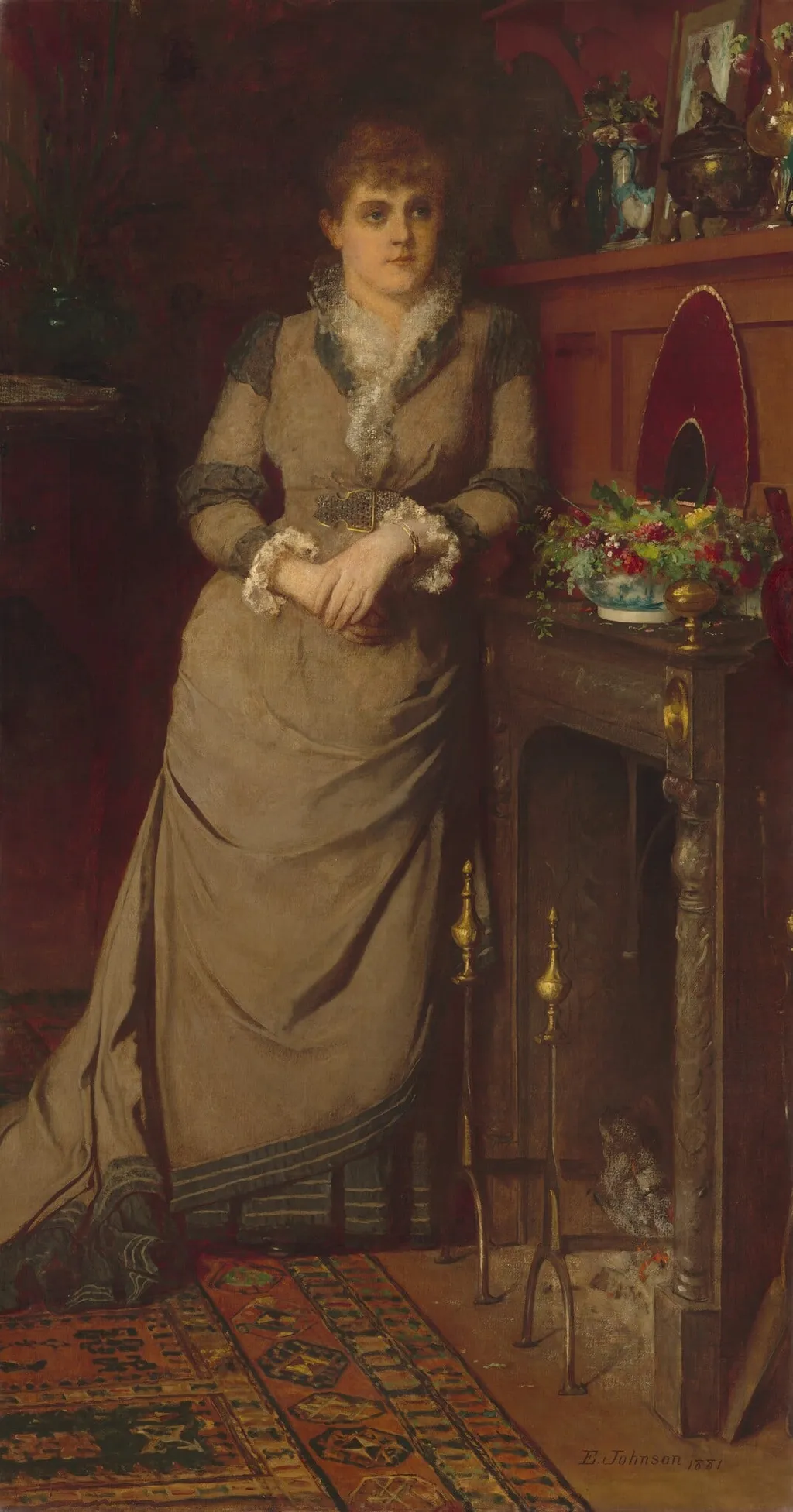
Harriet Hubbard Ayer is an oil painting by the American Impressionist artist Eastman Johnson. It dates from 1881 and is held in the collection of the National Gallery of Art.
About this work
Overview
Johnson employs his characteristic realistic style, capturing the subtle play of light on the fabric of her dress and the polished surfaces of the room.
Painted in 1881, Eastman Johnson's *Harriet Hubbard Ayer* is a formal portrait of the social reformer and cosmetics entrepreneur. The composition centers on Ayer standing in a domestic interior, her figure illuminated against a dimly lit background. She wears a high-necked blouse with lace trim, a dark belt, and a long brown skirt, her hands resting lightly on a small table. Behind her, a fireplace mantel displays a bright vase of flowers and shelves hold various small objects, including vases and framed pictures, adding texture and depth to the setting. Johnson employs his characteristic realistic style, capturing the subtle play of light on the fabric of her dress and the polished surfaces of the room. This work reflects Johnson's prominence in American portraiture during the late 19th century, where he balanced psychological insight with meticulous attention to material detail. The painting documents Ayer's status as a public figure while presenting her within a refined, private sphere, typical of Johnson's approach to depicting American society. It stands as a significant example of his mature period, showcasing his ability to convey character through pose and environment.
Subject & Meaning
The portrait presents Ayer in a long brown dress with a high‑necked, lace‑trimmed blouse, suggesting both modesty and refined taste. The surrounding objects—a mirror, framed pictures, and assorted vases—hint at a cultivated household, while the subdued lighting emphasizes a moment of personal repose rather than public display.
Technique & Style
Johnson renders the figure with careful attention to the subtle play of light across skin and fabric, employing soft, muted tones that lend the scene a warm, intimate atmosphere. His brushwork is gentle and blended, allowing the textures of the dress, lace, and patterned rug to emerge without harsh delineation.
History & Provenance
Created in 1881, the work reflects Johnson’s mature period, during which he frequently painted portraits of prominent American women. The painting has remained in private collections for much of its history, resurfacing in recent exhibitions that explore Johnson’s contributions to American genre and portraiture.
Context
Johnson, a leading figure of the American Realist movement, often focused on domestic interiors and everyday moments. This portrait aligns with his interest in portraying the private lives of his subjects, offering a glimpse into the genteel middle‑class environment of post‑Civil War America.
Legacy
While not as widely reproduced as some of Johnson’s genre scenes, the portrait of Harriet Hubbard Ayer exemplifies his skill in capturing nuanced character through modest settings, reinforcing his reputation as a chronicler of American social life in the late 19th century.
Artist & collection
Artist
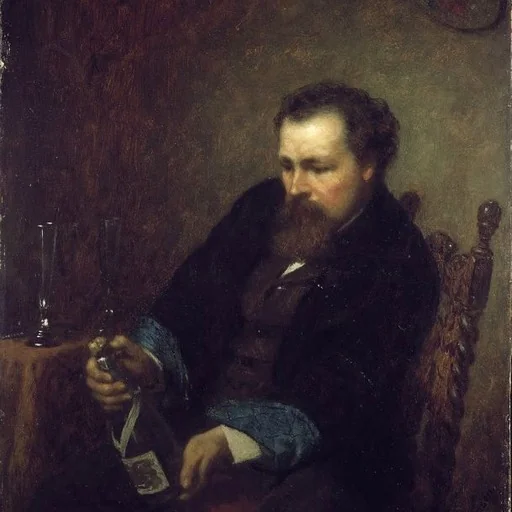
Jonathan Eastman Johnson (July 29, 1824 – April 5, 1906) was an American painter and co-founder of the Metropolitan Museum of Art, New York City, with his name inscribed at its entrance.