Artwork
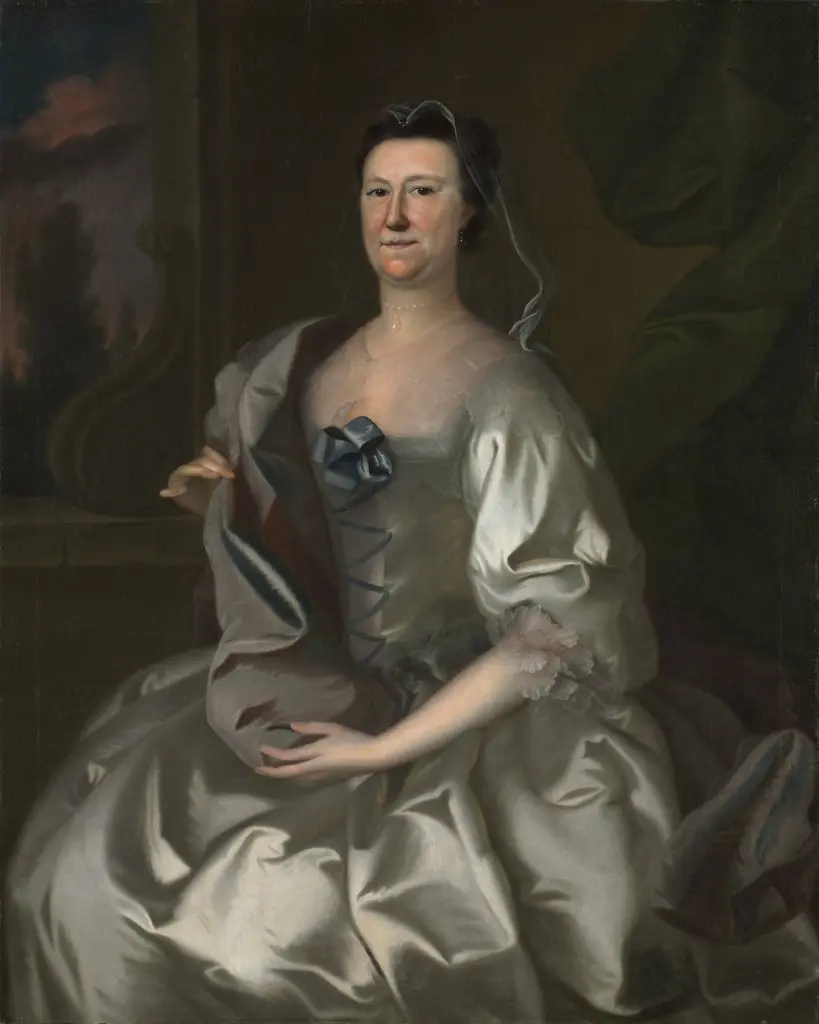
Abigail Chesebrough (Mrs. Alexander Grant)
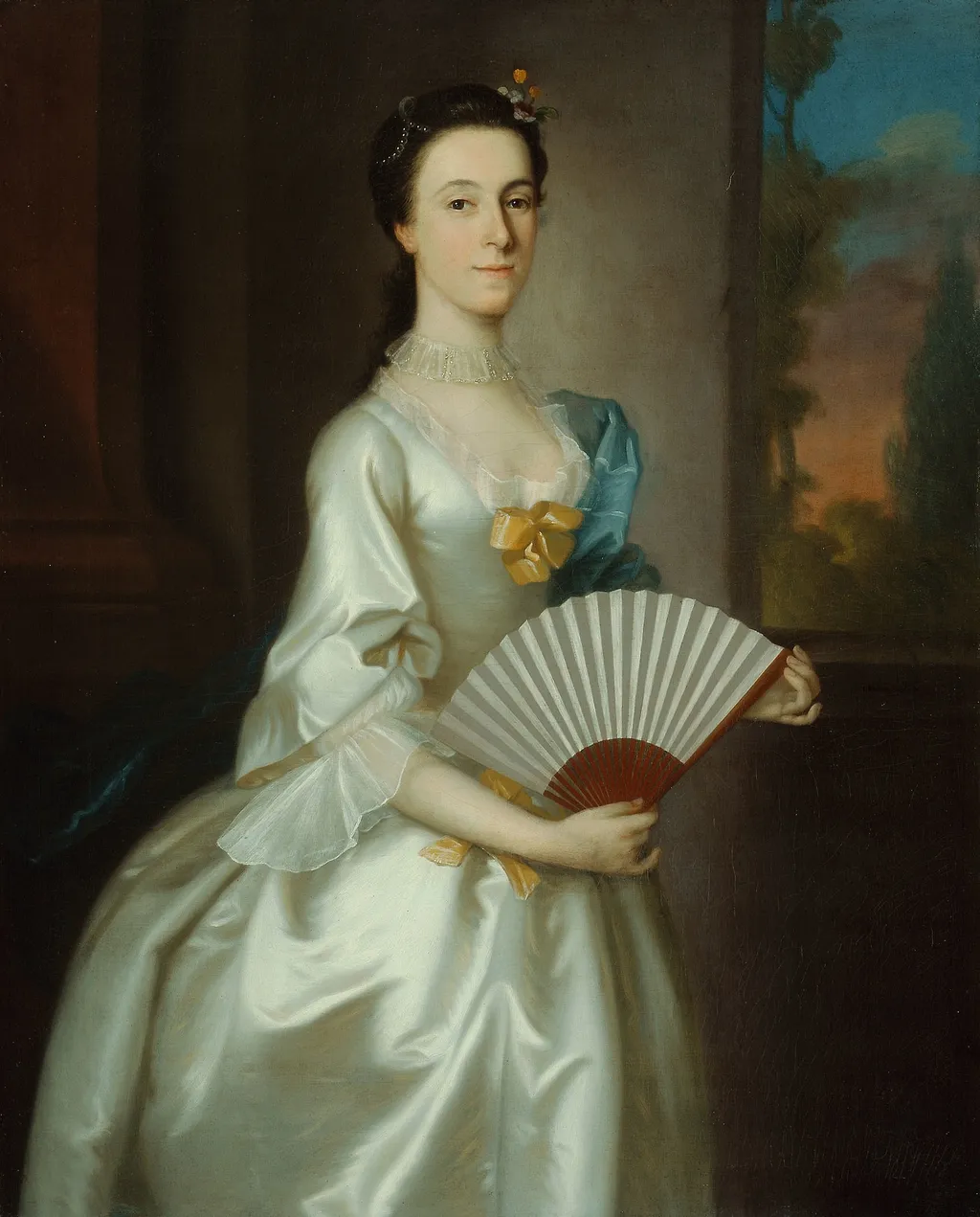
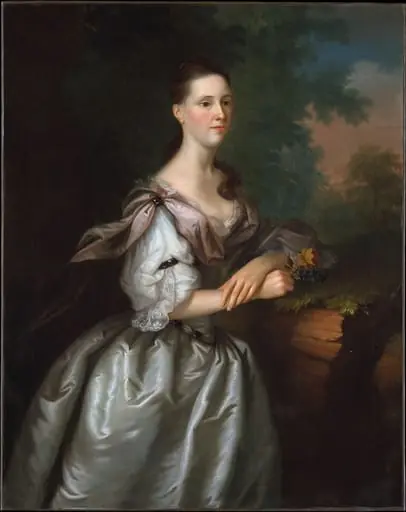
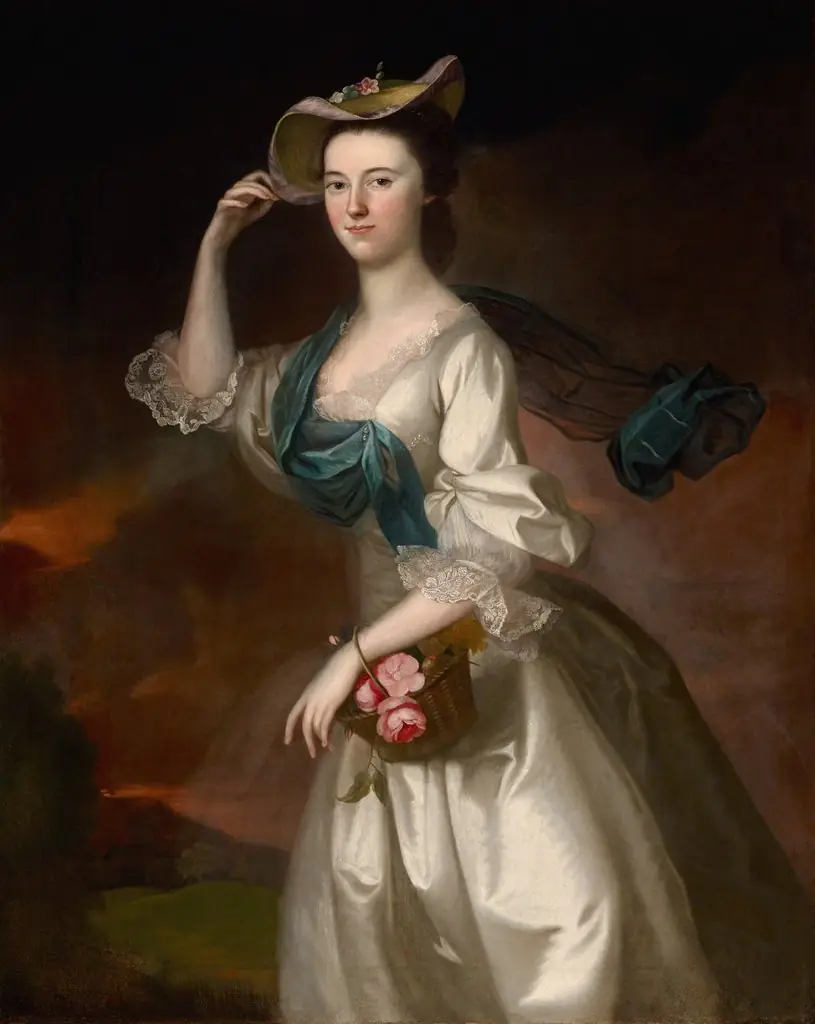
Abigail Chesebrough (Mrs. Alexander Grant) is an oil painting by the Rococo painting artist Joseph Blackburn. It dates from 1754 and is held in the collection of the Art Institute of Chicago.
About this work
This painting depicts a woman in a white satin dress with a blue sash and a yellow ribbon.
This painting depicts a woman in a white satin dress with a blue sash and a yellow ribbon. She holds a fan in her right hand and wears a floral hairpiece. The background is a dark room with a window on the right side, showing a sunset.
The woman's dress and hairstyle suggest a formal portrait from the 18th century. Her expression is calm and composed.
To learn more about the artist who created this portrait, look up Joseph Blackburn.
Overview
Joseph Blackburn, an English-born portraitist active in colonial America, painted Abigail Chesebrough in 1754. The work is an oil on canvas, executed during his years in British North America, where he became known for capturing the likenesses of New England’s elite. It now resides in the collection of the Art Institute of Chicago, representing one of many formal portraits Blackburn produced for wealthy families seeking to document their status and refinement.
Subject & Meaning
Abigail Chesebrough, wife of merchant Alexander Grant, is depicted in a composed, dignified pose, reflecting the social expectations of elite women in mid-18th-century America. Her attire—white satin, blue sash, and yellow ribbon—signals wealth and fashion, while the fan and floral hairpiece suggest refinement and leisure. The calm expression and controlled posture convey poise, aligning with ideals of feminine decorum in colonial society.
Technique & Style
Blackburn employed soft brushwork and subtle tonal transitions to render fabric and skin with quiet realism. The dark interior contrasts with the warm glow of the sunset visible through a window, creating a gentle focal point. The lighting enhances the texture of the satin and the delicate details of her hairpiece, while the composition remains balanced and restrained, characteristic of Rococo-influenced portraiture adapted to colonial tastes.
History & Provenance
Commissioned in 1754, the portrait remained within the Grant family for generations before entering the Art Institute of Chicago’s collection. Its survival through centuries reflects its significance as a family heirloom and a record of early American social life. Blackburn’s documented practice of painting in Boston and Portsmouth lends credibility to its origin in the colonial Northeast, where he maintained a steady clientele among merchant and gentry families.
Context
In the 1750s, colonial elites increasingly sought portraits to assert their status, often commissioning itinerant artists like Blackburn who brought European stylistic conventions to America. While lacking the grandeur of British court portraiture, works such as this one adapted those traditions to local materials and sensibilities, blending elegance with practicality. The inclusion of a sunset through a window hints at a growing interest in naturalistic settings, even in formal commissions.
Legacy
Blackburn’s portraits, including this one, offer valuable insight into the visual culture of colonial America. They document not only individual identities but also the aspirations of a society navigating its place within the British Empire. His work helped establish a local tradition of portraiture that preceded the rise of native-born American artists, preserving the appearance and demeanor of early American elites for future generations.
Own this work as a print
Artist & collection
Artist
Joseph Blackburn (died 1787) was an English painter who worked mainly in British North America. His notable works include portraits of Hugh Jones (circa 1777) and Colonel Theodore Atkinson (circa 1760).