Artwork
Stift Klosterneuburg
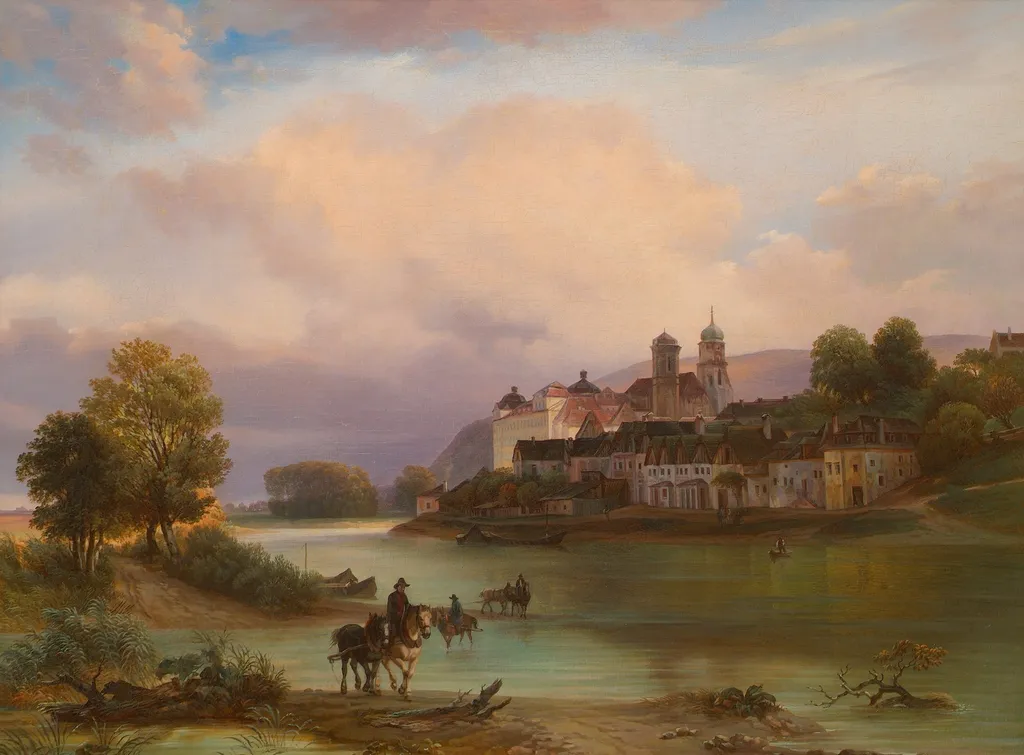
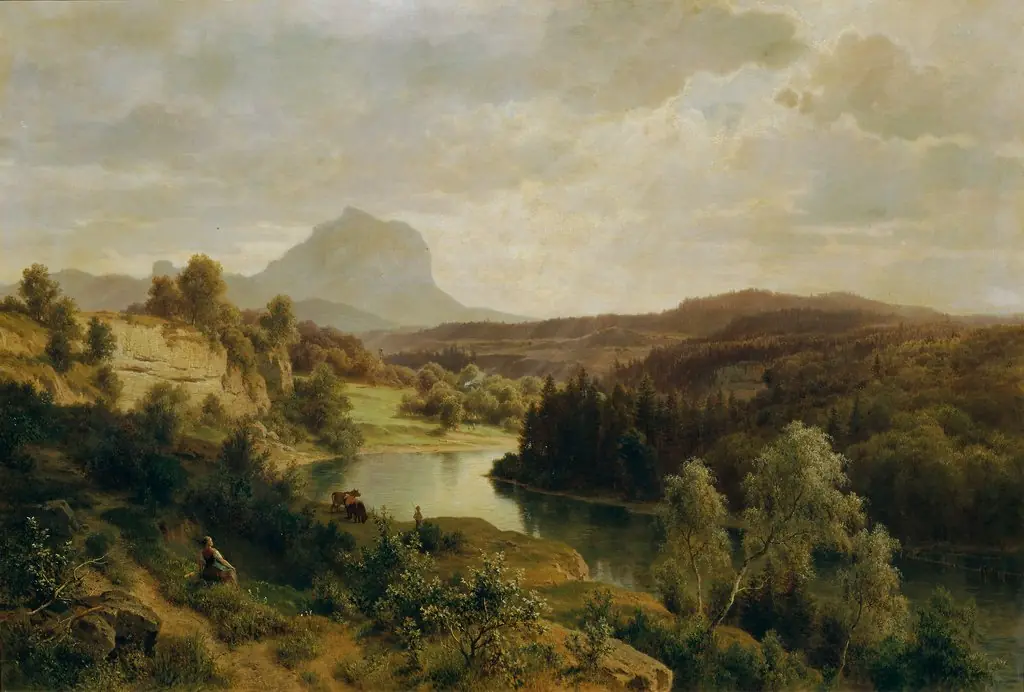
Stift Klosterneuburg is an oil painting by the Biedermeier artist Joseph Gerstmayer. It dates from 1850 and is held in the collection of the Kunsthistorisches Museum.
About this work
Overview
Its subdued palette and careful lighting reflect a 19th-century Austrian tradition of landscape painting rooted in observation rather than idealization.
Painted around 1850 by Joseph Gerstmayer, this oil-on-canvas work captures a quiet rural scene in Austria. It resides in the Kunsthistorisches Museum in Vienna, where it is cataloged under the identifier Q28001235. The composition balances natural elements with human presence, emphasizing stillness over action. Its subdued palette and careful lighting reflect a 19th-century Austrian tradition of landscape painting rooted in observation rather than idealization.
Subject & Meaning
The painting shows two figures near a river: one mounted on horseback, the other leading a second horse. Behind them, a small settlement with a church steeple rests among gentle hills. The figures are not engaged in dramatic activity, suggesting a moment of transit or rest. The scene evokes daily life in a pastoral setting, with no overt narrative—its meaning lies in the quiet dignity of routine and the harmony between people and landscape.
Technique & Style
Gerstmayer employs soft chiaroscuro to model forms and suggest spatial depth, particularly in the rolling terrain and clouded sky. Colors are restrained—earthy browns, muted greens, and hazy blues—enhancing the calm mood. Brushwork is precise yet unobtrusive, with attention to texture in foliage, stone, and water. The composition guides the eye along the river’s curve toward the distant town, reinforcing a sense of quiet progression.
History & Provenance
The painting entered the Kunsthistorisches Museum’s collection in the 19th century, likely through Austrian state or ecclesiastical acquisition. Gerstmayer, active in Vienna and Lower Austria, was known for topographical landscapes tied to regional monastic and noble estates. While not widely exhibited, the work reflects the museum’s broader effort to document Austrian artistic output beyond grand historical themes.
Context
Created during a period when Austrian artists increasingly turned to local landscapes as subjects, the painting aligns with a growing interest in regional identity and everyday life. Unlike Romanticized alpine vistas, Gerstmayer’s scene favors modest, inhabited terrain—echoing the influence of Dutch and German realist traditions. It reflects a cultural shift toward valuing the ordinary, particularly in ecclesiastical regions like Klosterneuburg, where the artist may have worked.
Legacy
Though not widely reproduced or studied, the painting remains a representative example of mid-19th-century Austrian landscape painting. It contributes to the understanding of how regional artists documented their surroundings without theatricality. Its preservation in a major national museum underscores its role as a quiet record of place, rather than a celebrated artistic breakthrough.
Own this work as a print
Artist & collection

 Gripsholmin linna
 Gezicht op Civita Castellana
 Church and monastery in Ląd
 Italiaans landschap met overzetveer
 Ruins of the castle in Czorsztyn
 Landschaft mit Bergsee
 Schloss Salurn in Südtirol
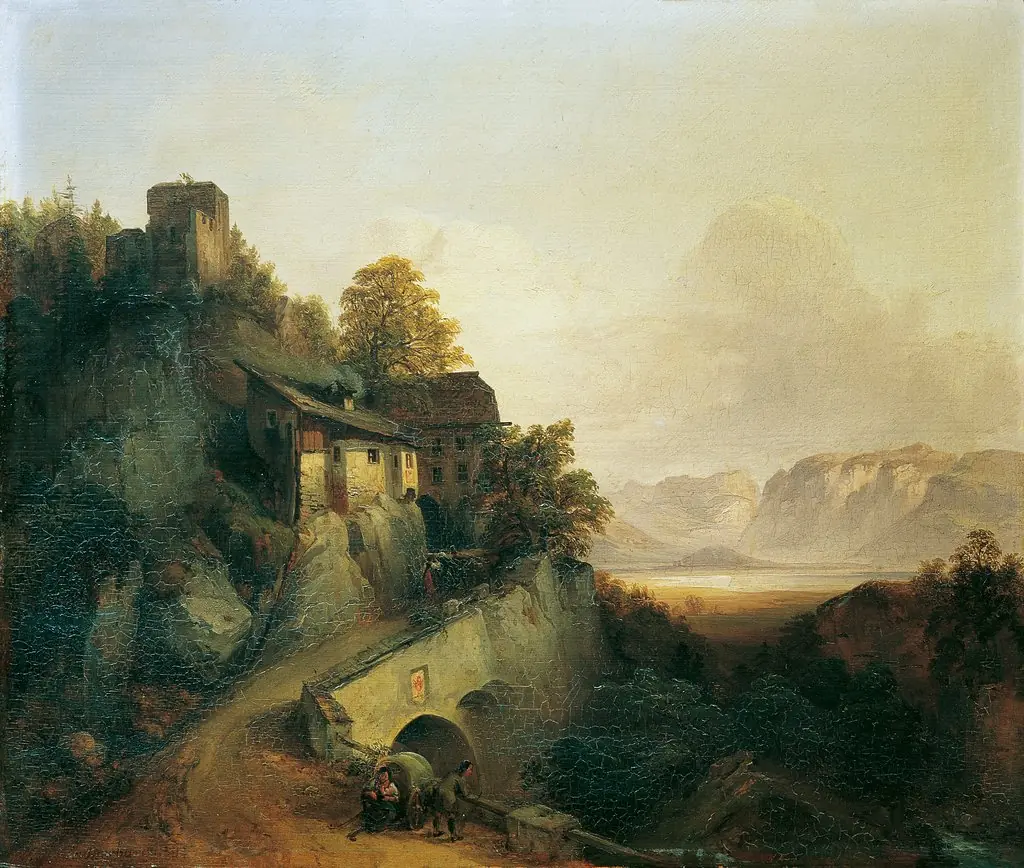 Mountain Road in Tirol
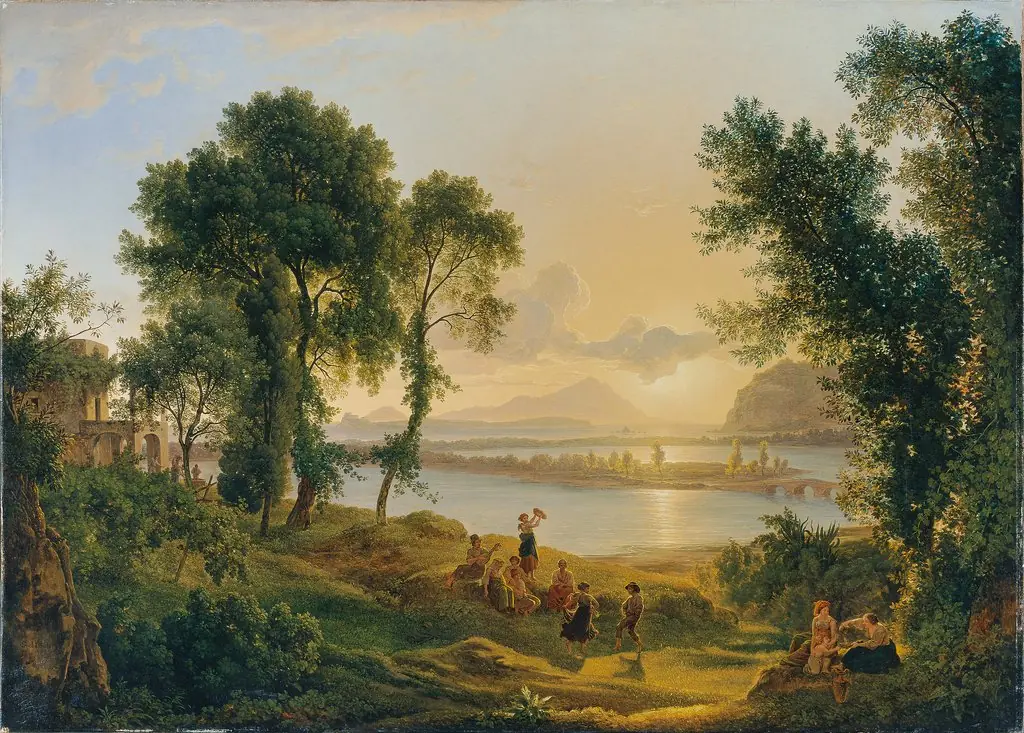 Sonnenuntergang über den Campi Flegrei gegen die Inseln Procida und Ischia
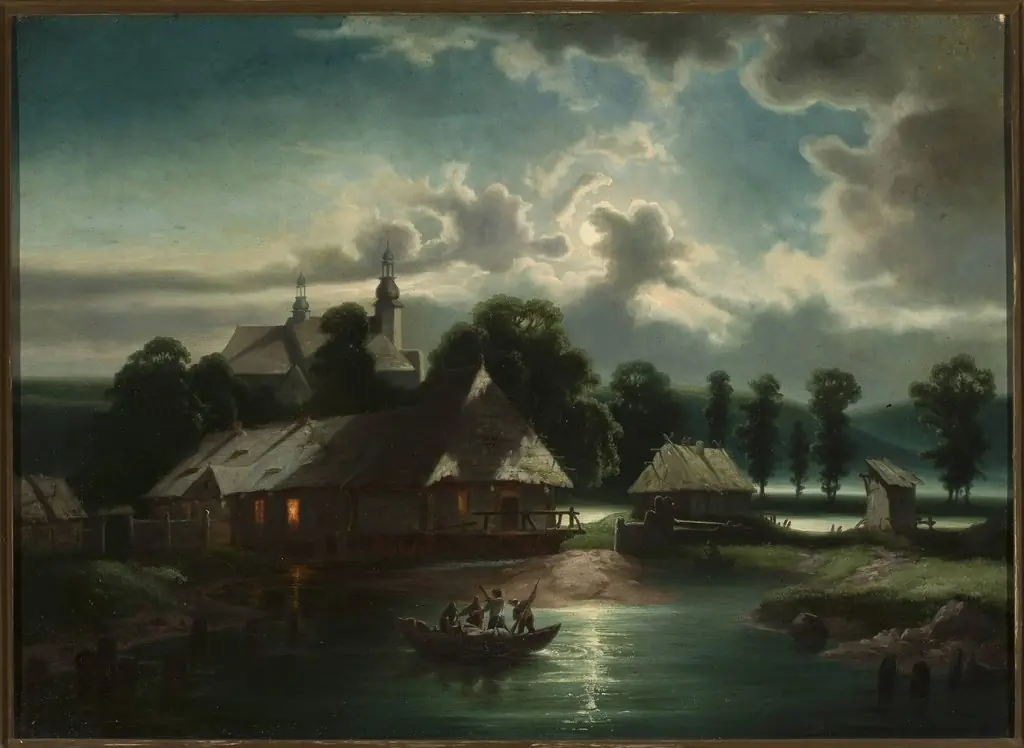 Countryside landscape at night
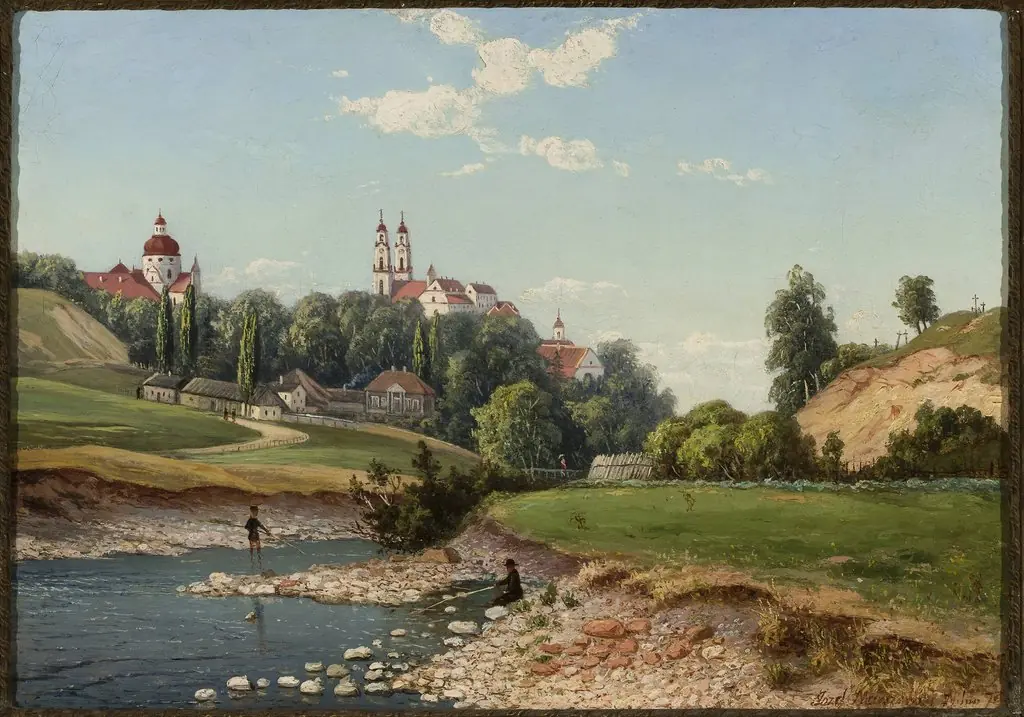 View of the church of Missionaries and Visitation Sisters in Vilnius
 Die Traun und der Traunstein