Artwork
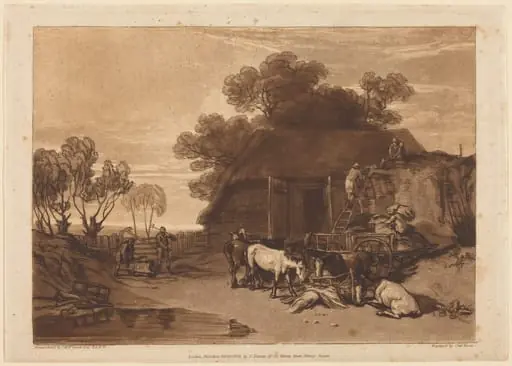
Liber Studiorum: The Farmyard with the Cock
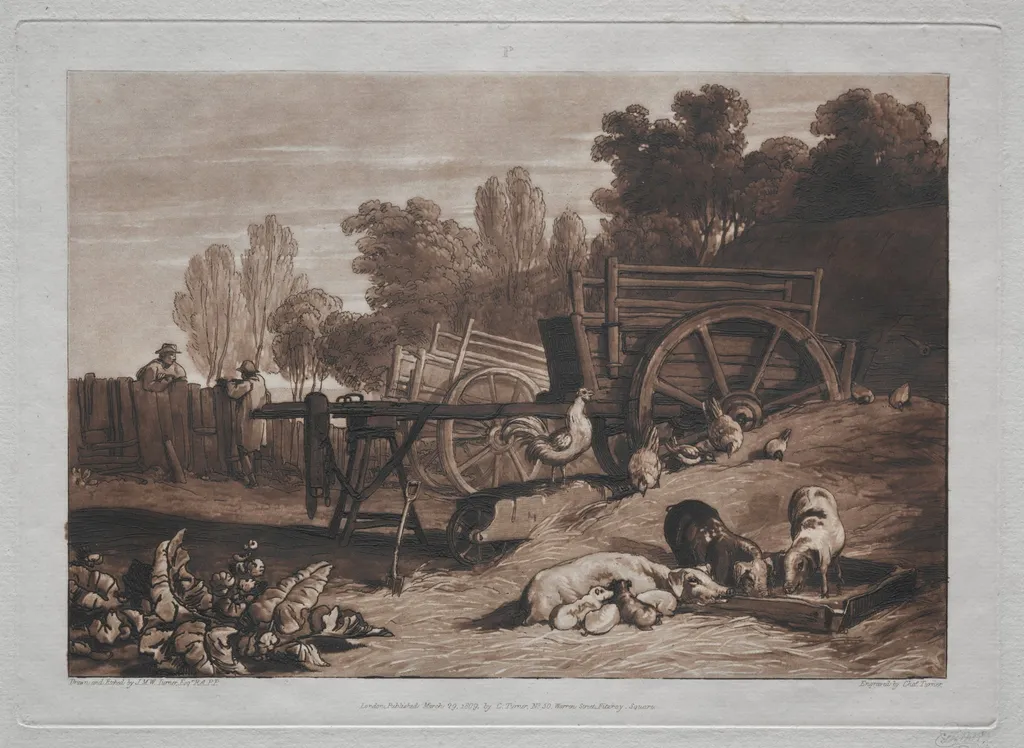
Liber Studiorum: The Farmyard with the Cock is a print by Joseph Mallord William Turner. It dates from 1823 and is held in the collection of the Cleveland Museum of Art.
About this work
Overview
The composition exemplifies Turner’s interest in everyday agrarian scenes rendered through the medium of print.
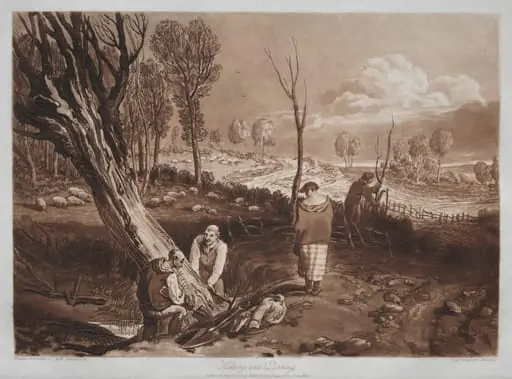
Created circa 1823, *Liber Studiorum: The Farmyard with the Cock* is a print by J. M. W. Turner, part of his ambitious *Liber Studiorum* series. The work presents a modest rural tableau, populated by a wooden wagon, a rooster, chickens, pigs, a dog, and two pedestrians, set against a fence, trees and a small stream. The composition exemplifies Turner’s interest in everyday agrarian scenes rendered through the medium of print.
Subject & Meaning
The image captures a moment of ordinary farm life, emphasizing the interaction of humans and animals within a bucolic landscape. By focusing on commonplace figures—a rooster crowing, pigs wallowing, a dog on guard—Turner highlights the vitality of the countryside, suggesting a quiet narrative of labor and coexistence without overt allegory.
Technique & Style
Turner employed a linear drawing foundation, enhanced by delicate shading to convey volume and atmospheric depth. The print’s restrained line work and subtle tonal gradations reflect his mastery of etching and mezzotint processes, allowing the scene to emerge with a sense of immediacy while retaining the softness characteristic of his watercolour practice.
History & Provenance
The print was produced as one of the 71 plates issued between 1807 and 1819 for the *Liber Studiorum*, a project intended to rival Claude Lorrain’s *Liber Veritatis*. After its initial publication, the plate circulated among collectors and institutions; it now resides in the collection of the Cleveland Museum of Art, where it is displayed as part of their British prints holdings.
Context
Turner’s *Liber Studiorum* sought to categorize landscape into six classical genres, blending pastoral observation with idealised scenery. Though this particular farmyard scene is grounded in realism, its atmospheric handling anticipates later developments in Impressionism and abstract approaches to landscape, marking a transitional moment in the evolution of British art.
Artist & collection
Artist
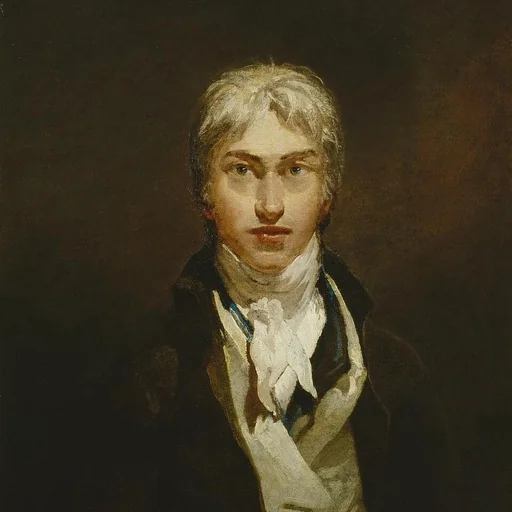
Joseph Mallord William Turner was born in 1775 at Maiden Lane, Covent Garden, where his father kept a barber and wig-making shop.