Artwork
Reclining Hermaphrodite
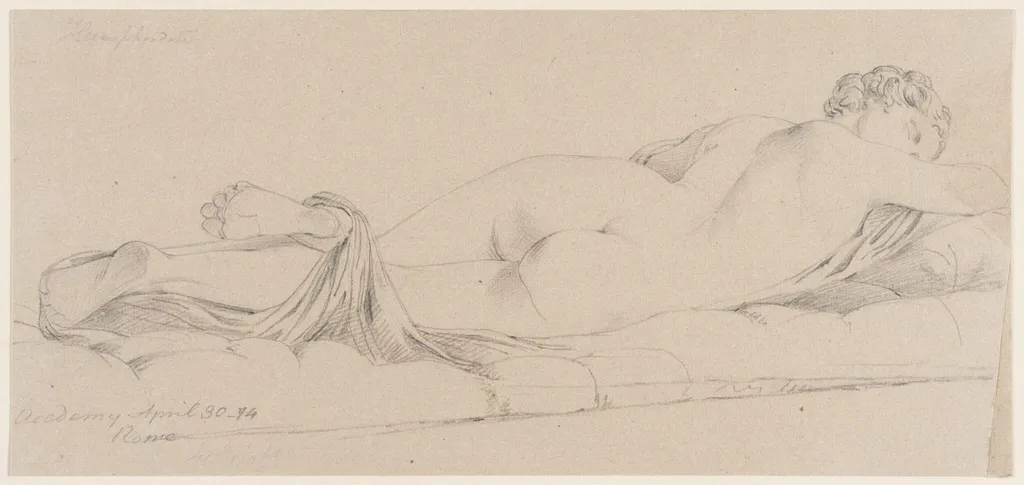
Reclining Hermaphrodite is a drawing by Joseph Wright. It dates from 1750 and is held in the collection of the Victoria and Albert Museum.
About this work
Overview
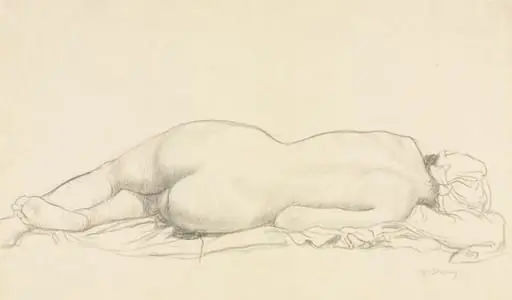
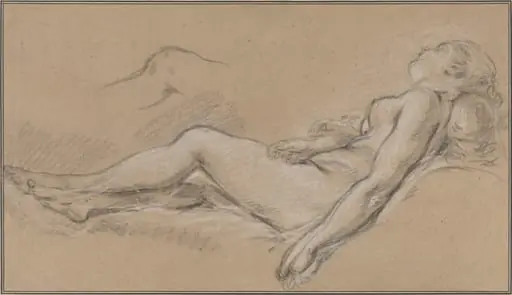
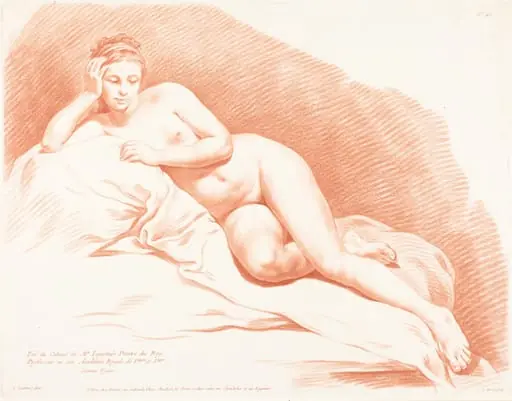
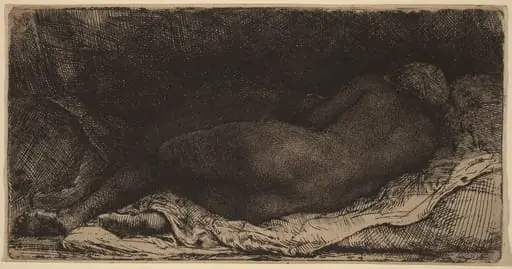
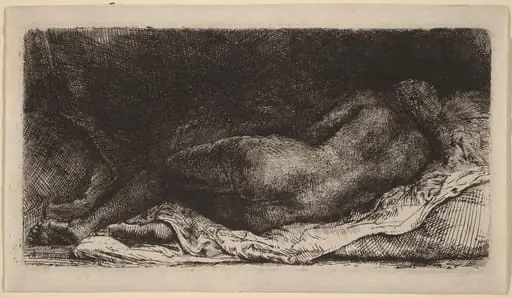
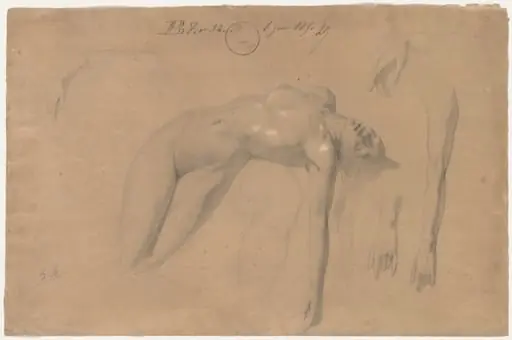
Joseph Wright’s 1750 pencil drawing presents a solitary figure lying on its side. The composition is truncated by the lower edge of the paper, suggesting a larger scene beyond the frame. The subject, shown in a relaxed pose with an arm supporting the head, occupies the central space, drawing immediate attention to the figure’s form and the surrounding drapery.
Subject & Meaning
The drawing portrays an intersex—or hermaphroditic—nude, a rare thematic choice for the mid‑eighteenth century. By depicting a body that blends traditionally masculine and feminine attributes, Wright engages with contemporary debates about gender, anatomy, and the limits of natural classification, inviting viewers to contemplate the fluidity of human form.
Technique & Style
Wright employs swift, flowing lines to outline the figure’s contours, contrasting with densely cross‑hatched strokes that render the fabric wrapped around the legs. This juxtaposition of loose gestural marks and meticulous shading creates a sense of immediacy while preserving depth and texture, illustrating the artist’s skill in manipulating graphite for both structure and atmosphere.
History & Provenance
Created in 1750, the drawing is part of Wright’s early oeuvre, a period when he explored anatomical studies alongside his more celebrated oil paintings. The work has remained in private collections before entering a museum’s holdings in the late twentieth century, where it is referenced as an example of his experimental approach to figure drawing.
Artist & collection
Artist
Joseph Wright painted theatrical nighttime scenes lit by candle or moon, with sharp realism and quiet drama.