Artwork
Os Jesuitos
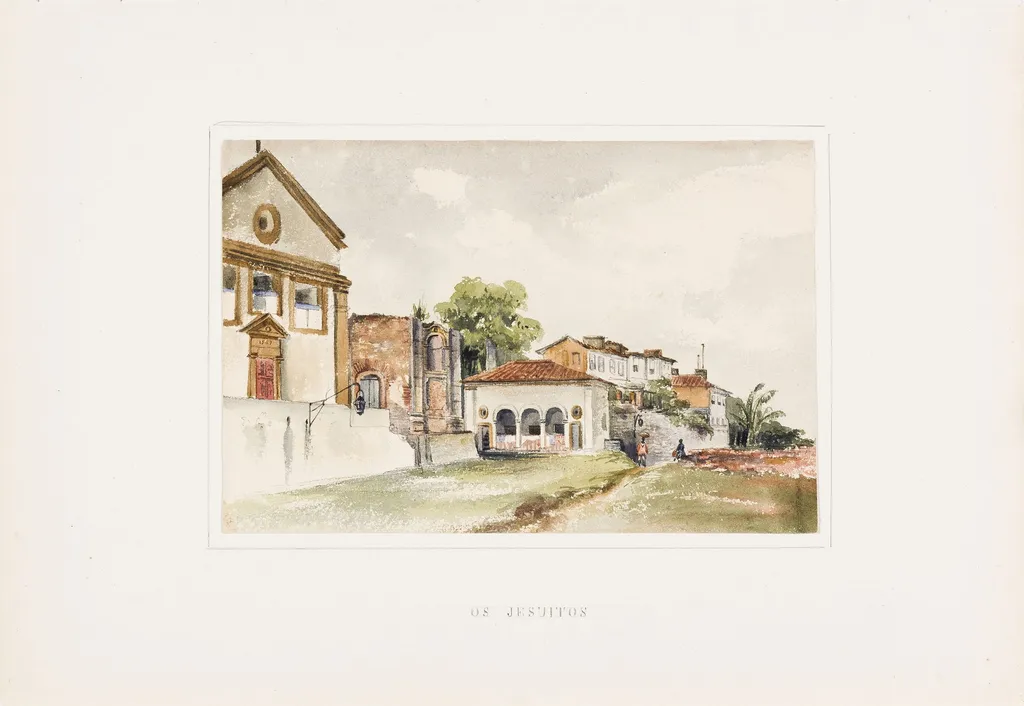
Os Jesuitos is a graphite painting by Jules Marie Vincent de Sinety. It dates from 1862 and is held in the collection of the Fundação Estudar collection.
About this work
Overview
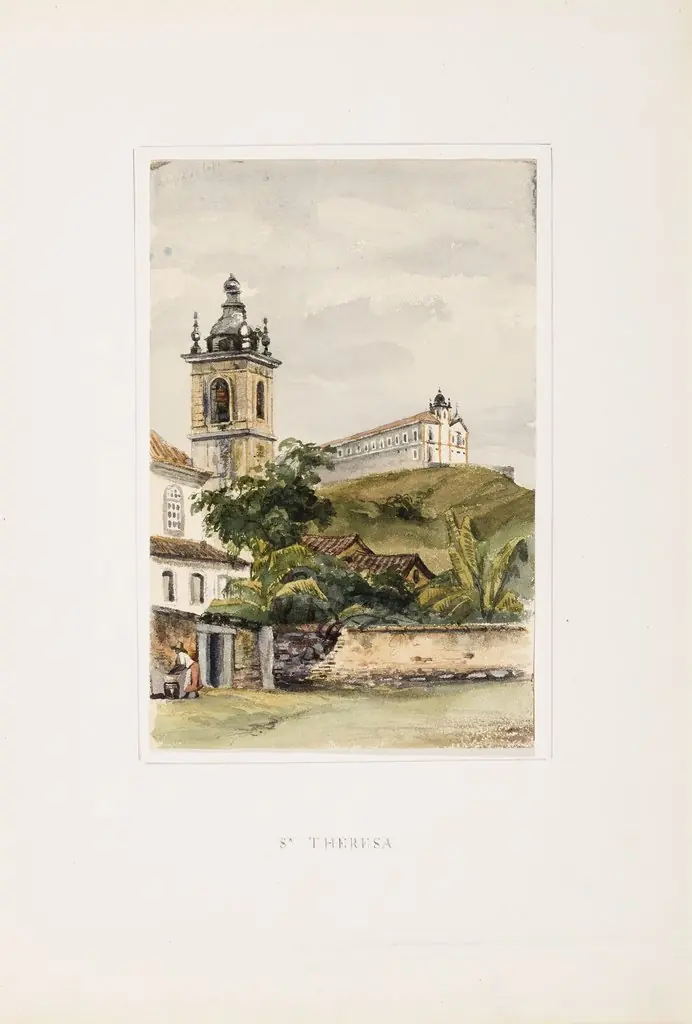
Os Jesuitos is a graphite drawing by Jules Marie Vincent de Sinety, dated around 1862. It presents a quiet urban vista of Rio de Janeiro, focusing on ecclesiastical and civic structures nestled within natural terrain. Executed in monochrome, the work belongs to a tradition of topographical studies that document colonial architecture through precise draftsmanship rather than color.
Subject & Meaning
The scene centers on a Jesuit-associated church and surrounding buildings, likely referencing the order’s historical presence in colonial Brazil. The inclusion of a winding dirt path suggests human activity and movement, subtly grounding the architecture in lived experience. The composition avoids grandeur, instead emphasizing quiet integration between built and natural environments.
Technique & Style
Sinety employed graphite to achieve subtle tonal gradations, using hatching and cross-contour lines to model forms and suggest texture. Chiaroscuro is applied with restraint, enhancing spatial depth without dramatic contrast. The precision in architectural rendering reflects academic training, while the loose handling of foliage introduces organic rhythm against rigid structures.
History & Provenance
Created during Sinety’s time in Brazil, the work was likely made as part of a broader documentation effort of colonial sites. It entered the collection of the Pinacoteca do Estado de São Paulo in the early 20th century, where it remains as part of a curated group of 19th-century Brazilian topographical drawings, valued for historical rather than aesthetic prominence.
Context
The Jesuit buildings depicted had been repurposed or abandoned by this time, lending the image a quiet sense of transition.
In the mid-19th century, European artists often traveled to Brazil to record its landscapes and architecture, responding to growing interest in colonial heritage. Sinety’s work aligns with this trend, offering a measured, observational approach distinct from romanticized depictions. The Jesuit buildings depicted had been repurposed or abandoned by this time, lending the image a quiet sense of transition.
Legacy
Os Jesuitos contributes to a modest but significant corpus of 19th-century Brazilian architectural studies. It is not widely exhibited but serves as a reference for scholars examining the visual documentation of colonial religious structures. Its enduring value lies in its unembellished record of a specific moment in Rio’s urban evolution.
Artist & collection
Artist
Jules Marie Vincent de Sinety (1812–1898) was an artist, born in Aix-en-Provence.
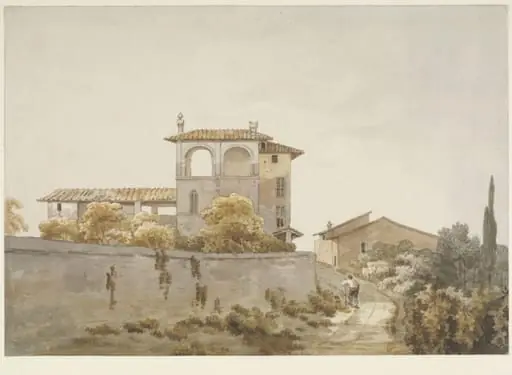 Italian villa
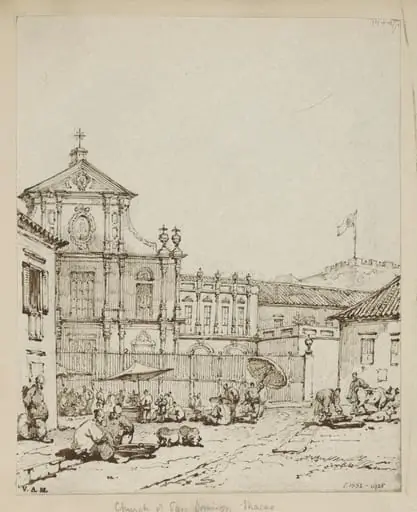 The church of S. Domingos, Macau
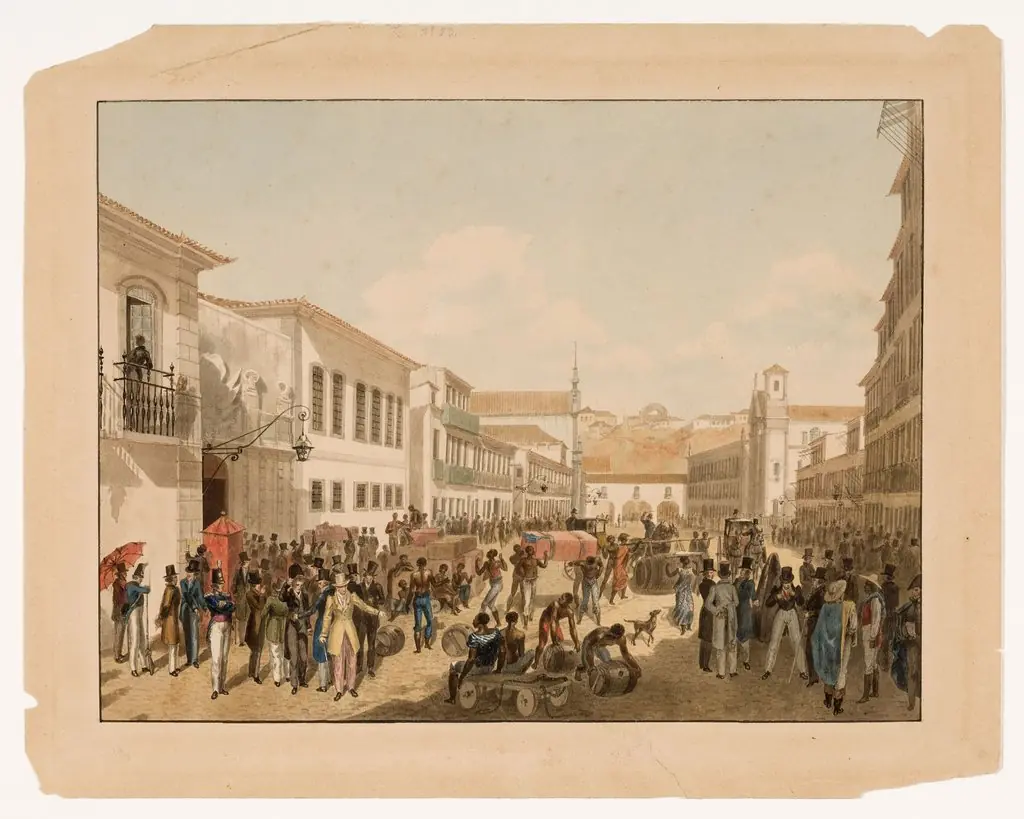 Rua Direita, Rio de Janeiro (atribuído)
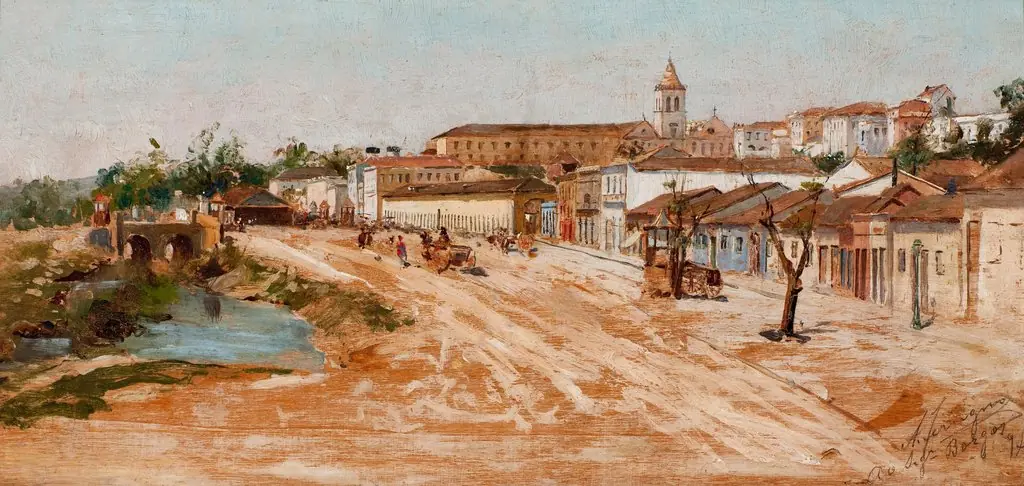 Rua 25 de março
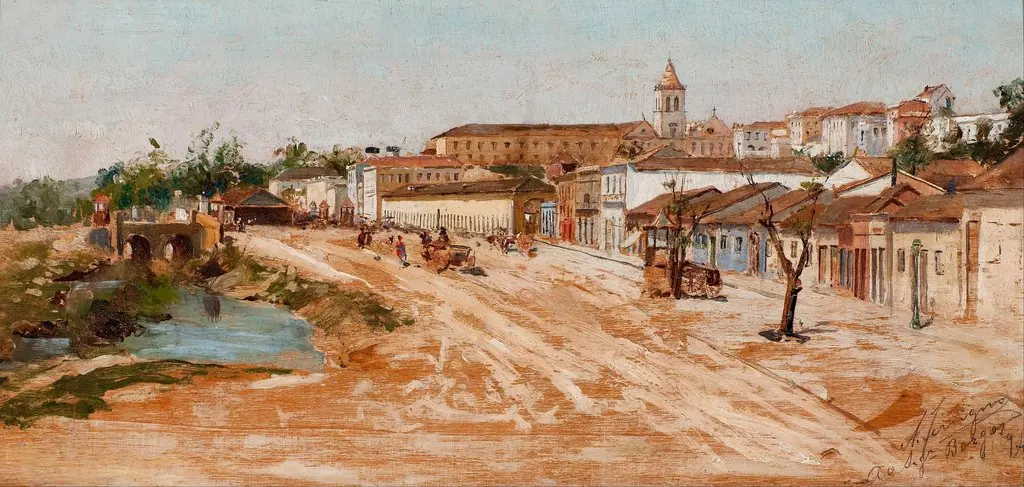 Rua 25 de março
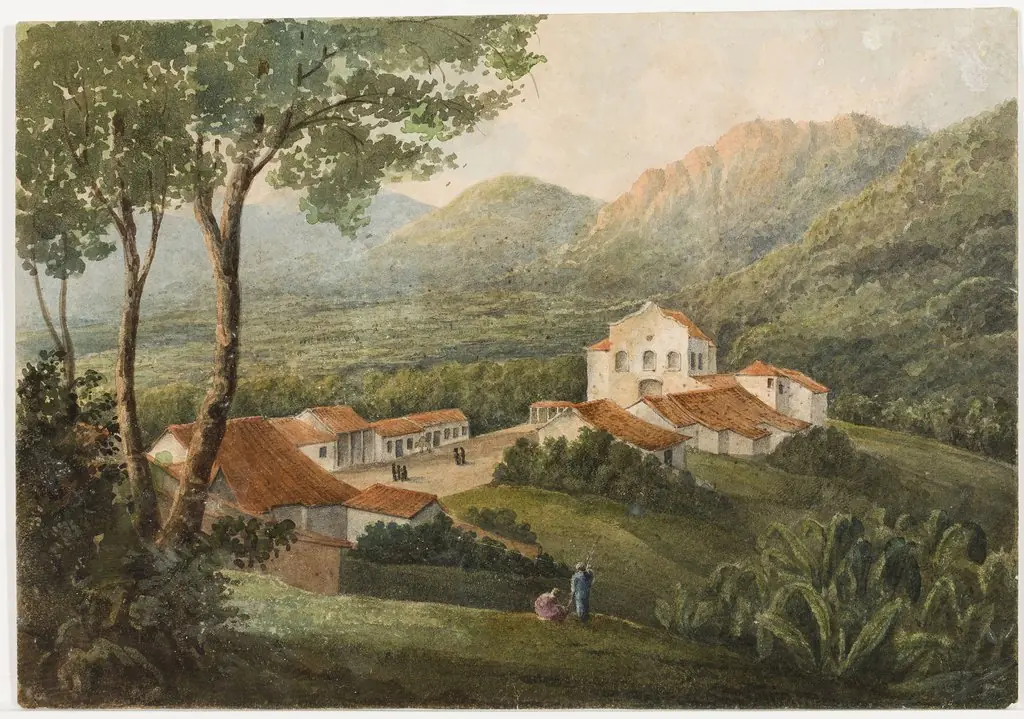 Vila rural e serra (atribuído)
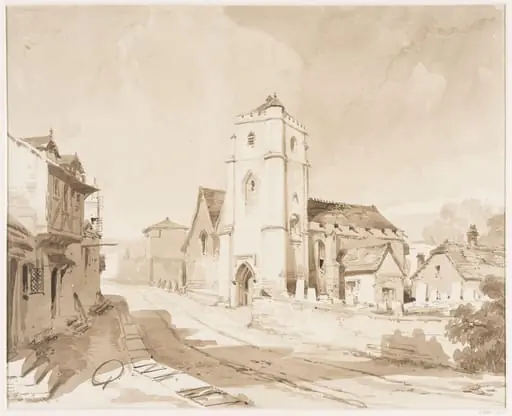 Untitled
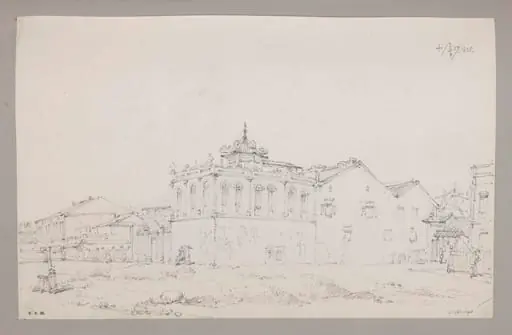 Chinqua's house, with entrance to China Street, Canton
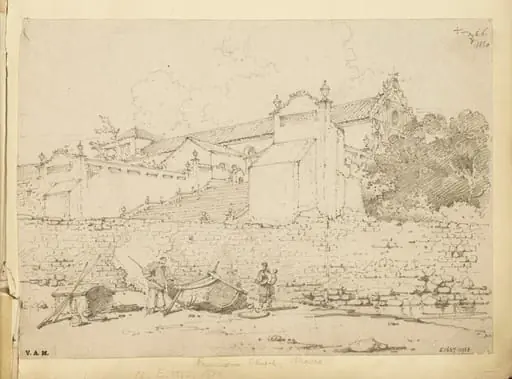 The church of S. Francisco, Macau
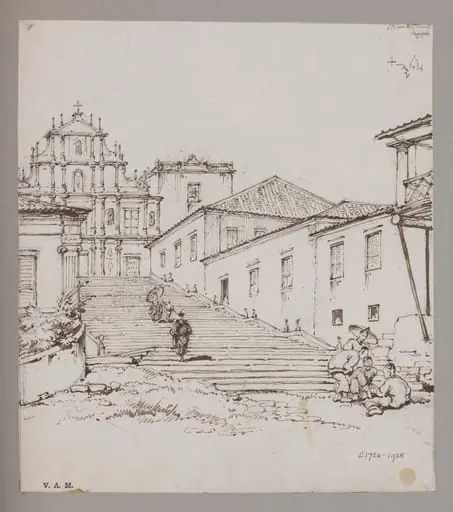 St. Paul's Church, Macao, before it was burnt down, and part of Mr. Turner's house