Artwork
Impression in a Dance Hall
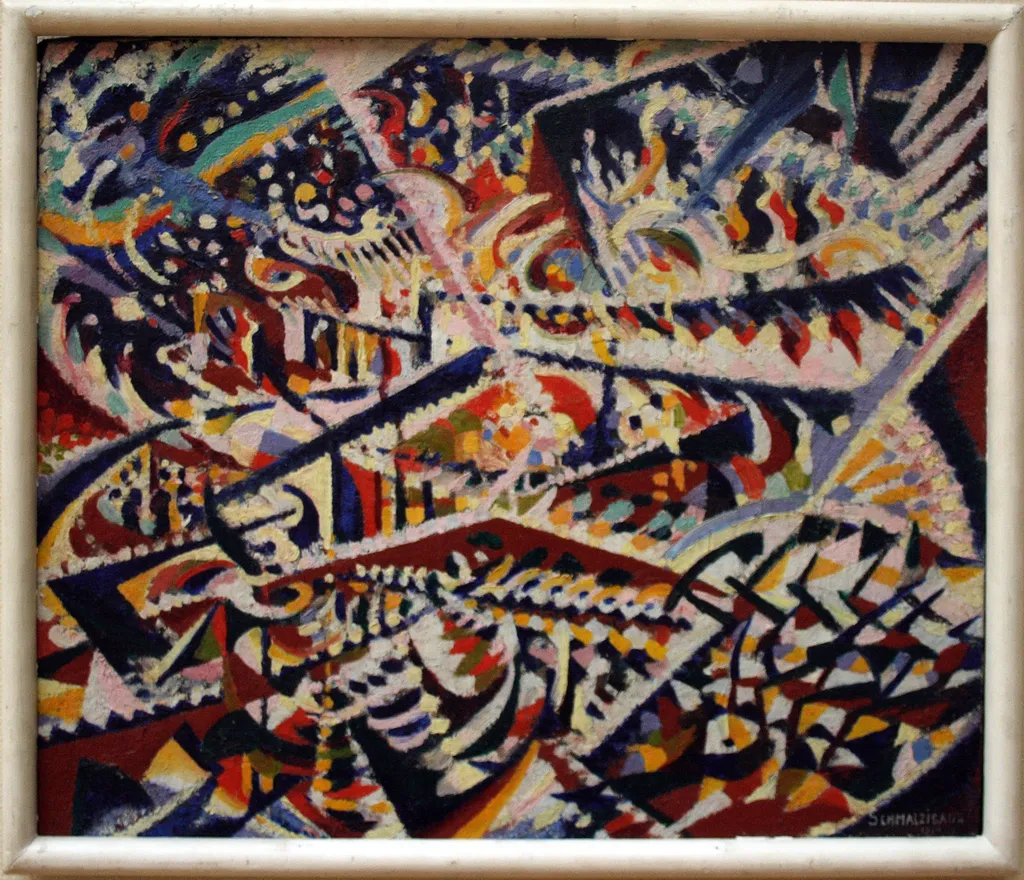
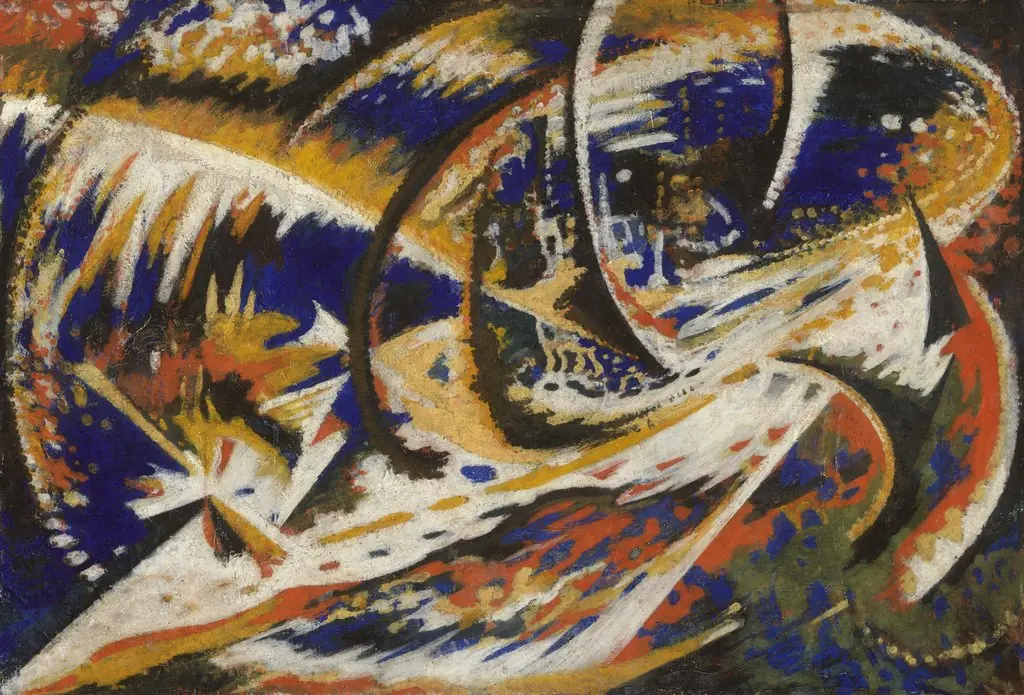
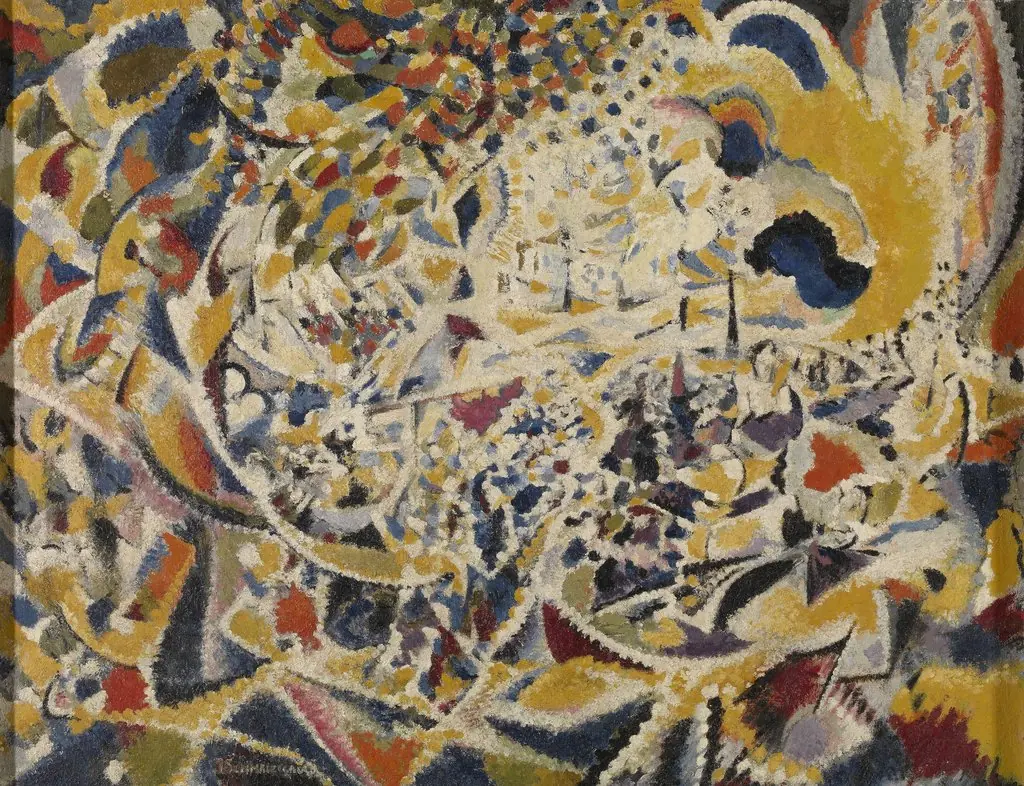
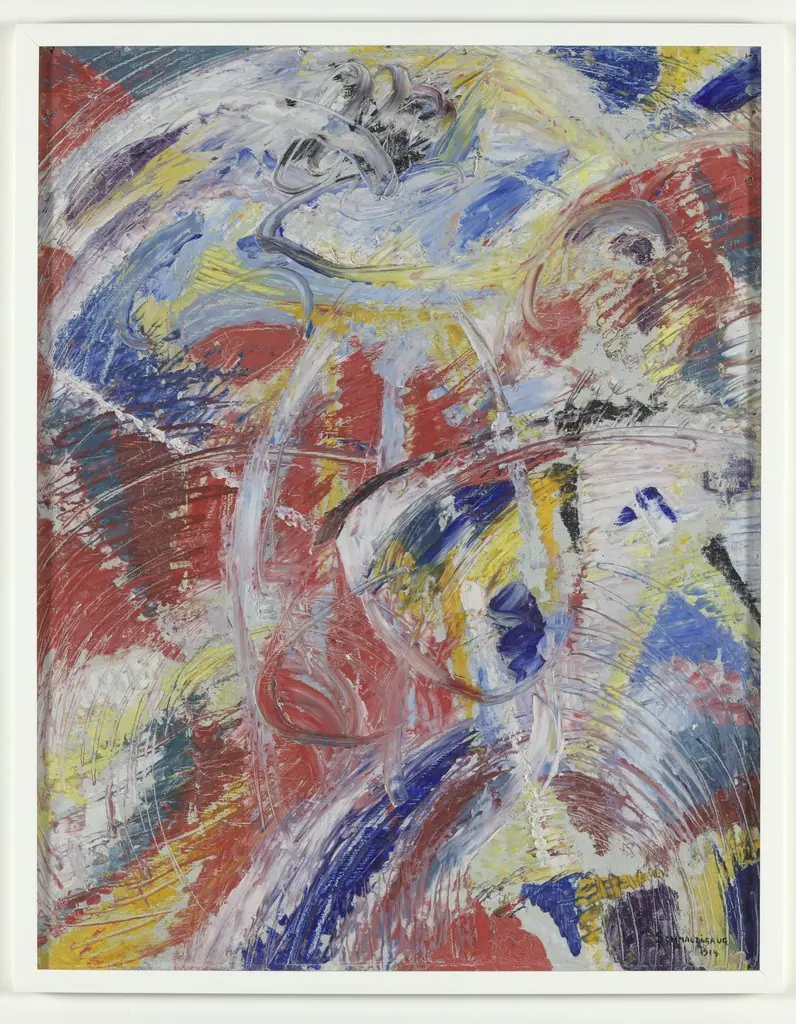
Impression in a Dance Hall is an oil painting by the Futurist artist Jules Schmalzigaug. It dates from 1914 and is held in the collection of the Royal Museum of Fine Arts Antwerp.
About this work
The painting is titled Impression in a Dance Hall.
It's an abstract work, which is interesting because abstract art was still a relatively new style in 1914. This was a time when many artists were experimenting with new ways to create and express themselves.
Check out the technique of impasto to learn more about how artists like Jules Schmalzigaug created textured effects in their paintings.
Overview
It resides in the collection of the Royal Museum of Fine Arts Antwerp.
Painted in 1914 by Belgian artist Jules Schmalzigaug, Impression in a Dance Hall is an oil-on-canvas work that captures the energy of a social gathering through abstract forms. It resides in the collection of the Royal Museum of Fine Arts Antwerp. At a time when abstraction was emerging as a radical departure from realism, Schmalzigaug’s approach reflected broader European experiments in visual language, moving away from literal representation toward emotional and sensory expression.
Subject & Meaning
The painting depicts a dance hall interior, but not as a scene of recognizable figures or architecture. Instead, it conveys movement, rhythm, and atmosphere through fragmented shapes and overlapping planes. The absence of clear narrative invites viewers to experience the ambiance—sound, light, and motion—rather than observe a specific event. This suggests an interest in the psychological or sensory impact of urban leisure spaces during the early 20th century.
Technique & Style
Schmalzigaug employed thick applications of paint, using impasto to build texture and depth across the canvas. Brushstrokes are energetic and directional, contributing to a sense of dynamism. Color is used expressively rather than naturallyistically, with hues chosen to evoke mood rather than depict reality. The composition lacks traditional perspective, favoring a flattened, rhythmic arrangement that aligns with early abstract tendencies in European modernism.
History & Provenance
Created in 1914, the painting entered the collection of the Royal Museum of Fine Arts Antwerp shortly after its completion. Schmalzigaug, though not widely known outside Belgium, was active in Antwerp’s avant-garde circles and exhibited with progressive groups. The work remained in institutional hands, avoiding private sales or major exhibitions abroad, which may explain its relative obscurity beyond regional art historical scholarship.
Context
In 1914, European artists were rapidly redefining visual expression, influenced by Cubism, Fauvism, and emerging abstract movements. Schmalzigaug’s work aligns with this ferment, particularly in its rejection of naturalism. While contemporaries like Kandinsky or Delaunay pursued abstraction more systematically, Schmalzigaug’s approach remained more intuitive, rooted in the immediate sensory experience of urban life rather than theoretical frameworks.
Legacy
Impression in a Dance Hall stands as an early example of Belgian abstraction, reflecting a localized response to international modernist trends. Though Schmalzigaug’s career was cut short by his death in 1917, this painting remains a significant artifact of pre-war experimentation in Belgium. It contributes to understanding how abstraction took root beyond major centers like Paris or Munich, revealing a quieter but persistent engagement with new artistic possibilities in regional contexts.
Artist & collection