Artwork
Diana and Her Nymphs
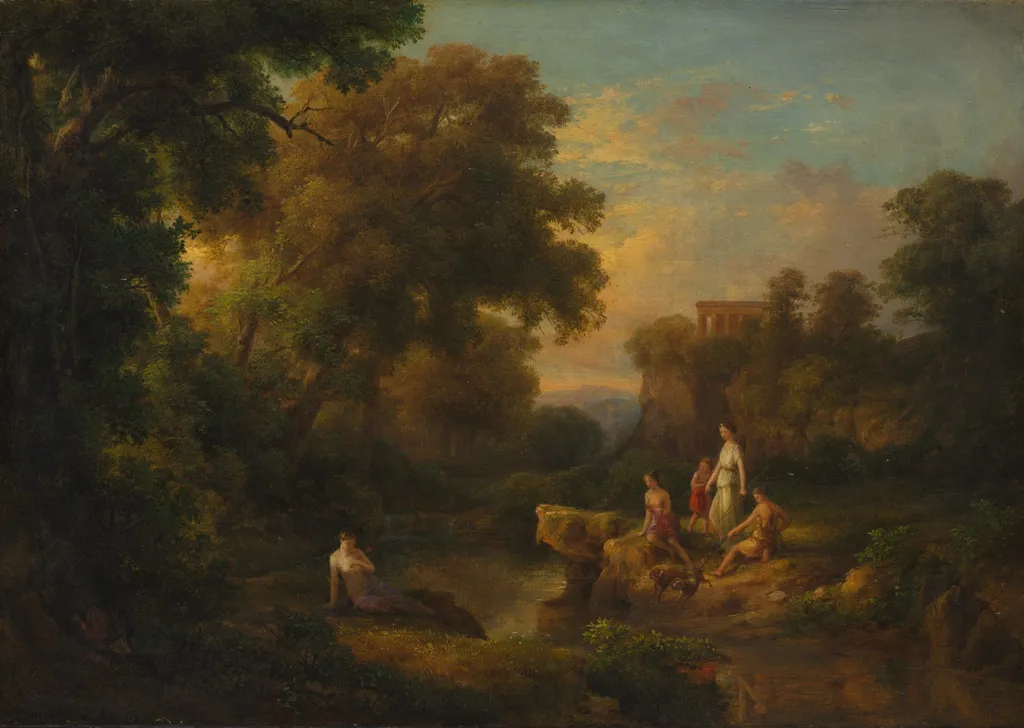
Diana and Her Nymphs is an unspecified painting by Károly Markó. It dates from 1853 and is held in the collection of the Cleveland Museum of Art.
About this work
Overview
This painting, now part of The Cleveland Museum of Art's collection, portrays the Roman goddess Diana with her accompanying nymphs within a natural setting.
Károly Markó, known as "The Elder," completed Diana and Her Nymphs in 1853. This painting, now part of The Cleveland Museum of Art's collection, portrays the Roman goddess Diana with her accompanying nymphs within a natural setting. Markó, a Hungarian artist, spent a considerable portion of his career in Italy, where he developed his distinctive approach to landscape painting. The work exemplifies his engagement with classical themes and the mythological genre.
Subject & Meaning
The painting centers on Diana, the Roman goddess revered for hunting, the moon, and wild places. She appears here with her retinue of nymphs, figures often associated with her in classical mythology. The central figure, distinguished by her white attire and commanding presence, leads the group through a dense forest. A subtle glimpse of a classical temple in the background further anchors the scene in its mythological context, suggesting a sacred grove.
Technique & Style
Markó renders this mythological scene with a focus on atmospheric effects. The composition frames the figures within a lush, shadowy forest, while a warm, glowing sky in the distance provides a dramatic contrast. This interplay of light and deep greens accentuates the forms of Diana and her nymphs, drawing the viewer's eye to their interaction. The detailed natural elements and classical figures align with the conventions of the mythological genre.
History & Provenance
Created in Italy during 1853, Diana and Her Nymphs reflects the environment where Károly Markó spent a significant portion of his artistic life. Markó, a prominent Hungarian landscape painter, established his career while residing in Italy, a common practice for artists seeking classical inspiration. The painting is currently preserved within the holdings of The Cleveland Museum of Art.
Context
Károly Markó "The Elder" holds a notable position in Hungarian art history as one of the earliest artists from his nation to specialize in landscape painting. His extended residence and work in Italy profoundly shaped his artistic vision, leading him to integrate classical themes and mythological narratives into his detailed natural settings. This approach contributed to the development of landscape as a significant genre in Hungarian art.
Own this work as a print
Artist & collection
Artist
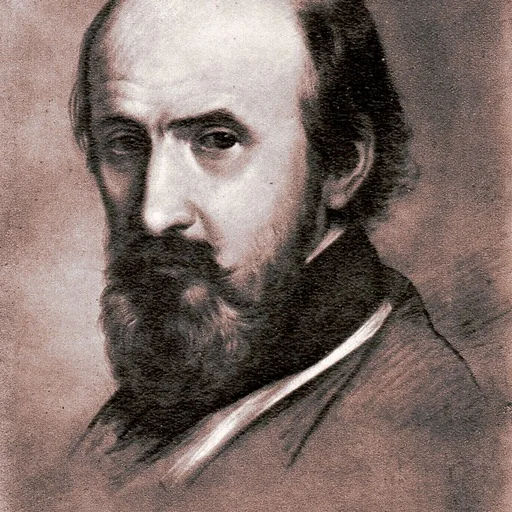
Károly Markó, also known as Carlo Marco (25 September 1791, Lőcse (today Levoča, Slovakia) – 19 November 1860, at the Villa Medici di Lappeggi near Bagno a Ripoli, Italy) was one of the first Hungarian landscape painters.
