Artwork
Portrait of Henri van Booven
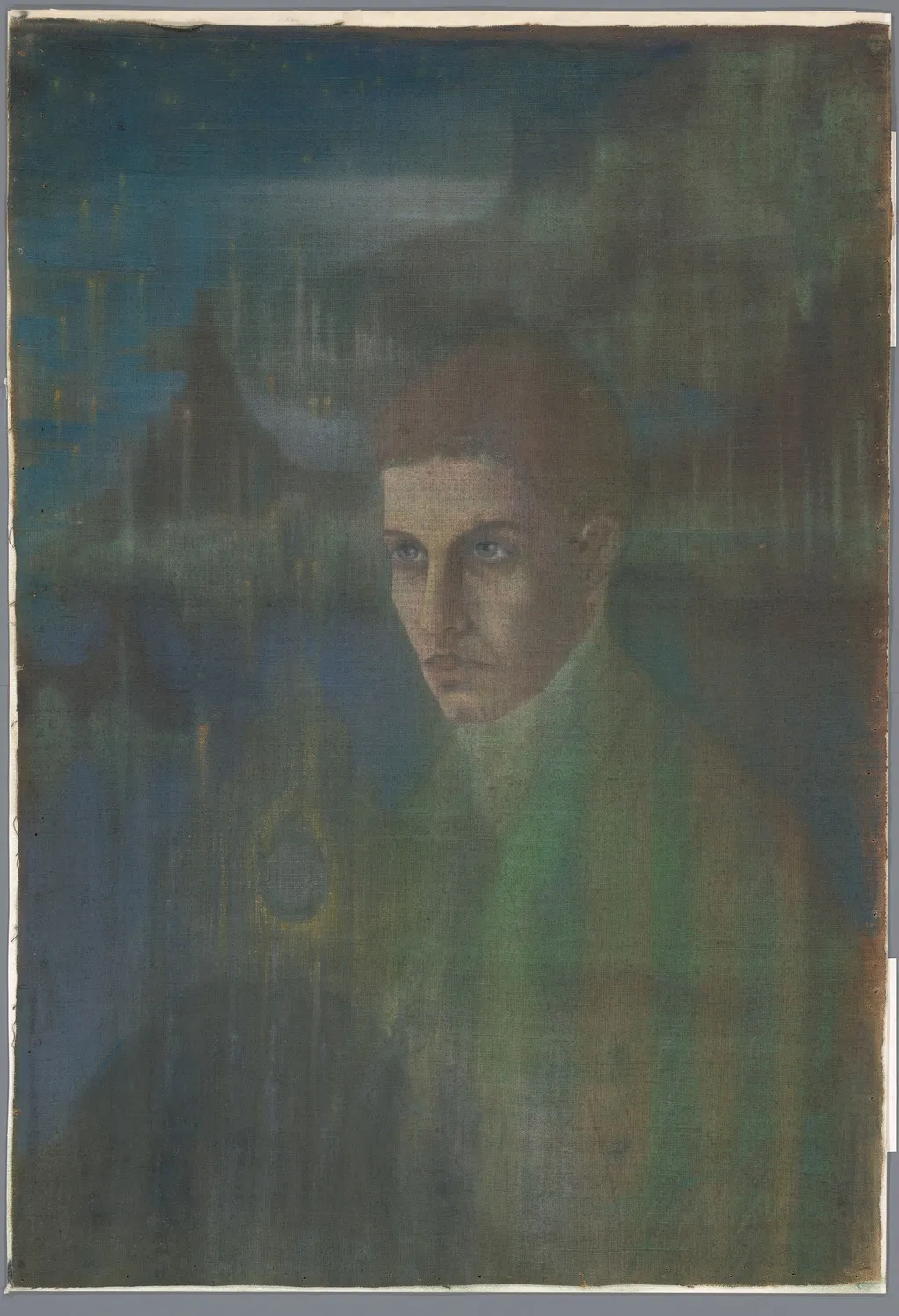
Portrait of Henri van Booven is an unspecified painting by the Post-Impressionist artist Karel de Nerée tot Babberich. It dates from 1900 and is held in the collection of the Rijksmuseum.
About this work
Overview
Created in 1900, the portrait depicts Henri van Booven, a contemporary of the Dutch artist Karel de Nerée tot Babberich. Executed in a post‑impressionist manner, the work is part of the Rijksmuseum’s holdings. The composition isolates the sitter’s face against an indistinct, shadowy backdrop, emphasizing his direct gaze while the surrounding space remains deliberately vague.
Subject & Meaning
Henri van Booven is presented with a sharply focused stare, his eyes catching the viewer’s attention amid softened facial contours. The contrast between the luminous collar and the muted tones suggests an introspective mood, inviting contemplation of the sitter’s inner life rather than external details. The portrait thus functions as a psychological study rather than a conventional likeness.
Technique & Style
De Nerée employs a limited palette of subdued greens and blues, applying thin, almost translucent layers that dissolve the background into a smoky haze. The handling recalls the decorative line work of Aubrey Beardsley and the stylized forms of Jan Toorop, while the overall brushwork aligns with post‑impressionist concerns for atmosphere and emotional resonance.
History & Provenance
The painting entered the Rijksmuseum’s collection, where it remains on display as an example of early‑20th‑century Dutch symbolism. Its acquisition reflects the museum’s interest in works that bridge decadent symbolism and emerging modernist tendencies, preserving de Nerée’s contribution to the period’s artistic dialogue.
Artist & collection
Artist
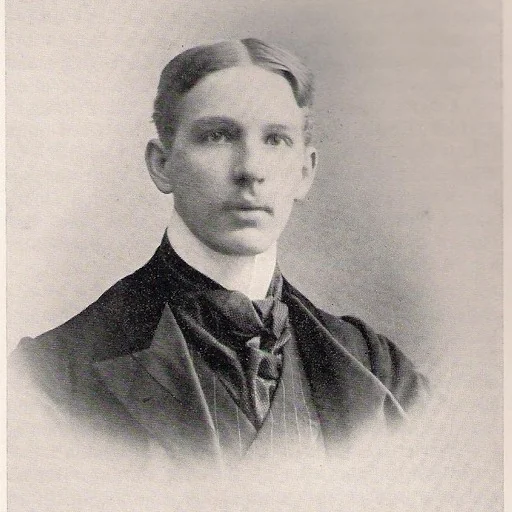
Christophe Karel Henri (Karel) de Nerée tot Babberich (18 March 1880 – 19 October 1909) was a Dutch symbolist artist who worked in the decadent and symbolist style of Aubrey Beardsley and Jan Toorop.
