Artwork
Piazzale Michelangelo near Florence
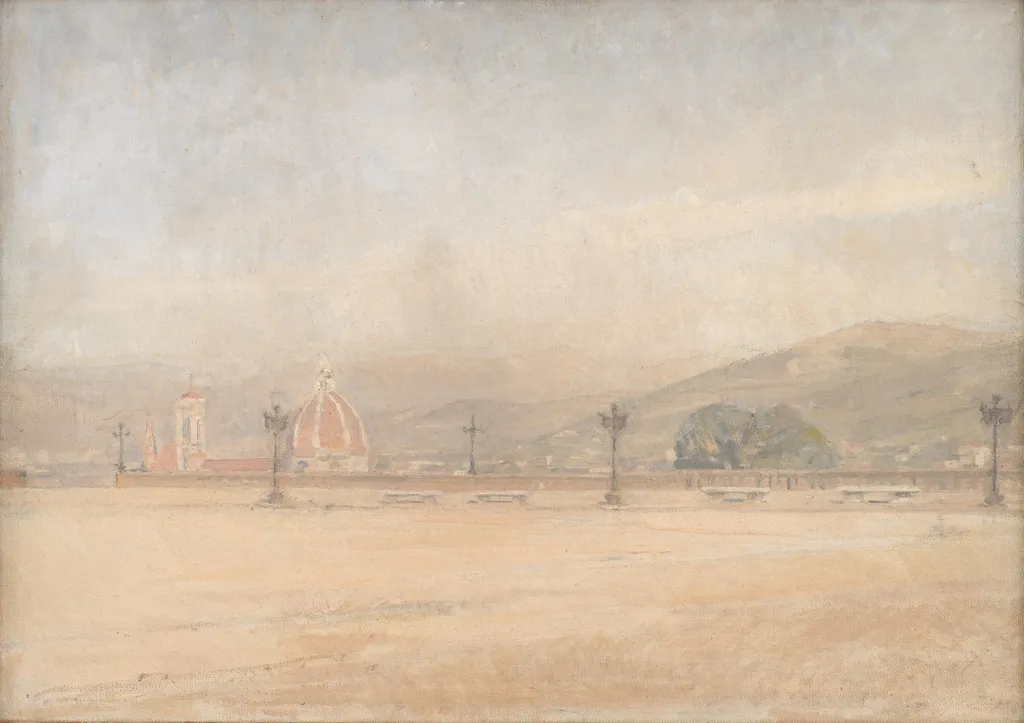
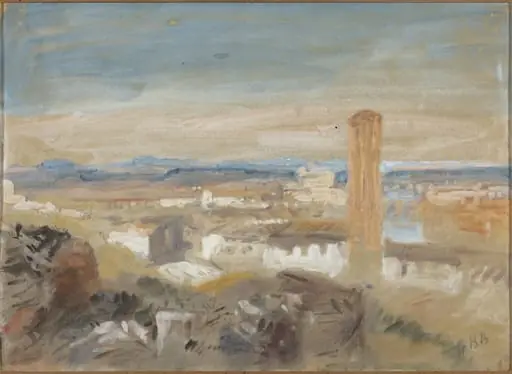
Piazzale Michelangelo near Florence is an oil painting by the Post-Impressionist artist Karl Schou. It dates from 1910 and is held in the collection of the Statens Museum for Kunst.
About this work
Overview
The composition centers on the iconic dome of the cathedral, set against a hazy sky, while an expansive, sparsely populated square stretches forward.
Karl Schou’s 1910 oil on canvas, titled *Piazzale Michelangelo near Florence*, presents a tranquil, atmospheric view of Florence’s skyline. The composition centers on the iconic dome of the cathedral, set against a hazy sky, while an expansive, sparsely populated square stretches forward. Muted pinks, grays and browns dominate the palette, lending the scene a softened, almost reverie-like quality.
Subject & Meaning
The painting captures two emblematic landmarks: the cathedral’s red‑tiled dome and the adjoining Piazzale Michelangelo, a popular lookout over the city. By rendering the urban forms in vague outlines, Schou emphasizes the sense of distance and contemplation, inviting viewers to experience the vista as a fleeting, meditative impression rather than a detailed topographical record.
Technique & Style
Schou employs light, almost impressionistic brushwork that blurs architectural edges, creating a dreamlike atmosphere. The subdued colour scheme and delicate handling of light suggest an early twentieth‑century interest in mood over precise representation, aligning the work with broader European trends toward atmospheric landscape painting.
History & Provenance
Executed in 1910, the canvas entered the collection of Denmark’s Statens Museum for Kunst, where it remains on display. Its acquisition reflects the museum’s early twentieth‑century commitment to acquiring works that illustrate international artistic dialogues, particularly those depicting renowned European locales.
Context
At the time of its creation, Florence was a frequent subject for artists drawn to its Renaissance heritage and striking vistas. Schou’s choice of the Piazzale Michelangelo—a relatively new public space inaugurated in the late nineteenth century—places the work within a period of renewed interest in urban panoramas that celebrate both historic monuments and modern civic spaces.
Own this work as a print
Artist & collection