Artwork
Kirifuri Fall in Kurokami Mountain, Shimotsuke Province
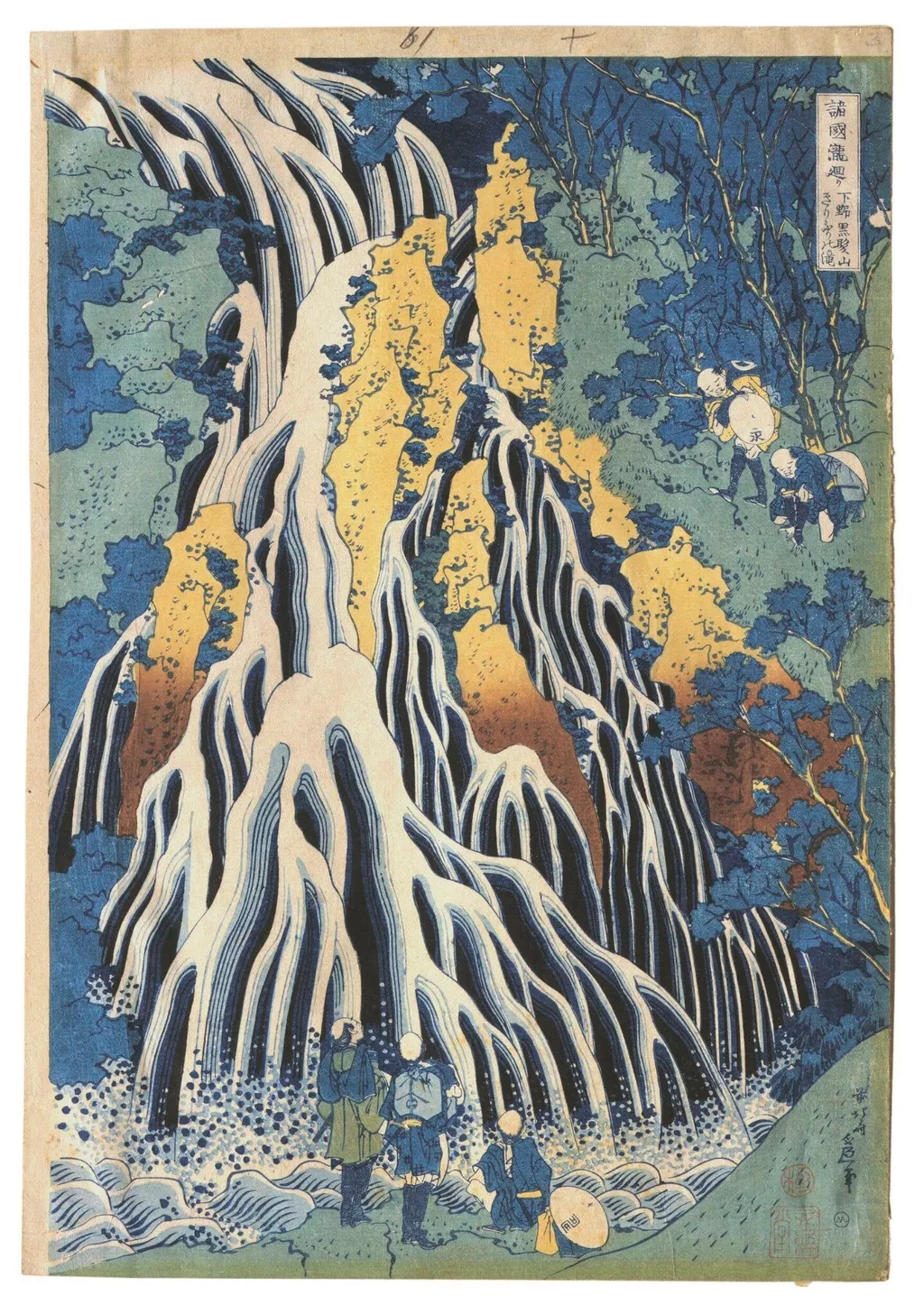
Kirifuri Fall in Kurokami Mountain, Shimotsuke Province is a print by the Japonisme artist Katsushika Hokusai. It dates from 1827 and is held in the collection of the Victoria and Albert Museum.
About this work
Overview
This woodblock print, created by Katsushika Hokusai in 1827, captures Kirifuri Falls within the Kurokami Mountain range of Shimotsuke Province. Part of a larger series, it presents a natural landscape with minimal human presence, emphasizing the power and stillness of the environment. The composition is restrained, focusing attention on the vertical flow of water against rugged terrain.
Subject & Meaning
The scene depicts a single, towering waterfall descending a steep cliff, surrounded by dense vegetation. Human figures, small and distant, serve to scale the immensity of nature rather than to narrate an event. The work reflects a contemplative view of the natural world, common in Edo-period landscape prints, where nature is neither conquered nor idealized, but observed with quiet reverence.
Technique & Style
Hokusai employed precise linework and layered color blocks typical of ukiyo-e woodblock printing. Subtle gradations in ink and tone suggest depth and shadow, though without overt chiaroscuro. The palette is restrained, using earth tones and muted blues to enhance the sense of atmospheric space. Simplicity in form and absence of decorative detail reinforce the print’s focus on elemental forces.
History & Provenance
The print entered the museum’s collection in 1901 following the sale of the Bowes Museum’s holdings. Its presence in the institution’s Asia Department records was confirmed through a 2022 provenance review, which traced its acquisition path and verified its origin within Hokusai’s published series. No evidence suggests alteration or later reissue.
Context
Created during the late Edo period, this print belongs to Hokusai’s series of landscapes that redefined Japanese printmaking. It responds to growing public interest in travel and regional scenery, while aligning with traditional aesthetic values that favored harmony with nature. Unlike theatrical ukiyo-e subjects, this work prioritizes topographical accuracy and quiet observation.
Legacy
Though less famous than Hokusai’s later 'Thirty-Six Views of Mount Fuji,' this print exemplifies his early mastery of landscape composition. Its influence is seen in later artists who adopted his emphasis on natural forms and spatial economy. The work remains a quiet but significant reference in the evolution of Japanese printmaking beyond urban themes.
Artist & collection

Artist
Katsushika Hokusai spent his life in Edo, now Tokyo, where he drew and carved prints for a living.

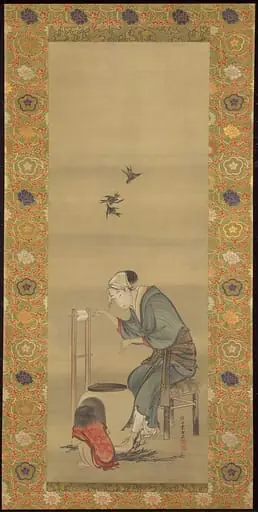
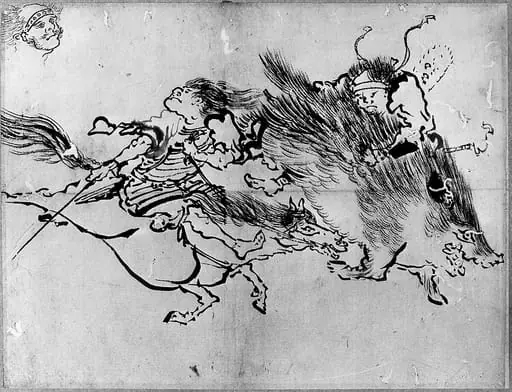
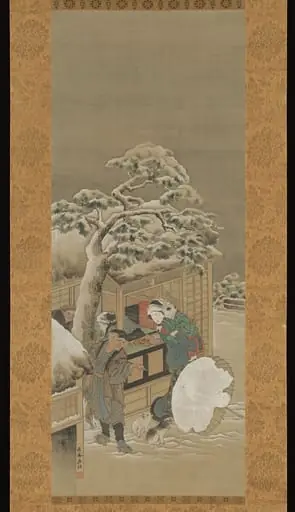
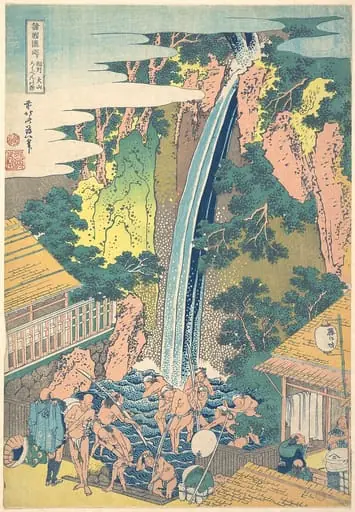 諸國瀧廻リ 相州大山ろうべんの瀧|Rōben Waterfall at Ōyama in Sagami Province (Sōshū Ōyama Rōben no taki), from the series A Tour of Waterfalls in Various Provinces (Shokoku taki meguri)
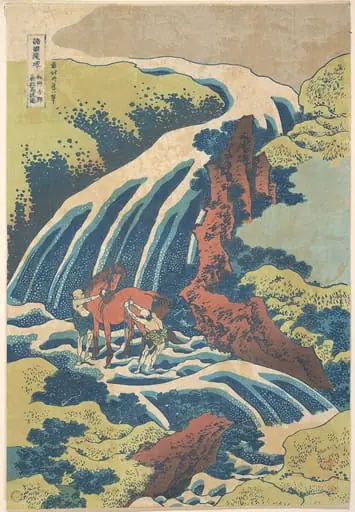 諸國瀧廻リ 和州吉野義経馬洗滝|The Waterfall Where Yoshitsune Washed His Horse at Yoshino in Yamato Province (Washū Yoshino Yoshitsune uma arai no taki), from the series A Tour of Waterfalls in Various Provinces (Shokoku taki meguri)
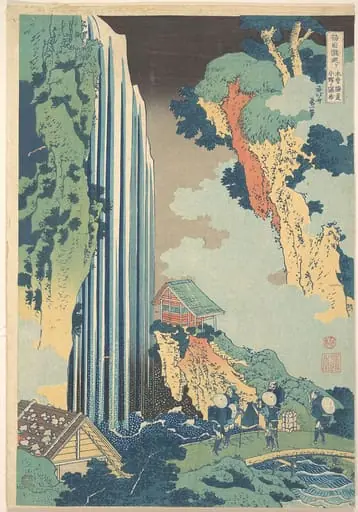 諸國瀧廻リ 木曾海道小野ノ瀑布|Ono Waterfall on the Kisokaidō (Kisokaidō Ono no bakufu), from the series A Tour of Waterfalls in Various Provinces (Shokoku taki meguri)
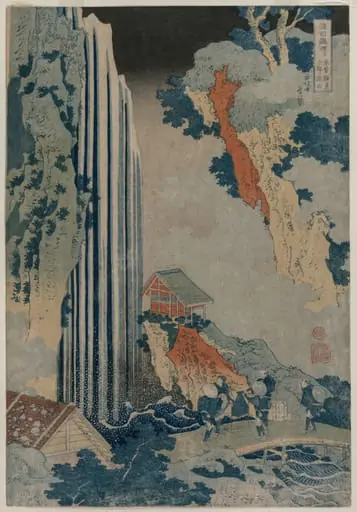 Ono Waterfall on the Kiso Road (from the series a Tour of Waterfalls in the Provinces)
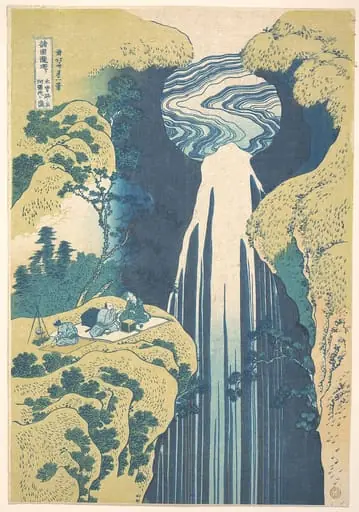 諸國瀧廻リ 木曽路ノ奥 阿彌陀ヶ瀧|The Amida Falls in the Far Reaches of the Kisokaidō Road (Kisoji no oku Amida-ga-taki), from the series A Tour of Waterfalls in Various Provinces (Shokoku taki meguri)
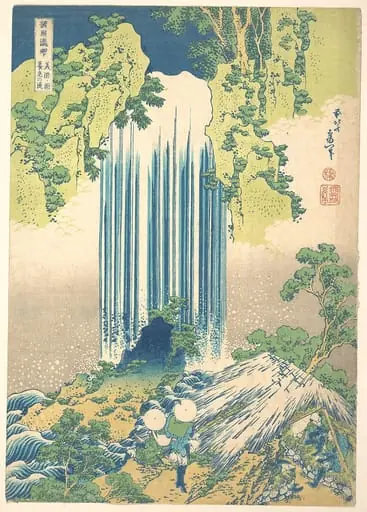 諸國瀧廻リ 美濃ノ国養老の滝|Yōrō Waterfall in Mino Province (Mino no Yōrō no taki), from the series A Tour of Waterfalls in Various Provinces (Shokoku taki meguri)
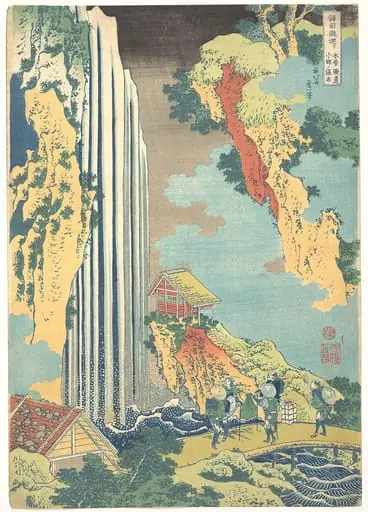 諸國瀧廻リ 木曾海道小野ノ瀑布|Ono Waterfall on the Kisokaidō (Kisokaidō Ono no bakufu), from the series A Tour of Waterfalls in Various Provinces (Shokoku taki meguri)
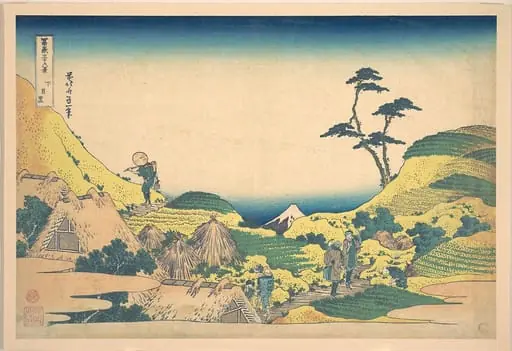 冨嶽三十六景 下目黒|Lower Meguro (Shimo Meguro), from the series Thirty-six Views of Mount Fuji (Fugaku sanjūrokkei)
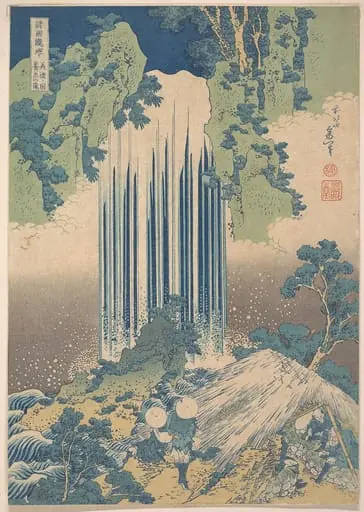 諸國瀧廻リ 美濃ノ国養老の滝|Yōrō Waterfall in Mino Province (Mino no Yōrō no taki), from the series A Tour of Waterfalls in Various Provinces (Shokoku taki meguri)
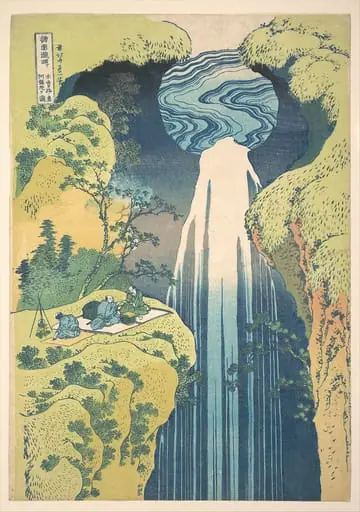 諸國瀧廻リ 木曽路ノ奥 阿彌陀ヶ瀧|The Amida Falls in the Far Reaches of the Kisokaidō Road (Kisoji no oku Amida-ga-taki), from the series A Tour of Waterfalls in Various Provinces (Shokoku taki meguri)