Artwork
Full Moon with Crow on Plum Branch
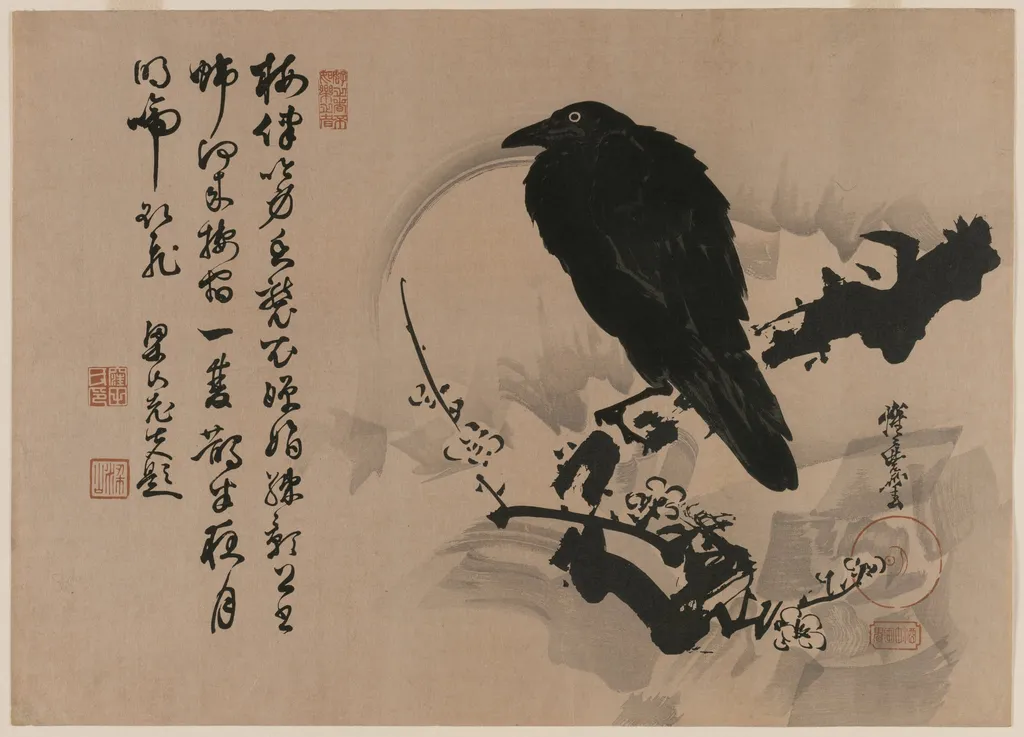
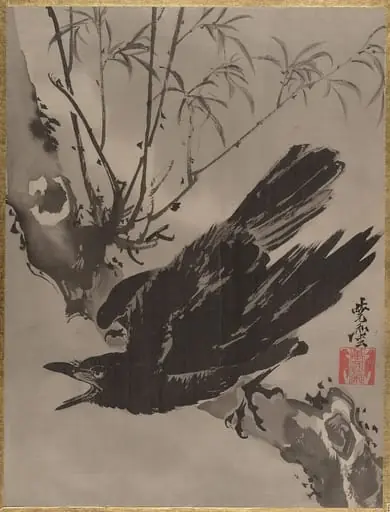
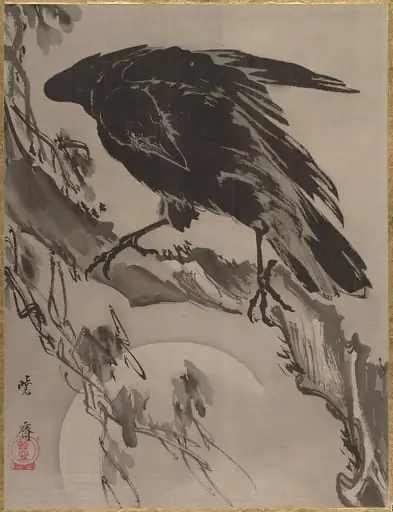
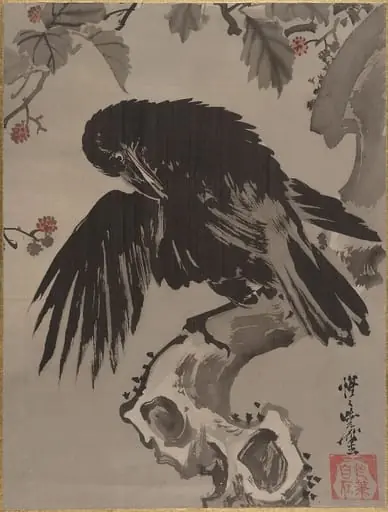
Full Moon with Crow on Plum Branch is a print by the Impressionist artist Kawanabe Kyōsai 河鍋暁斎. It dates from 1884 and is held in the collection of the Cleveland Museum of Art. This ink-on-paper print depicts a full moon partially obscured by a slender plum branch, with two crows perched along its length.
About this work
The poem tucked in the corner tells a tiny story: the crows are noisy guests in the artist’s house, their squawks mixing with the scent of plum blossoms.
You see a bright full moon behind a thin plum branch, with two crows perched on it.
The poem tucked in the corner tells a tiny story: the crows are noisy guests in the artist’s house, their squawks mixing with the scent of plum blossoms. The moonlight turns the branches into delicate shadows on the window. It’s a quiet moment, but the words make it feel alive.
Look up more paintings of japan, edo period (1615–1868) to see how artists played with nature and poetry.
Overview
This ink-on-paper print depicts a full moon partially obscured by a slender plum branch, with two crows perched along its length. A short poem in calligraphy occupies the upper corner, weaving narrative into the visual scene. The composition balances minimalism with emotional resonance, characteristic of Edo-period literati aesthetics where nature and verse intertwine.
Subject & Meaning
The crows, depicted as persistent intruders in the artist’s dwelling, vocalize beneath the moon’s glow. Their presence, paired with the plum’s fragrance, suggests an uneasy harmony between wildness and domesticity. The poem frames the scene not as serene solitude but as a quiet disturbance—nature’s intrusion into human space, felt through sound and scent rather than grand gesture.
Technique & Style
Rendered in monochrome ink, the print uses sparse brushwork to suggest form: the moon as a hollow circle, branches as fine, tapered lines, and crows as simplified silhouettes. The poem’s calligraphy is integrated as a compositional element, its placement guiding the viewer’s eye. Wet-on-dry ink techniques create subtle gradations, enhancing the moon’s glow and the delicate shadows cast on the window.
History & Provenance
Created during the Edo period, likely by a literati painter trained in Chinese-inspired ink traditions, the work reflects the cultural practice of combining poetry, painting, and calligraphy. Its intimate scale suggests private ownership, possibly part of a scroll or album meant for contemplative viewing. No documented provenance exists beyond its stylistic alignment with contemporary amateur artist circles.
Context
In Edo Japan, artists often used nature motifs to express inner states, drawing from Chinese scholarly traditions. Plum blossoms symbolized resilience; crows, ambiguous messengers between worlds. Such prints were exchanged among intellectuals as personal expressions, not public displays. The fusion of visual and textual elements mirrored the literati ideal of art as a quiet, reflective act.
Legacy
This work exemplifies a broader Edo trend where poetry and painting coexisted as complementary disciplines. Though not widely reproduced, its quiet intensity influenced later generations of Japanese artists who valued understatement and emotional nuance over spectacle. It remains a quiet testament to the literati’s belief that the smallest natural moments could carry profound personal meaning.
Own this work as a print
Artist & collection
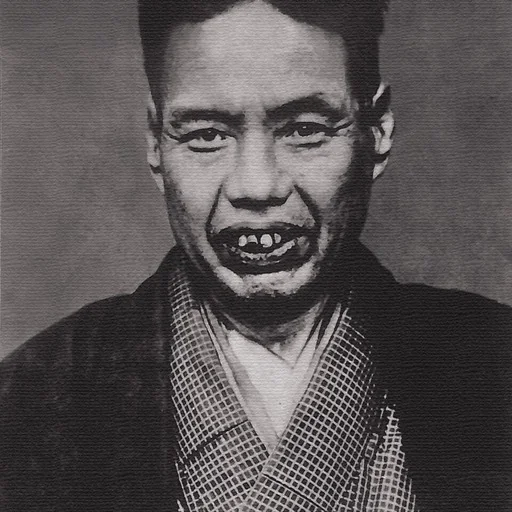
Artist
Kawanabe Kyōsai (河鍋 暁斎; May 18, 1831 – April 26, 1889) was a Japanese painter and caricaturist. In the words of art historian Timothy Clark, "an individualist and an independent, perhaps the last virtuoso in traditional Japanese painting".