Artwork
Insects and a Sprig of Rosemary
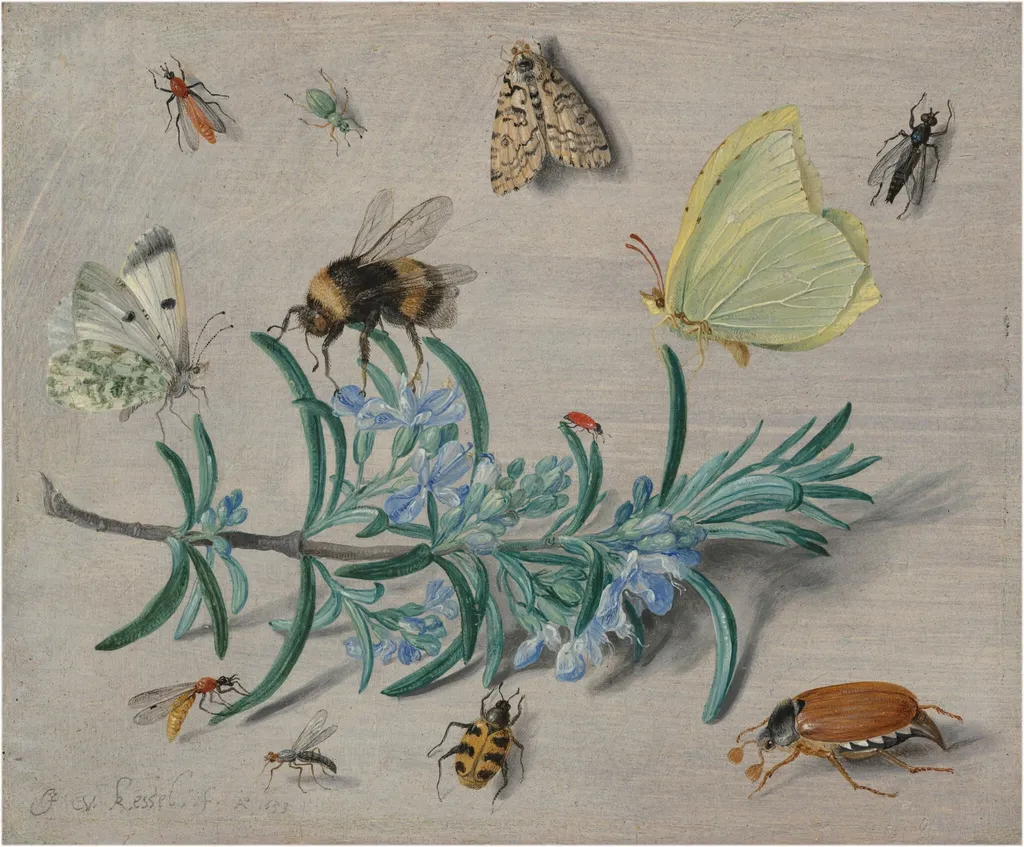
Insects and a Sprig of Rosemary is an oil painting by the Baroque artist Jan van Kessel the Elder. It dates from 1653 and is held in the collection of the National Gallery of Art.
About this work
Overview
Jan van Kessel the Elder’s 1653 work Insects and a Sprig of Rosemary is an oil painting executed on a copper support. The composition centers on a sprig of rosemary, its green leaves and blue‑tinted blossoms rendered with meticulous detail, while a variety of insects populate the surrounding space.
Subject & Meaning
The painting presents a single rosemary branch as the focal point, surrounded by an assortment of butterflies, beetles, a bee and other small creatures. The careful arrangement of flora and fauna reflects a study of nature’s diversity, a common theme in 17th‑century scientific illustration.
Technique & Style
Executed in oil on copper, the work displays the fine brushwork and luminous surface typical of Baroque naturalist painting. The copper ground allows for a smooth, reflective finish, enhancing the vivid coloration of the insects and the delicate rendering of the rosemary’s foliage.
History & Provenance
Created in 1653, the piece belongs to the oeuvre of Jan van Kessel the Elder, a Flemish painter known for his detailed still lifes and animal studies. Its provenance prior to modern collections is not extensively documented, but it remains a representative example of his mid‑century output.
Context
During the mid‑17th century, Flemish artists often combined artistic skill with scientific observation, producing works that served both decorative and educational purposes. Kessel’s painting aligns with this tradition, echoing the period’s fascination with cataloguing the natural world.
Own this work as a print
Artist & collection