Artwork
A Genius Serves a Small Breakfast (Ein Genius serviert ein kleines Frühstück)
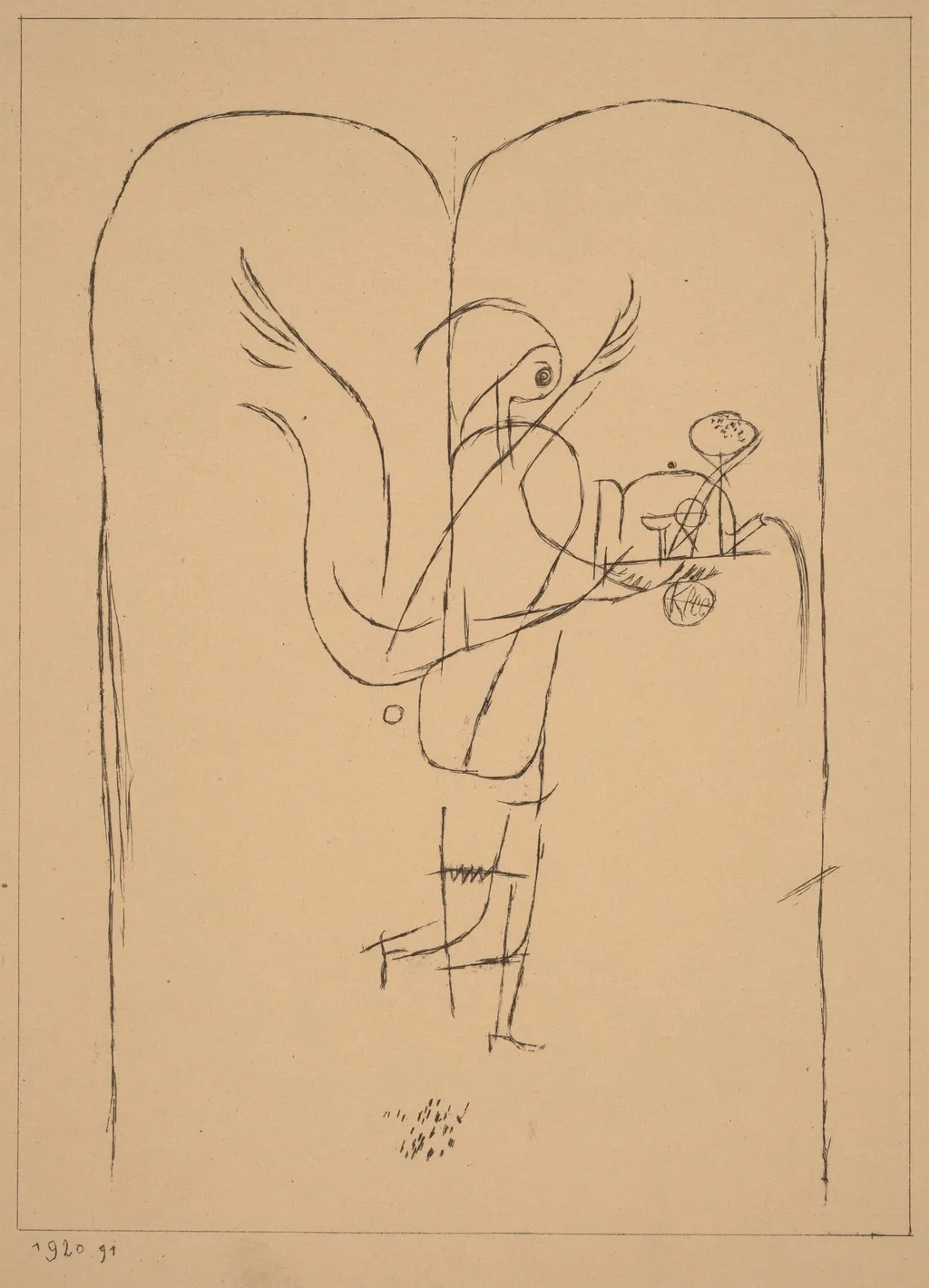
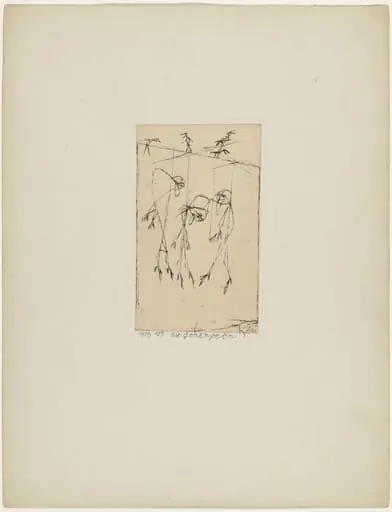
A Genius Serves a Small Breakfast (Ein Genius serviert ein kleines Frühstück) is an ink print by Paul Klee. It dates from 1920 and is held in the collection of the National Gallery of Art.
About this work
Overview
Working in Germany after years in Switzerland, he explored the boundaries between drawing, symbolism, and printmaking.
Paul Klee produced this 1920 lithograph during a period of intense experimentation in graphic arts. Working in Germany after years in Switzerland, he explored the boundaries between drawing, symbolism, and printmaking. The work is part of a broader body of prints where he translated abstract ideas into intimate, often playful imagery, using the lithographic process to achieve subtle tonal variations and delicate line work.
Subject & Meaning
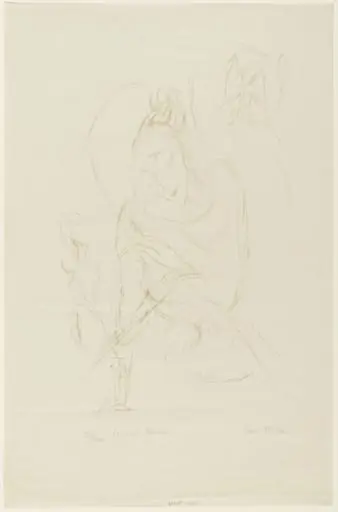
The image presents a surreal encounter: a large, winged being with a single large eye and a curved tail offers a modest meal to a diminutive figure. The scale contrast and anthropomorphic creature suggest a metaphor for creativity or the unconscious mind serving the self. Klee avoids narrative clarity, instead inviting interpretation through visual poetry—where the breakfast becomes a symbol of quiet, daily nourishment for the spirit.
Technique & Style
Lithography allowed Klee to mimic the spontaneity of sketching while achieving soft gradations of tone. He drew directly on stone with greasy crayons, preserving the fluidity of his hand. The thin black outline frames the scene like a drawing on paper, while the pale brown background enhances the dreamlike atmosphere. His lines are precise yet loose, blending geometric suggestion with organic forms characteristic of his mature style.
History & Provenance
Created in 1920, the print emerged from Klee’s time at the Bauhaus, where he taught and refined his approach to form and color. It was likely produced in a small edition, common for his graphic works at the time. The piece entered public collections in the mid-20th century, preserved as part of the broader recognition of Klee’s contributions to modern printmaking and visual symbolism.
Context
In postwar Germany, artists like Klee sought new visual languages beyond realism. Influenced by Expressionist emotion, Cubist fragmentation, and emerging Surrealist dream logic, he synthesized these into personal iconography. His lithographs from this era reflect a broader cultural turn toward introspection and symbolic representation, distancing from prewar traditions while embracing psychological and metaphysical themes.
Legacy
This work exemplifies Klee’s lasting influence on 20th-century printmaking and abstract art. His integration of poetic imagery with technical precision inspired later generations of artists working in graphic media. The lithograph remains a touchstone for understanding how small-scale, intimate works could carry complex philosophical undertones, bridging the gap between the whimsical and the profound.
Artist & collection
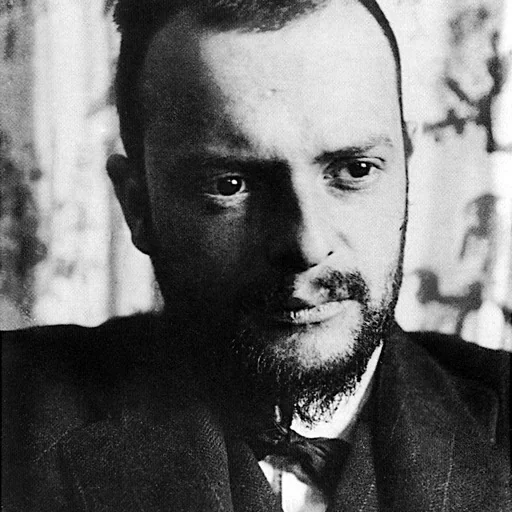
Artist
Paul Klee (German: ; 18 December 1879 – 29 June 1940) was a Swiss-born German artist.

![Four Fantastic Forms [recto], by Paul Gauguin](https://artifactworldgallery.com/img/paul-gauguin--four-fantastic-forms-recto--183786bd7a3d5b0d-w320.webp)