Artwork
Meri ja purjelaivoja
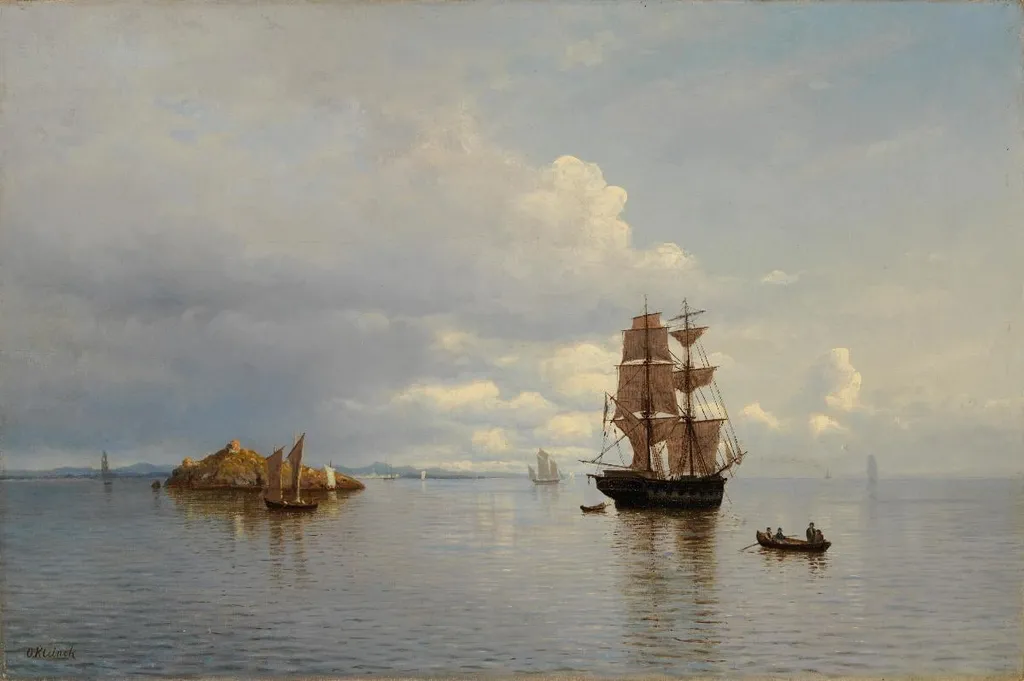
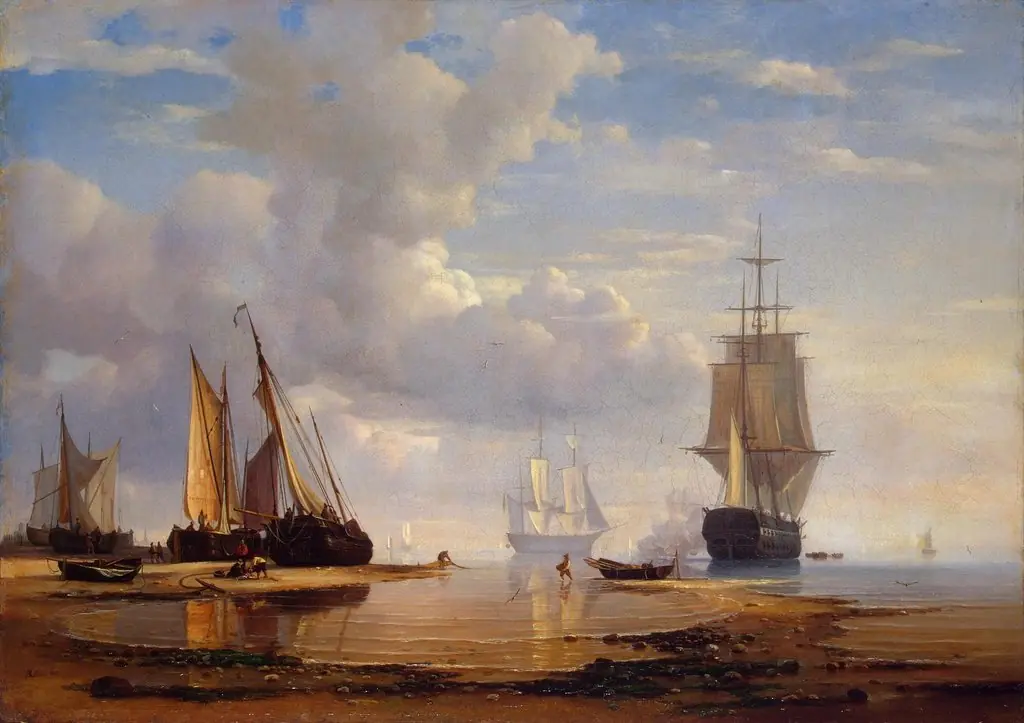
Meri ja purjelaivoja is an unspecified painting by Oscar Kleineh. It is held in the collection of the Finnish National Gallery. The painting presents a quiet maritime scene dominated by a large sailing vessel centered on the canvas.
About this work
Overview
A smaller rowboat in the foreground moves toward the viewer, while the ship’s reflection gently fractures across still water.
The painting presents a quiet maritime scene dominated by a large sailing vessel centered on the canvas. A smaller rowboat in the foreground moves toward the viewer, while the ship’s reflection gently fractures across still water. Rocky cliffs rise to the left, grounding the composition, and a soft, cloud-dappled sky completes the tranquil atmosphere. Light and shadow are subtly modulated to evoke a calm, sunlit moment at sea.
Subject & Meaning
The imagery suggests a moment of quiet transition — the large ship, perhaps en route, contrasts with the intimate, human-scale rowboat. The absence of dramatic action or narrative cues implies contemplation rather than adventure. The reflection of the vessel in the water may hint at impermanence or the quiet interplay between presence and memory in the natural world.
Technique & Style
The artist employs soft, blended brushwork to render the sky and water, creating a seamless transition between elements. Light is diffused to suggest late afternoon, enhancing the warmth of the scene. The ship’s sails are rendered with loose, fluid strokes that imply motion, while the rocky outcrop uses denser, textured marks to provide tactile contrast against the smooth sea.
History & Provenance
The work is attributed to Kleineh, an artist whose oeuvre centers on coastal and nautical themes. While specific details of its creation or early ownership are not documented, its stylistic consistency with other known works by the artist suggests it was produced during a period of focused landscape study, likely in the late 19th or early 20th century.
Context
This piece aligns with broader 19th-century European traditions of lyrical seascapes, where nature was rendered not as spectacle but as a space for quiet observation. Unlike dramatic Romantic seascapes, it avoids turbulence or heroism, instead favoring stillness and subtle tonal variation — a sensibility shared by contemporaries who sought calm in the everyday rhythms of the sea.
Legacy
Kleineh’s body of work, including this painting, contributes to a lesser-known but persistent strand of Nordic and Baltic coastal art that prioritizes atmosphere over narrative. Though not widely exhibited beyond regional collections, the piece remains a representative example of intimate, observational marine painting from the period.
Artist & collection




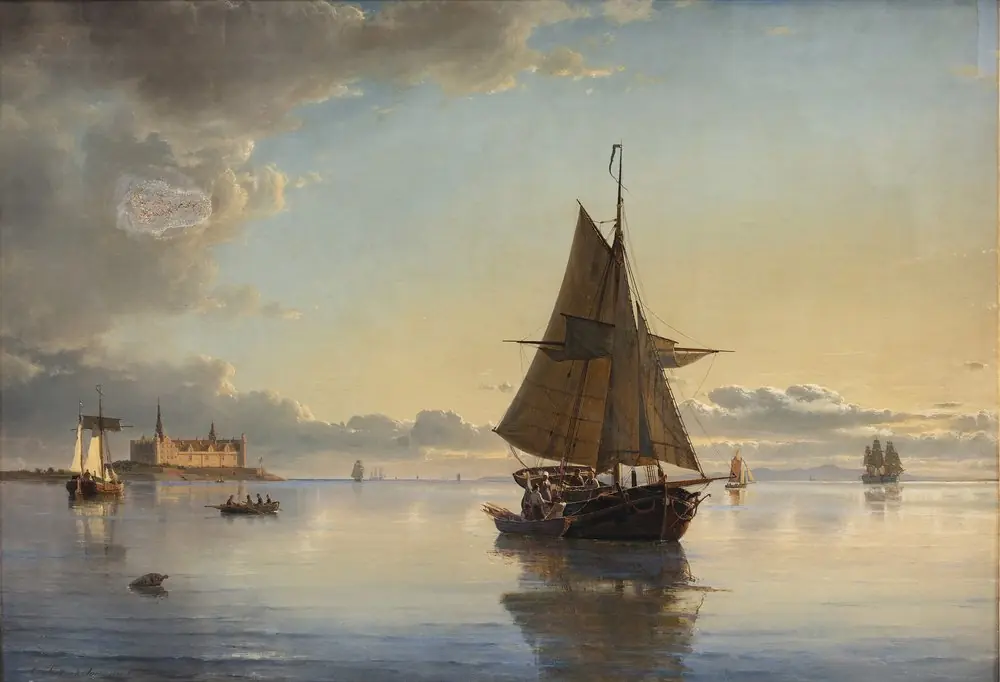 An Early Summer Morning in the Roads of Elsinore
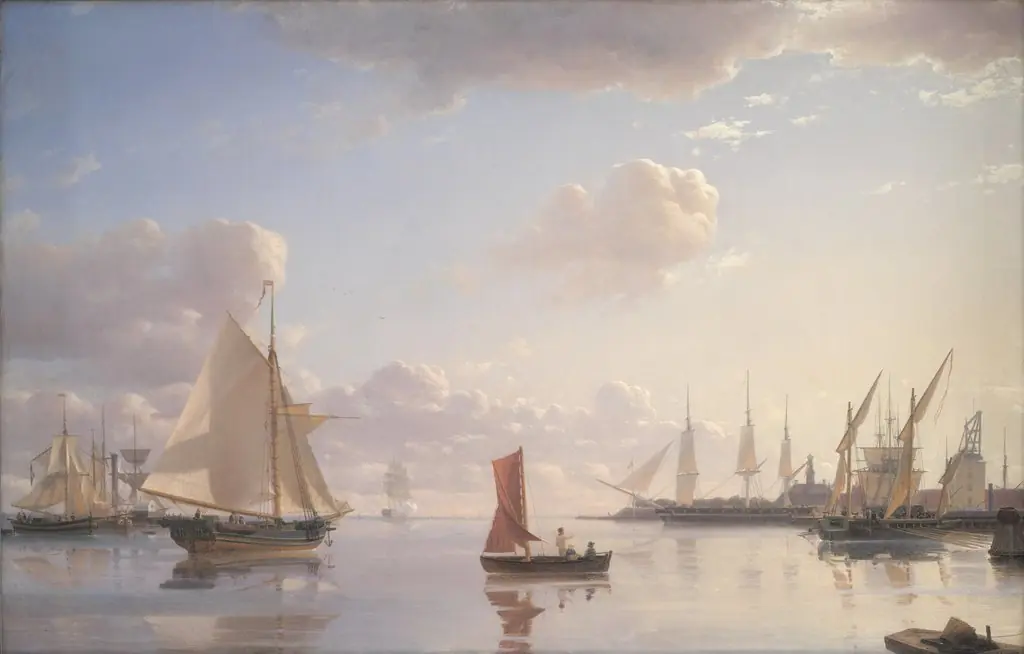 View from Langelinie towards the Royal naval Dockyards at Nyholm, Copenhagen. Morning Light
 View from Langelinie towards the Royal naval Dockyards at Nyholm, Copenhagen. Morning Light
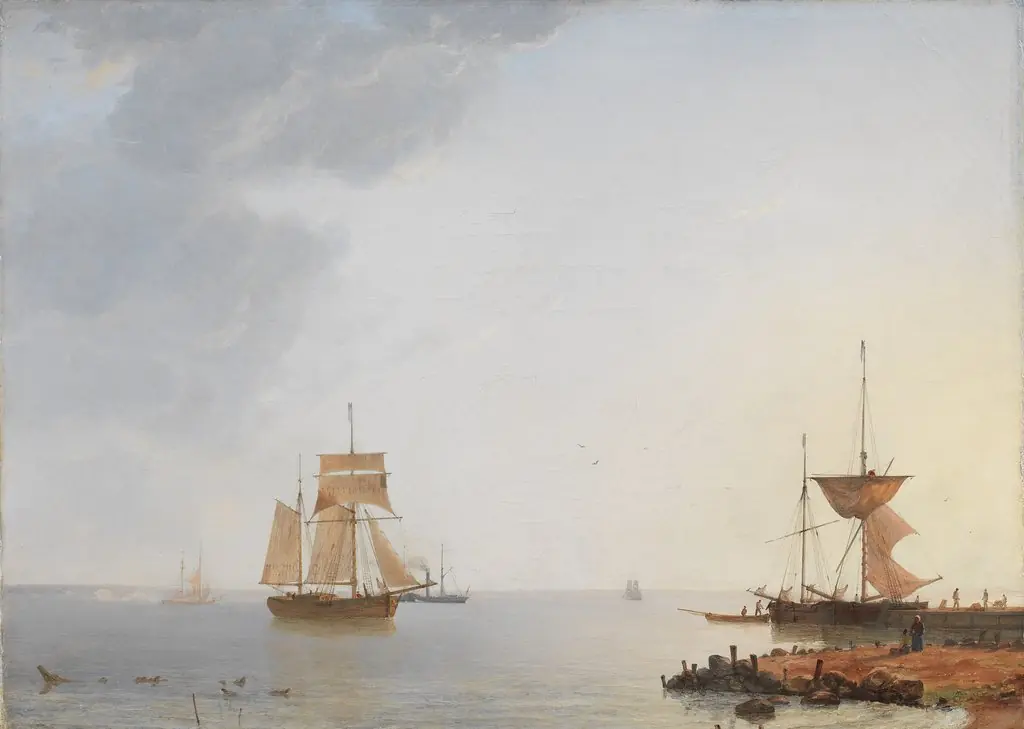 Ships Off the Coast of Zealand. Morning
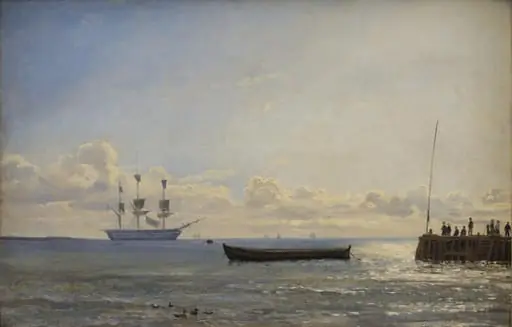 A Ship of the Line at Anchor
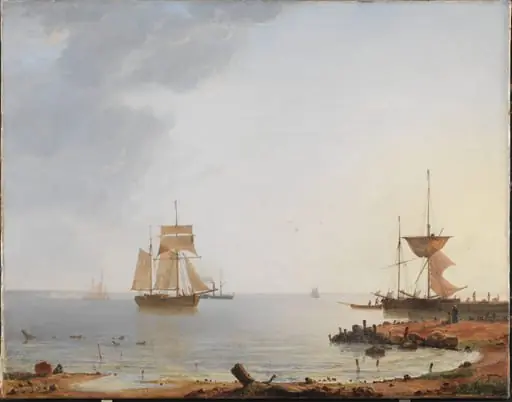 Ships Off the Coast of Zealand. Morning
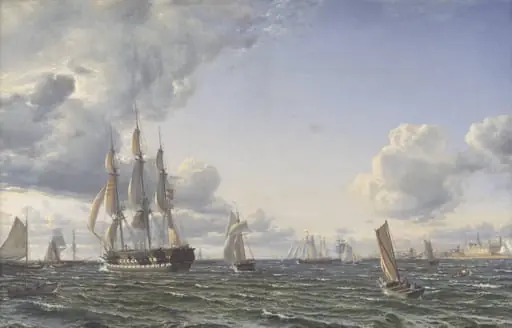 Linieskibet "Valdemar" krydser Sundet ind for en frisk bramsejlskuling
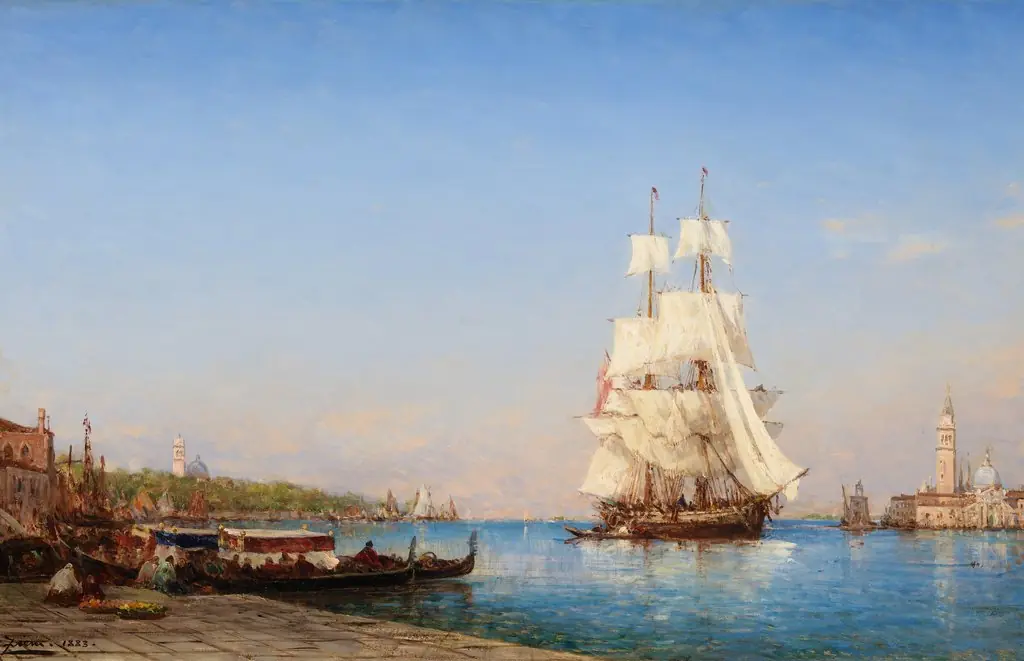 Venice: a Sailing Ship
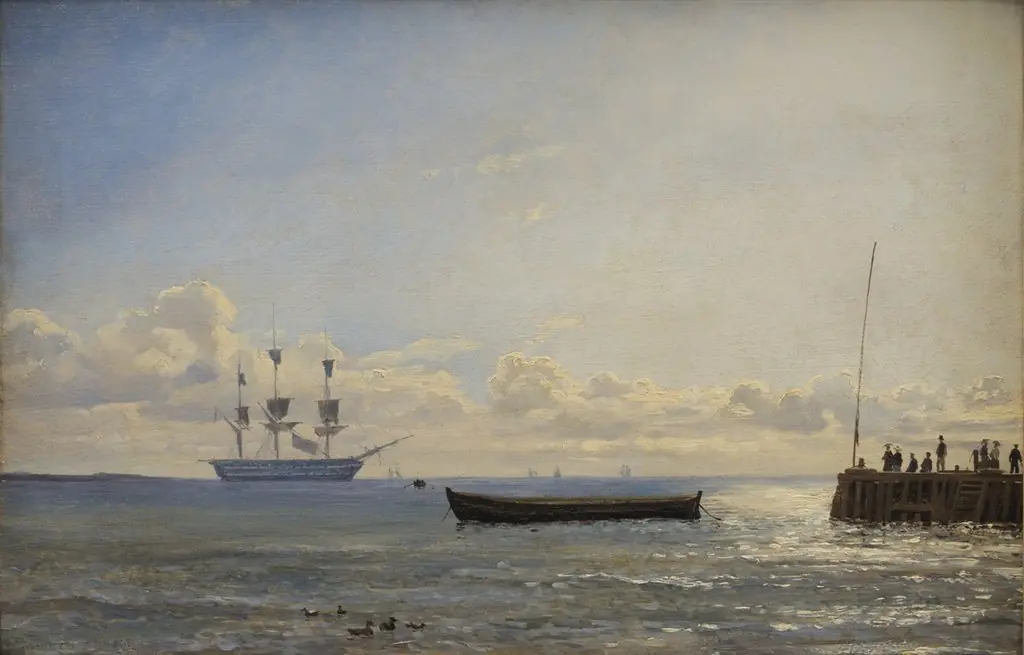 A ship of the line at anchor
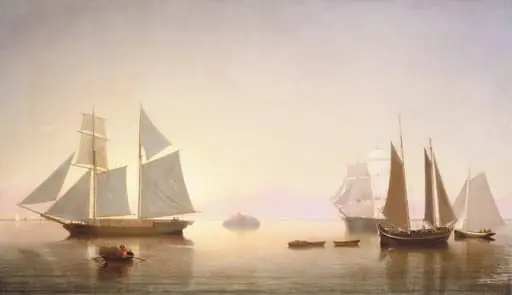 Becalmed off Halfway Rock
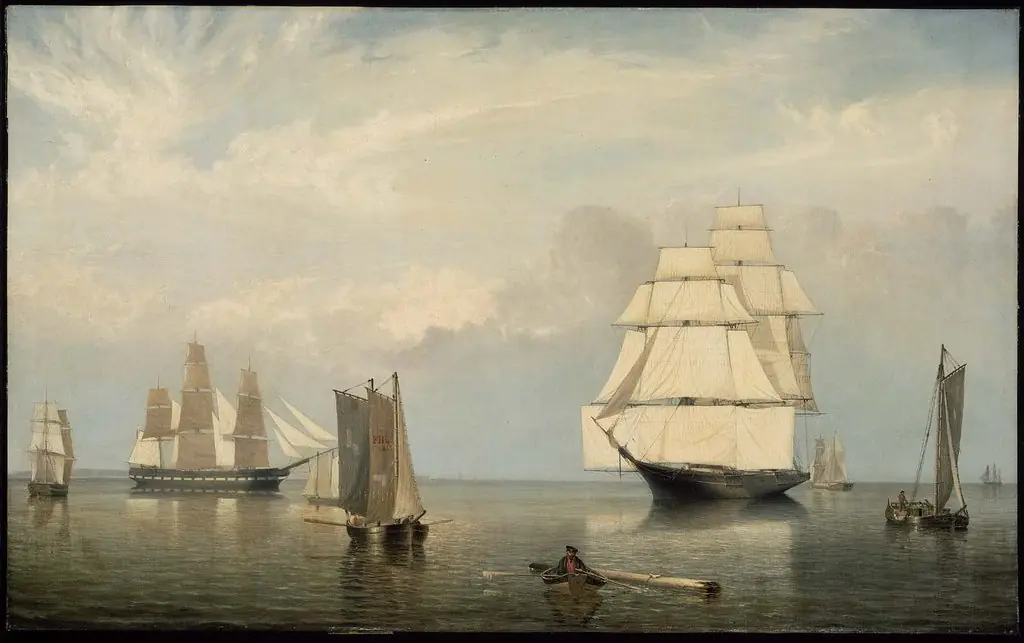 Salem Harbor
 Sea View