Artwork
Moldavian Bagpipe-Player
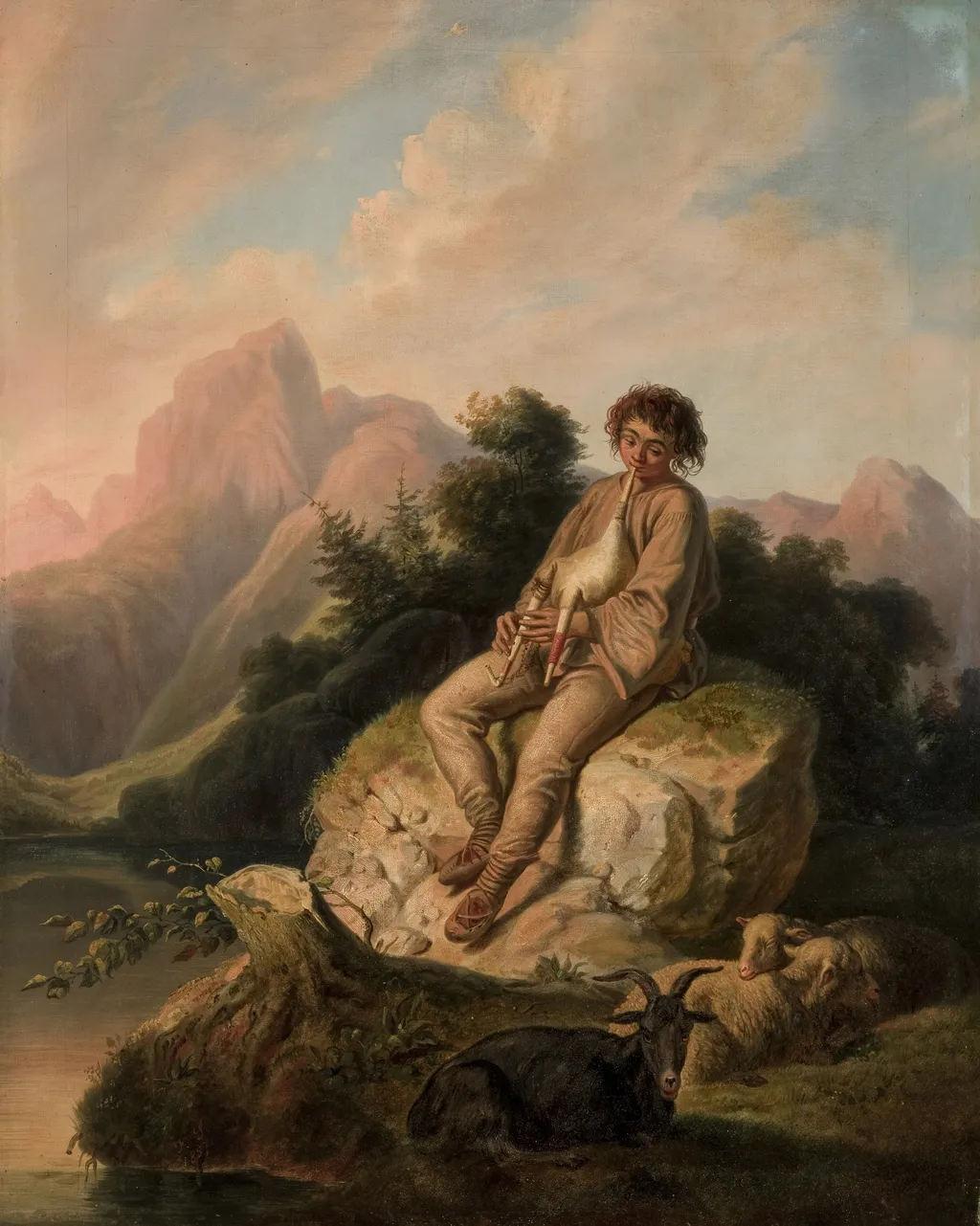
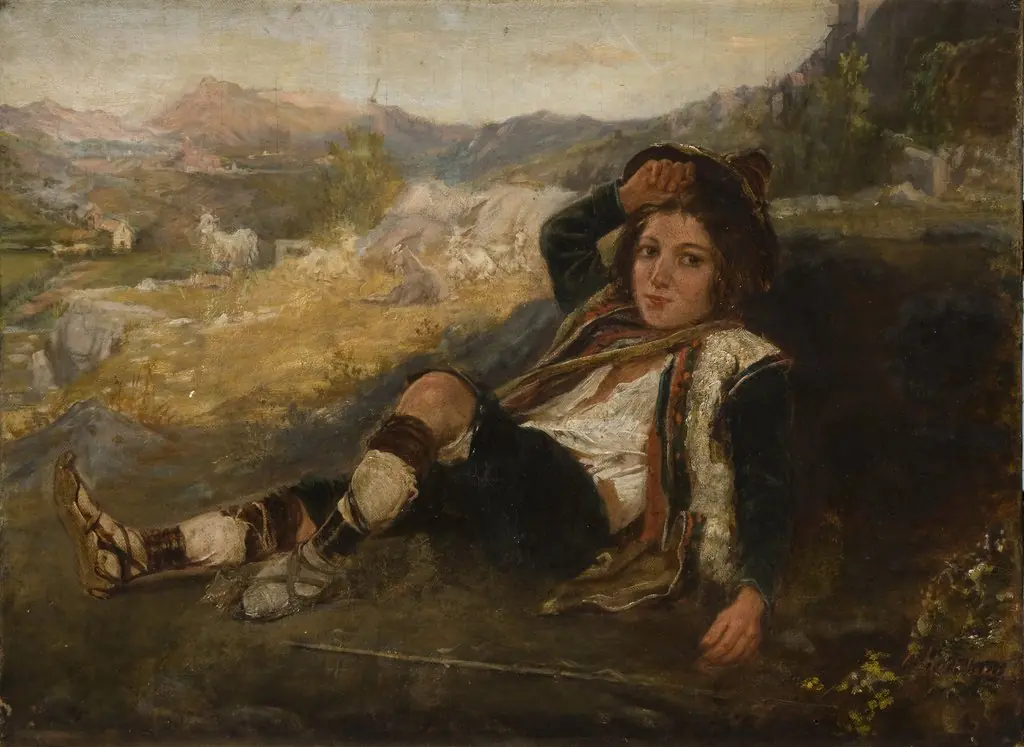
Moldavian Bagpipe-Player is an oil painting by Korneli Szlegel. It dates from 1857 and is held in the collection of the National Museum in Kraków.
About this work
Overview
Korneli Szlegel’s 1857 oil on canvas, titled Moldavian Bagpipe‑Player, is part of the collection of the National Museum in Kraków. The work presents a solitary figure in a natural landscape, rendered with a calm, reflective mood that invites the viewer to contemplate the act of music making.
Subject & Meaning
The central figure is a young man seated on a rocky ledge, barefoot and dressed in a plain tunic and trousers. He cradles a bagpipe in his lap, his legs crossed, and appears absorbed in the music, suggesting a moment of personal introspection amid a rustic environment.
Technique & Style
Szlegel employs a clear chiaroscuro, contrasting illuminated areas of the figure and instrument with darker shadows of the surrounding terrain. This handling of light creates a sense of three‑dimensionality, while the loose brushwork in the background foliage and distant mountains conveys atmospheric depth without detracting from the focal subject.
History & Provenance
Completed in 1857, the painting entered the holdings of the National Museum in Kraków, where it remains on display. Its acquisition date is not recorded in the available sources, but the work has been catalogued as part of the museum’s 19th‑century European painting collection.
Context
The depiction of a Moldavian musician reflects 19th‑century interest in folk culture and regional identities within the Austro‑Hungarian sphere. By choosing a bagpipe—a traditional instrument of the Carpathian region—Szlegel aligns the work with contemporary ethnographic trends that celebrated rural life and local customs.
Own this work as a print
Artist & collection

 Italian Landscape
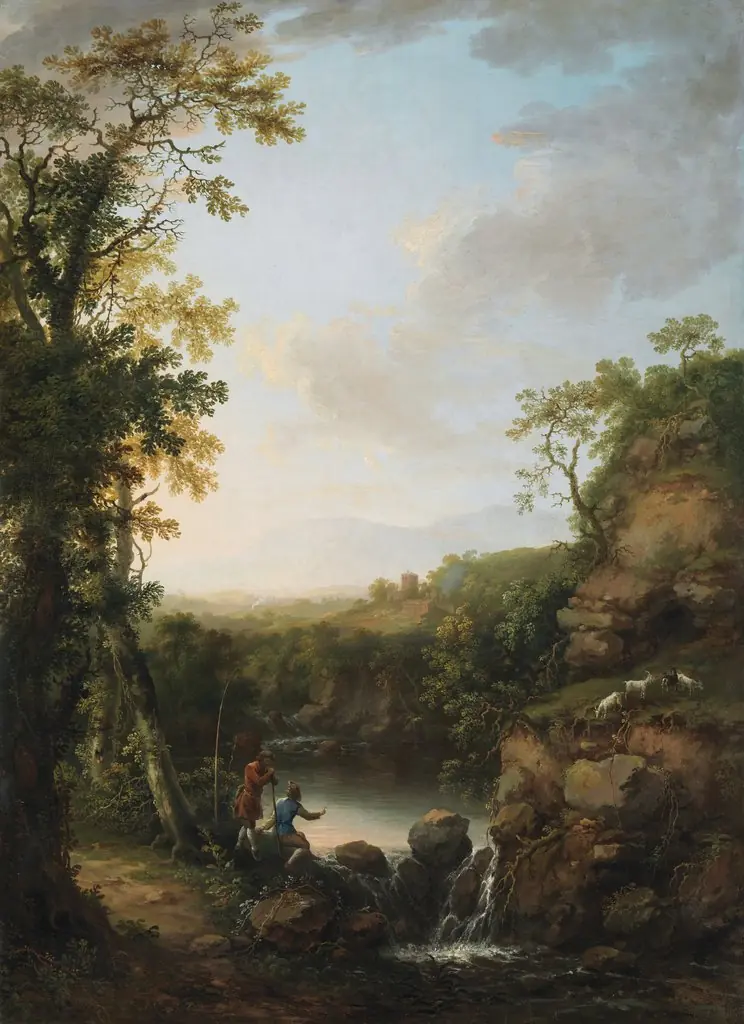 River Landscape with Fisherman
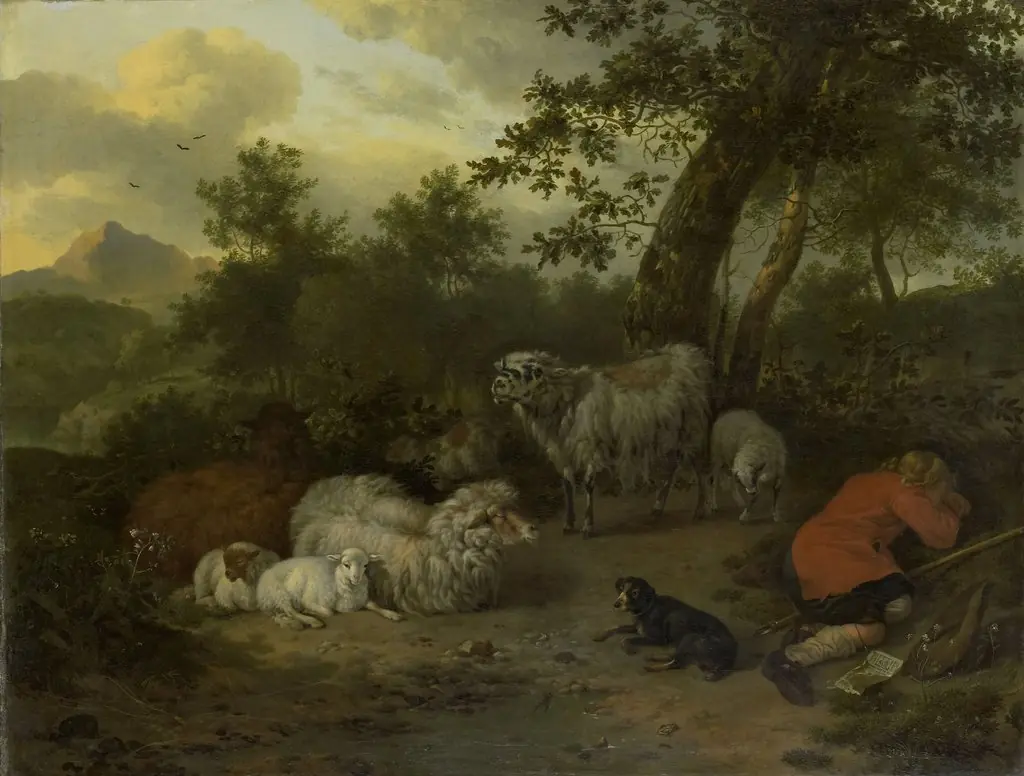 The Sleeping Shepherd
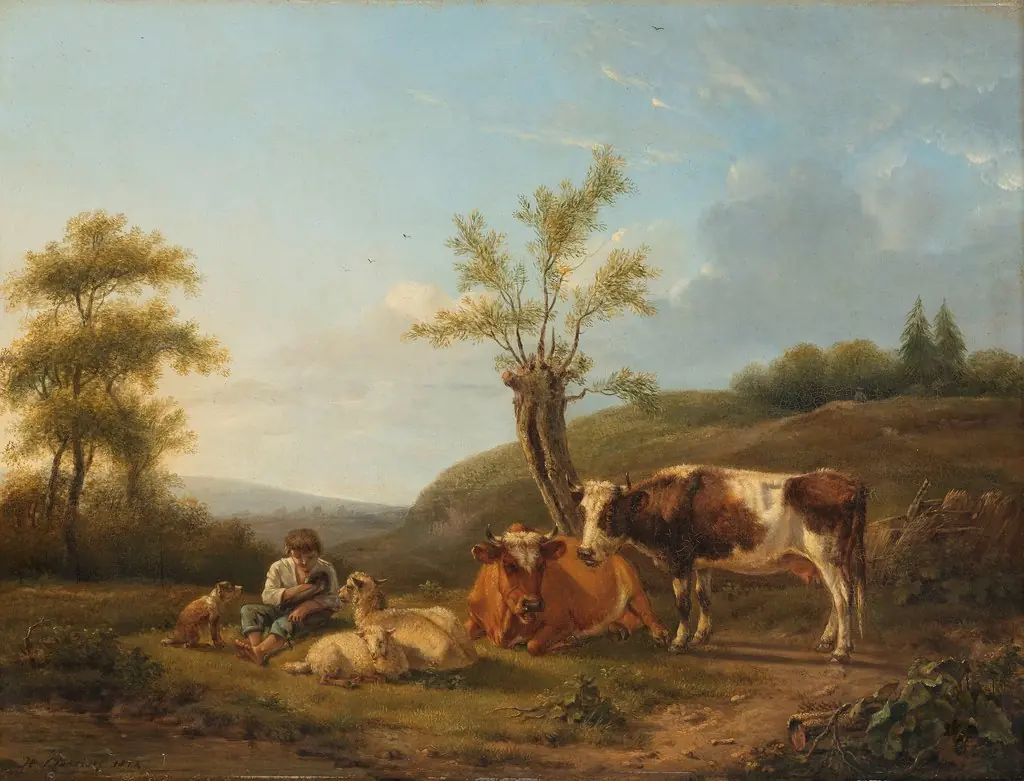 Landscape with Cattle near Darthuizen
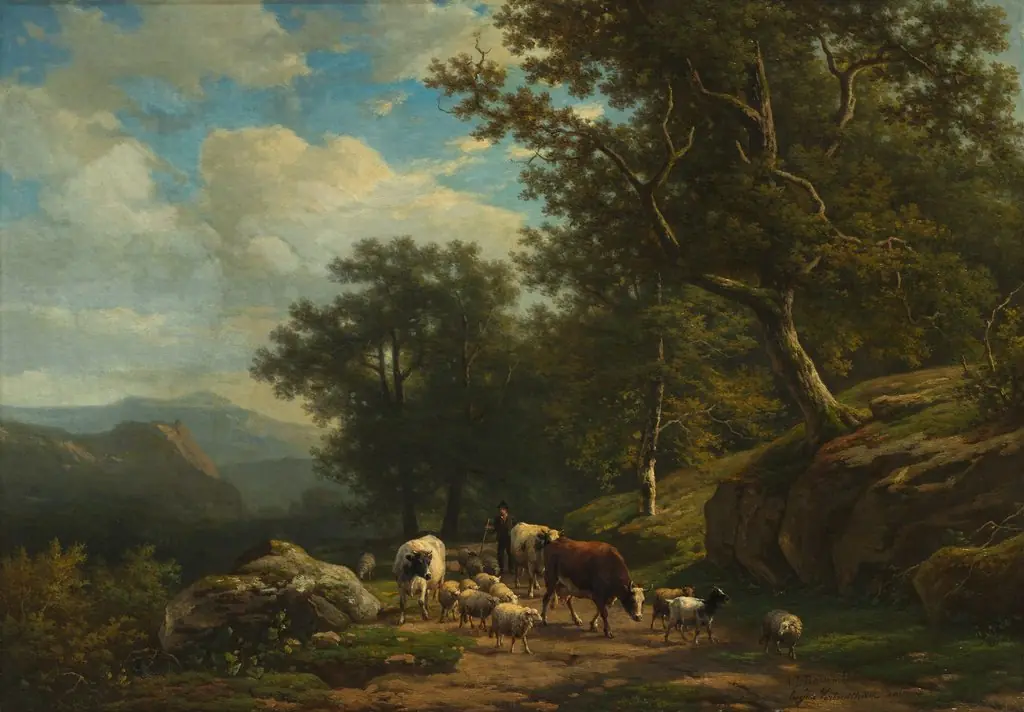 Landscape with a Peasant and His Flock
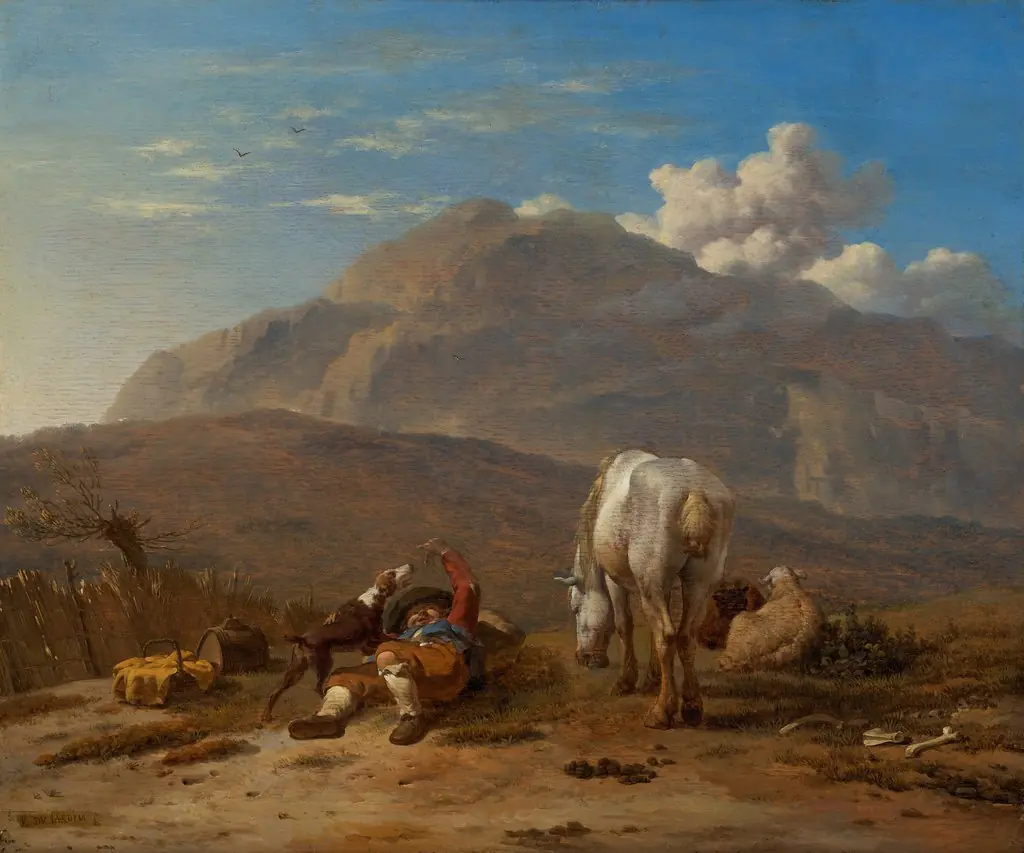 Italian Landscape with a Young Shepherd Playing with his Dog
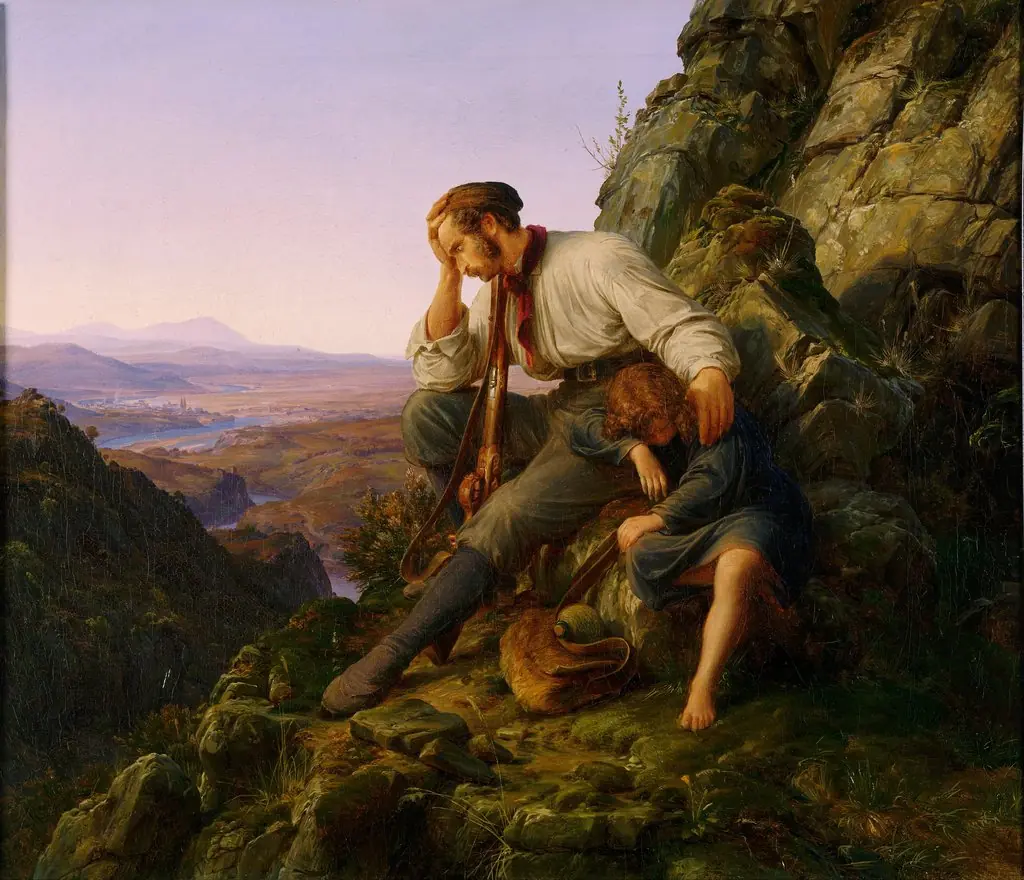 The Robber and His Child
 Landscape with a Peasant and His Flock
 Rip Van Winkle Awakening from his Long Sleep
 Roman Shepherd-Boy