Artwork
Emperor Yao Visiting Yu Chonghua
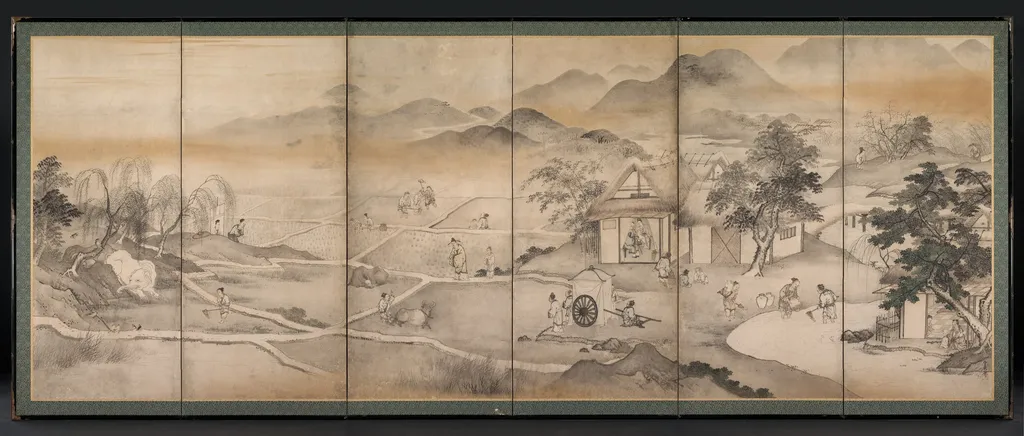
Emperor Yao Visiting Yu Chonghua is an unspecified painting by the Ukiyo-e artist Kusumi Morikage. It dates from 1674 and is held in the collection of the Cleveland Museum of Art.
About this work
Overview
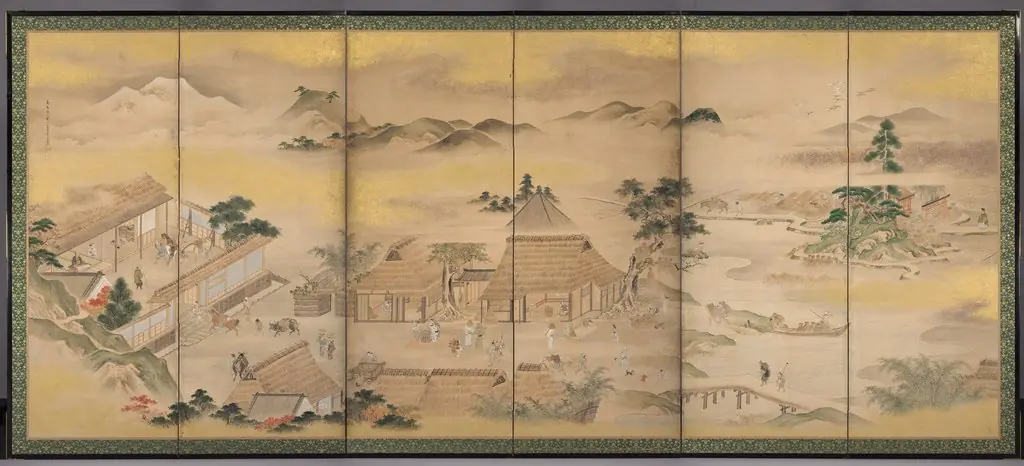
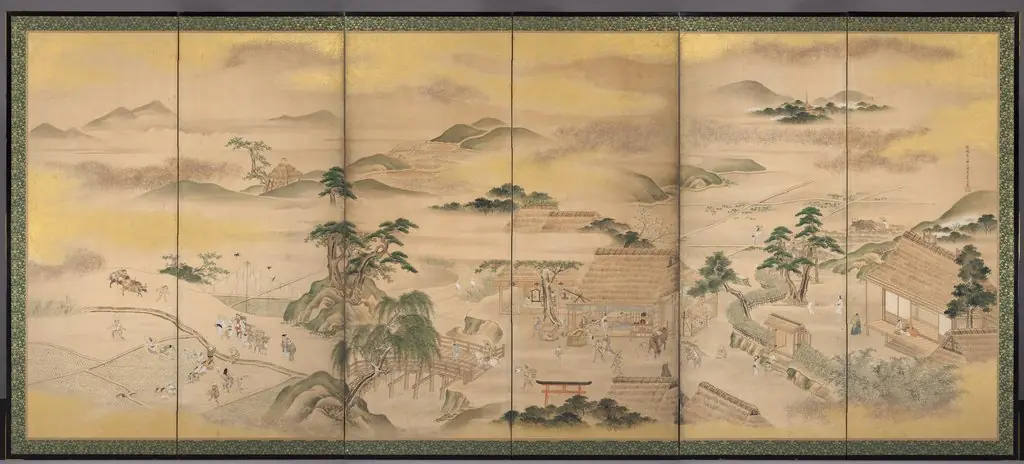
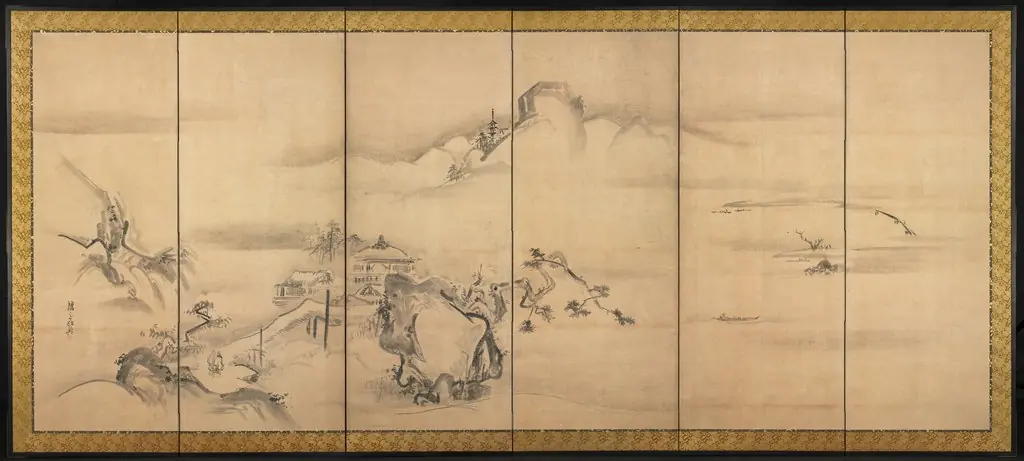
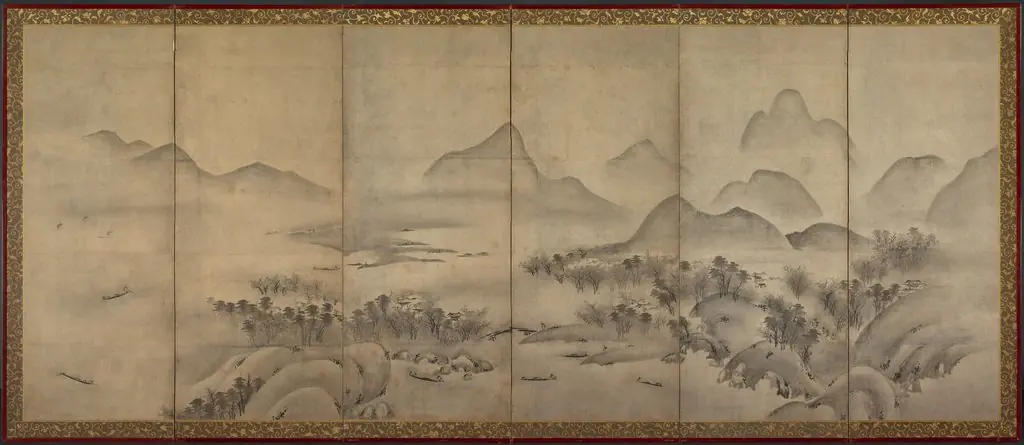
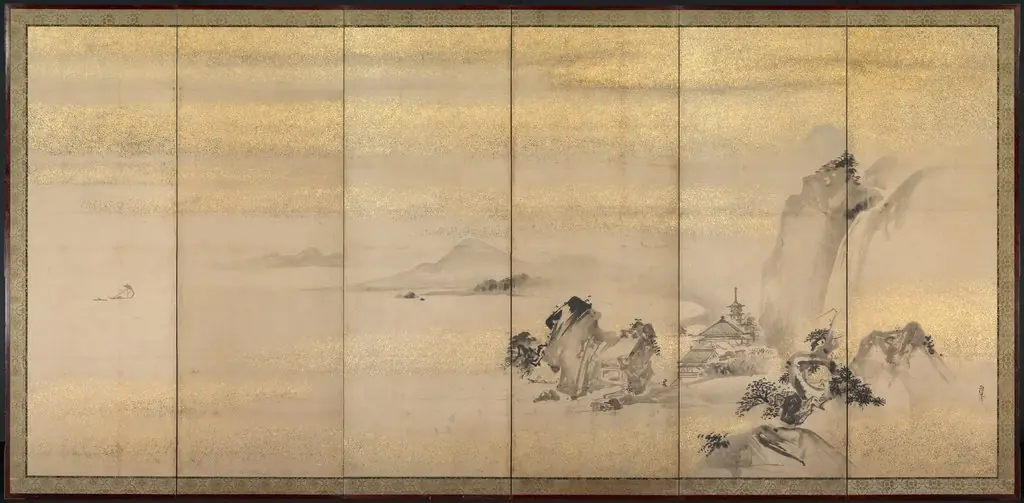
Emperor Yao Visiting Yu Chonghua, painted by Kusumi Morikage in 1674, is part of the Cleveland Museum of Art’s collection. The work presents an elongated, flattened landscape populated by diminutive figures engaged in ordinary activities. A calm, orderly atmosphere pervades the scene, offering a quiet glimpse into rural life as imagined in the artist’s time.
Subject & Meaning
The juxtaposition of everyday toil with imperial presence underscores themes of governance, humility, and the harmony between ruler and common folk.
The composition depicts a pastoral village where agricultural labor, animal husbandry, and travel converge. Central to the narrative is a procession of riders on horseback, suggesting a ceremonial visit by the legendary Emperor Yao to the humble dwelling of Yu Chonghua. The juxtaposition of everyday toil with imperial presence underscores themes of governance, humility, and the harmony between ruler and common folk.
Technique & Style
Morikage employs a restrained palette of muted earth tones, allowing the delicate brushwork to convey texture without overwhelming detail. Figures are rendered in a miniature scale, their gestures suggested rather than fully defined, which creates a sense of depth across the flat pictorial plane. The linear perspective is minimal, emphasizing the rhythmic arrangement of activities over realistic spatial illusion.
History & Provenance
Created in the late Edo period, the painting entered the Cleveland Museum of Art’s holdings through acquisition in the 20th century, though specific details of its earlier ownership remain sparse. Its presence in an American institution reflects the broader interest in Japanese scroll painting that grew among Western collectors during the early modern era.
Context
The work belongs to a tradition of narrative scrolls that illustrate historic or mythic episodes, a genre popular among literati painters who combined scholarly subjects with everyday scenes. By situating Emperor Yao—a figure from ancient Chinese legend—within a Japanese rural setting, Morikage bridges cultural narratives, reflecting the syncretic artistic exchanges of his period.
Artist & collection