Artwork
Along the Jordan River (recto)
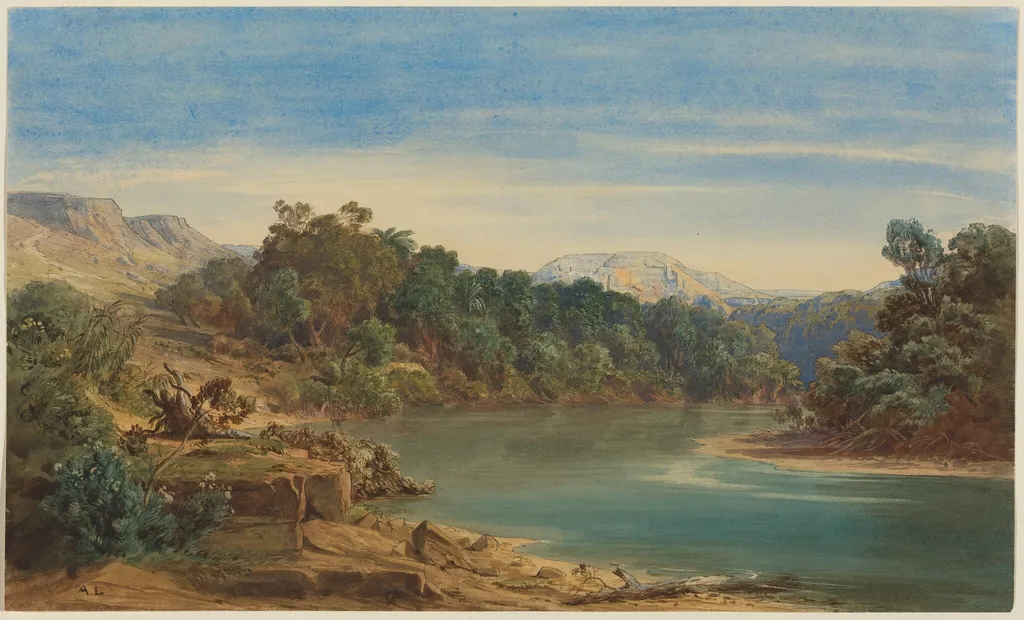
Along the Jordan River (recto) is a graphite drawing by the Romanticist artist August Löffler. It dates from 1850 and is held in the collection of the National Gallery of Art.
About this work
Overview
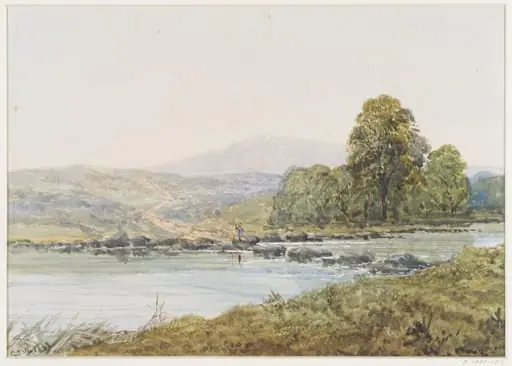
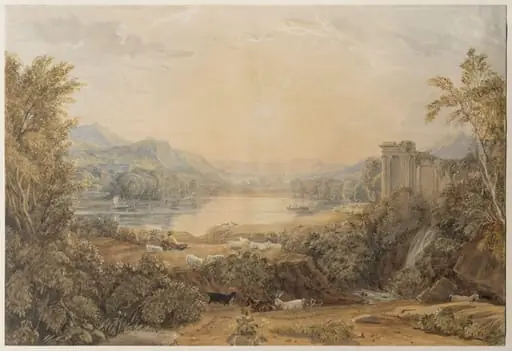
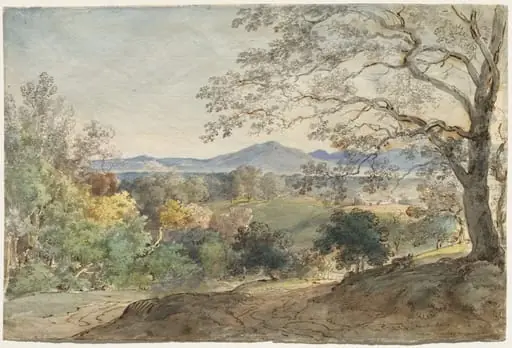
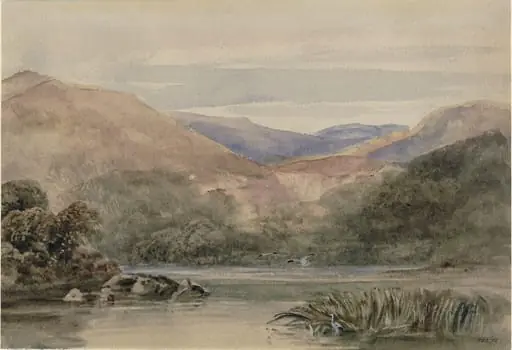
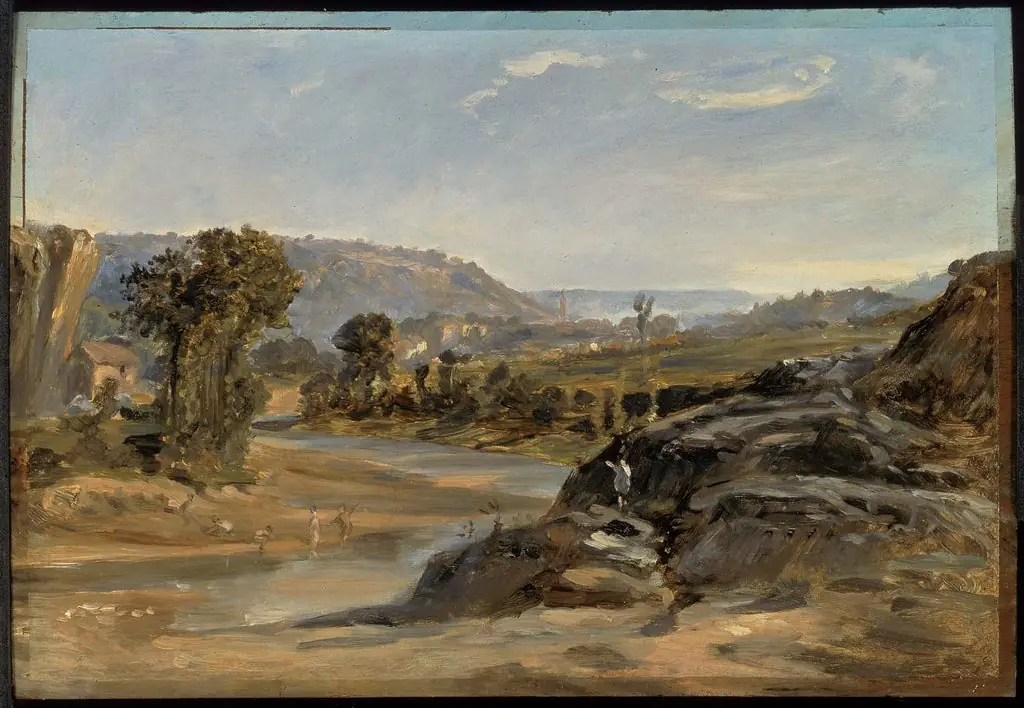
August Löffler’s 1850 work, titled Along the Jordan River (recto), is a watercolor drawing executed on brown laid paper. The piece combines a light gray wash with accents of white gouache, all laid over an initial graphite sketch, creating a layered surface that captures a tranquil riverscape.
Subject & Meaning
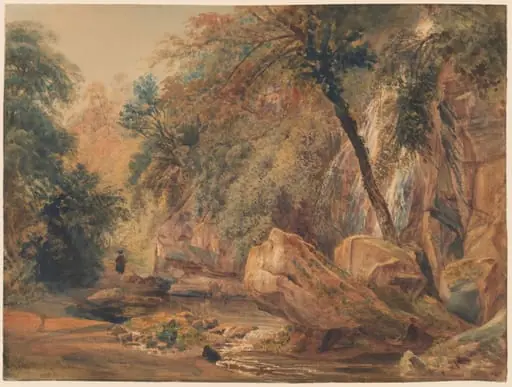
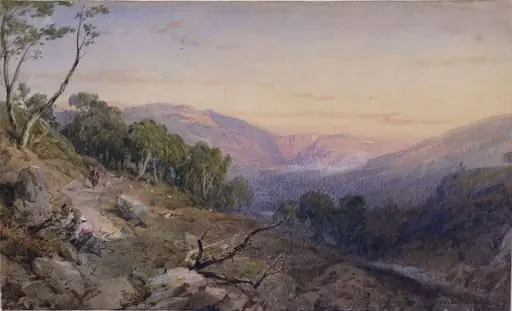
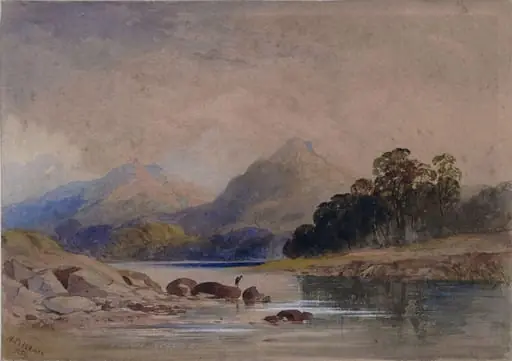
The composition depicts a serene river coursing through a verdant valley, bordered by tall trees and interspersed with rocky outcrops. Calm water mirrors a pale sky, while distant hills dissolve into a warm, hazy atmosphere, suggesting a peaceful, untouched landscape.
Technique & Style
Löffler employs delicate washes of green and blue, allowing colors to blend seamlessly and convey depth. The use of gray wash as a tonal foundation, heightened with white gouache, emphasizes light and texture, particularly in the foliage and stone surfaces, while the underlying graphite provides structural guidance.
History & Provenance
Created in 1850, the drawing reflects Löffler’s interest in Middle‑Eastern scenery during a period when European artists frequently explored biblical and exotic locales. Its provenance traces back to private collections before entering the museum’s holdings as part of a broader acquisition of 19th‑century watercolors.
Context
The work belongs to a tradition of 19th‑century landscape watercolors that sought to document distant terrains with scientific accuracy and artistic sensitivity. Löffler’s approach aligns with contemporaneous practices of using glazing techniques to build luminosity and atmospheric perspective.
Own this work as a print
Artist & collection