Artwork
A Plow Horse in a Field
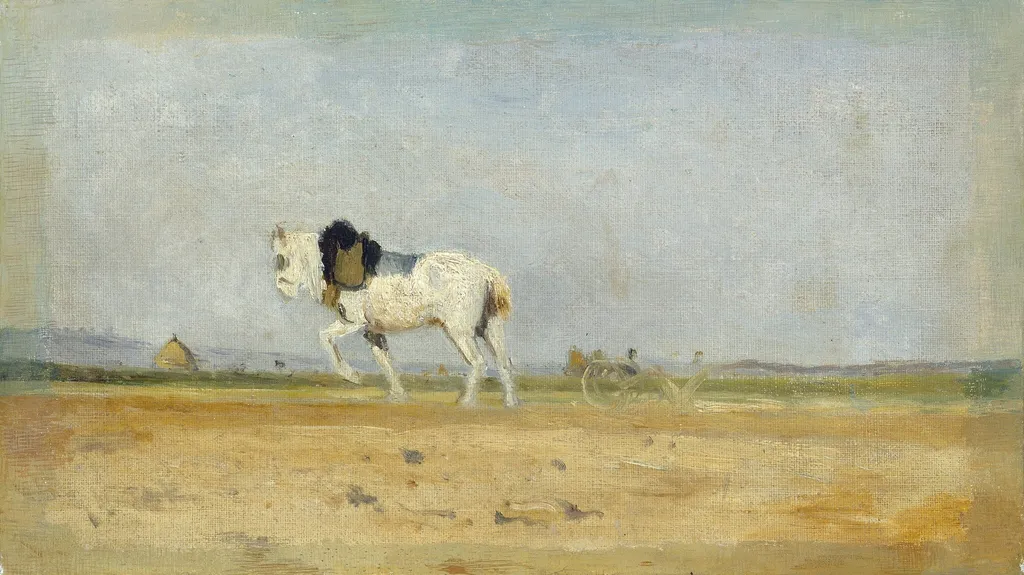
A Plow Horse in a Field is an oil painting by the Impressionist artist Stanislas Lépine. It dates from 1872 and is held in the collection of the National Gallery of Art.
About this work
Overview
Created in 1872 by French artist Stanislas Lépine, this oil on canvas depicts a solitary white horse laboring in a barren field. The composition places the animal in the foreground, moving toward the right, while a modest hut and indistinct figures linger in the distance beneath a pale sky.
Subject & Meaning
The work focuses on a common agricultural scene, emphasizing the everyday labor of a plow horse. By presenting the animal without romantic embellishment, the painting reflects a concern for the realities of rural life, a central preoccupation of the Realist tendency.
Technique & Style
Lépine employs a muted palette and soft, blended tones, rendering the horse’s coat with a near‑ethereal quality against the subdued landscape. Loose brushwork conveys the sense of movement and light, while the overall handling remains restrained, aligning with Realist principles rather than the brighter, fragmented approach of emerging Impressionism.
History & Provenance
Executed during Lépine’s mature period, the painting follows his reputation for river and countryside subjects. Though specific ownership records are limited, the piece has been documented in French collections since the late nineteenth century, illustrating the artist’s continued relevance to regional art histories.
Context
The late nineteenth century saw French painters turn toward the depiction of ordinary labor and the countryside, reacting against idealized historicism. Lépine’s focus on a working horse situates the canvas within this broader Realist movement, which sought to portray the world as observed, without decorative excess.
Artist & collection
Artist
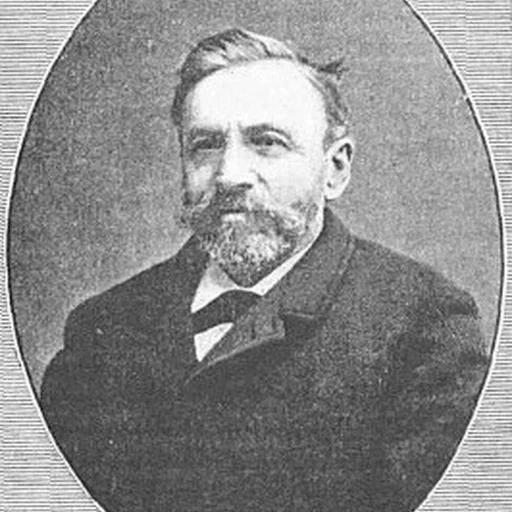
Stanislas Victor Edouard Lépine (October 3, 1835 – September 28, 1892) was a French painter who specialized in landscapes, especially views of the Seine.