Artwork
Landscape with ruined castle and figures
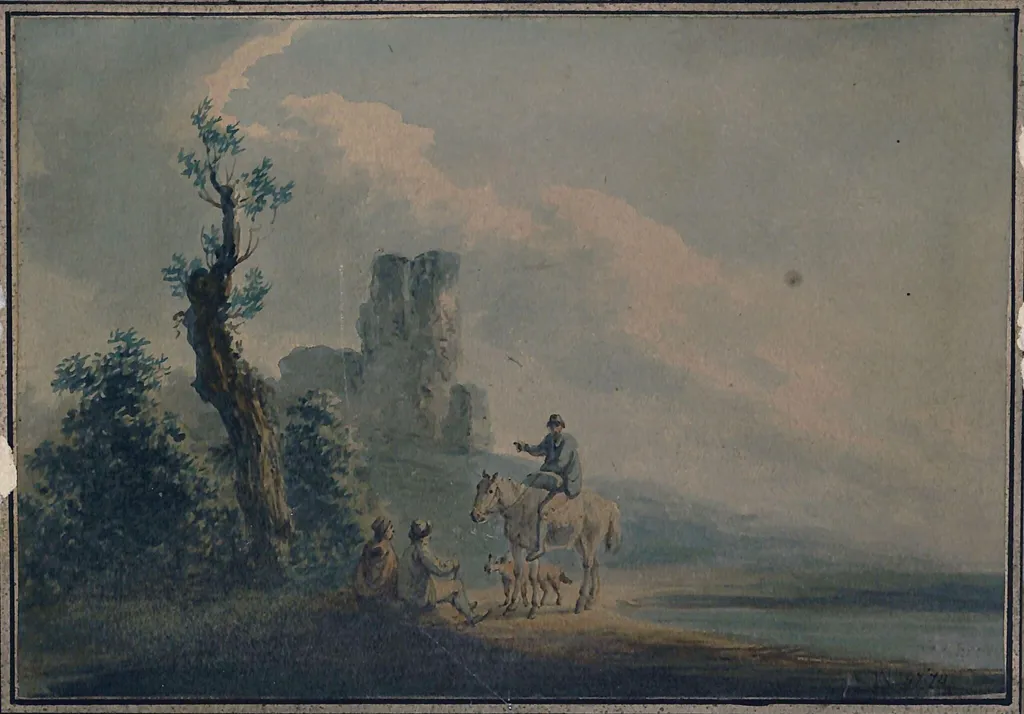
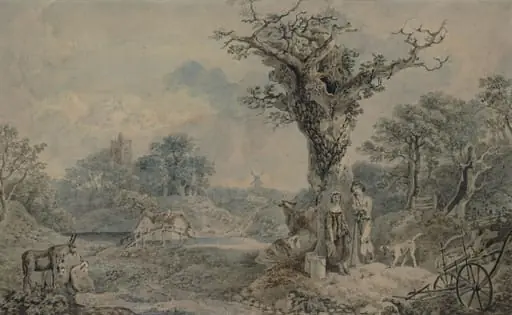
Landscape with ruined castle and figures is a watercolor work on paper by the Romanticist artist La Cave. It dates from 1802 and is held in the collection of the Victoria and Albert Museum.
About this work
Overview
Painted in 1802, this watercolour by La Cave presents a quiet, atmospheric landscape centered on the remnants of a castle. The work is signed, confirming the artist’s authorship. Rendered in delicate washes, the piece balances natural elements with human presence, evoking a subdued mood through muted tones and soft transitions between light and shadow.
Subject & Meaning
The scene includes a lone rider on horseback and two figures seated on the ground, one cradling a dog. Their stillness contrasts with the decay of the castle behind them, suggesting themes of time, solitude, or abandonment. The figures appear small against the ruins, emphasizing nature’s reclamation and the transience of human structures without overt narrative.
Technique & Style
La Cave employed transparent watercolour washes to build subtle gradations of tone, avoiding sharp outlines. The brushwork is gentle, allowing colors to blend softly, enhancing the hazy quality of the atmosphere. Light filters through the trees with a diffused glow, creating depth and a sense of quiet stillness characteristic of early 19th-century landscape studies.
History & Provenance
The work dates from 1802, a period when watercolour was gaining recognition as a medium for serious artistic expression in Britain and Europe. While specific ownership history is not documented, its signed status suggests it was intended as a finished piece rather than a sketch, possibly made for private collectors interested in topographical or poetic landscapes.
Context
Created during the rise of Romanticism, the painting reflects contemporary interest in ruins, nature, and emotional resonance over classical order.
Created during the rise of Romanticism, the painting reflects contemporary interest in ruins, nature, and emotional resonance over classical order. Though not overtly dramatic, its contemplative tone aligns with the movement’s preference for introspective scenes. The use of watercolour, then associated with travel and observation, underscores a shift toward personal, intimate responses to landscape.
Legacy
La Cave’s work contributes to a broader tradition of British watercolourists who elevated the medium beyond mere documentation. This piece, though not widely exhibited, exemplifies how quiet, observational landscapes helped shape aesthetic values that valued mood and atmosphere over grandeur, influencing later generations of landscape artists.
Artist & collection
Artist
This artist painted delicate watercolors of European landscapes in the late 1700s and early 1800s.

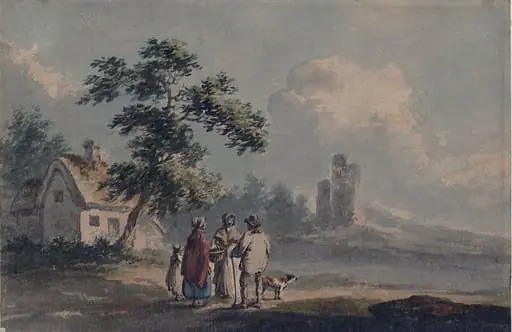 Landscape with figures
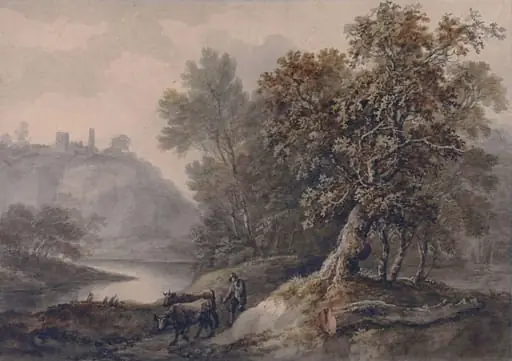 Bath Landscape
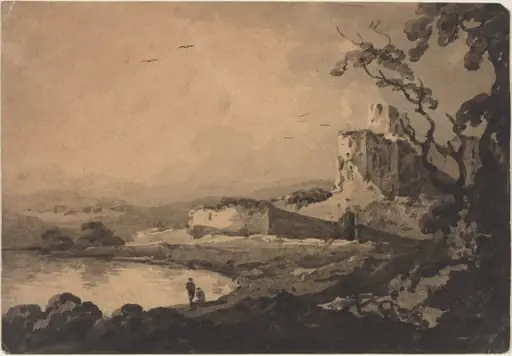 Landscape
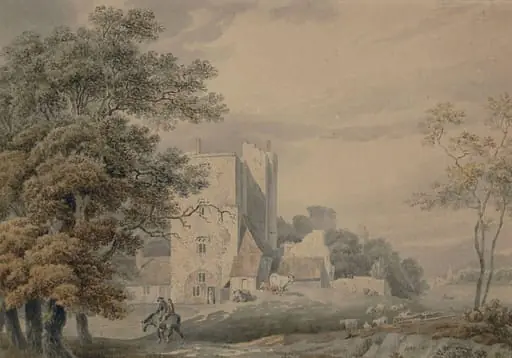 Saltwood Castle near Hythe
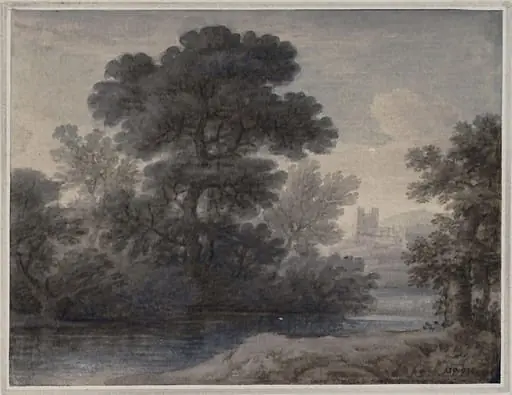 Landscape with river and castle
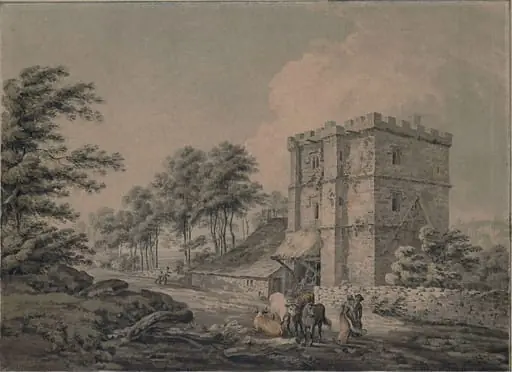 Wetheral Priory, Cumberland, with figures and cattle
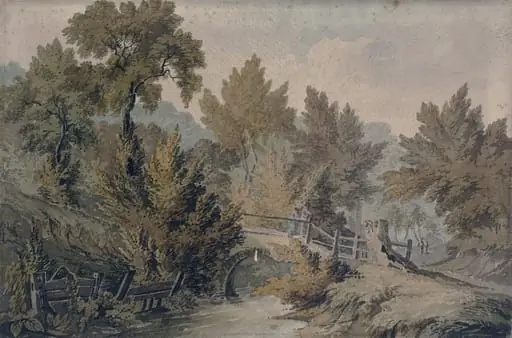 Landscape with Bridge and Stream
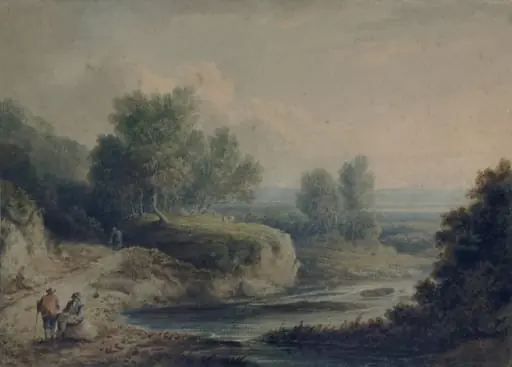 River scene with figures.
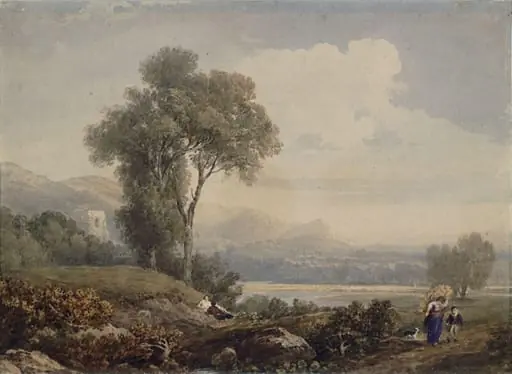 Landscape
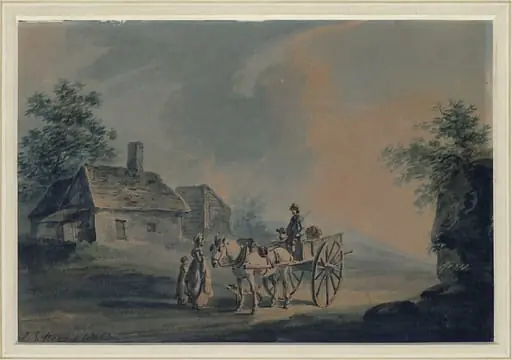 Cottage with cart and figures
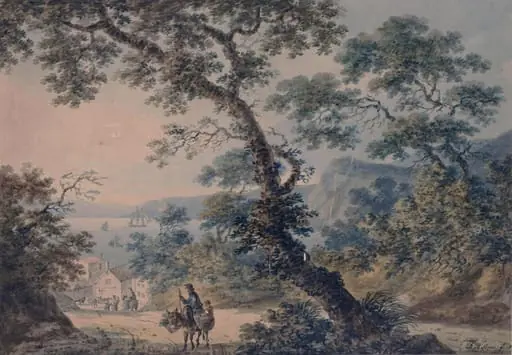 Village on the seashore
 Landscape with figures and cattle