Artwork
Wooded Landscape with a River
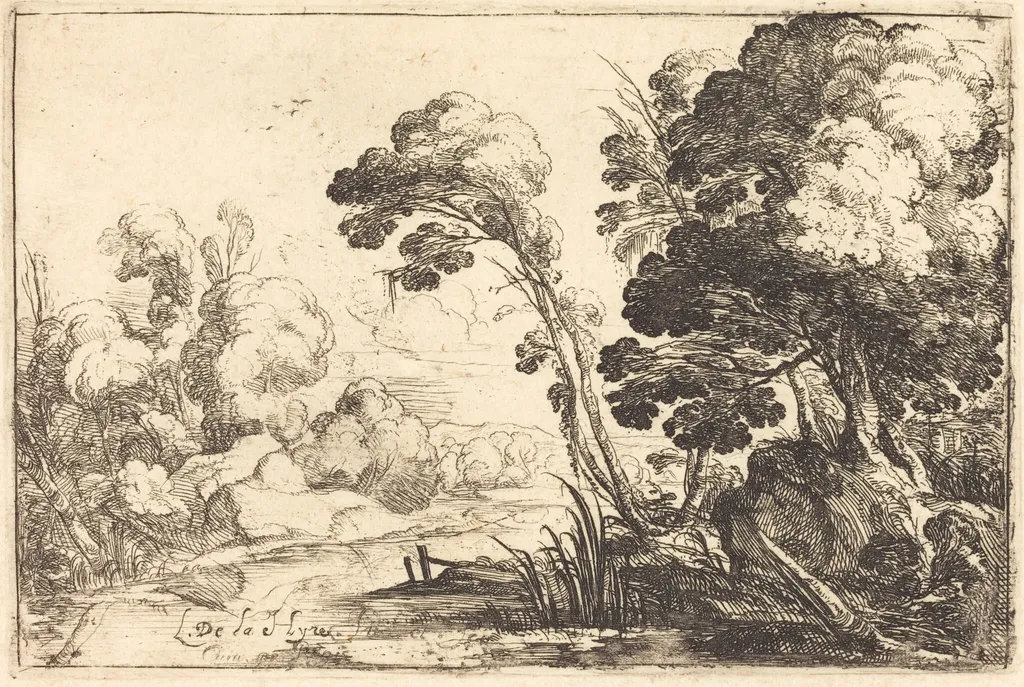
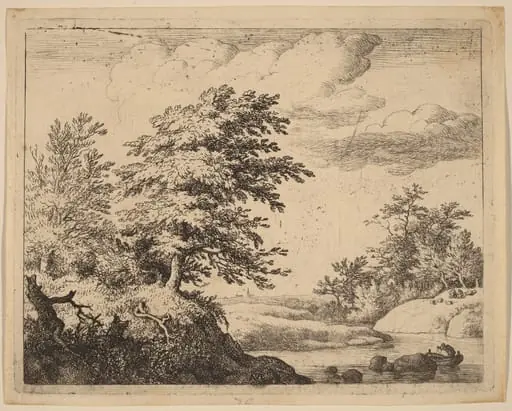
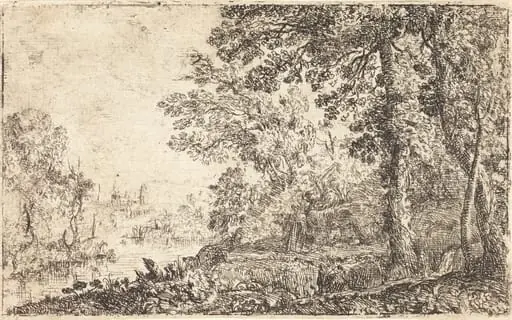
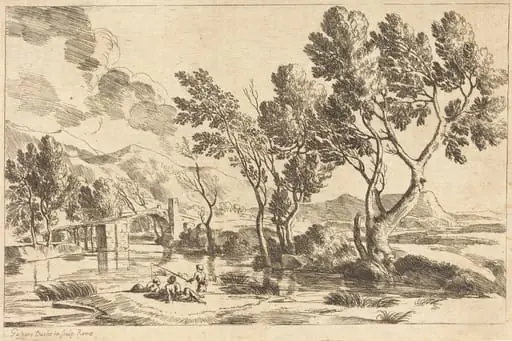
Wooded Landscape with a River is an ink print by the Baroque artist Laurent de La Hyre. It dates from 1640 and is held in the collection of the National Gallery of Art.
About this work
Overview
Created in 1640, *Wooded Landscape with a River* is an etching by French artist Laurent de La Hyre, executed on laid paper.
Created in 1640, *Wooded Landscape with a River* is an etching by French artist Laurent de La Hyre, executed on laid paper. As a printmaker, La Hyre translated his painterly sensibilities into the medium of etching, producing a quiet, atmospheric scene that reflects his engagement with both natural observation and classical composition. The work belongs to a body of landscape prints that diverge from the grand narratives typical of his contemporaries.
Subject & Meaning
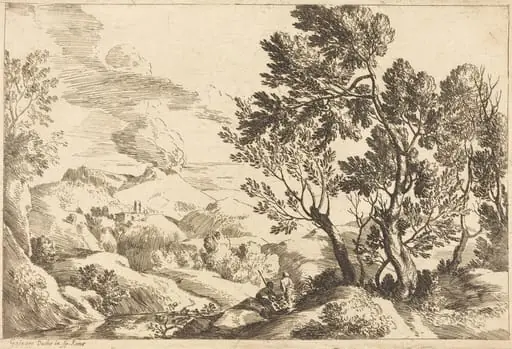
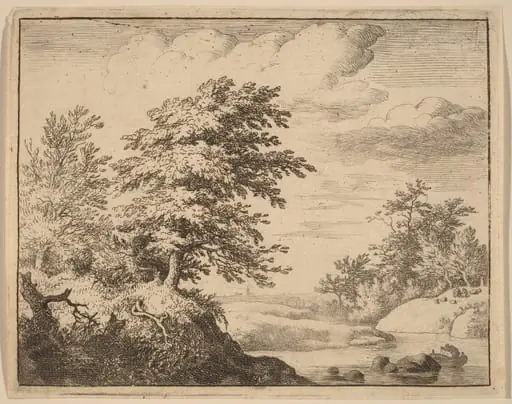
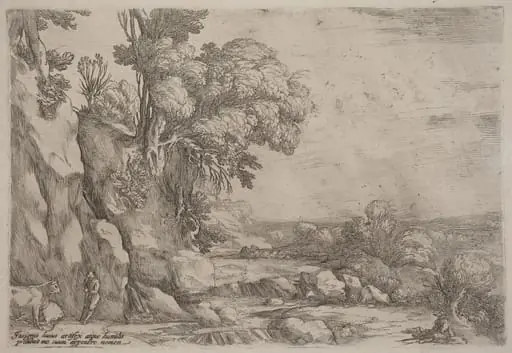
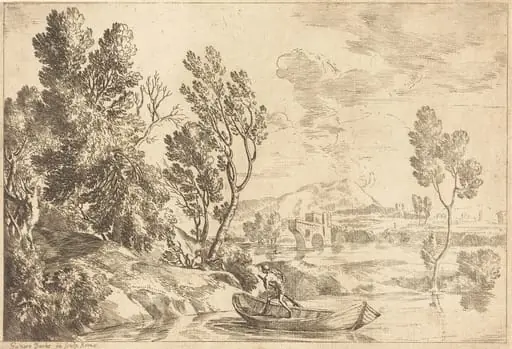
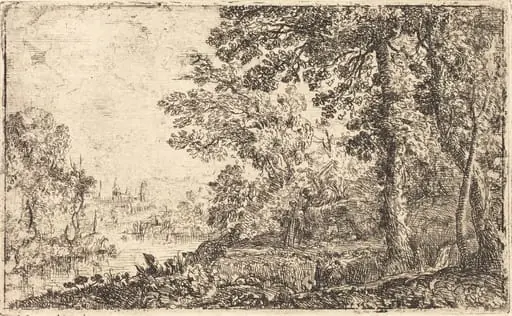
The scene depicts a tranquil river winding through a dense woodland, with leaning trees, scattered rocks, and patches of vegetation framing the water. A small boat rests near the bank, suggesting quiet human presence without narrative drama. The composition evokes contemplation rather than action, aligning with the restrained poetic tone of Parisian Atticism, which favored harmony, subtlety, and idealized nature over theatricality.
Technique & Style
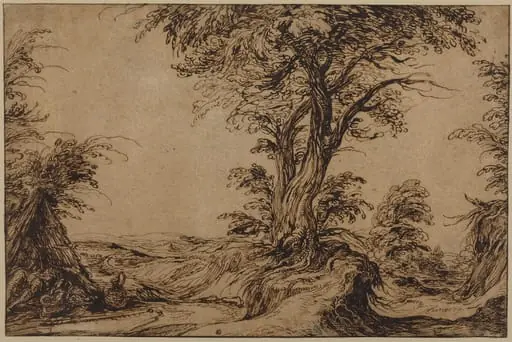
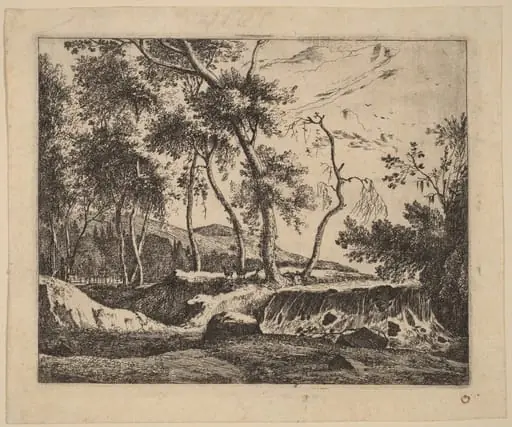
La Hyre employed etching to achieve fine, incised lines that define the trees, water, and terrain with a sense of depth and texture. The dark, scratchy strokes contrast with the paper’s natural grain, enhancing the misty, atmospheric quality of the scene. The use of laid paper, with its subtle chain lines, adds to the tactile richness, while the monochrome palette emphasizes tonal variation over color, characteristic of printmaking of the period.
History & Provenance
The print was made during La Hyre’s mature period in Paris, when he was active in artistic circles and involved in decorative projects for the royal court. Though primarily known as a painter, his etchings circulated among collectors and fellow artists, preserving his landscape vision beyond canvas. No definitive early provenance is recorded, but the work aligns with known prints from his workshop dated to the 1640s.
Context
In mid-17th-century France, landscape as an independent subject was gaining ground, though still secondary to history painting. La Hyre’s etching reflects the influence of Northern European models and the emerging French preference for serene, intimate nature. His approach, termed Atticism, sought clarity and balance, distinguishing his work from the more ornate styles of Italian Baroque and aligning him with intellectual currents favoring restraint and order.
Legacy
La Hyre’s etchings, including this landscape, contributed to the legitimization of landscape as a subject worthy of printmaking in France. Though less widely known today than his paintings, his prints influenced later generations of French draftsmen who valued precision and poetic atmosphere. His integration of naturalism with classical composure helped shape the trajectory of French landscape art into the 18th century.
Own this work as a print
Artist & collection
Artist
Laurent de La Hyre (French pronunciation: ; 27 February 1606 – 28 December 1656) was a French Baroque painter, born in Paris. He was a leading exponent of the neoclassical style of Parisian Atticism.