Artwork
Nessus and Deianira
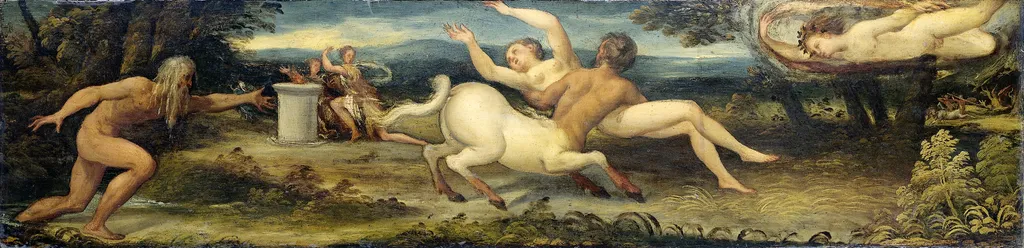
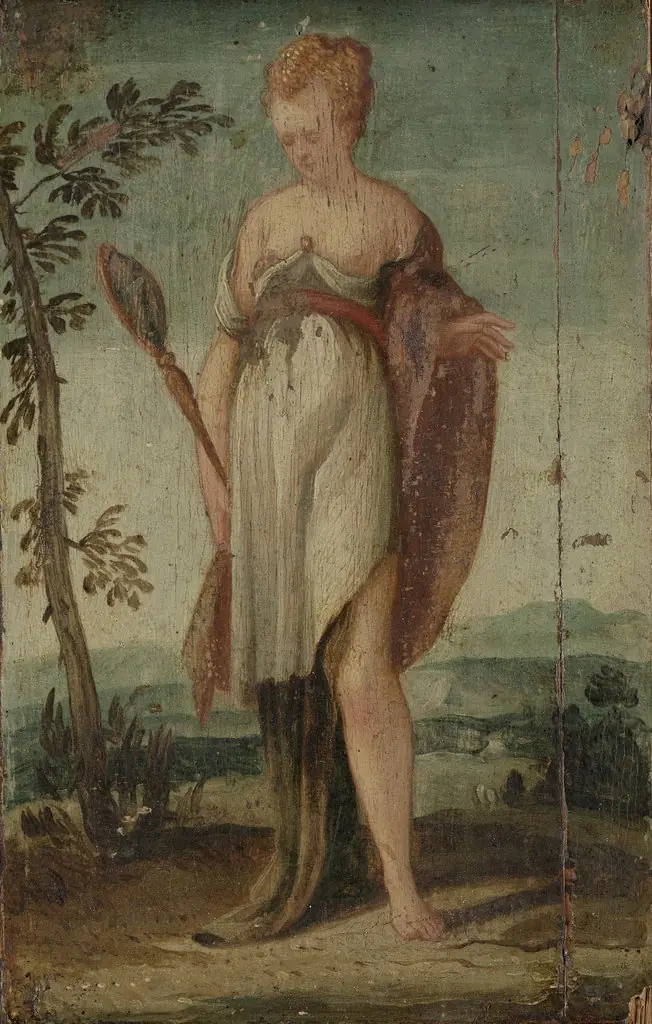
Nessus and Deianira is an oil painting by the Mannerist artist Lambert Sustris. It dates from 1550 and is held in the collection of the Rijksmuseum.
About this work
Overview
Created circa 1550, *Nessus and Deianira* is an oil painting by the Dutch artist Lambert Sustris, who spent much of his career working in Venice. Executed in a Mannerist idiom, the work presents a dramatic mythological encounter set against a rugged landscape. The canvas is part of the Rijksmuseum’s collection, where it is displayed among other works of Northern European painters active in Italy.
Subject & Meaning
A second figure, likely the hero Heracles, is shown reaching toward a floating, serene female form, suggesting the intervention of divine forces.
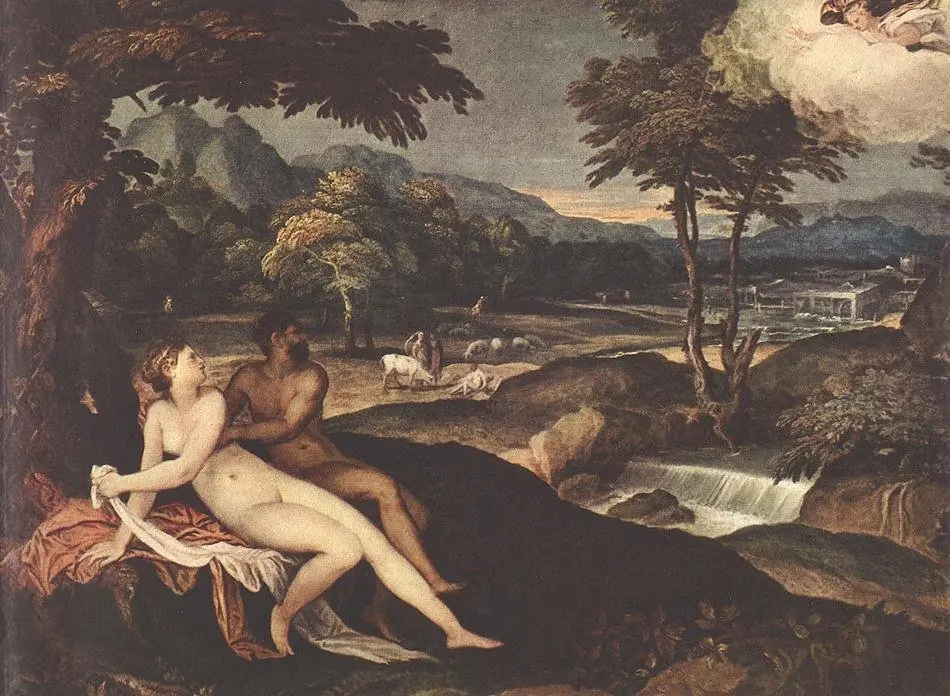
The composition illustrates the moment from the Greek legend when the centaur Nessus attempts to seize Deianira, the wife of Heracles, as she rides a white horse. A second figure, likely the hero Heracles, is shown reaching toward a floating, serene female form, suggesting the intervention of divine forces. The scene captures the tension between mortal vulnerability and the looming consequences of betrayal.
Technique & Style
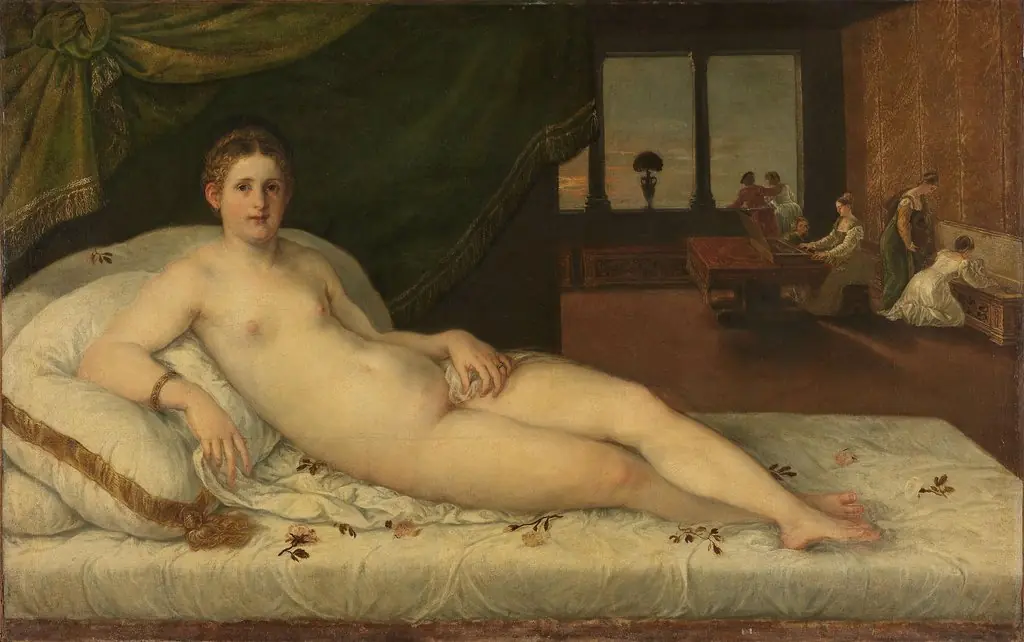
Sustris employs a softened palette and fluid brushwork characteristic of late‑Renaissance Mannerism. The figures are elongated, and the spatial arrangement is deliberately ambiguous, creating a sense of movement through the rocky foreground. Light falls across the bodies in a subtle chiaroscuro, modeling forms while the distant clouds and sea recede into atmospheric haze, enhancing the emotional charge of the narrative.
History & Provenance
Born in Amsterdam and later known as Alberto de Olanda, Sustris trained in Titian’s workshop before traveling to Augsburg, where he contributed portraits and landscapes. After his Venetian period, the painting entered a private collection before being acquired by the Rijksmuseum in the 20th century, where it remains a representative example of his cross‑cultural oeuvre.
Context
The work reflects Sustris’s exposure to both Venetian colorism and the elegant elongation favored by Parmigianino, merging Northern precision with Italian sensuality. By choosing a classical myth, the artist aligns himself with the humanist interests of his patrons, while the turbulent setting mirrors the Mannerist fascination with complex compositions and emotional intensity.
Artist & collection
Artist
Lambert Sustris (c. 1515/1520 – c. 1584) was a Dutch painter active mainly in Venice. The works Sustris completed in Italy exhibit either a Mannerist style or qualities that may be deemed proto-Baroque. He is also…