Artwork
Underground
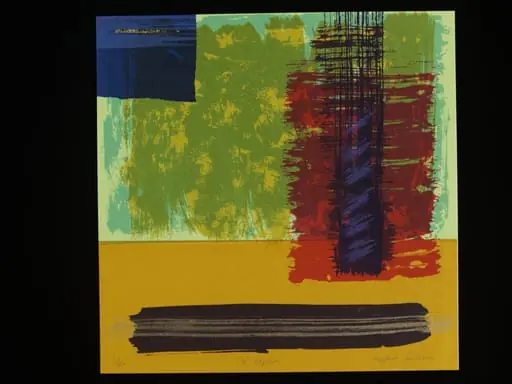
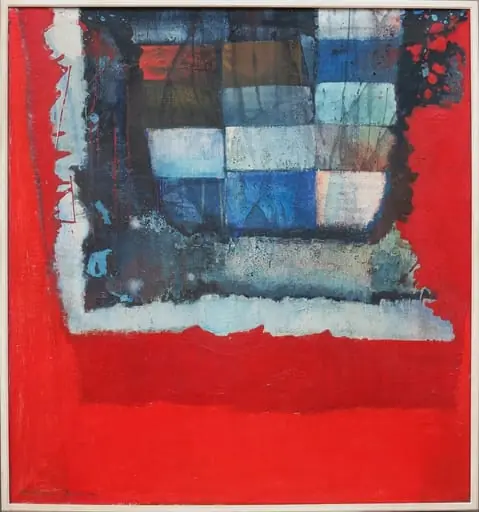
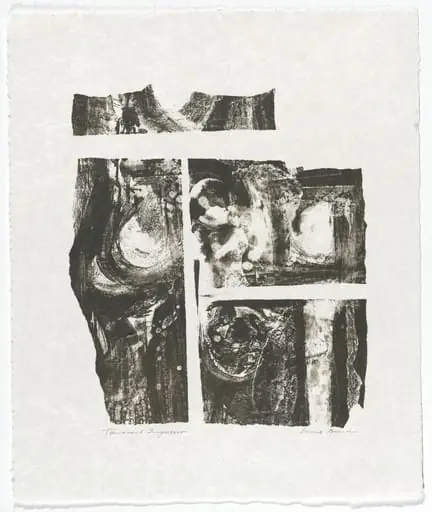
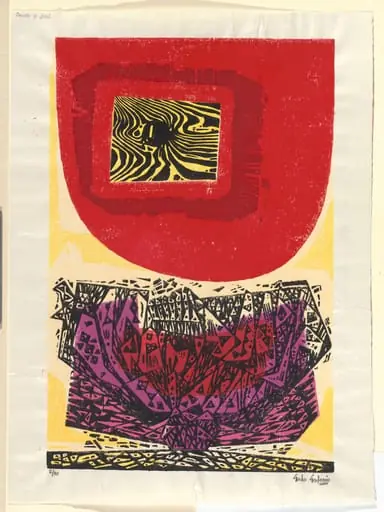
Underground is a print by Peter Lanyon. It dates from 1951 and is held in the collection of the Victoria and Albert Museum.
About this work
The stain-like background comes from washing off colored stencils with turpentine.
Peter Lanyon’s 1951 print *Underground* is abstract and made with screenprint.
It’s one of the first times British artists used this method for fine art prints.
Lanyon learned the process from American artist Warren Mackenzie who showed him how to clean stencils with turpentine, leaving the ghostly background we see here.
The title points to mines, burial grounds, and caves beneath Cornwall’s ground.
As a Cornishman, Lanyon knew these hidden spaces shaped local life and memory.
The stain-like background comes from washing off colored stencils with turpentine.
Check out the technique called impasto next.
Overview
Underground is a 1951 abstract print by Peter Lanyon, notable for its early use of screenprinting in British fine art.
Subject & Meaning
The title Underground references the subterranean features of Cornwall, including mines, burial grounds, and caves, which Lanyon, as a native Cornishman, understood to be integral to the region's landscape and cultural heritage.
Technique & Style
Lanyon employed screenprinting, a technique he learned from American artist Warren Mackenzie. The process involved washing off preliminary stencil colors with turpentine, resulting in a translucent stain that forms the image's background.
History & Provenance
Underground is among the first fine art prints in Britain to utilize screenprinting, marking an early adoption of this medium in the country's art scene.
Artist & collection
Artist
Peter Lanyon spent years gliding over Cornwall’s jagged cliffs in a tiny plane, mapping the land from the air before he put brush to canvas.