Artwork
Landscape: Galatsi
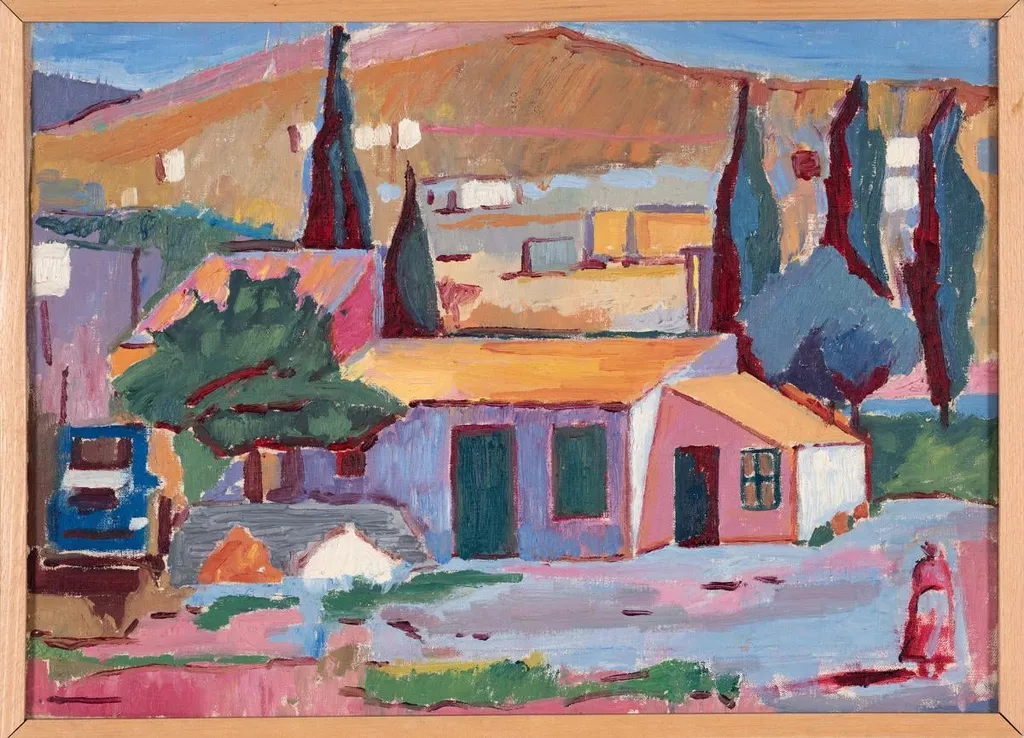
Landscape: Galatsi is an unspecified painting by Lefteris Kanakakis. It dates from 1957 and is held in the collection of the Athens School of Fine Arts.
About this work
Overview
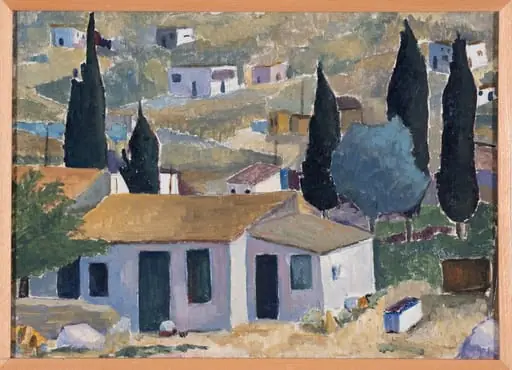
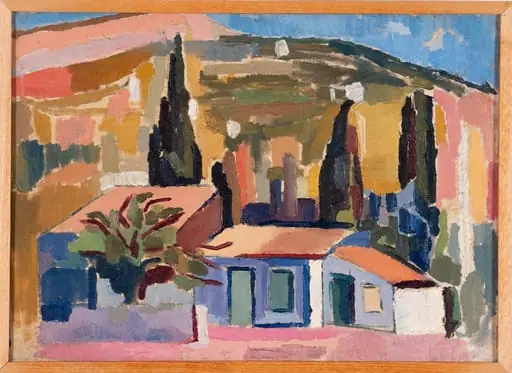
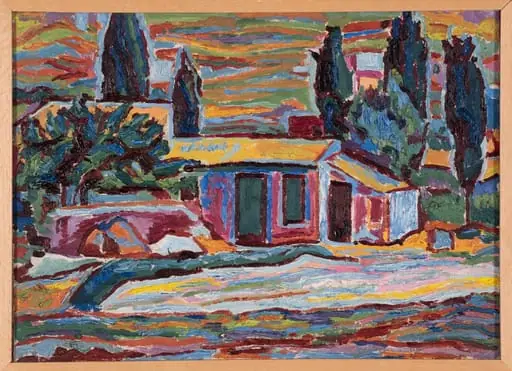
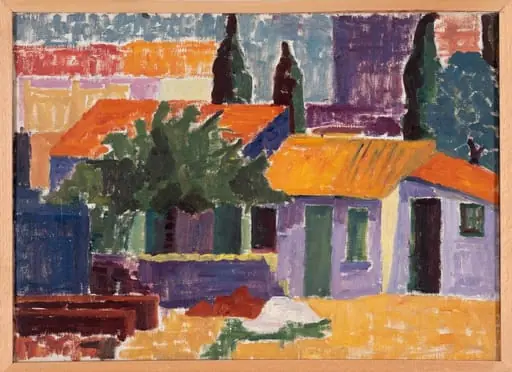
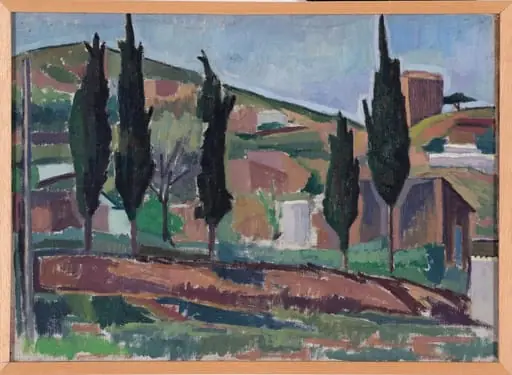
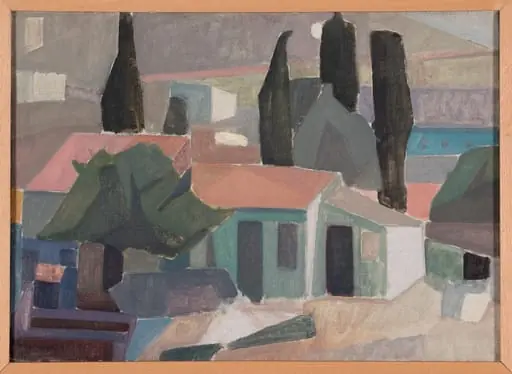
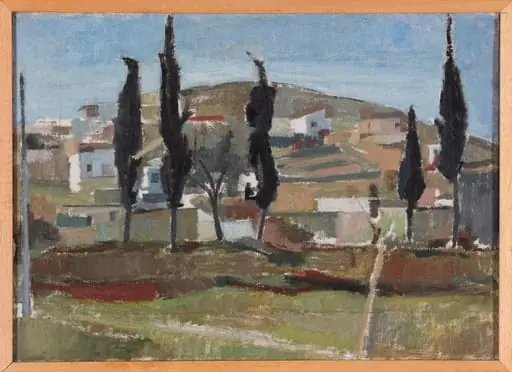
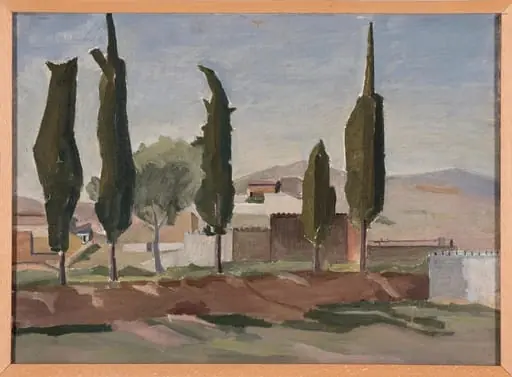
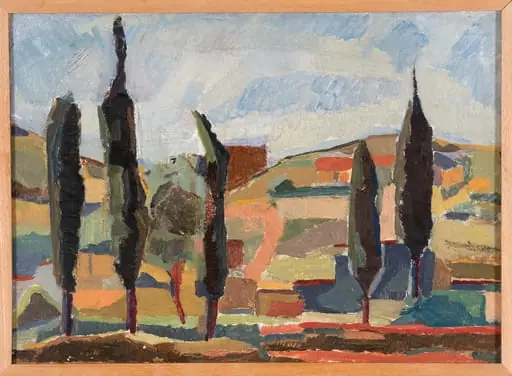
Landscape: Galatsi, painted in 1957 by Lefteris Kanakakis, is a representational depiction of a rural scene in the Athenian suburb of Galatsi.
Landscape: Galatsi, painted in 1957 by Lefteris Kanakakis, is a representational depiction of a rural scene in the Athenian suburb of Galatsi. The work is part of the Museum of Ethnography’s collection and reflects the artist’s interest in capturing everyday environments through a simplified visual language. Its composition centers on a modest dwelling amid natural surroundings, rendered with deliberate formal clarity.
Subject & Meaning
The painting portrays a single domestic structure with a yellow roof and pink walls, positioned at the edge of a dirt road flanked by trees. The house, small and unadorned, suggests a quiet, unremarkable life. The surrounding hills and open sky frame the scene without drama, emphasizing stillness and solitude. The subject reflects a personal, perhaps nostalgic, observation of postwar Greek rural life rather than a symbolic statement.
Technique & Style
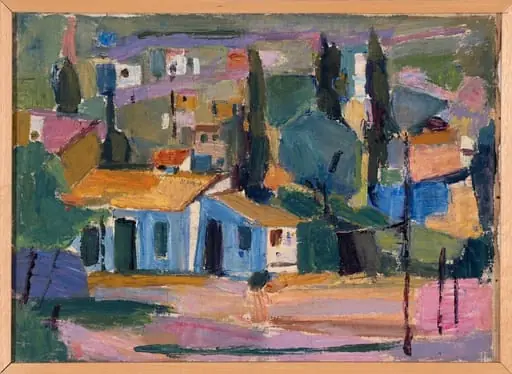
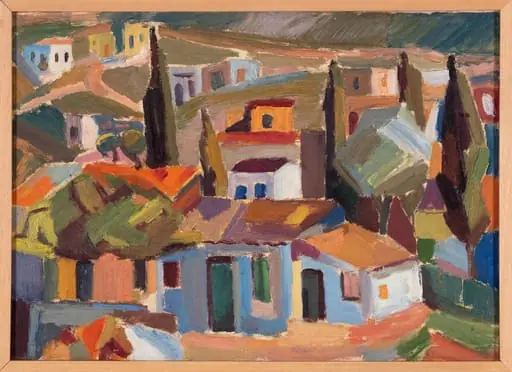
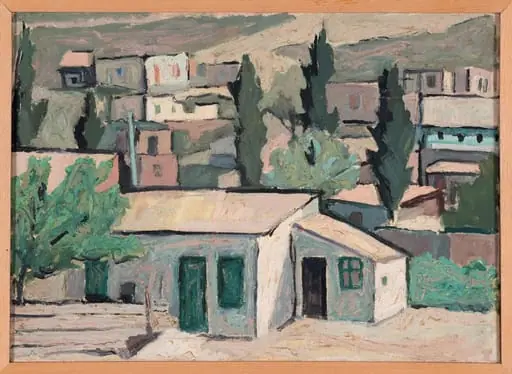
Kanakakis employs bold, flat areas of color and clearly defined geometric forms to construct the landscape. Brushstrokes remain visible, introducing subtle texture without abandoning structural clarity. The palette is restrained yet vivid—yellow, pink, and blue dominate—creating visual harmony through contrast rather than detail. The style leans toward modernist simplification, reducing nature and architecture to essential shapes.
History & Provenance
Created in 1957, the painting entered the collection of the Museum of Ethnography shortly after its completion. Its acquisition aligns with the museum’s broader interest in documenting everyday Greek life during the mid-20th century. No significant changes in ownership are documented, and the work has remained in institutional care since its early years, preserving its original condition.
Context
Painted during a period of rapid urbanization in Greece, Landscape: Galatsi captures a vanishing rural vernacular. While Athens expanded, suburbs like Galatsi retained pockets of traditional settlement. Kanakakis’s choice to depict such a scene reflects a quiet resistance to industrial modernity, valuing the quiet dignity of ordinary places over grand narratives of progress.
Legacy
Though not widely exhibited beyond institutional settings, the painting contributes to a lesser-known strand of postwar Greek modernism that prioritized local observation over international trends. Kanakakis’s approach influenced regional artists seeking to reconcile folk subject matter with abstracted form, leaving a modest but distinct mark on Greece’s mid-century visual culture.