Artwork
Rachel Concealing Laban's Idols
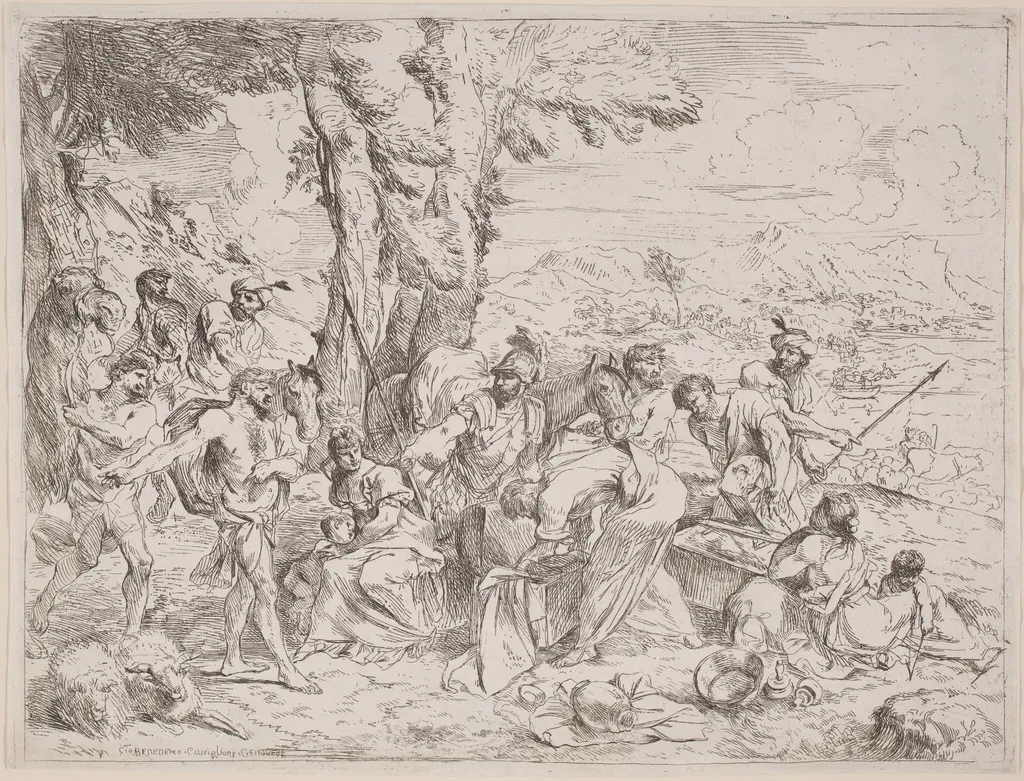
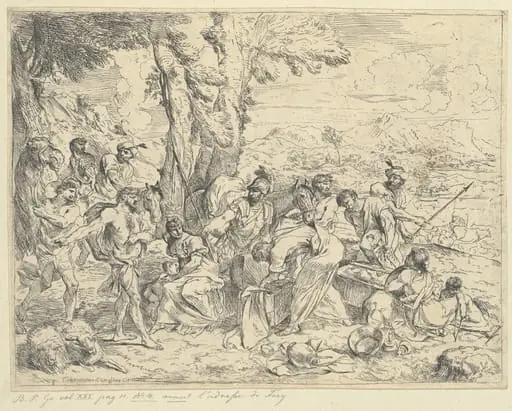
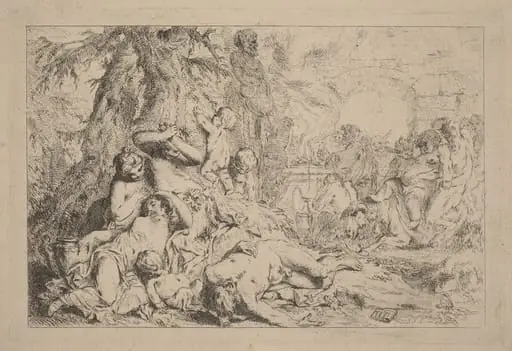
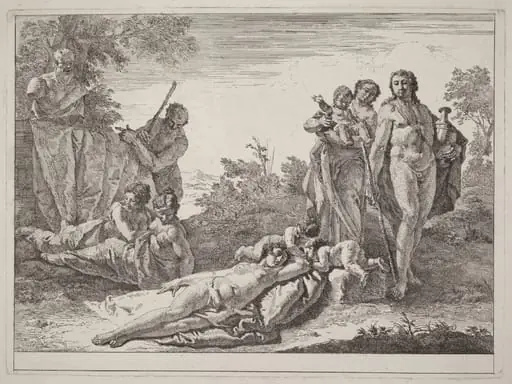
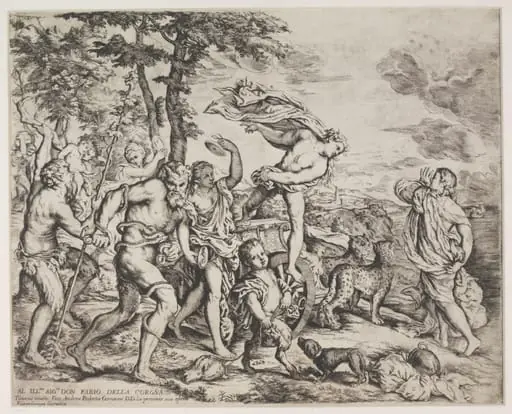
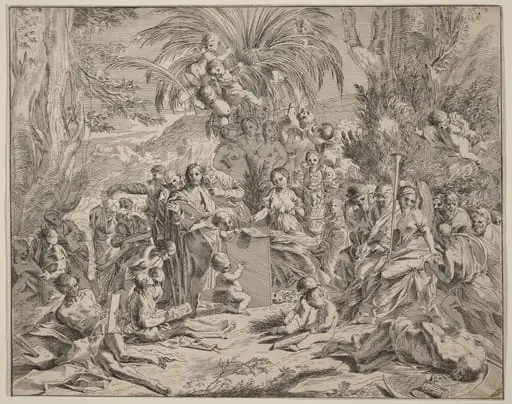
Rachel Concealing Laban's Idols is an ink print by the Baroque artist Andrea De Leone. It dates from 1635 and is held in the collection of the National Gallery of Art.
About this work
Overview
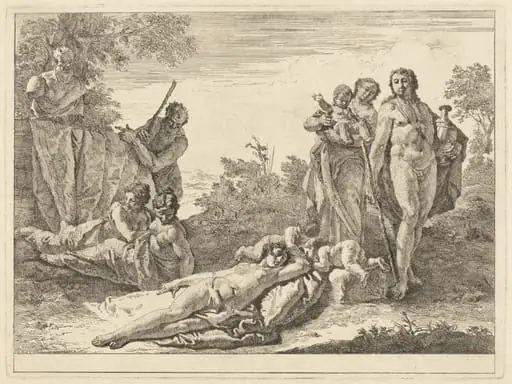
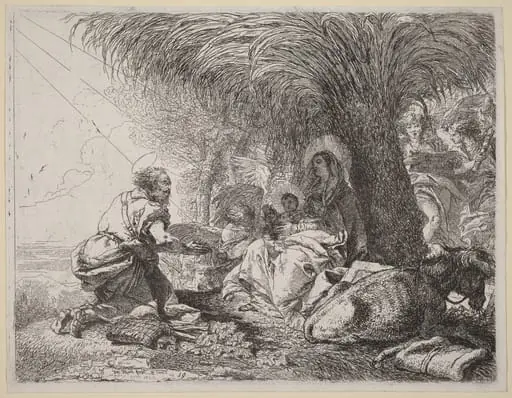
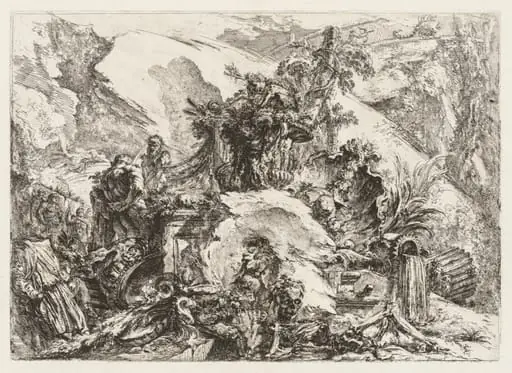
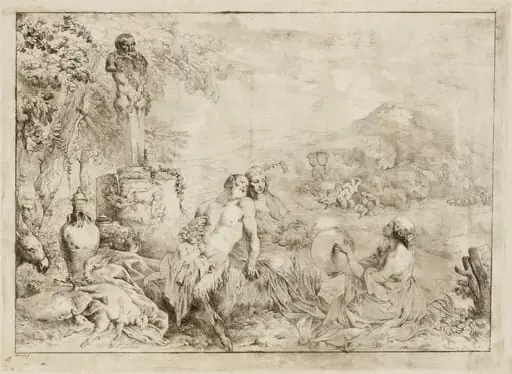
Andrea De Leone’s etching Rachel Concealing Laban’s Idols, executed around 1635, presents a densely populated tableau rendered in stark black and white. The composition is crowded with figures, animals and assorted objects that intertwine in a seemingly disorderly space, creating a sense of visual turbulence.
Subject & Meaning
At the centre of the scene a woman is depicted shielding an object beneath a draped fabric, suggesting the biblical episode in which Rachel hides her father Laban’s household idols. The surrounding characters appear absorbed in their own activities, emphasizing the secrecy of the act amid a bustling environment.
Technique & Style
The work is an etching, a printmaking process that involves incising lines into a metal plate and then drawing ink into the recessed areas. De Leone’s handling of the needle produces scratchy, overlapping lines, while areas of heavy ink build up create deep shadows, giving the image a textured, urgent quality.
History & Provenance
Created in the early seventeenth century, the print reflects the period’s interest in biblical narratives rendered with dramatic intensity. While specific ownership records are scarce, the piece is catalogued among De Leone’s surviving prints and is referenced in collections that focus on Baroque-era Italian etchings.
Artist & collection