Artwork
Buddha's Conversion of Five Bhiksu

Buddha's Conversion of Five Bhiksu is an unspecified painting by the Ming dynasty painting artist Li Sheng. It dates from 1355 and is held in the collection of the Cleveland Museum of Art.
About this work
Overview
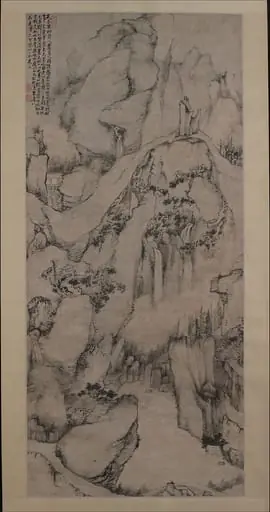
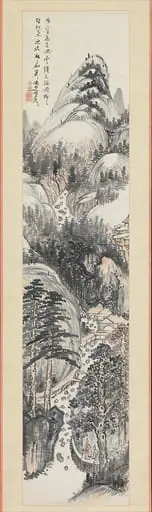
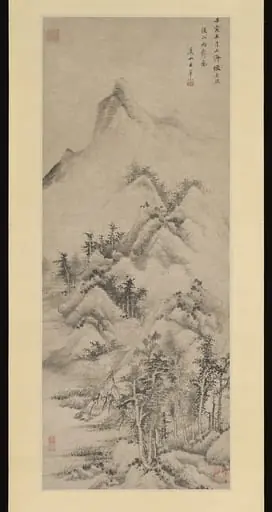
Created in 1355 by the Chinese painter Li Sheng, *Buddha’s Conversion of Five Bhiksu* is a narrow, horizontal composition that depicts a mist‑shrouded mountain setting. The work is part of the collection of the Cleveland Museum of Art, where it is displayed as an example of Yuan‑period religious painting.
Subject & Meaning
The scene illustrates the moment the Buddha initiates the ordination of five wandering monks, or bhiksu, a narrative drawn from Buddhist tradition. The small group of figures gathers near a modest temple, emphasizing the humility of the disciples against the vast, contemplative landscape that surrounds them.
Technique & Style
Brushwork suggests atmospheric depth, with distant peaks rendered in delicate washes, while the foreground features more defined trees and rock formations.
Li Sheng employs a restrained palette of soft grays, muted greens, and earthy browns, punctuated by occasional red and blue accents that draw attention to specific details. Brushwork suggests atmospheric depth, with distant peaks rendered in delicate washes, while the foreground features more defined trees and rock formations. A line of calligraphic text runs along the top, likely a poem or explanatory note.
History & Provenance
The painting has remained in private or institutional hands since its creation, eventually entering the Cleveland Museum of Art’s collection. Its provenance prior to acquisition by the museum is not extensively documented, but the work is recognized as a representative piece of Li Sheng’s oeuvre from the mid‑14th century.
Context
Produced during the Yuan dynasty, a period marked by Mongol rule over China, the artwork reflects the continued patronage of Buddhist subjects by Chinese artists. The composition’s emphasis on nature and spiritual contemplation aligns with contemporary aesthetic values that favored harmony between humanity and the natural world.
Artist & collection
Artist
Li Sheng painted ink on silk, showing Buddhist scenes in the Yuan dynasty. His 1355 scroll *Buddha’s Conversion of Five Bhiksu* captures robes, rocks, and a haloed teacher in monochrome strokes. The work belongs to a…