Artwork
Caulking a ship
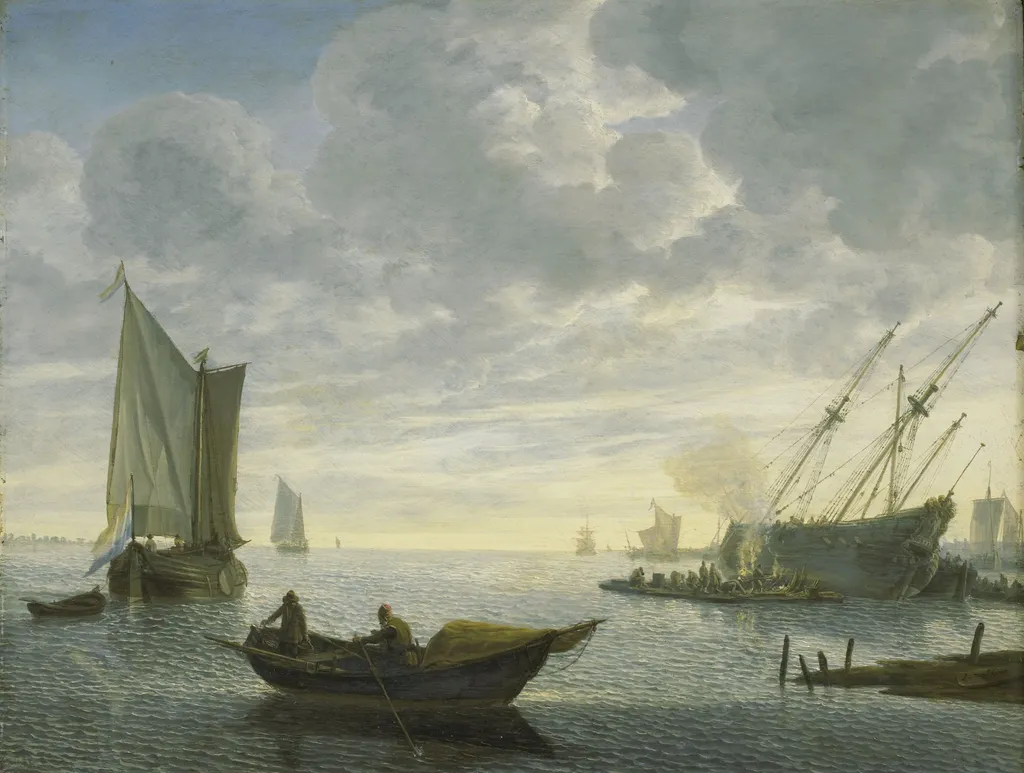
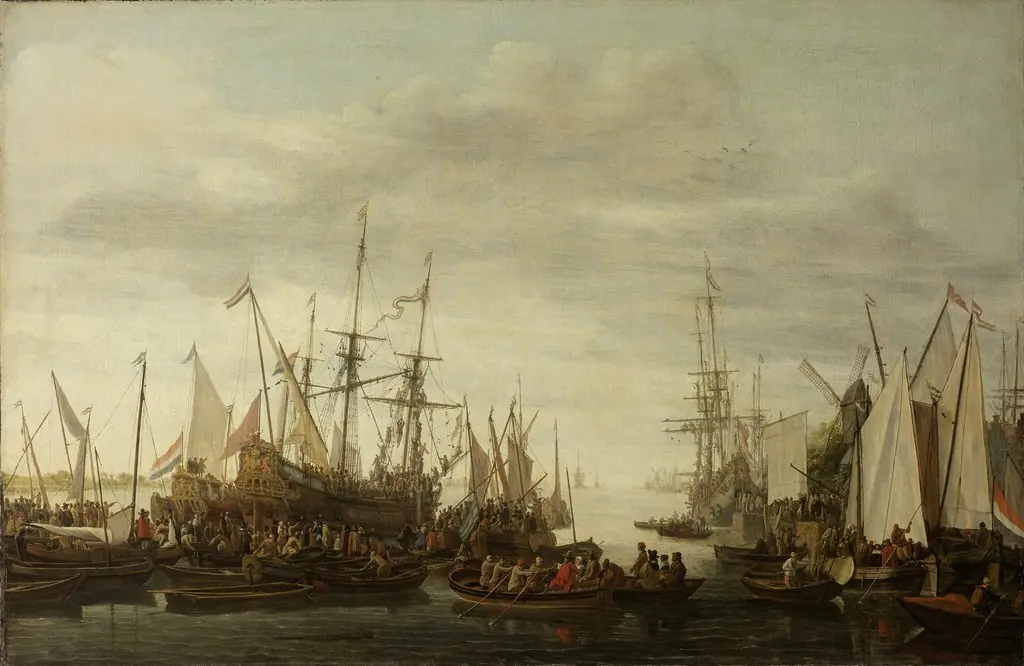
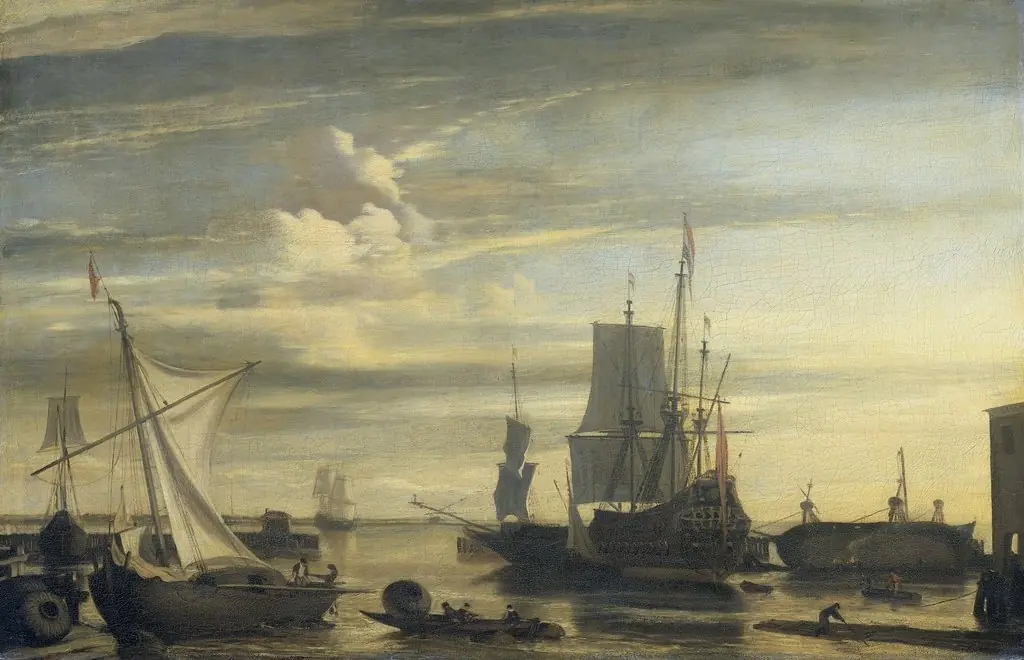
Caulking a ship is an oil painting by the Dutch Golden Age artist Lieve Verschuier. It dates from 1673 and is held in the collection of the Rijksmuseum.
About this work
Overview
Lieve Verschuier’s 1673 oil painting, titled Caulking a Ship, captures a bustling harbor scene. The composition centers on a small, tarp‑covered boat rowed by two figures, while larger vessels dominate the middle and background. Calm waters reflect a bright sky dotted with soft clouds, and the overall effect conveys a lively snapshot of 17th‑century maritime activity.
Subject & Meaning
The work records the practical labor of ship maintenance, specifically the caulking process undertaken by a crew on a sizable vessel with prominent green sails. By juxtaposing the intimate effort of the rowers with the larger scale of the ship’s upkeep, the painting underscores the interdependence of individual workers and the broader commercial enterprise of seafaring.
Technique & Style
Executed in oil on canvas, Verschuier employs a restrained palette and careful modeling of light to suggest volume. The illumination catches the sails and rippling water, creating a subtle chiaroscuro that gives the scene a three‑dimensional presence. Fine brushwork renders details such as the tarp’s texture and the crew’s movements, while broader strokes convey atmospheric depth.
History & Provenance
Created in the Dutch Golden Age, Caulking a Ship entered the collection of the Rijksmuseum, where it remains on display. The painting’s provenance traces back to the artist’s workshop in Amsterdam, reflecting the period’s interest in documenting everyday maritime labor alongside more grandiose naval subjects.
Own this work as a print
Artist & collection