Artwork
Cloud study at Highgate
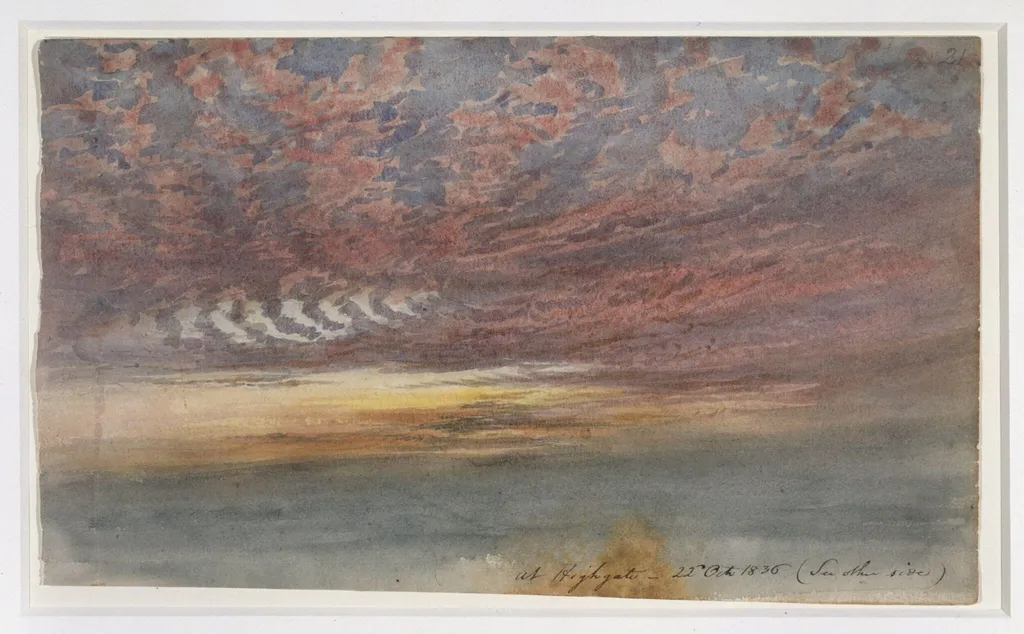
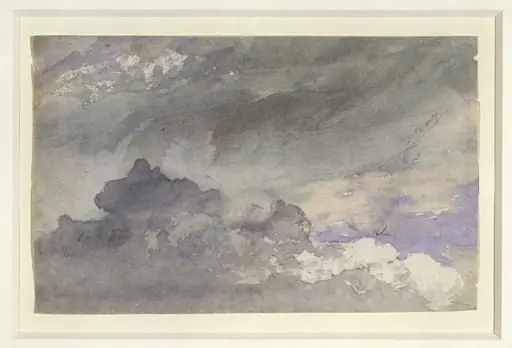
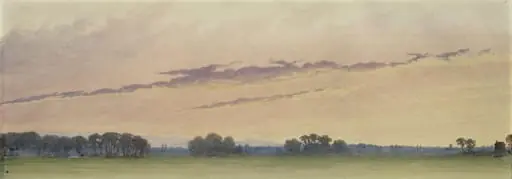
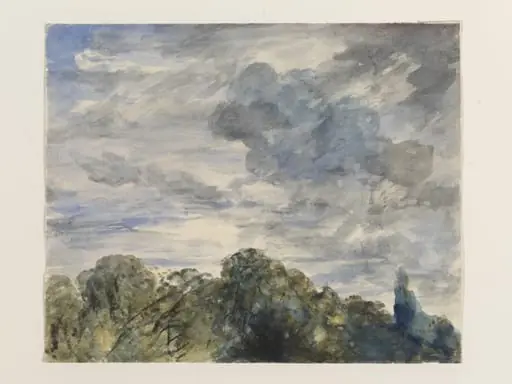
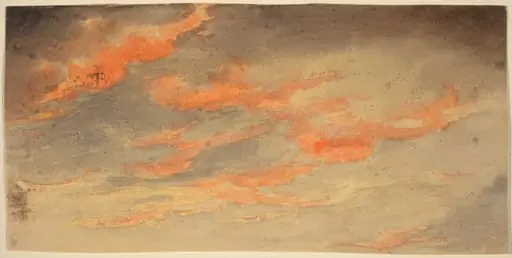
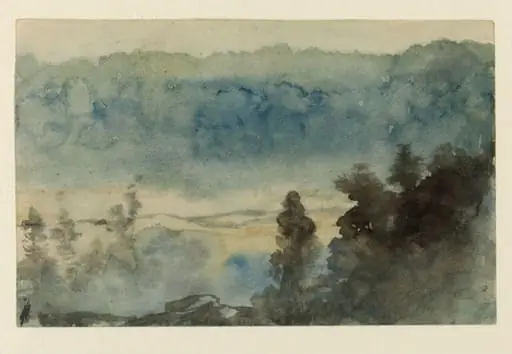
Cloud study at Highgate is a watercolor work on paper by the British Romanticist artist Thomas Lindsay. It dates from 16 and is held in the collection of the Victoria and Albert Museum.
About this work
Overview
Its small scale and intimate detail reflect its function as a scientific and aesthetic exercise rather than a finished composition.
Thomas Lindsay created this watercolor study on October 22, 1836, while observing the sky from Highgate. The work is a direct record of atmospheric conditions at sunset, annotated with precise color observations. Unlike the described seascape, the piece focuses solely on the sky, with no land or water visible. Its small scale and intimate detail reflect its function as a scientific and aesthetic exercise rather than a finished composition.
Subject & Meaning
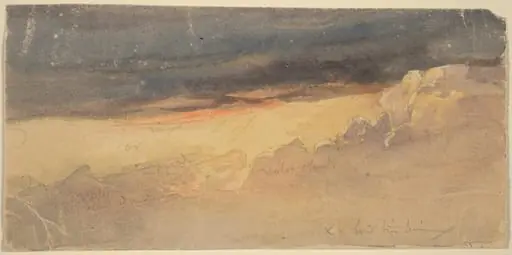
The study captures a transient moment in the sky’s chromatic shift at dusk. Lindsay documented the layered structure of clouds: warm copper tones at the top, fading into deeper purples and ash hues below, with a distinct horizon band transitioning between cool and warm palettes. These notes reveal an intent to understand light’s behavior, not merely to depict beauty. The work embodies a quiet, observational reverence for natural phenomena.
Technique & Style
Executed in watercolor, the piece employs thin washes and controlled layering to suggest subtle gradations of color. Brushwork is restrained, avoiding dramatic strokes in favor of soft transitions. The absence of outlines or solid forms emphasizes the ephemeral quality of light. Inscriptions in ink, placed directly on the paper, integrate textual analysis with visual representation, blurring the line between scientific record and artistic expression.
History & Provenance
The study is part of a series of sky observations Lindsay made during the 1830s, likely for personal study or pedagogical use. It remained in private hands until acquired by a public collection, where it is now preserved as an example of 19th-century British atmospheric studies. The reverse of the sheet contains additional notes, suggesting repeated use as a reference tool. No evidence indicates it was exhibited publicly during Lindsay’s lifetime.
Context
Lindsay’s work aligns with a broader 19th-century interest in meteorological observation among artists and scientists. While contemporaries like Constable also studied skies, Lindsay’s method was more analytical, prioritizing color notation over emotional tone. His approach reflects the influence of emerging scientific disciplines, where art served as a tool for recording natural phenomena with precision, rather than as a vehicle for idealized landscape.
Legacy
Though not widely known today, Lindsay’s cloud studies contribute to the historical record of how artists engaged with atmospheric science. They offer insight into the intersection of empirical observation and visual practice in the pre-photographic era. These works remain valuable for understanding the technical and perceptual concerns of landscape artists who sought to decode nature’s transient effects through direct study.
Own this work as a print
Artist & collection