Artwork
'Sculpture Frieze'
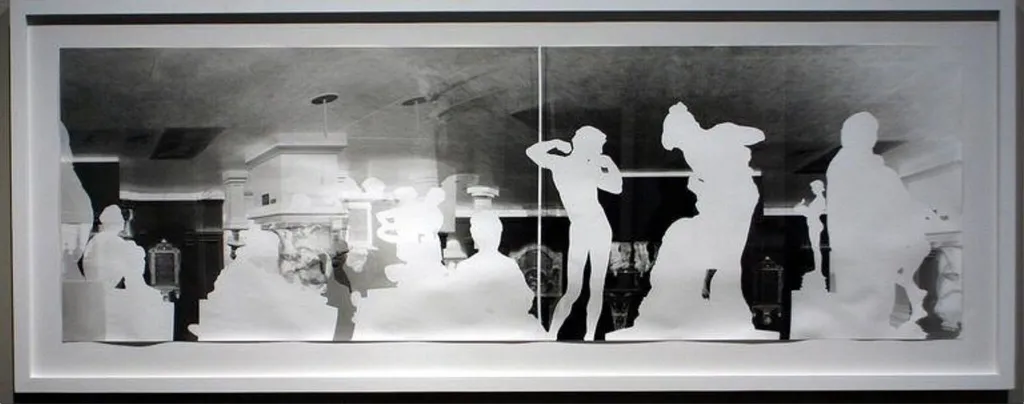
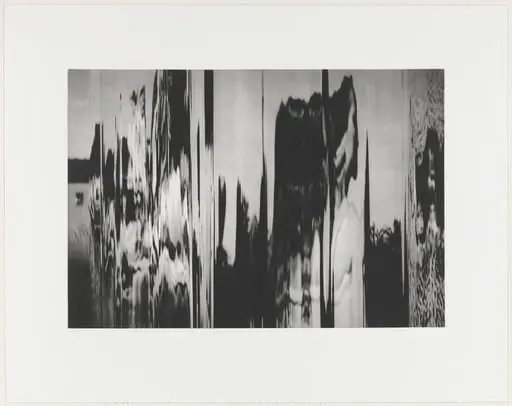
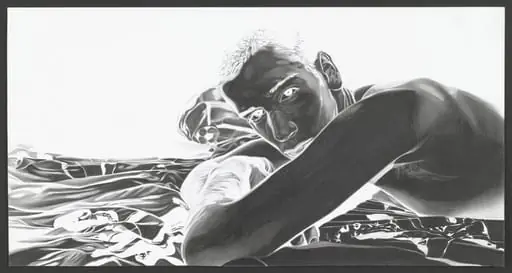
'Sculpture Frieze' is a photographic photography by Edgar Lissel. It dates from 2002 and is held in the collection of the Victoria and Albert Museum.
About this work
The long exposure turned the still objects into a moving band of shapes.
Edgar Lissel made a photo in 2002 called “Sculpture Frieze.”
He used a giant pinhole camera inside the Victoria and Albert Museum.
The camera sat around a case of bronze and clay figures.
A sheet of photo paper hung behind the case.
Light came through two tiny holes for five straight hours.
The shadows of the sculptures mixed with the room’s upside-down view.
The long exposure turned the still objects into a moving band of shapes.
Check out Lissel, Edgar next.
Overview
Edgar Lissel's 'Sculpture Frieze' is a photograph created in 2002 using a unique giant pinhole camera setup within the Victoria and Albert Museum.
Technique & Style
The camera was constructed around a display case containing bronze and terracotta figures, with photographic paper attached to the back. Light passing through two pinholes over a five-hour exposure created a negative image, blending silhouettes of sculptures with an inverted view of the gallery.
Subject & Meaning
The resulting photograph presents an animated frieze, where the still objects appear as a dynamic band of shapes, interacting with the museum's interior in unexpected ways.
History & Provenance
The V&A commissioned Lissel during a two-week residency, coinciding with the 'Seeing Things: Photographing Objects 1850-2001' exhibition, marking his first collaboration with a UK museum.
Artist & collection
Artist
Edgar Lissel treats light like a sculptor, folding it into crisp geometric shapes that seem to float off the paper.