Artwork
Peisaj
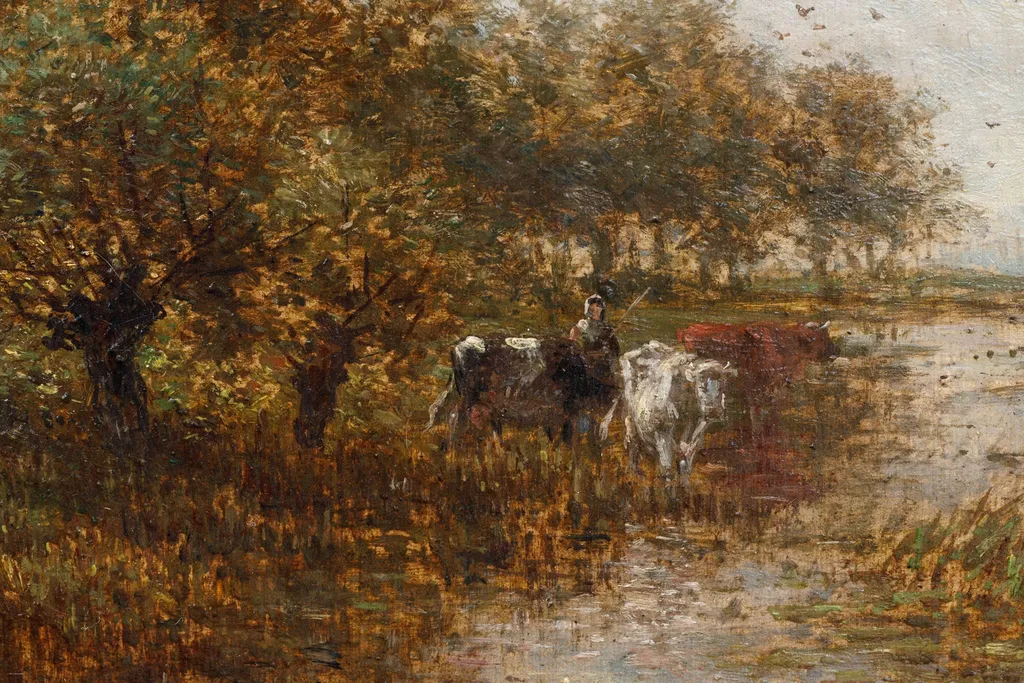
Peisaj is an unspecified painting by Jan van Lokhorst. It dates from 1885 and is held in the collection of the National Museum of Art of Romania.
About this work
Overview
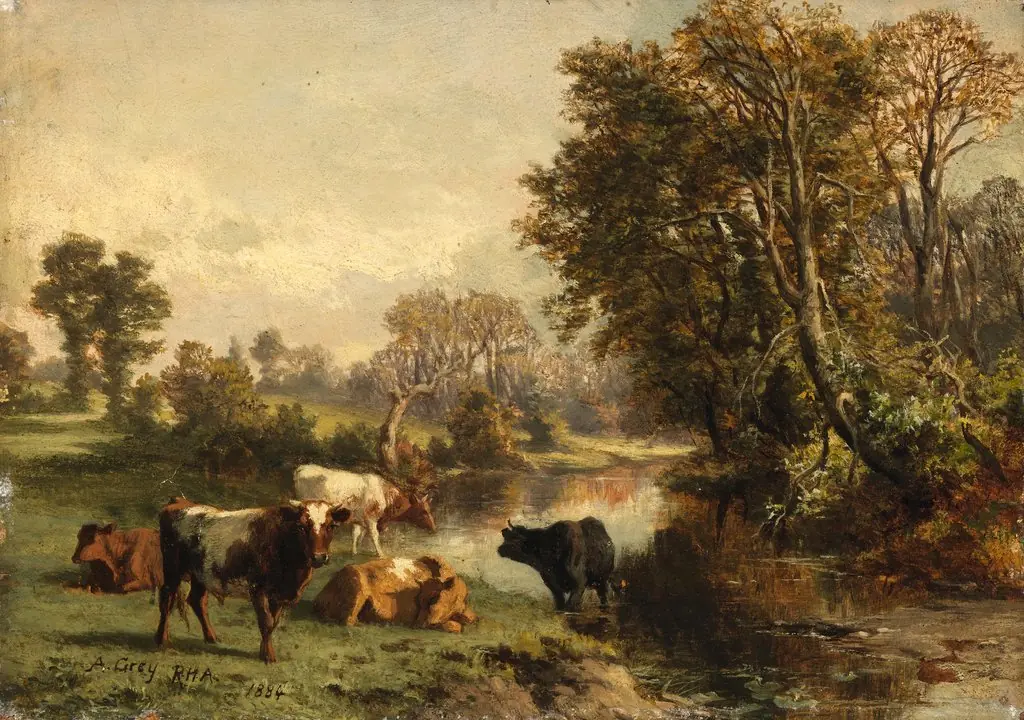
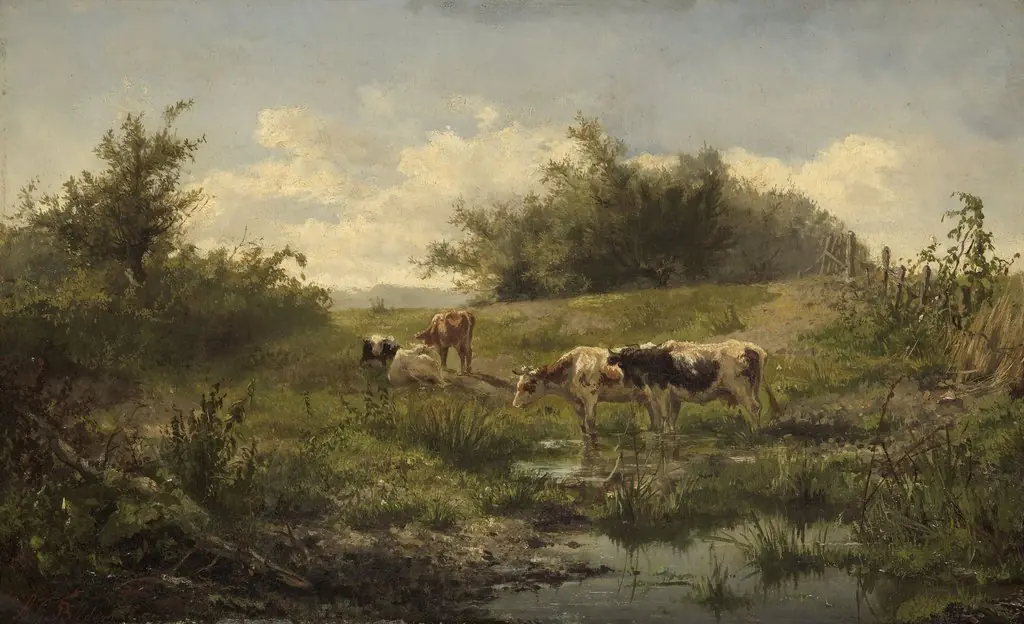
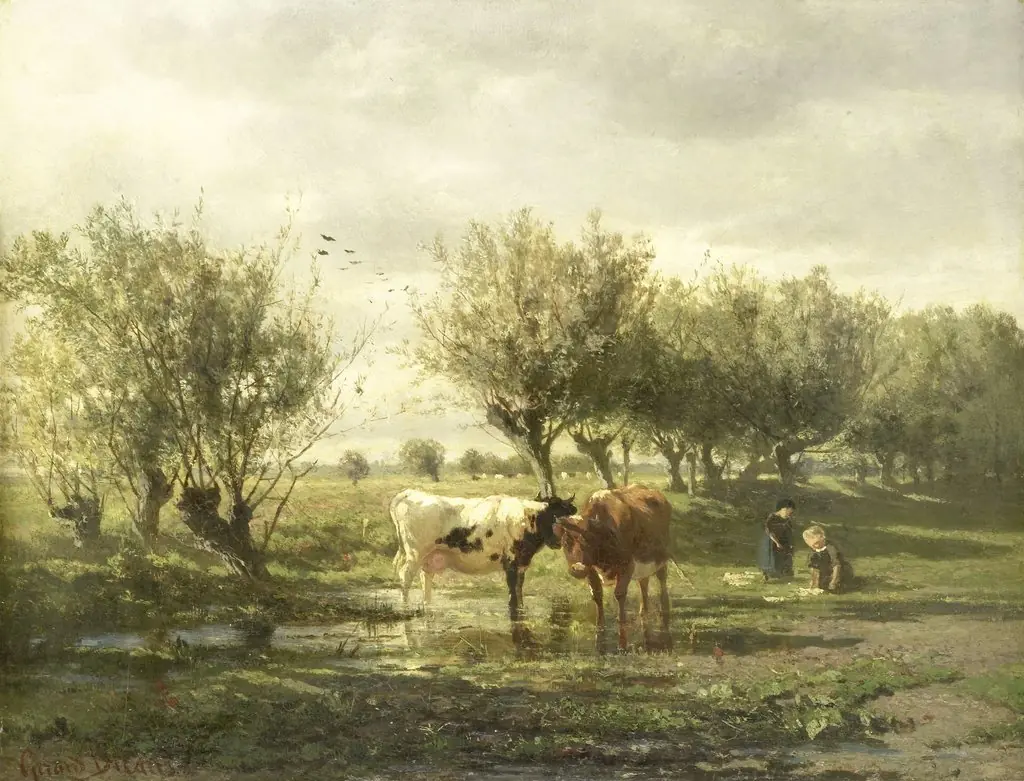
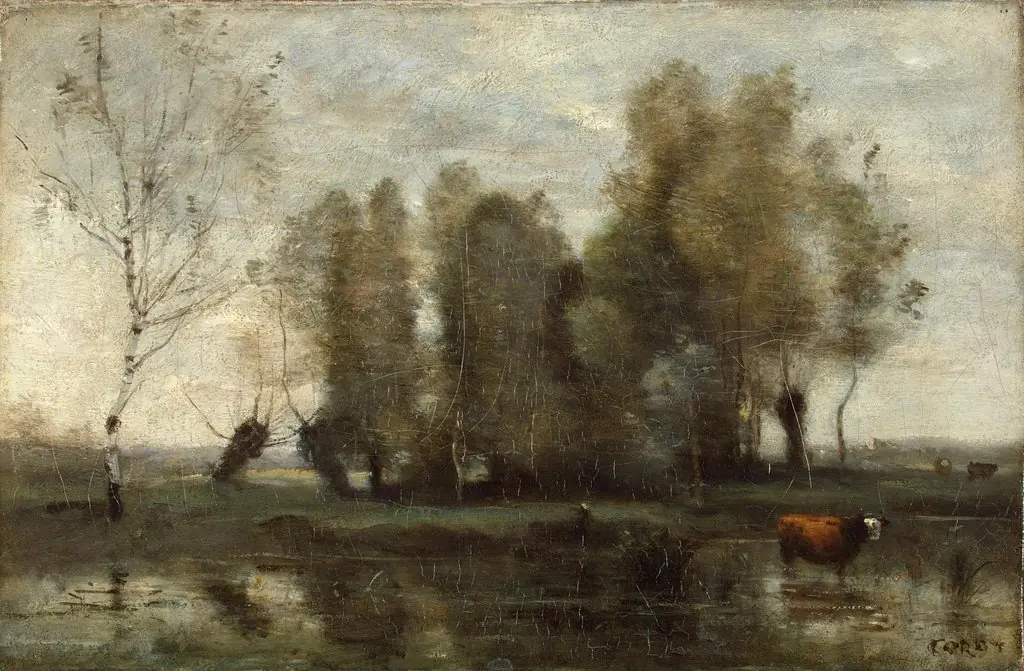
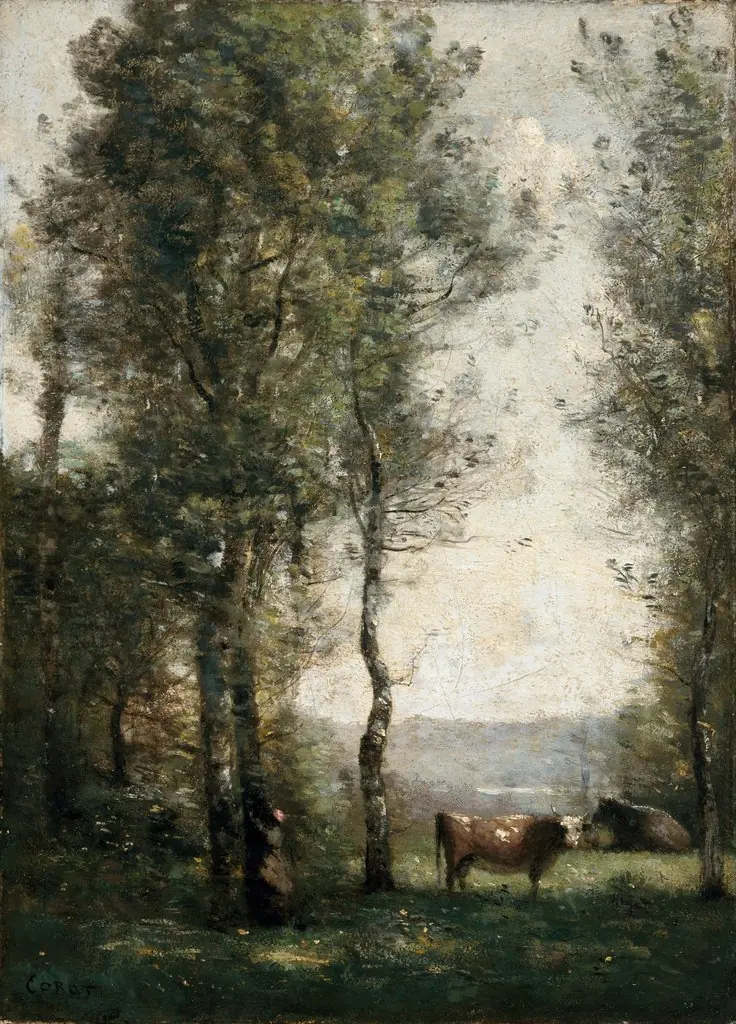
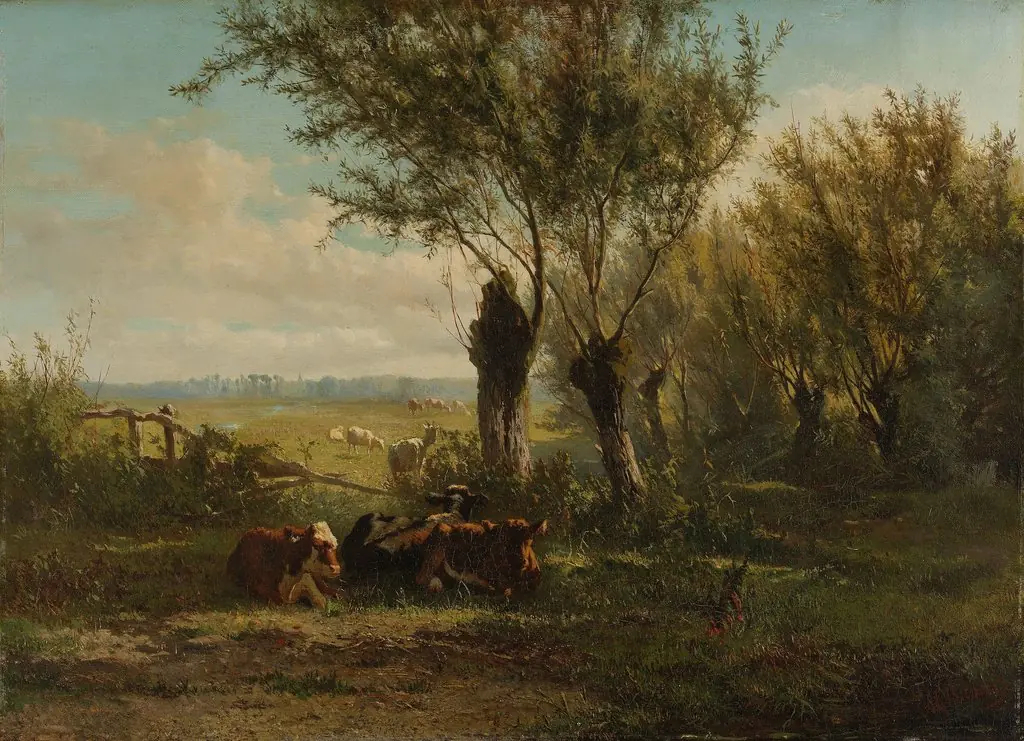
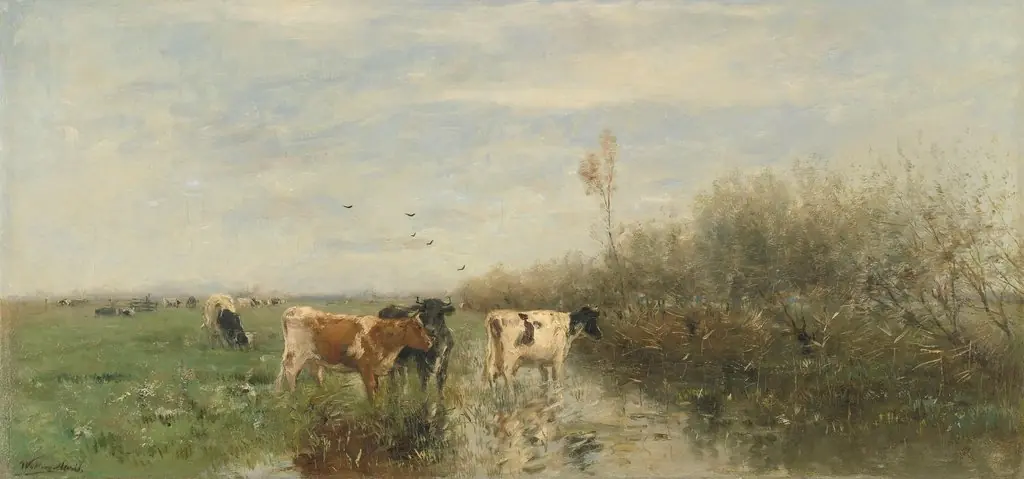
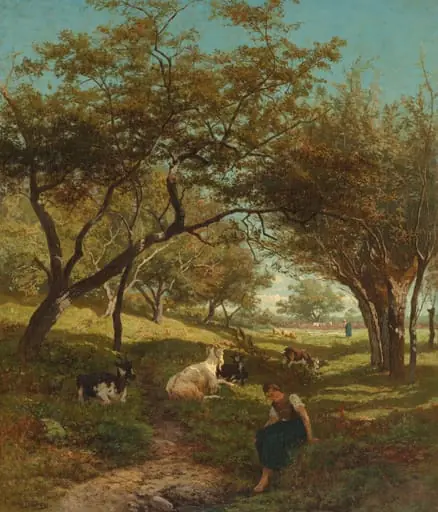
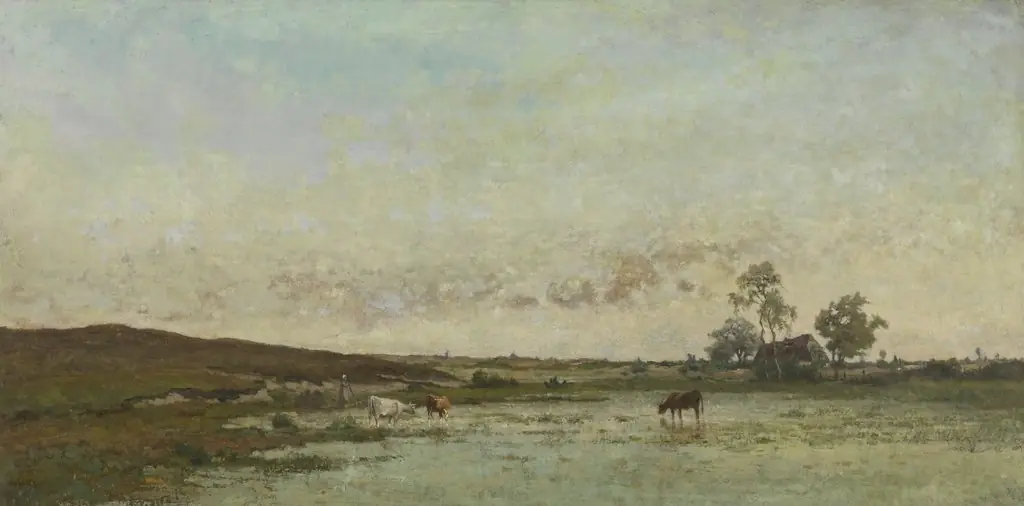
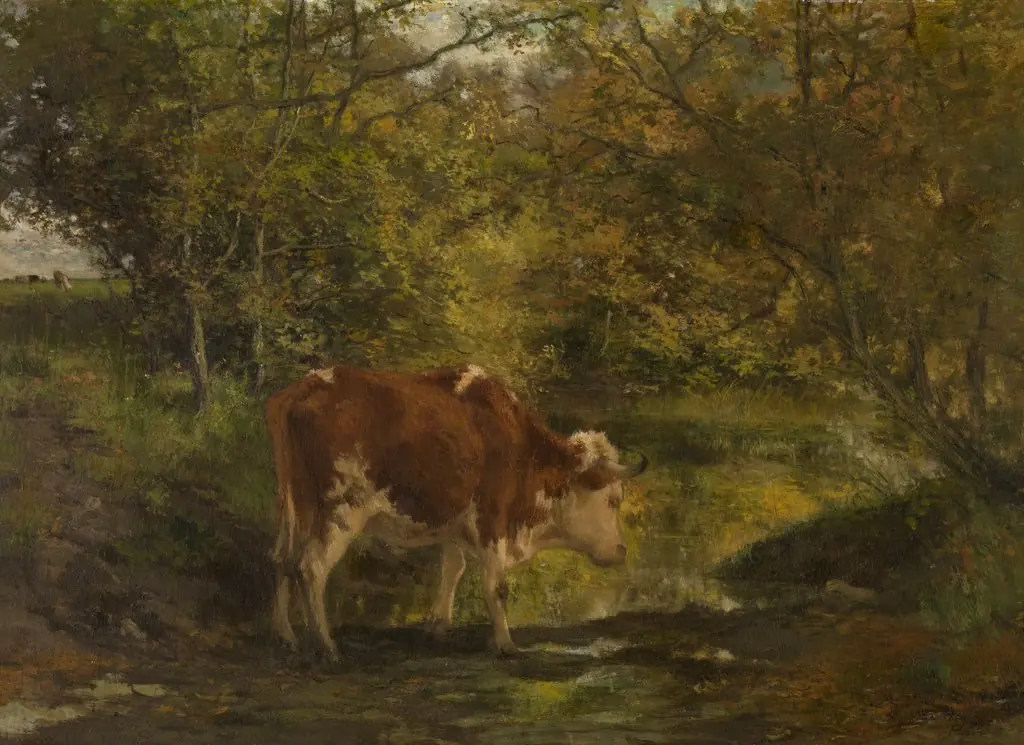
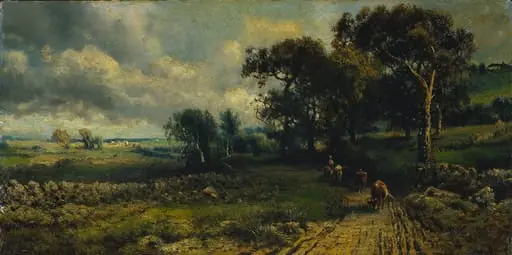
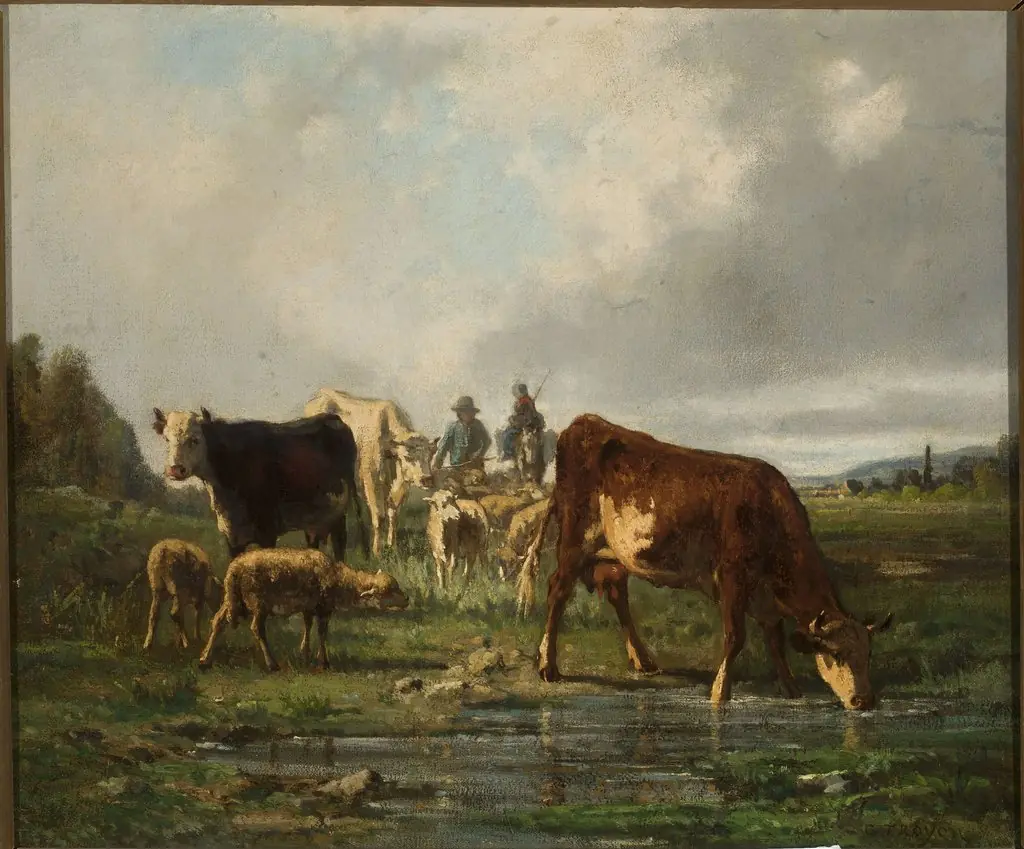
Painted in 1885 by Jan van Lokhorst, this landscape depicts a rural scene of a rider guiding two cattle along a damp, narrow track. The work is rendered in oil with a pronounced textural quality, emphasizing the physicality of the medium. Its composition centers on movement and atmosphere rather than detail, capturing a fleeting moment in the countryside.
Subject & Meaning
The painting portrays an ordinary agricultural task—herding livestock through muddy terrain—elevated through its unidealized presentation. There is no narrative flourish; instead, the focus lies in the quiet labor of rural life. The rider, barely distinguished from the environment, becomes part of the land’s rhythm, suggesting a harmony between human effort and natural conditions.
Technique & Style
Lokhorst applied paint thickly, using a palette knife or heavy brush to build up surfaces in uneven, tactile layers. This impasto technique gives the foliage and earth a sculptural weight, while the muted palette of ochres, moss greens, and a single red accent anchors the scene in realism. The rough handling conveys immediacy, as if the scene was recorded in direct observation.
History & Provenance
Created during Lokhorst’s active period in the Netherlands, the work reflects his engagement with regional rural life. It remained in private collections until the mid-20th century, with no public exhibition record prior to the 1970s. Its survival is attributed to its modest scale and unassuming subject, which spared it from commercial or political appropriation.
Context
In the late 19th century, Dutch artists increasingly turned from idealized landscapes to scenes of everyday labor, influenced by Realism and the Barbizon school. Lokhorst’s work aligns with this shift, rejecting romanticized pastoralism in favor of unvarnished observation. The painting’s texture and tone echo contemporaneous efforts to capture the physicality of nature beyond mere representation.
Legacy
Though not widely exhibited, the painting contributes to a lesser-known strand of Dutch regional painting that prioritized materiality over polish. Its emphasis on texture and transient light influenced later artists exploring the tactile potential of paint. Today, it stands as a quiet testament to the dignity of rural labor, preserved through its unadorned technique.
Artist & collection
Artist
This Dutch painter made one known work, Peisaj, a straightforward landscape in oils.