Artwork
Portretul Reginei Maria
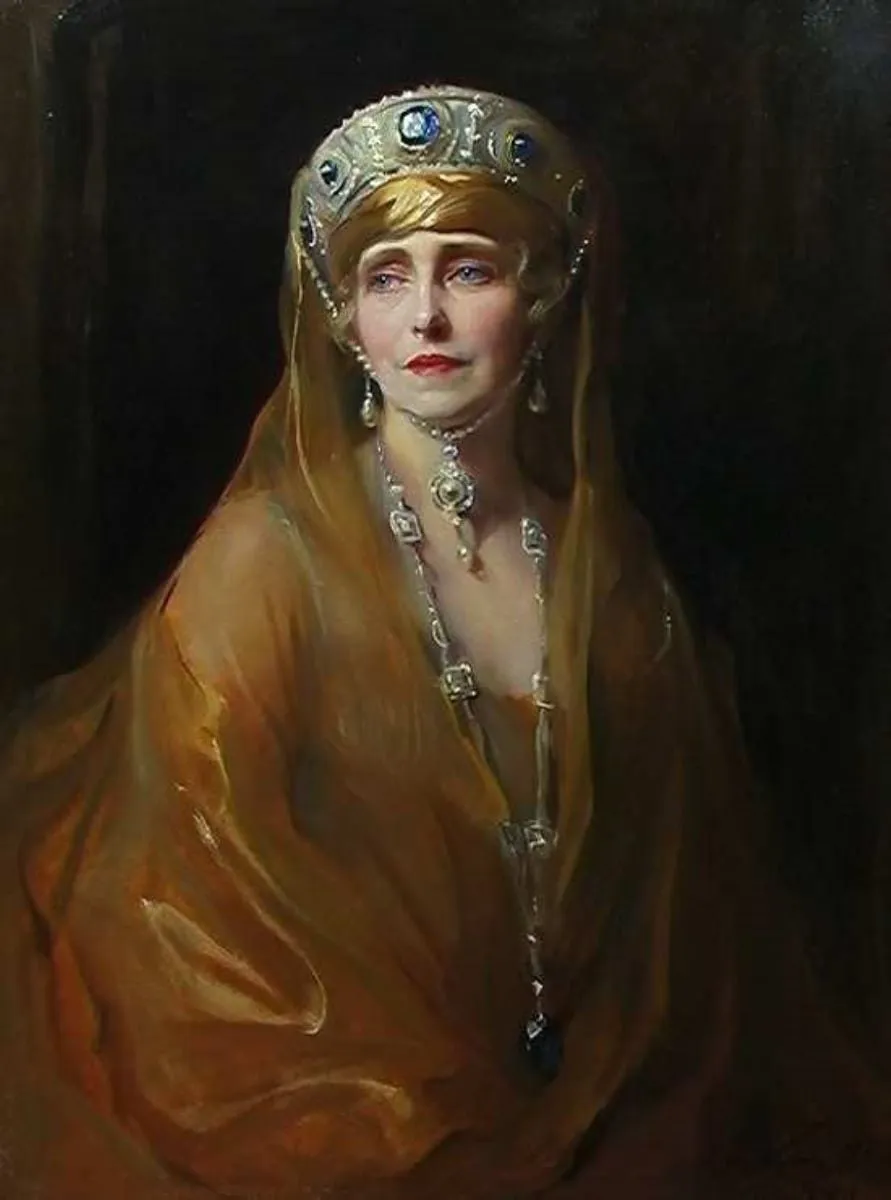
Portretul Reginei Maria is an unspecified painting by Laszlo Philip de Lombos. It is held in the collection of the Peleș National Museum.
About this work
Overview
Subtle gradations of light and shadow define her facial features, suggesting a deliberate emphasis on dignity and status rather than personal intimacy.
This portrait depicts a royal woman adorned in elaborate gold and beige garments, accented by a jeweled headdress and a long pendant necklace. The composition isolates her against a deep, unbroken background, drawing focus to her poised expression and rich attire. Subtle gradations of light and shadow define her facial features, suggesting a deliberate emphasis on dignity and status rather than personal intimacy.
Subject & Meaning
The figure is likely a queen or high-ranking noblewoman, identified by the opulence of her regalia. The heavy gold headpiece and cascading jewels serve as symbols of authority and lineage, while her solemn gaze conveys composure and gravitas. The painting functions as a visual assertion of power, intended to project legitimacy and social standing rather than emotional vulnerability.
Technique & Style
The artist employs chiaroscuro to model the face and robes with smooth transitions between light and shadow, creating a sense of volume without harsh edges. The background’s darkness enhances the luminosity of the garments, while fine brushwork renders the texture of fabric and jewels with restrained precision. The overall effect is one of quiet grandeur, prioritizing tonal harmony over decorative excess.
History & Provenance
The painting’s origin and commissioning context remain undocumented. No definitive record identifies the sitter, artist, or date of creation. Its survival suggests it was once held in a royal or aristocratic collection, though its path through private hands or institutions is unclear. The absence of inscriptions or corroborating documentation leaves its historical narrative incomplete.
Context
Created during a period when portraiture was a tool of political representation, this work aligns with traditions in which royalty used image-making to reinforce hierarchy. Similar compositions appear across European courts, where sumptuous dress and controlled lighting signaled legitimacy. The absence of overt narrative or symbolic objects reflects a preference for austere authority over allegorical complexity.
Legacy
Though not widely exhibited or studied, the portrait exemplifies the quiet potency of courtly portraiture in the early modern era. Its restrained use of light and focus on material wealth influenced later depictions of nobility, particularly in regions where subtlety was valued over flamboyance. It remains a quiet testament to the visual language of power in pre-modern societies.
Artist & collection
Artist
This quiet painter liked to sneak behind the scenes at royal parties, sketching the queen when she wasn’t looking.
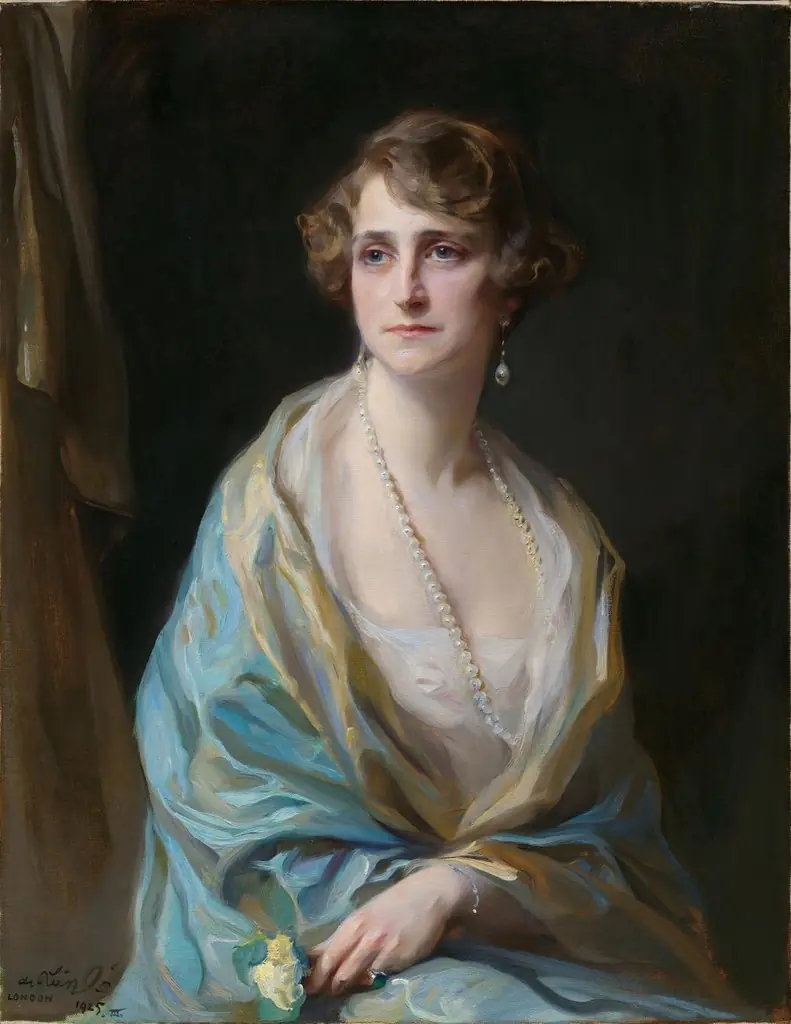 Portrait of Clarice de Rothschild
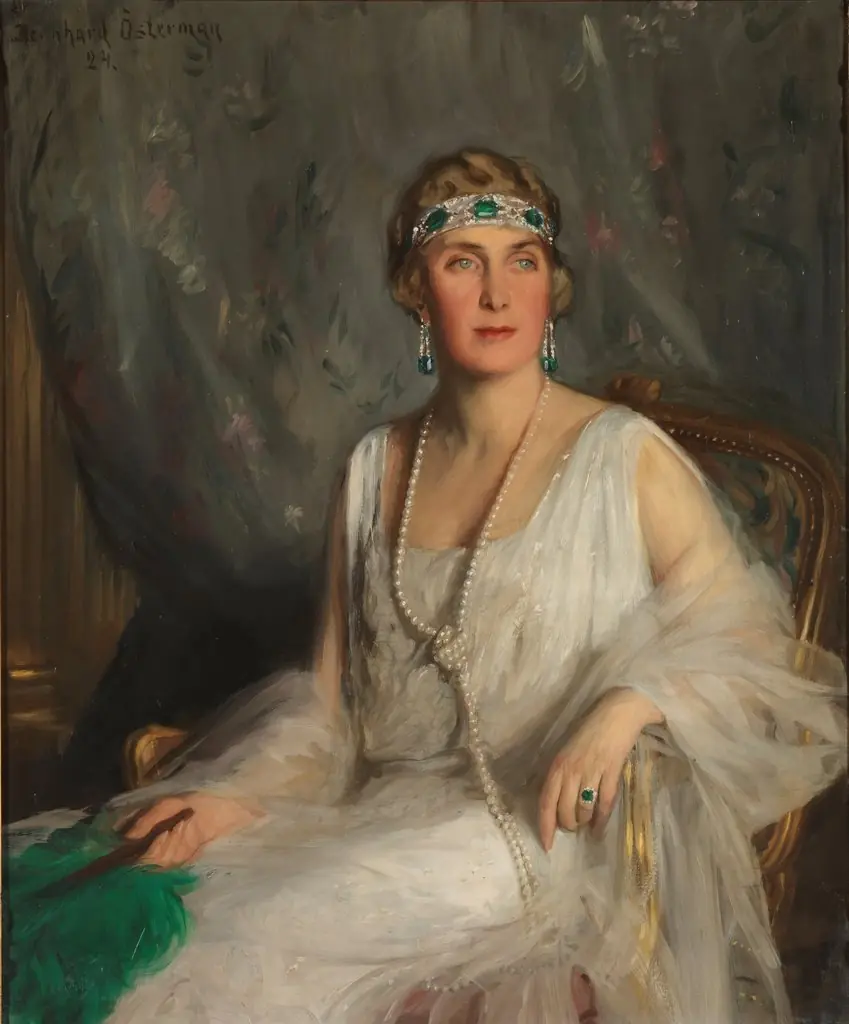 Victoria Eugenie of Battenberg
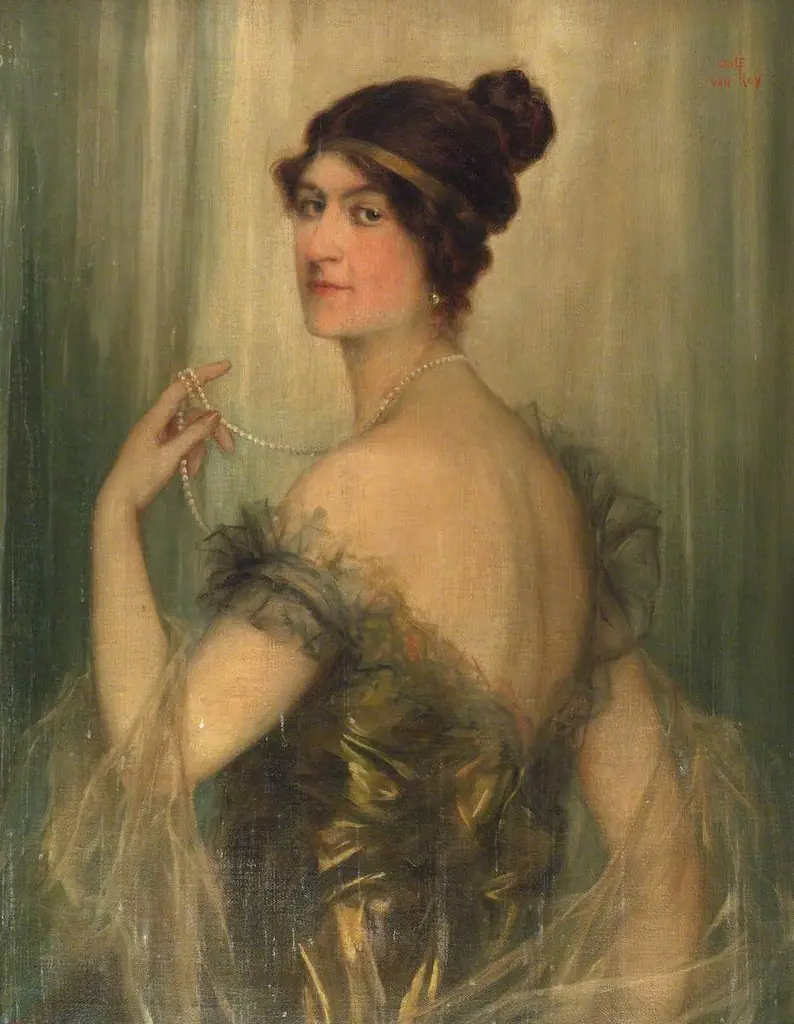 Isobelle Humphreys-Owen
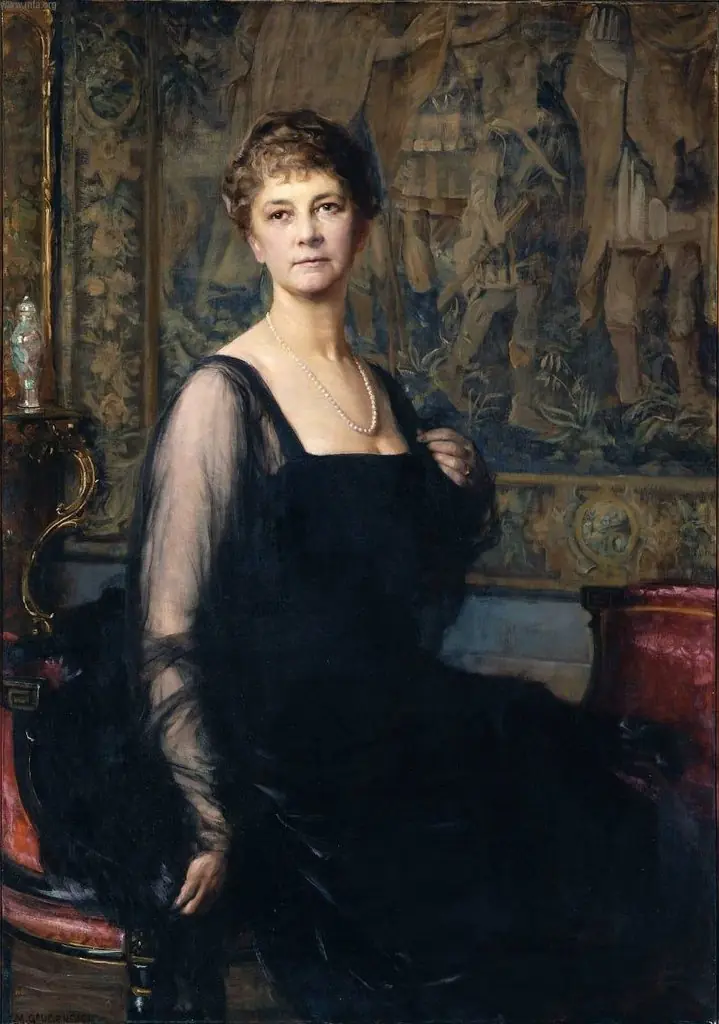 Mrs. James Henry Lancashire (Sarah Hale Wright)
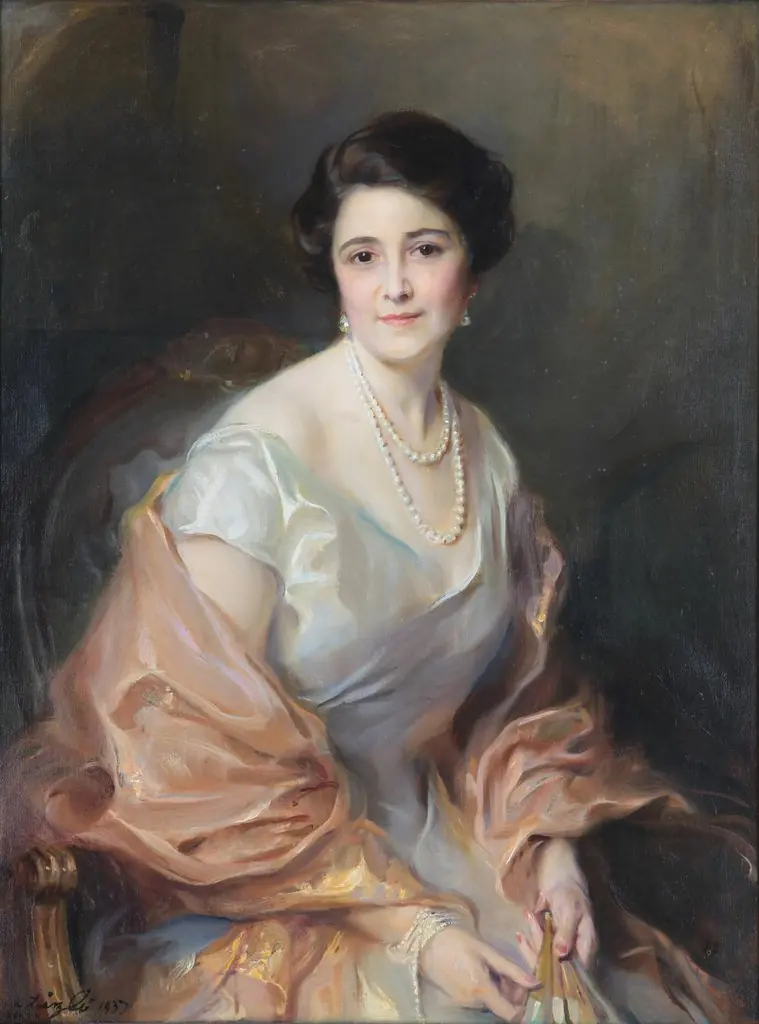 Portrait of Elizabeth Gottschalk de Hirsch
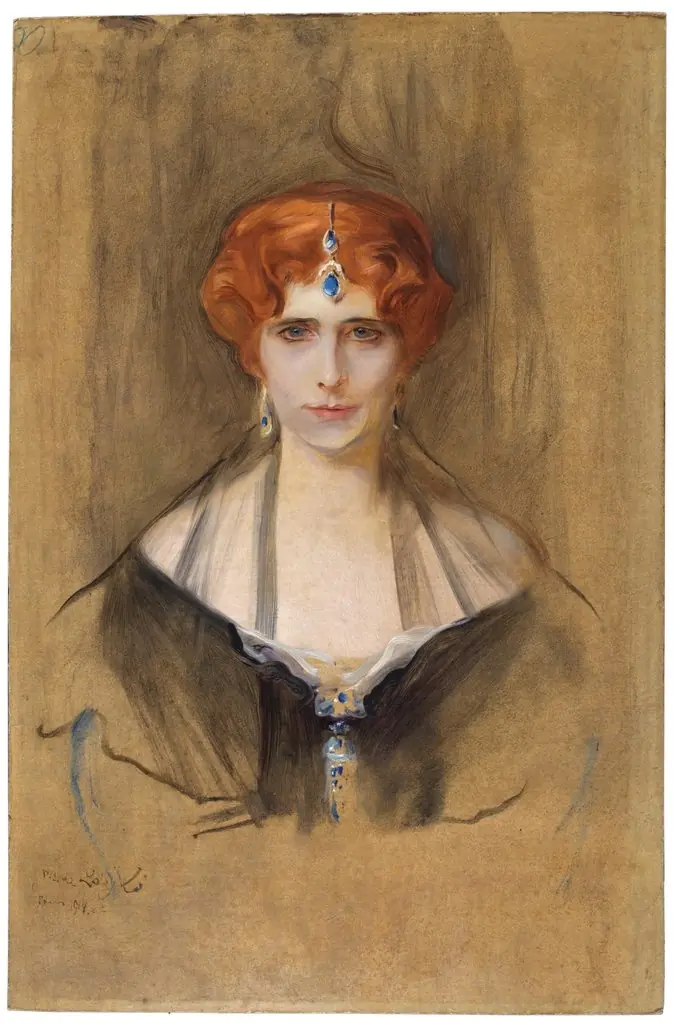 Elinor Glyn
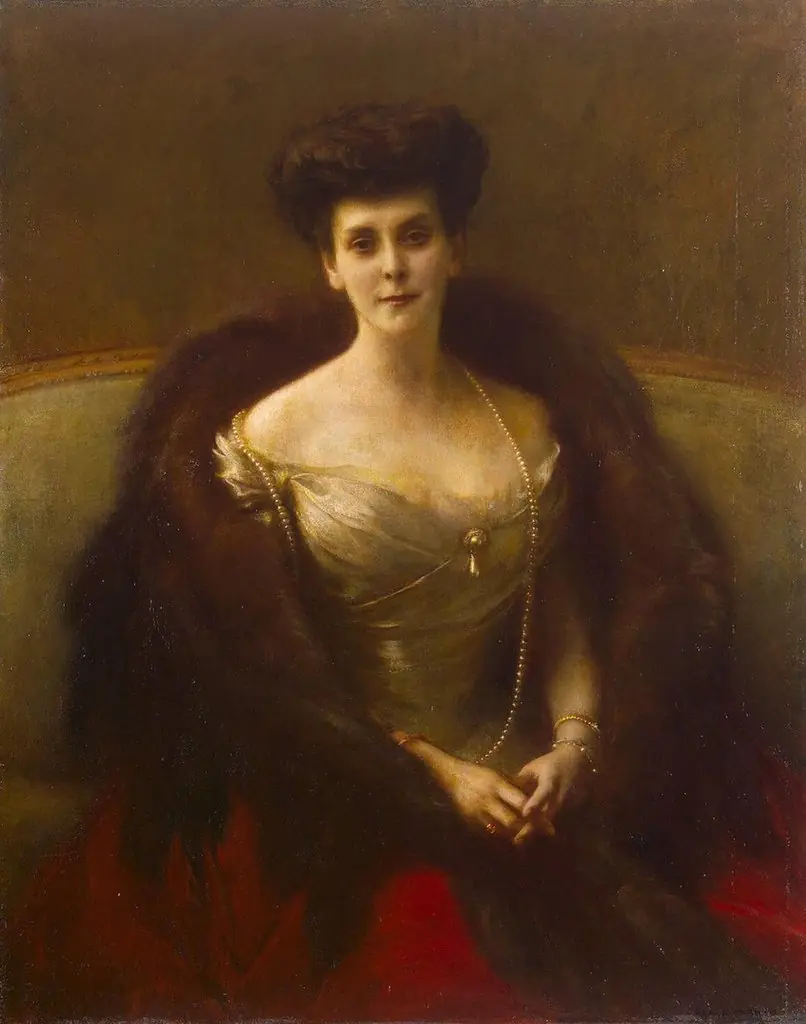 Portrait of Countess Gogonfelsen (Princess Olga Paley)
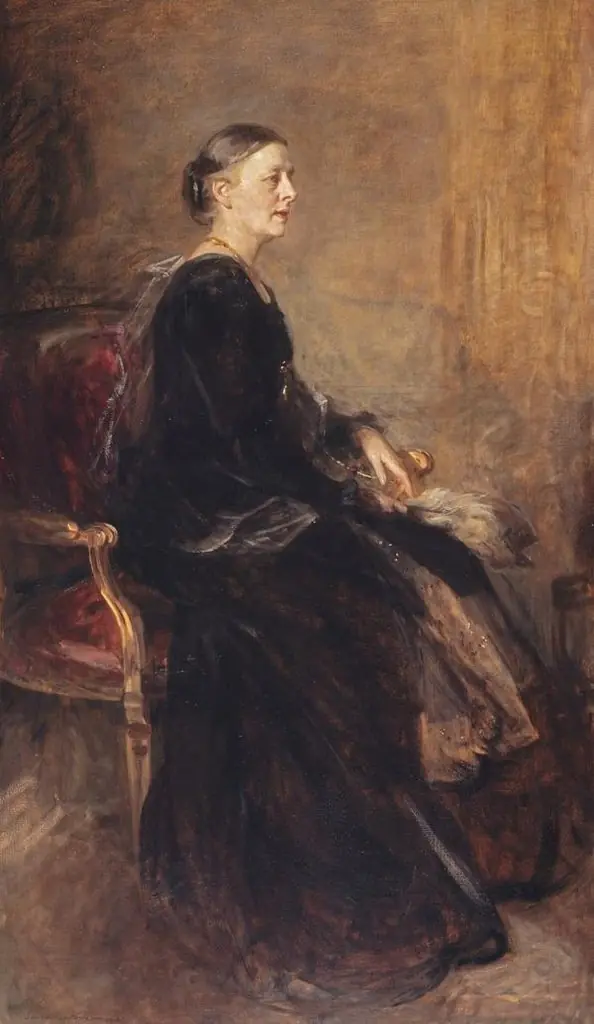 Mrs Craig Sellar of Ardtornish (1844 - 1929)
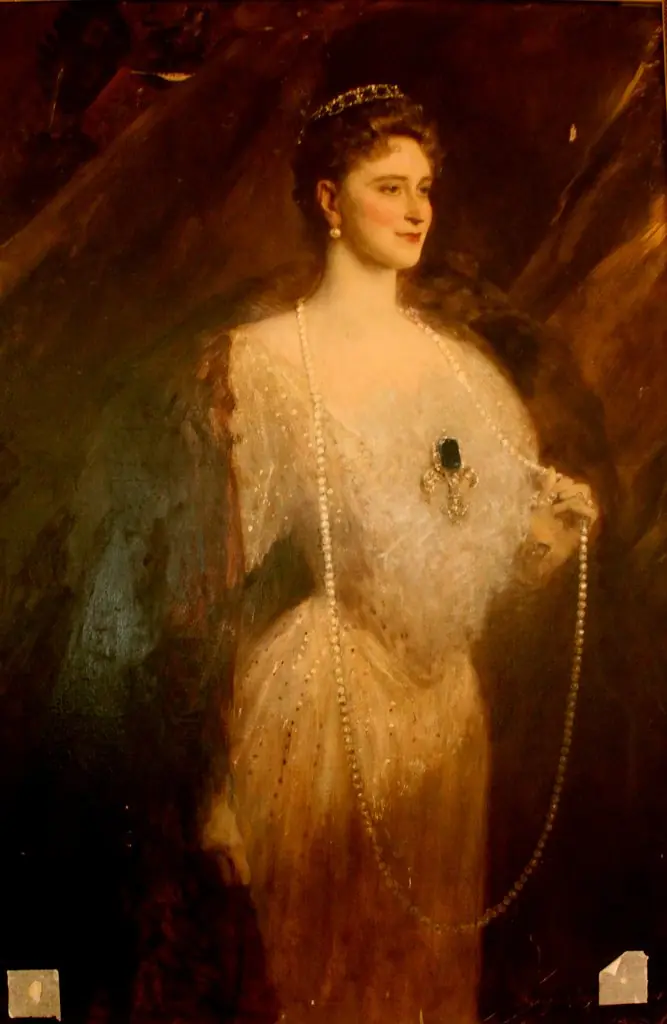 Portrait de Elisabeth Feodorovna Romanova
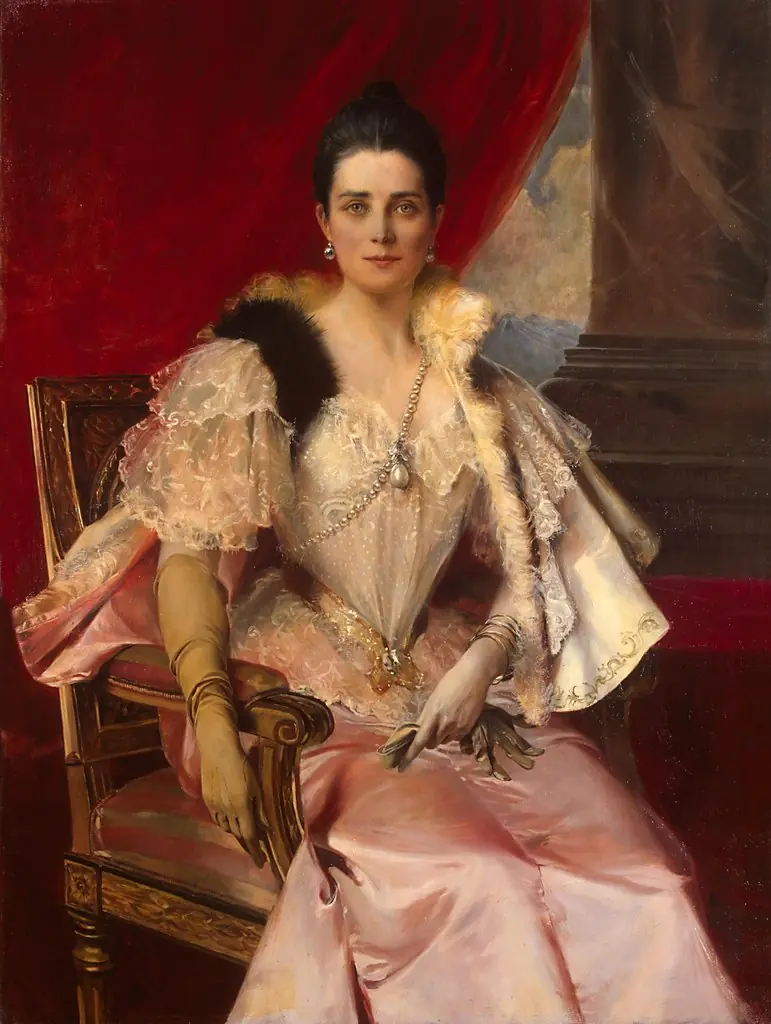 Portrait of Princess Z. N. Yusupova