Artwork
Madonna and child with Saint Catherine, Saint James the Greater, and an angel
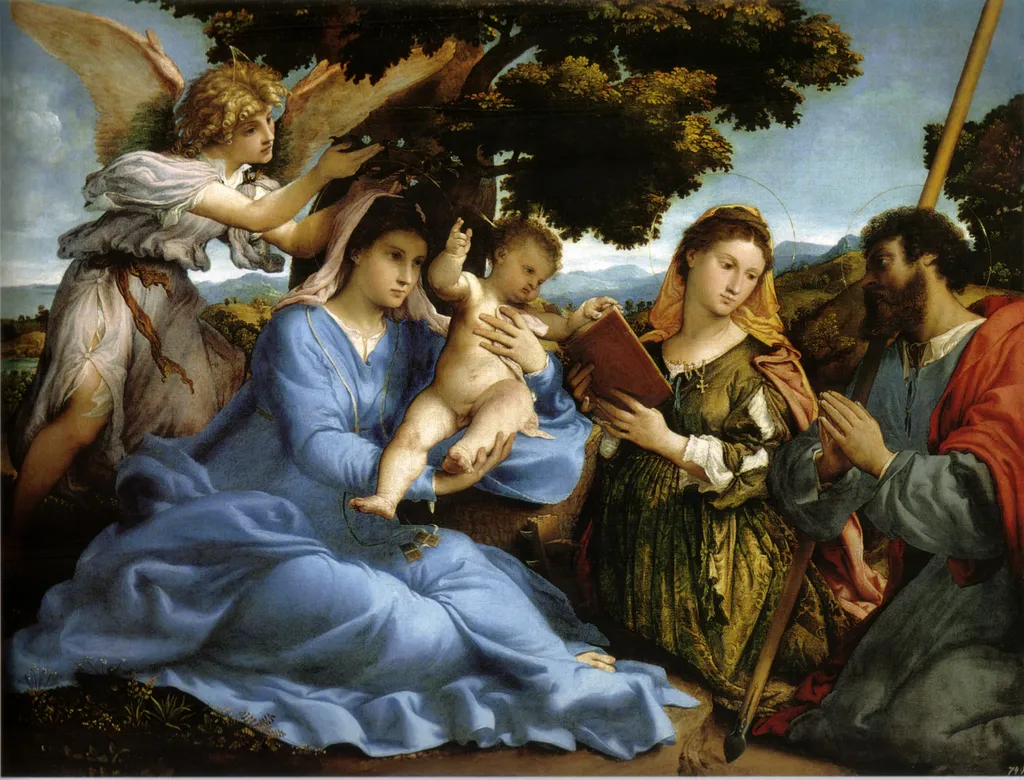
Madonna and child with Saint Catherine, Saint James the Greater, and an angel is an oil painting by the Mannerist artist Lorenzo Lotto. It dates from 1527 and is held in the collection of the Kunsthistorisches Museum.
About this work
Overview
Lorenzo Lotto's oil painting, Madonna and Child with Saint Catherine, Saint James the Greater, and an angel, dates to approximately 1527. This canvas, now housed in the Kunsthistorisches Museum in Vienna, depicts a sacred gathering. The composition features the Virgin Mary holding the Christ Child, flanked by two prominent saints and a celestial attendant, set within a serene landscape.
Subject & Meaning
The painting portrays the Virgin Mary tenderly holding the infant Jesus, positioned centrally within the composition.
The painting portrays the Virgin Mary tenderly holding the infant Jesus, positioned centrally within the composition. To her left, an angel with wings holds a tree branch, while on her right stand two martyr saints. Saint Catherine of Alexandria is identifiable by her small cross necklace and a closed book, and Saint James the Greater is depicted as a bearded man leaning on a staff, signifying his pilgrimage.
Technique & Style
Executed in oil paint on canvas, the work demonstrates Lotto's approach to rendering figures and atmosphere. The artist employs chiaroscuro, utilizing contrasts of light and shadow to create depth and model the forms of the figures. Notably, the angel's face exhibits a degree of naturalism, departing from more idealized or conventional depictions of celestial beings, which contributes to the painting's humanistic quality.
History & Provenance
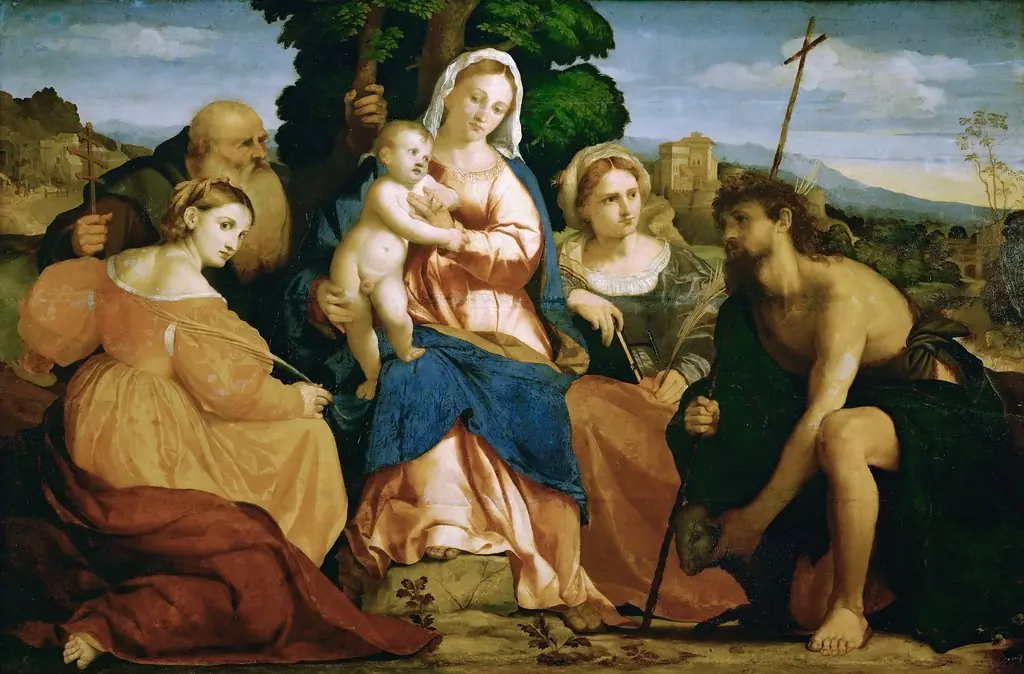
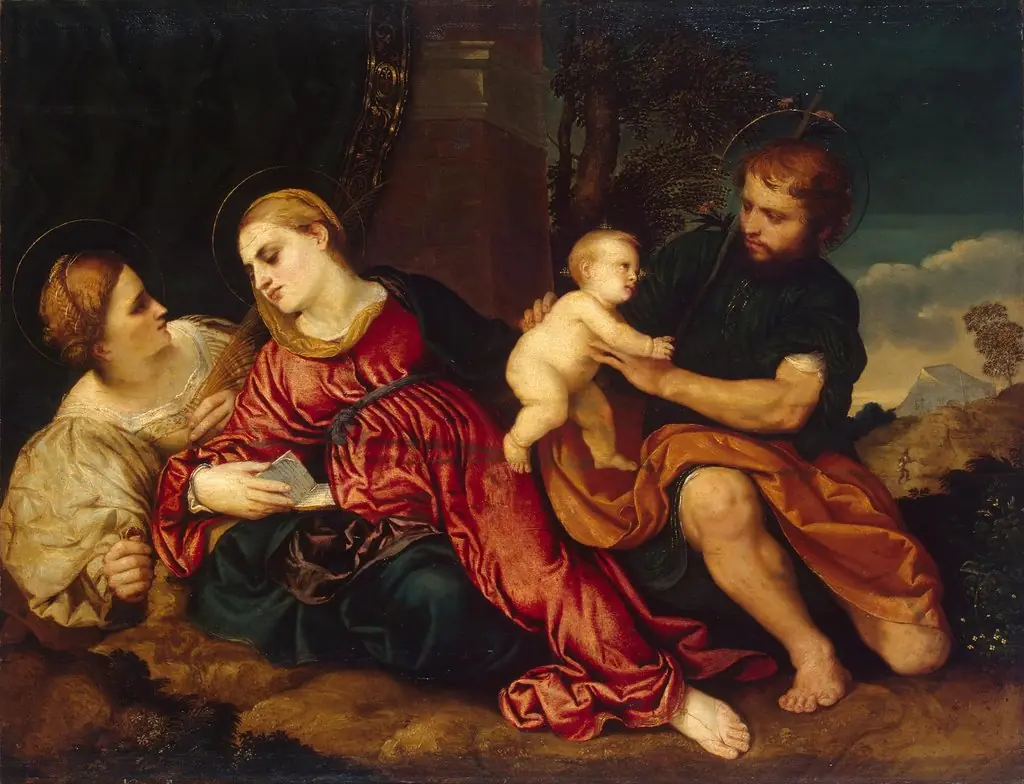
The earliest documented reference to this painting appears in Marco Boschini's 1660 text, Carta del navigar pittoresco, where it was praised for its thoughtful and memorable qualities. At that time, the artwork was already part of the distinguished Habsburg collections. Boschini initially attributed the piece to Palma il Vecchio, though contemporary scholarship now firmly assigns it to Lorenzo Lotto, suggesting he may have adapted a compositional idea from Palma.
Context
This painting was likely commissioned for a private patron rather than a church, suggesting its intended display in a domestic or personal devotional setting. Its creation around 1527 places it shortly after Lorenzo Lotto's relocation to Venice, marking a period of transition and new artistic endeavors for the painter in the vibrant Venetian art scene.
Own this work as a print
Artist & collection
Artist
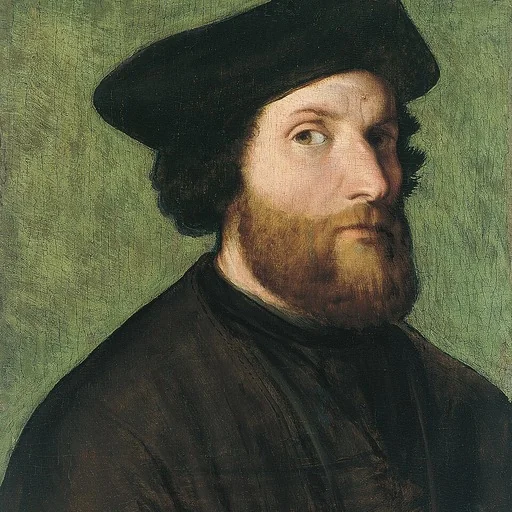
Lorenzo Lotto (c. 1480 – 1556/57) was an Italian Renaissance painter, draughtsman, and illustrator, traditionally placed in the Venetian school, though much of his career was spent in other north Italian cities. He…