Artwork
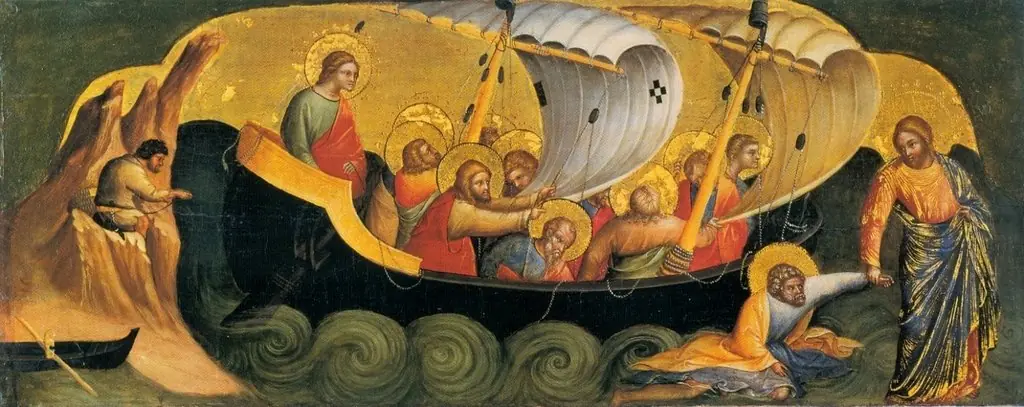
The Calling of Peter and Andrew

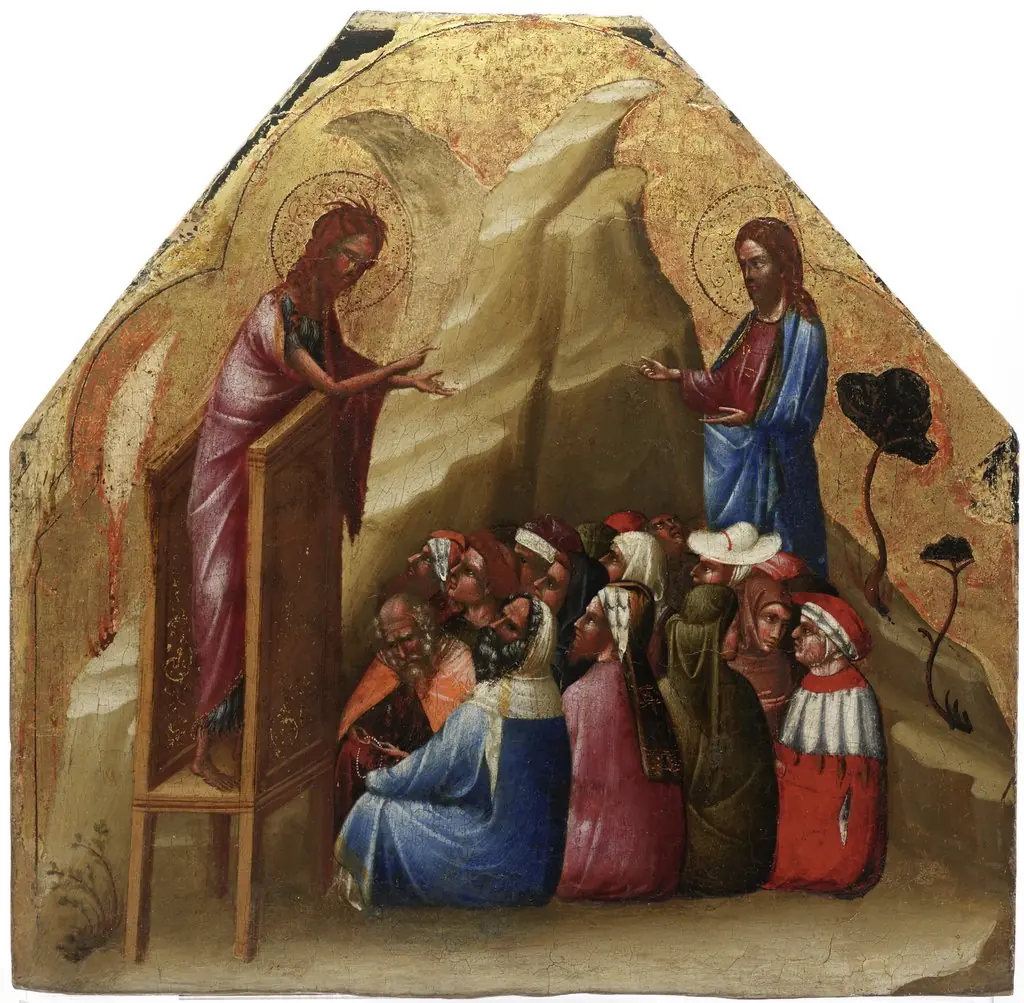
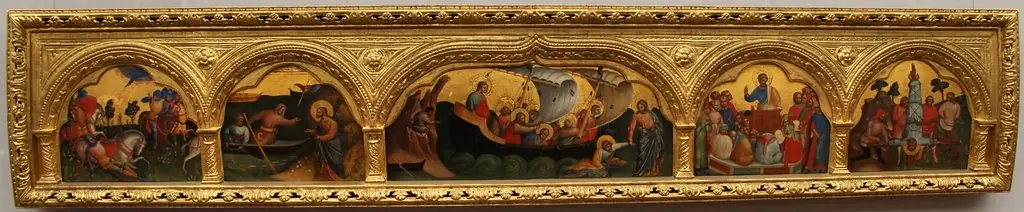
The Calling of Peter and Andrew is an unspecified painting by the Byzantine icon painting artist Lorenzo Veneziano. It dates from 1370 and is held in the collection of the Gemäldegalerie Berlin.
About this work
Overview
Created circa 1370 by Lorenzo Veneziano, a Venetian painter active between 1356 and 1372, this panel portrays a biblical episode in which Christ calls the future apostles Peter and Andrew. The work belongs to the religious icon tradition and is presently conserved in the Gemäldegalerie, Berlin.
Subject & Meaning
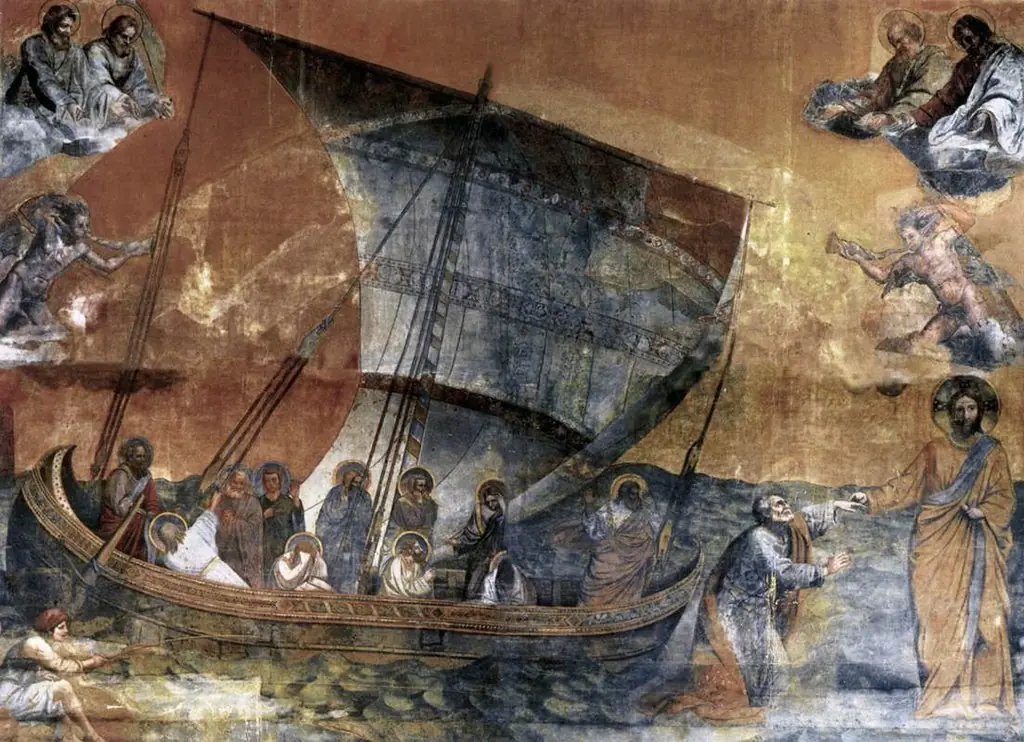
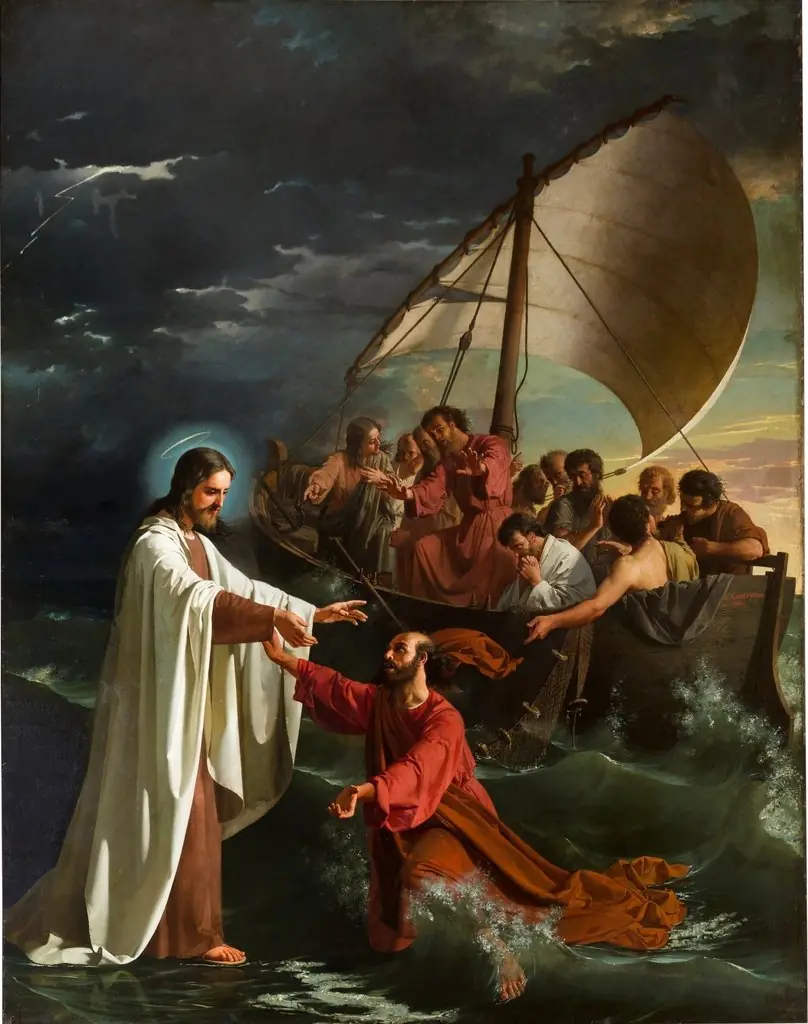
The composition shows a bearded figure, identified as Christ, standing on a shoreline and extending his right hand toward a small boat. Inside the vessel sit two men: one holding a fishing net, the other gripping an oar, representing the future disciples Peter and Andrew at the moment of their summons.
Technique & Style
Executed in tempera on panel, the painting employs a subtle chiaroscuro that models the figures against a dark, craggy background and a yellowed sky. The contrast of light and shadow creates a modest sense of volume, while the linear outlines retain the decorative quality of the late Byzantine tradition transitioning toward Gothic naturalism.
History & Provenance
Lorenzo Veneziano worked during Venice’s stylistic shift from Byzantine rigidity to a more expressive Gothic idiom, influencing the city’s visual culture. After centuries of private ownership, the panel entered the collection of Berlin’s Gemäldegalerie, where it remains on display as part of the museum’s medieval holdings.
Context
The scene reflects the medieval emphasis on apostolic authority, illustrating the moment Christ designates Peter as the rock upon which the Church will be built. The inclusion of a second boat with a red and blue sail in the distance adds narrative depth, suggesting the broader spread of the Christian mission beyond the immediate encounter.
Artist & collection
Artist
Lorenzo Veneziano ('Lorenzo the Venetian') (active 1356–1372) was an important painter in Venice during the second half of the 14th century.