Artwork
River Landscape
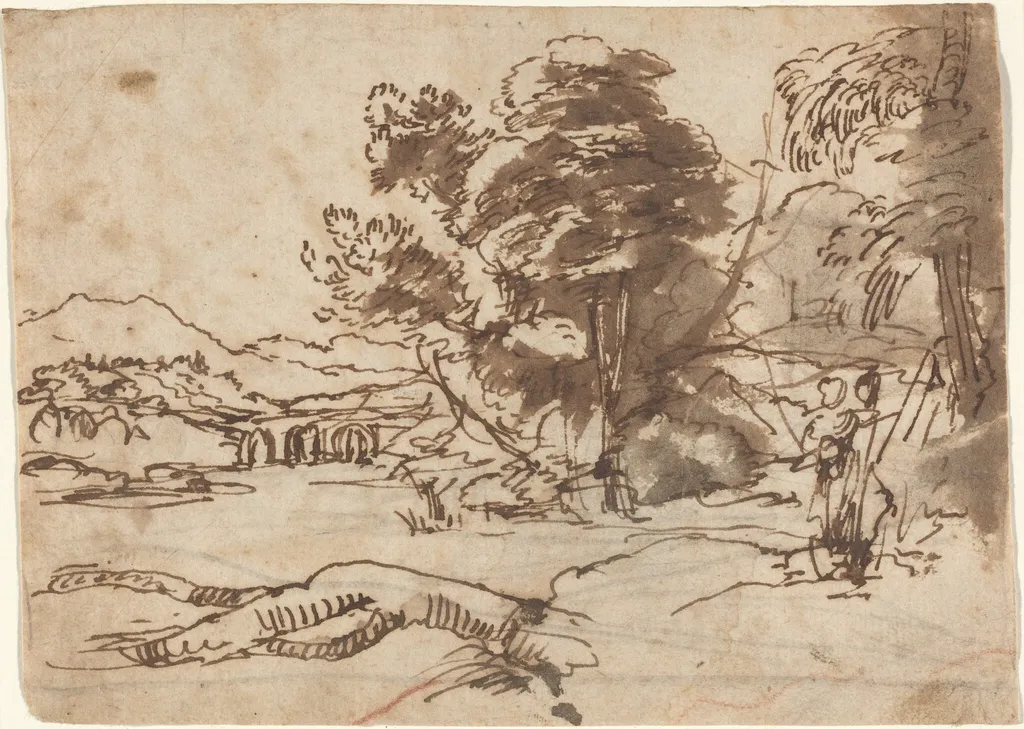
River Landscape is an ink drawing by the Baroque artist Claude Lorrain. It dates from 1636 and is held in the collection of the National Gallery of Art.
About this work
Overview
River Landscape is a drawing created around 1636 by Claude Lorrain, a French Baroque artist. Executed in multiple media, it combines pen and brown ink, brown wash, and black and red chalk on laid paper.
Subject & Meaning
The drawing depicts a serene riverside scene, characteristic of Lorrain's focus on landscape. While figures are not explicitly mentioned, Lorrain's works often incorporate small, contextually meaningful human presences, potentially alluding to classical or biblical themes, though their absence here emphasizes the natural setting.
Technique & Style
Lorrain's technical versatility is showcased through the layered use of pen and ink for outlines, brown wash for tonal depth, and the contrasting tones of black and red chalk, contributing to the work's textured, nuanced visual appeal.
History & Provenance
Created circa 1636, during Lorrain's maturity in Italy, the piece reflects his established style. Provenance details are not provided, but its creation date situates it within his prolific output in Rome.
Context
Part of the broader Baroque movement, River Landscape aligns with the era's emphasis on naturalism and emotional depth in landscape art. Lorrain's work, in particular, bridges French and Italian artistic influences of the time.
Legacy
As part of Lorrain's oeuvre, River Landscape contributes to his legacy as a leading landscape artist of the Baroque period, influencing subsequent generations of European landscape painters.
Artist & collection
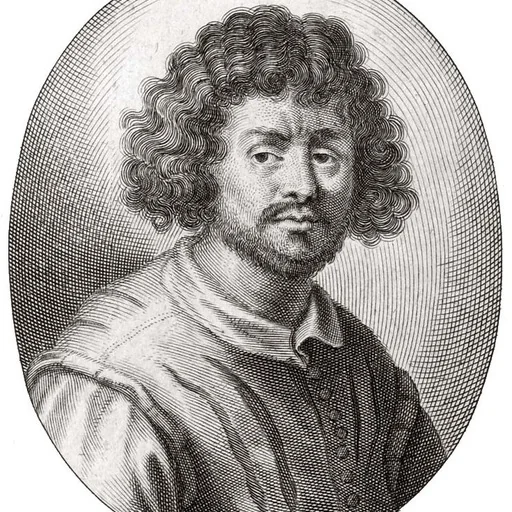
Artist
Claude Lorrain (French: ; born Claude Gellée , called le Lorrain in French; traditionally just Claude in English; c.

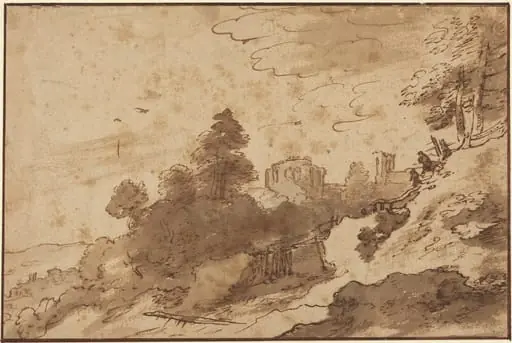 Landscape with Bridge and Ruins in Background
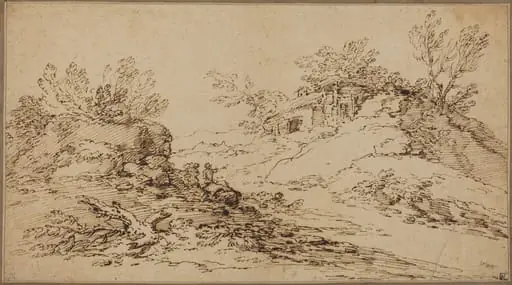 Rocky Landscape with a Rustic House
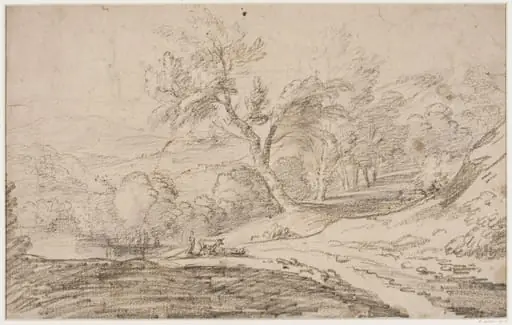 Landscape with lake
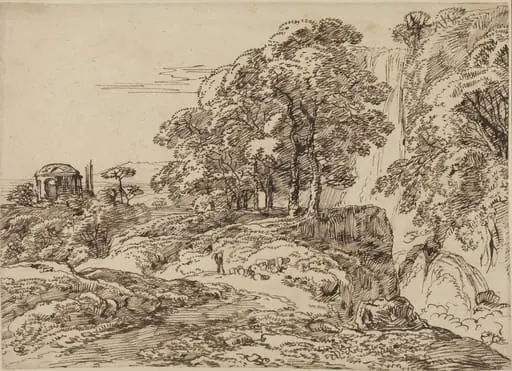 Pastoral Landscape with a Waterfall and a Temple
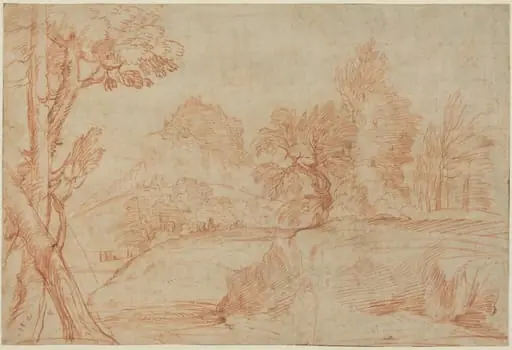 Classical Landscape
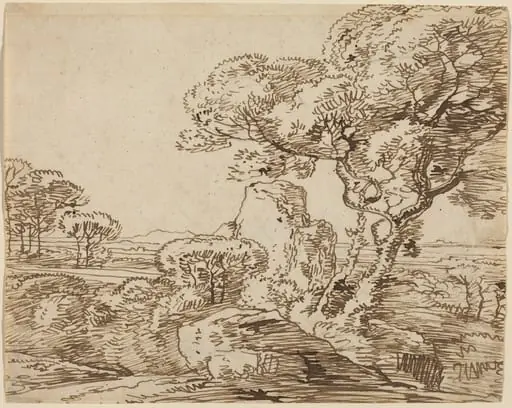 Landscape with Trees and Craggy Rocks
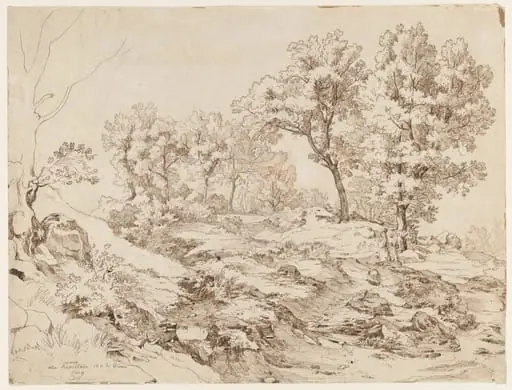 La Serpentara near Olevano
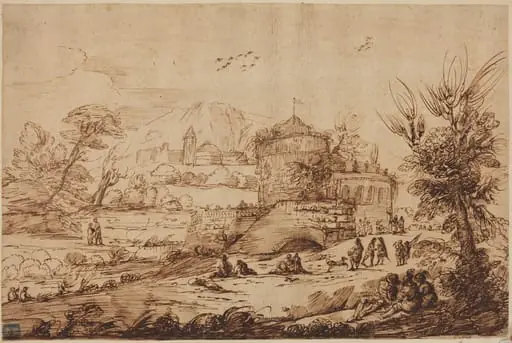 Landscape with Fortress and River
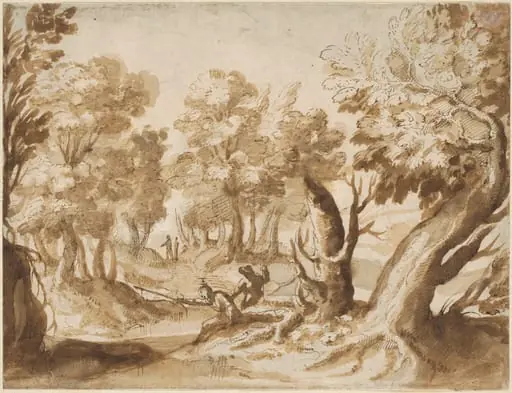 Two Figures Fishing in a Landscape
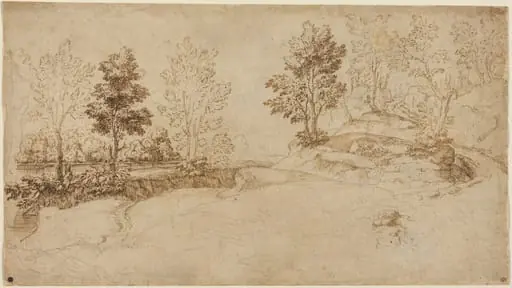 River Landscape