Artwork
De cavalier
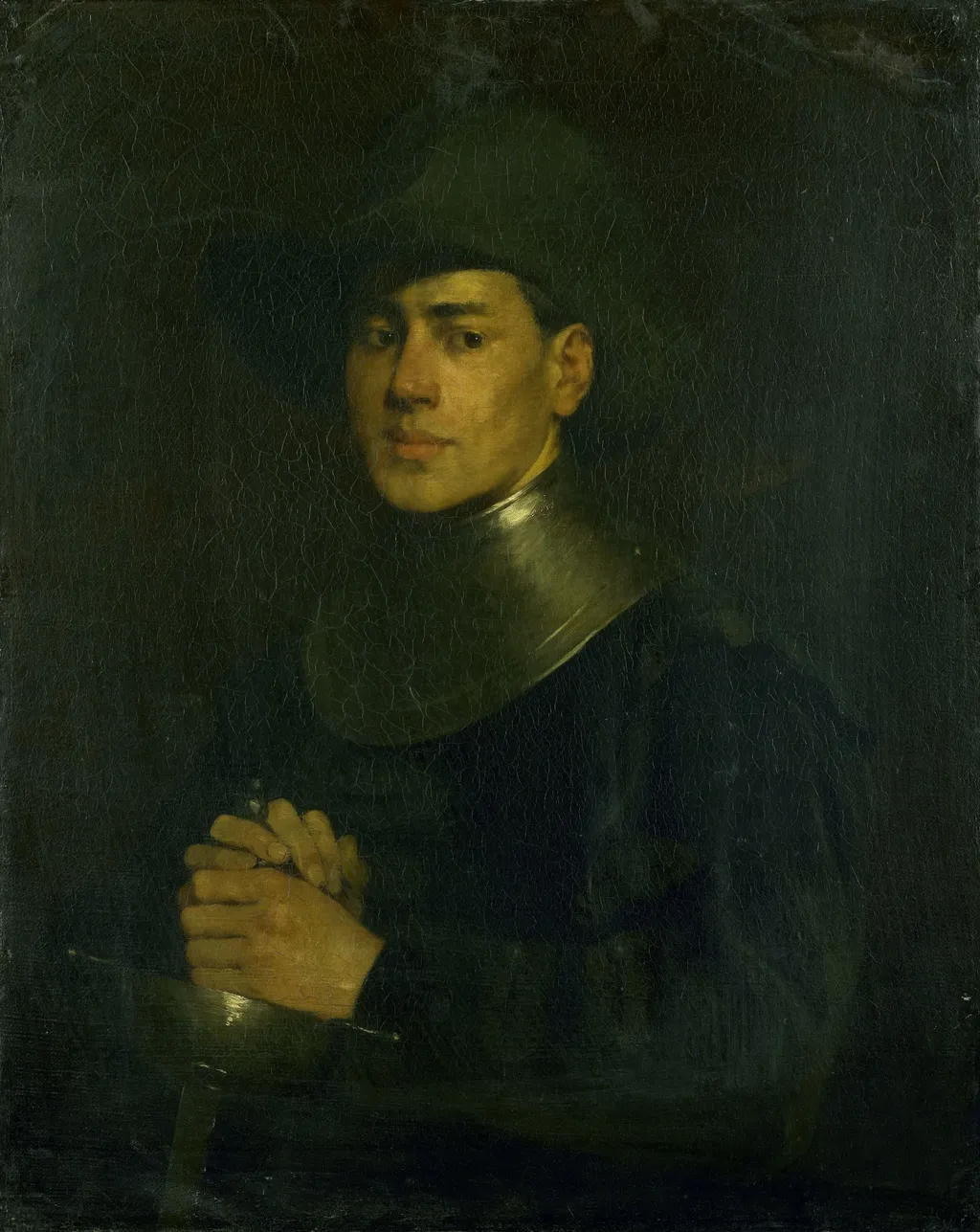
De cavalier is an oil painting by the Impressionist artist Louis Mettling. It dates from 1893 and is held in the collection of the Rijksmuseum.
About this work
Overview
Louis Mettling’s 1893 oil on canvas entitled *De cavalier* is part of the Rijksmuseum’s collection. The work presents a solitary figure dressed in dark attire, complete with a high‑collared shirt and a hat, holding a sword in his right hand while his left hand rests upon the blade. The composition is set against a muted, dark background that subtly shifts in tone.
Subject & Meaning
The portrait shows a man whose expression is grave and reflective, his gaze directed downward as if engaged in private contemplation. The solemn demeanor, combined with the presence of the sword, suggests themes of duty, honor, or inner conflict, inviting viewers to consider the psychological state of the sitter rather than a purely heroic narrative.
Technique & Style
Mettling employs a pronounced chiaroscuro, using stark contrasts of light and shadow to model the figure’s form and create a three‑dimensional presence. The illumination highlights the texture of the fabric and the gleam of the sword, while the surrounding darkness recedes, focusing attention on the sitter’s face and hands. The brushwork is controlled, emphasizing realism and atmospheric depth.
History & Provenance
Completed in 1893, *De cavalier* entered the Rijksmuseum’s holdings at an unspecified date, where it remains on display. The painting’s provenance prior to acquisition by the museum has not been extensively documented, but its inclusion in the national collection underscores its relevance to Dutch portraiture of the late nineteenth century.
Context
Created during a period when European artists were revisiting classical portrait conventions, Mettling’s work reflects a blend of academic training and the era’s growing interest in psychological depth. The somber palette and introspective pose align with contemporary trends that favored mood and character over overt spectacle, situating the piece within broader late‑Victorian artistic currents.
Own this work as a print
Artist & collection
