Artwork
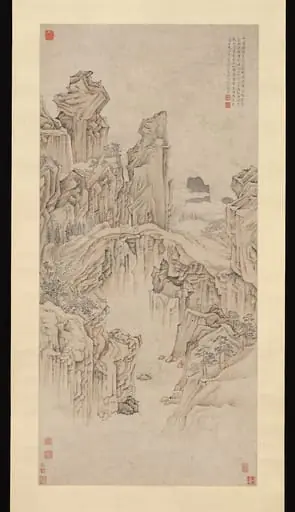
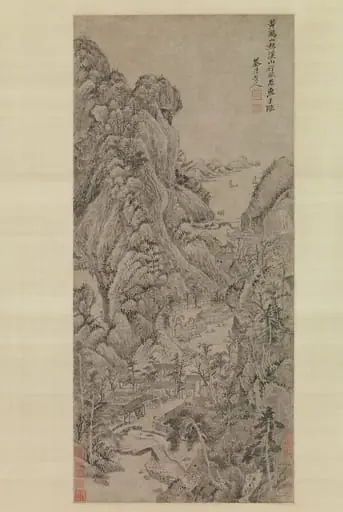
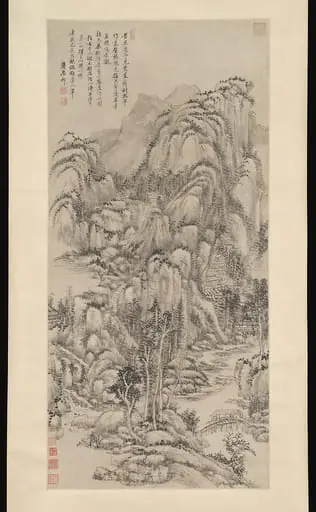
Daoist Retreat in Mountain and Stream (Landscape after Ni Zan [1301–1374])
![Daoist Retreat in Mountain and Stream (Landscape after Ni Zan [1301–1374]), by Lu Zhi, unspecified, 1567](https://artifactworldgallery.com/img/lu-zhi--daoist-retreat-in-mountain-and-stream-landscape-after-ni-zan--766e576a4810a8bc-w1024.webp)
Daoist Retreat in Mountain and Stream (Landscape after Ni Zan [1301–1374]) is an unspecified painting by the Ming dynasty painting artist Lu Zhi. It dates from 1567 and is held in the collection of the Cleveland Museum of Art.
About this work
Overview
Daoist Retreat in Mountain and Stream, executed in 1567 by Lu Zhi, is a hand‑scroll landscape now in the collection of the Cleveland Museum of Art. The work is a direct copy of an earlier composition by the Yuan‑dynasty master Ni Zan (1301–1374), reproducing his austere, monochrome scenery for a later audience.
Subject & Meaning
The painting depicts an isolated mountain valley where craggy peaks descend to a meandering stream. Sparse foliage clings to the slopes, a modest hut rests beside the water, and a low bridge arches over the current. The tranquil setting evokes Daoist ideals of withdrawal from worldly affairs and communion with nature’s quiet rhythms.
Technique & Style
Rendered in ink on paper, Lu Zhi employs Ni Zan’s characteristic brushwork: dry, angular strokes outline the rugged rocks, while softer washes suggest mist and distant hills. The limited palette of greys and browns reinforces the work’s restrained aesthetic, and the delicate rendering of trees and architecture creates a sense of depth without relying on color.
History & Provenance
Created during the Ming dynasty, the piece reflects the period’s reverence for Yuan masters and the practice of copying esteemed models. It entered the Cleveland Museum of Art’s collection through a 20th‑century acquisition, where it has been catalogued as an example of the transmission of Ni Zan’s visual language across generations.
Context
Lu Zhi’s replication aligns with a broader Ming tradition of studying and preserving earlier artistic achievements. By reproducing Ni Zan’s composition, the artist not only honored the original master but also engaged in a scholarly exercise, demonstrating his own proficiency in the literati brush technique that prized personal expression within established conventions.
Artist & collection