Artwork
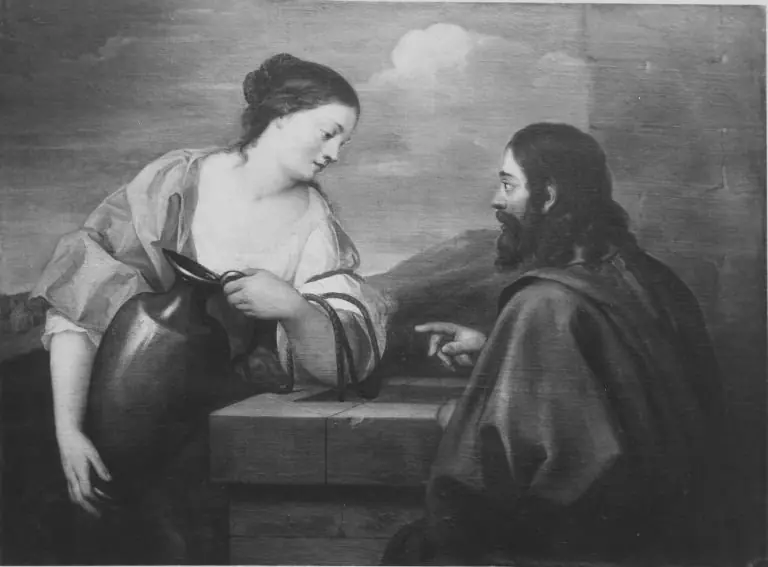
Christ and the Samaritan woman at the well
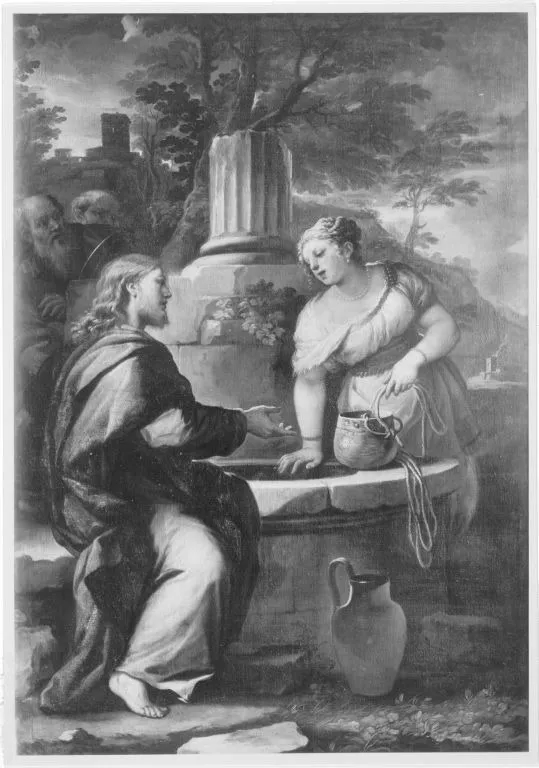
Christ and the Samaritan woman at the well is an unspecified painting by the Early Baroque Italian artist Luca Giordano. It dates from 1669 and is held in the collection of the Bavarian State Painting Collections.
About this work
Overview
Luca Giordano’s 1669 oil painting portrays the biblical encounter between Jesus and the Samaritan woman at Jacob’s well. Executed in a Baroque idiom, the work is part of the collection of Munich’s Alte Pinakothek, where it is displayed among other 17th‑century religious canvases.
Subject & Meaning
The composition captures the moment of dialogue described in the Gospel of John, emphasizing the exchange of spiritual insight across cultural boundaries. Christ, kneeling on the left, offers water that symbolizes eternal life, while the Samaritan woman, poised with a jug, represents humanity’s receptivity to divine revelation.
Technique & Style
Giordano employs a pronounced chiaroscuro, contrasting the dark drapery of Christ’s robe with the luminous white tunic of the woman. The soft modeling of flesh and the delicate handling of light on the surrounding foliage reveal his mastery of Baroque drama and his ability to render intimate, contemplative scenes.
History & Provenance
Completed in 1669, the canvas entered the Alte Pinakothek’s holdings during the 19th century, joining a broader acquisition of Italian Baroque works. Its presence in the museum reflects the institution’s commitment to representing the artistic output of Naples, where Giordano was active.
Context
Giordano, a prolific Neapolitan painter, was known for synthesizing influences from Caravaggio and the Roman school. This work reflects the Counter‑Reformation’s emphasis on biblical narratives that underscore universal salvation, a theme frequently commissioned for churches and private devotion in the late 1600s.
Artist & collection

Artist
Luca Giordano was an Italian late-Baroque painter and printmaker in etching. Giordano was one of the most celebrated artists of the Neapolitan Baroque, whose vast output included altarpieces, mythological paintings and…