Artwork
Death of Saint Joseph
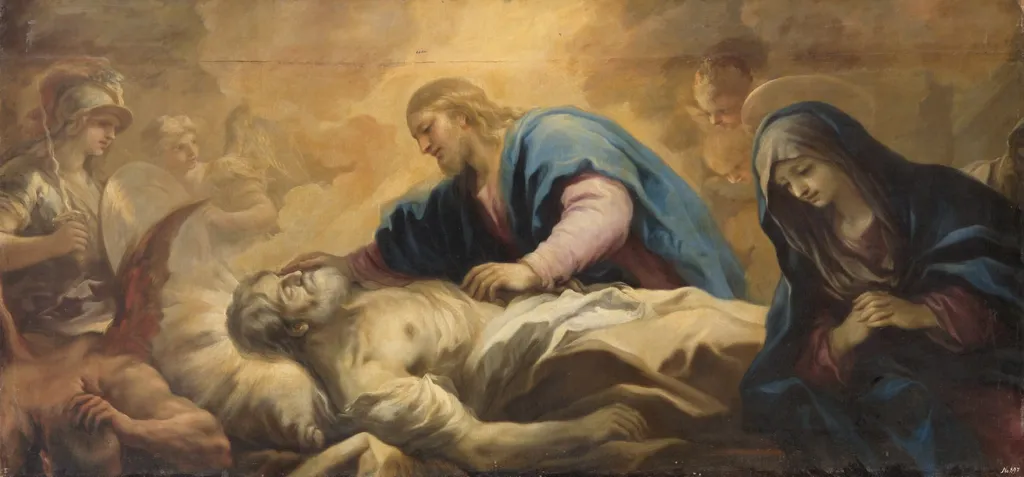
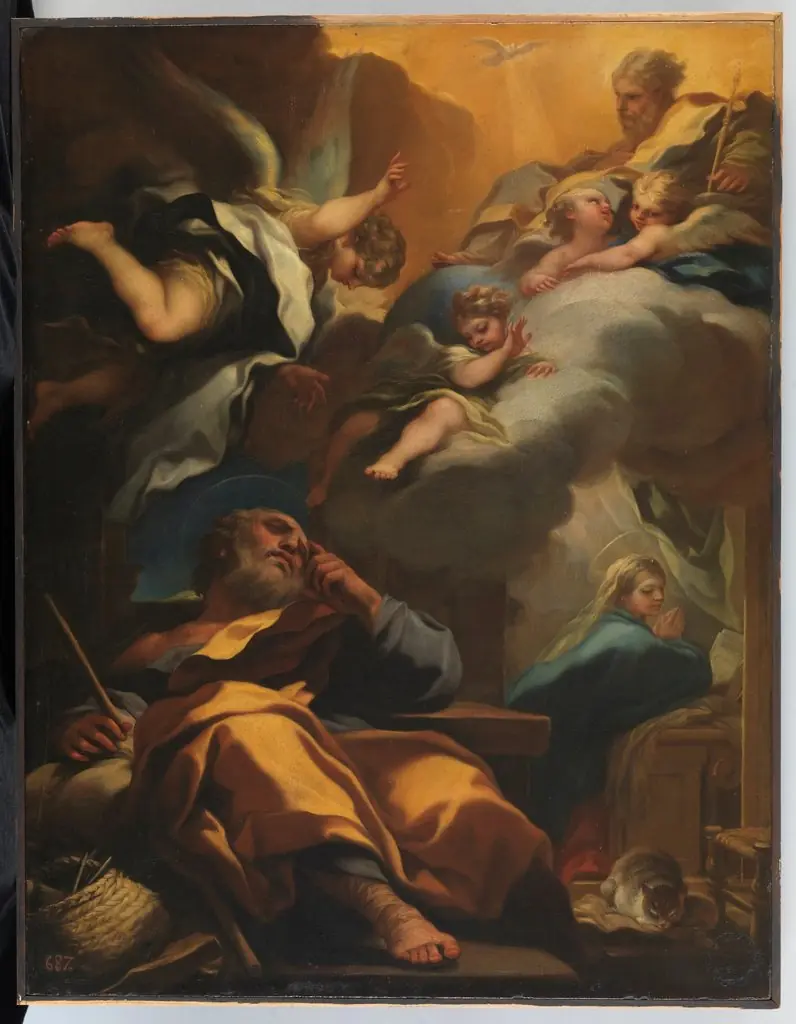
Death of Saint Joseph is an unspecified painting by the Early Baroque Italian artist Luca Giordano. It dates from 1698 and is held in the collection of the Kunsthistorisches Museum.
About this work
Overview
Luca Giordano’s 1698 canvas ‘Death of Saint Joseph’ presents a solemn tableau of the holy family at the moment of Joseph’s passing. Executed in the late Baroque period, the work resides in Vienna’s Kunsthistorisches Museum, where it remains a notable example of devotional imagery from the artist’s prolific output.
Subject & Meaning
The composition centers on Saint Joseph, depicted recumbent with his head turned and eyes closed, signifying his death. Flanking him are figures identified as the Virgin Mary and the infant Jesus, whose gentle gestures convey compassion and reverence, underscoring themes of familial devotion and the sanctity of a holy death.
Technique & Style
Giordano employs a restrained palette of warm golds and muted whites, while chiaroscuro modeling creates depth and highlights the central figure. The soft illumination falling on Joseph’s face and the delicate drapery of the surrounding robes reflect the artist’s skill in rendering texture and volume within a restrained, contemplative atmosphere.
History & Provenance
Completed in 1698, the painting entered the collection of the Kunsthistorisches Museum, where it has been displayed as part of the museum’s Baroque holdings. Its provenance traces back to the artist’s workshop in Naples before being acquired by the imperial collection in the 18th century.
Context
Created during Giordano’s mature phase, the work aligns with Counter‑Reformation commissions that emphasized pious narratives. The depiction of Joseph’s death, a relatively rare subject, reflects contemporary theological interest in the saint’s role as protector of the Holy Family and model of humble obedience.
Artist & collection

Artist
Luca Giordano was an Italian late-Baroque painter and printmaker in etching. Giordano was one of the most celebrated artists of the Neapolitan Baroque, whose vast output included altarpieces, mythological paintings and…